Gordon Teskey - Böcker
Visar alla böcker från författaren Gordon Teskey. Handla med fri frakt och snabb leverans.
5 produkter
5 produkter
519 kr
Skickas inom 10-15 vardagar
John Milton is regarded as the greatest English poet after Shakespeare. Yet for sublimity and philosophical grandeur, Milton stands almost alone in world literature. His peers are Homer, Virgil, Dante, Wordsworth, and Goethe: poets who achieve a total ethical and spiritual vision of the world. In this panoramic interpretation, the distinguished Milton scholar Gordon Teskey shows how the poet’s changing commitments are subordinated to an aesthetic that joins beauty to truth and value to ethics. The art of poetry is rediscovered by Milton as a way of thinking in the world as it is, and for the world as it can be.Milton’s early poems include the heroic Nativity Ode; the seductive paired poems “L’Allegro” and “Il Penseroso”; the mythological pageant Comus, with its comically diabolical enchanter and its serious debate on the human use of nature; and “Lycidas,” perhaps the greatest short poem in English and a prophecy of vast human displacements in the modern world. Teskey follows Milton’s creative development in three phases, from the idealistic transcendence of the poems written in his twenties to the political engagement of the gritty, hard-hitting poems of his middle years. The third phase is that of “transcendental engagement,” in the heaven-storming epic Paradise Lost, and the great works that followed it: the intense intellectual debate Paradise Regained, and the tragedy Samson Agonistes.
199 kr
Skickas inom 7-10 vardagar
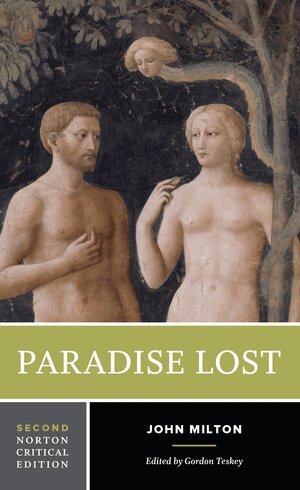
This Norton Critical Edition includes:The 1674 text of Paradise Lost, with emendations and adoptions from the first edition and from the scribal manuscript. Spelling and punctuation have been modernised for student readers.An illuminating introduction and abundant explanatory annotations by Gordon Teskey.Source and background materials, including Milton’s greatest prose work, Areopagitica, in its entirety and key selections from the Bible.Topically arranged commentaries and interpretations—seventy-eight in all, thirty-nine of them new to the Second Edition—from classic assessments to current scholarship.A glossary of names and suggestions for further reading.
344 kr
Skickas inom 10-15 vardagar
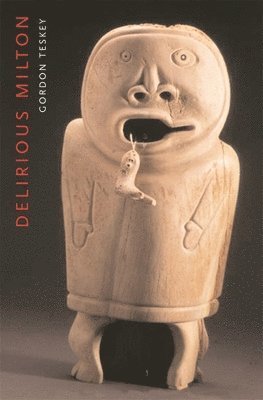
Composed after the collapse of his political hopes, Milton's great poems Paradise Lost, Paradise Regained, and Samson Agonistes are an effort to understand what it means to be a poet on the threshold of a post-theological world. The argument of Delirious Milton, inspired in part by the architectural theorist Rem Koolhaas's Delirious New York, is that Milton's creative power is drawn from a rift at the center of his consciousness over the question of creation itself. This rift forces the poet to oscillate deliriously between two incompatible perspectives, at once affirming and denying the presence of spirit in what he creates. From one perspective the act of creation is centered in God and the purpose of art is to imitate and praise the Creator. From the other perspective the act of creation is centered in the human, in the built environment of the modern world. The oscillation itself, continually affirming and negating the presence of spirit, of a force beyond the human, is what Gordon Teskey means by delirium. He concludes that the modern artist, far from being characterized by what Benjamin (after Baudelaire) called "loss of the aura," is invested, as never before, with a shamanistic spiritual power that is mediated through art.
519 kr
Skickas inom 10-15 vardagar
From the distinguished literary scholar Gordon Teskey comes an essay collection that restores Spenser to his rightful prominence in Renaissance studies, opening up the epic of The Faerie Queene as a grand, improvisatory project on human nature, and arguing—controversially—that it is Spenser, not Milton, who is the more important and relevant poet for the modern world.There is more adventure in The Faerie Queene than in any other major English poem. But the epic of Arthurian knights, ladies, and dragons in Faerie Land, beloved by C. S. Lewis, is often regarded as quaint and obscure, and few critics have analyzed the poem as an experiment in open thinking. In this remarkable collection, the renowned literary scholar Gordon Teskey examines the masterwork with care and imagination, explaining the theory of allegory—now and in Edmund Spenser’s Elizabethan age—and illuminating the poem’s improvisatory moments as it embarks upon fairy tale, myth, and enchantment.Milton, often considered the greatest English poet after Shakespeare, called Spenser his “original.” But Teskey argues that while Milton’s rigid ideology in Paradise Lost has failed the test of time, Spenser’s allegory invites engagement on contemporary terms ranging from power, gender, violence, and virtue ethics, to mobility, the posthuman, and the future of the planet. The Faerie Queene was unfinished when Spenser died in his forties. It is the brilliant work of a poet of youthful energy and philosophical vision who opens up new questions instead of answering old ones. The epic’s grand finale, “The Mutabilitie Cantos,” delivers a vision of human life as dizzyingly turbulent and constantly changing, leaving a future open to everything.
997 kr
Skickas inom 10-15 vardagar
The only form of monumental artistic expression practiced from antiquity to the Enlightenment, allegory evolved to its fullest complexity in Dante's Commedia and Spenser's Faerie Queene. Drawing on a wide range of literary, visual, and critical works in the European tradition, Gordon Teskey provides both a literary history of allegory and a theoretical account of the genre which confronts fundamental questions about the violence inherent in cultural forms.Approaching allegory as the site of intense ideological struggle, Teskey argues that the desire to raise temporal experience to ever higher levels of abstraction cannot be realized fully but rather creates a "rift" that allegory attempts to conceal. After examining the emergence of allegorical violence from the gendered metaphors of classical idealism, Teskey describes its amplification when an essentially theological form of expression was politicized in the Renaissance by the introduction of the classical gods, a process leading to the replacement of allegory by political satire and cartoons. He explores the relationship between rhetorical voice and forms of indirect speech (such as irony) and investigates the corporeal emblematics of violence in authors as different as Machiavelli and Yeats. He considers the large organizing theories of culture, particularly those of Eliot and Frye, which take the place in the modern world of earlier allegorical visions. Concluding with a discussion of the Mutabilitie Cantos, Teskey describes Spenser's metaphysical allegory, which is deconstructed by its own invocation of genealogical struggle, as a prophetic vision and a form of warning.