Graeme Cavers – författare
Visar alla böcker från författaren Graeme Cavers. Handla med fri frakt och snabb leverans.
3 produkter
3 produkter
1 078 kr
Skickas inom 5-8 vardagar
479 kr
Skickas
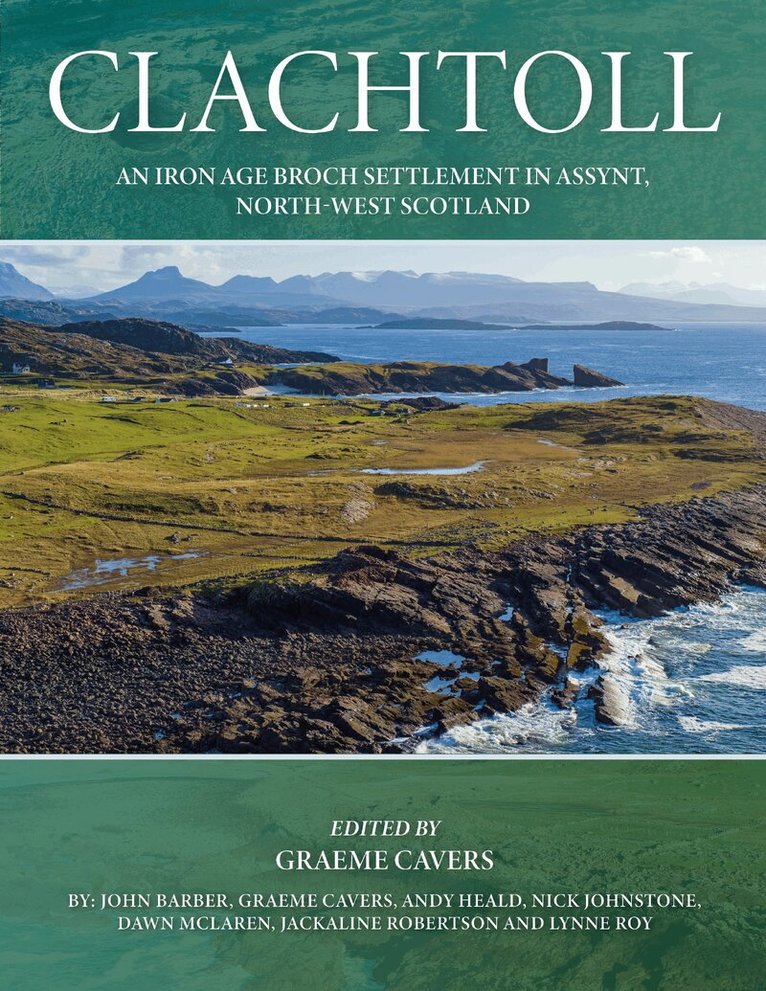
Clachtoll broch is one of the most spectacular Iron Age settlements on the northern mainland of Scotland. When it became clear that the structure was threatened by coastal erosion, community heritage group Historic Assynt launched a major programme of conservation and excavation works designed to secure the vulnerable structure and recover the archaeological evidence of its occupation and use. The resulting excavation provided evidence of a long and complex history of construction and rebuilding, with the final, middle Iron Age occupation phase ending in a catastrophic fire and collapse of the tower by the early years of the first century AD. The internal deposits span perhaps 50 years of the broch’s final occupation and were remarkably well preserved, with no evidence for secondary re-use or disturbance after the fire. As a result, the excavation provides a remarkable snapshot of life in Iron Age Scotland, with an artefact assemblage attesting to daily agricultural life as well as long-range contacts that sets the broch within a wider Atlantic community. Specialist analysis of the artefactual and palaeoenvironmental evidence coupled with detailed analysis of the structure in its local geographical context combine to provide a major new contribution to the archaeology of north-west Scotland, with wider implications for our understanding of late prehistoric society in northern Britain. This report comprises the results of the archaeological investigations at Clachtoll, compiled by a team of archaeologists and specialists from AOC Archaeology Group, and brings together evidence from a range of specialist analyses as well as environmental and landscape investigations.
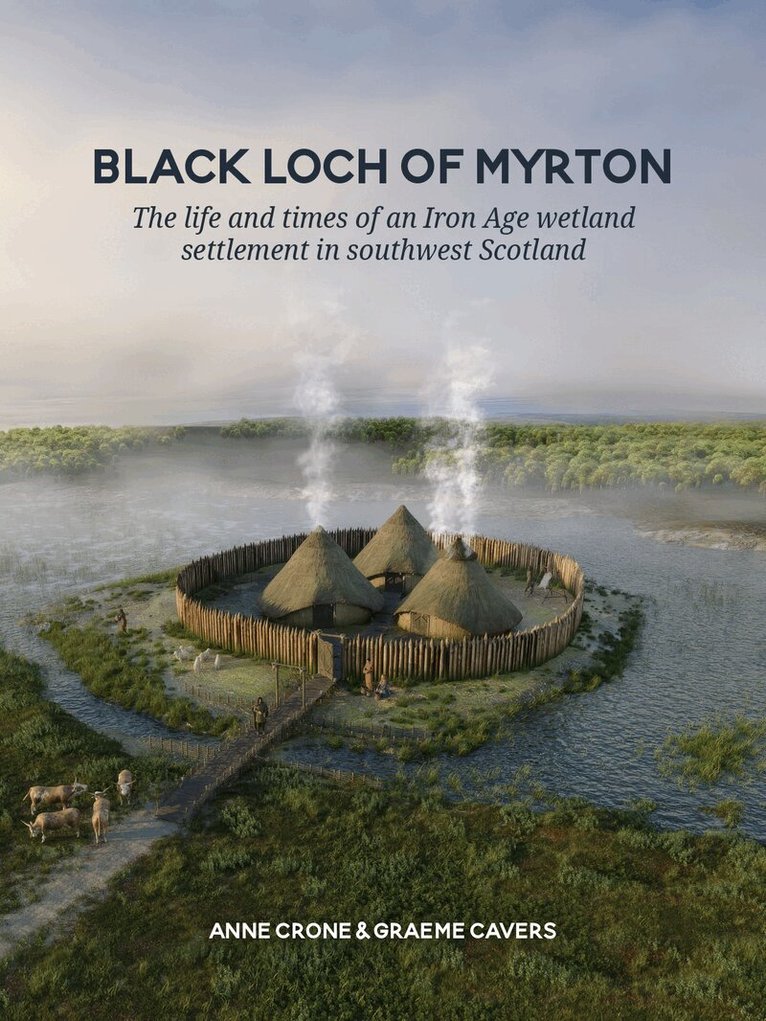
Black Loch of Myrton
The life and times of an Iron Age wetland settlement in southwest Scotland
Häftad, Engelska, 2026
1 912 kr
Tillfälligt slut
This monograph presents the results of excavations at an Iron Age wetland settlement at Black Loch of Myrton (BLM), located on the Machars peninsula in Wigtownshire, Scotland. Although first noted in the 1880s, the site remained unexamined until its rediscovery during modern drainage work. Excavations were carried out between 2013 and 2019 as part of the Scottish Wetland Archaeology Programme (SWAP), supported by Historic Environment Scotland and the UK Arts and Humanities Research Council. The project used a multidisciplinary approach, combining dendrochronology, radiocarbon dating, micromorphology, and multi-proxy environmental analyses. The settlement, built on a natural peat island in a small loch, revealed three main episodes of occupation between the mid-5th and early 2nd century BCE. The earliest phase (c. 437 BCE) featured a log trackway, defensive palisades, and roundhouses. Around 425–420 BCE, the site expanded beyond the original boundaries with new roundhouses and an earthen rampart. A third phase (starting c. 278 BCE) involved substantial reconstruction of the perimeter defences using oak planks and palisades.Excavation revealed exceptionally well-preserved wooden structures, hearths, and organic floor deposits. These finds allowed detailed reconstructions of domestic life, construction techniques, and the site’s interaction with its environment. The site’s deep stratigraphy and ecofactual remains – including plants, insects, animal bones, and lipid biomarkers – offer unique insights into living conditions, resource use, and spatial organisation.Thanks to precise dating through dendrochronology and radiocarbon modelling, the research demonstrates that wetland settlements were an integral part of Iron Age life in northern Britain. These findings reshape our understanding of settlement patterns, defence, and resource management during the mid to late first millennium BCE.