Graham Fairclough – författare
Visar alla böcker från författaren Graham Fairclough. Handla med fri frakt och snabb leverans.
9 produkter
9 produkter
Routledge Handbook of Landscape Character Assessment
Current Approaches to Characterisation and Assessment
Häftad, Engelska, 2020
697 kr
Skickas inom 10-15 vardagar
In this multi-authored book, senior practitioners and researchers offer an international overview of landscape character approaches for those working in research, policy and practice relating to landscape.Over the last three decades, European practice in landscape has moved from a narrow, if relatively straightforward, focus on natural beauty or scenery to a much broader concept of landscape character constructed through human perception, and transcending any of its individual elements. Methods, tools and techniques have been developed to give practical meaning to this idea of landscape character.The two main methods, Landscape Character Assessment (LCA) and Historic Landscape Characterisation (HLC) were applied first in the United Kingdom, but other methods are in use elsewhere in Europe, and beyond, to achieve similar ends. This book explores why different approaches exist, the extent to which disciplinary or cultural specificities in different countries affect approaches to land management and landscape planning, and highlights areas for reciprocal learning and knowledge transfer.Contributors to the book focus on examples of European countries – such as Sweden, Turkey and Portugal – that have adopted and extended UK-style landscape characterisation, but also on countries with their own distinctive approaches that have developed from different conceptual roots, as in Germany, France and the Netherlands. The collection is completed by chapters looking at landscape approaches based on non-European concepts of landscape in North America, Australia and New Zealand.This book has an introductory price of £125/$205 which will last until 3 months after publication - after this time it will revert to £140/$225.
670 kr
Skickas inom 10-15 vardagar
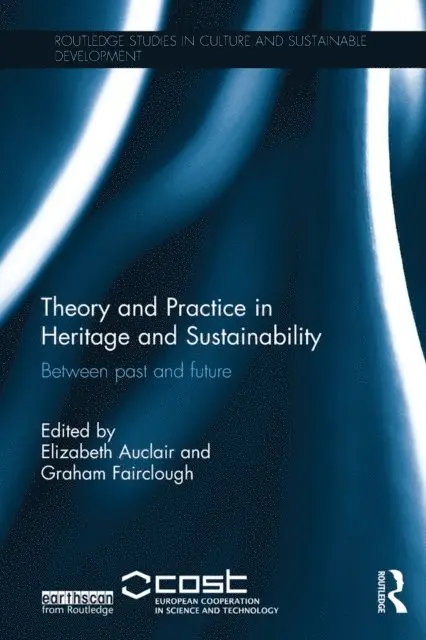
This book explores cultural sustainability and its relationships to heritage from a wide interdisciplinary perspective. By examining the interactions between people and communities in the places where they live it exemplifies the diverse ways in which a people-centred heritage builds identities and supports individual and collective memories. It encourages a view of heritage as a process that contributes through cultural sustainability to human well-being and socially- and culturally-sensitive policy.With theoretically-informed case studies from leading researchers, the book addresses both concepts and practice, in a range of places and contexts including landscape, townscape, museums, industrial sites, every day heritage, ‘ordinary’ places and the local scene, and even UNESCO-designated sites. The contributors, most of whom, like the editors, were members of the COST Action ‘Investigating Cultural Sustainability’, demonstrate in a cohesive way how the cultural values that people attach to place are enmeshed with issues of memory, identity and aspiration and how they therefore stand at the centre of sustainability discourse and practice. The cases are drawn from many parts of Europe, but notably from the Baltic, and central and south-eastern Europe, regions with distinctive recent histories and cultural approaches and heritage discourses that offer less well-known but transferable insights. They all illustrate the contribution that dealing with the inheritance of the past can make to a full cultural engagement with sustainable development. The book provides an introductory framework to guide readers, and a concluding section that draws on the case studies to emphasise their transferability and specificity, and to outline the potential contribution of the examples to future research, practice and policy in cultural sustainability. This is a unique offering for postgraduate students, researchers and professionals interested in heritage management, governance and community participation and cultural sustainability.
2 672 kr
Skickas inom 10-15 vardagar
This resource is a much-needed support to the few textbooks in the field and offers an excellent introduction and overview to the established principles and new thinking in cultural heritage management .Leading experts in the field from Europe, North America and Australia, bring together recent and innovative works in the field. With geographically and thematically diverse case studies, they examine the theoretical framework for heritage resource management.Setting significant new thinking within the framework of more established views and ideas on heritage management, this reader re-publishes texts of the past decade with an overview of earlier literature and essays that fill the gaps in between, providing students of all stages with a clear picture of new and older literature. A helpful introduction sets out key issues and debates, and individual chapter introductions and reading lists give a background collection of key works that offer ideas for the development of thought and study.With good coverage of major issues and solutions in Britain, the USA and Australia, The Heritage Reader will appeal to students internationally across the English-speaking world, and will stand proud as a key guide to the study and practice of this major archaeological sector.
800 kr
Skickas inom 10-15 vardagar
This resource is a much-needed support to the few textbooks in the field and offers an excellent introduction and overview to the established principles and new thinking in cultural heritage management .Leading experts in the field from Europe, North America and Australia, bring together recent and innovative works in the field. With geographically and thematically diverse case studies, they examine the theoretical framework for heritage resource management.Setting significant new thinking within the framework of more established views and ideas on heritage management, this reader re-publishes texts of the past decade with an overview of earlier literature and essays that fill the gaps in between, providing students of all stages with a clear picture of new and older literature. A helpful introduction sets out key issues and debates, and individual chapter introductions and reading lists give a background collection of key works that offer ideas for the development of thought and study.With good coverage of major issues and solutions in Britain, the USA and Australia, The Heritage Reader will appeal to students internationally across the English-speaking world, and will stand proud as a key guide to the study and practice of this major archaeological sector.
2 334 kr
Skickas inom 10-15 vardagar
This book explores cultural sustainability and its relationships to heritage from a wide interdisciplinary perspective. By examining the interactions between people and communities in the places where they live it exemplifies the diverse ways in which a people-centred heritage builds identities and supports individual and collective memories. It encourages a view of heritage as a process that contributes through cultural sustainability to human well-being and socially- and culturally-sensitive policy.With theoretically-informed case studies from leading researchers, the book addresses both concepts and practice, in a range of places and contexts including landscape, townscape, museums, industrial sites, every day heritage, ‘ordinary’ places and the local scene, and even UNESCO-designated sites. The contributors, most of whom, like the editors, were members of the COST Action ‘Investigating Cultural Sustainability’, demonstrate in a cohesive way how the cultural values that people attach to place are enmeshed with issues of memory, identity and aspiration and how they therefore stand at the centre of sustainability discourse and practice. The cases are drawn from many parts of Europe, but notably from the Baltic, and central and south-eastern Europe, regions with distinctive recent histories and cultural approaches and heritage discourses that offer less well-known but transferable insights. They all illustrate the contribution that dealing with the inheritance of the past can make to a full cultural engagement with sustainable development. The book provides an introductory framework to guide readers, and a concluding section that draws on the case studies to emphasise their transferability and specificity, and to outline the potential contribution of the examples to future research, practice and policy in cultural sustainability. This is a unique offering for postgraduate students, researchers and professionals interested in heritage management, governance and community participation and cultural sustainability.
Routledge Handbook of Landscape Character Assessment
Current Approaches to Characterisation and Assessment
Inbunden, Engelska, 2018
3 328 kr
Skickas inom 10-15 vardagar
In this multi-authored book, senior practitioners and researchers offer an international overview of landscape character approaches for those working in research, policy and practice relating to landscape.Over the last three decades, European practice in landscape has moved from a narrow, if relatively straightforward, focus on natural beauty or scenery to a much broader concept of landscape character constructed through human perception, and transcending any of its individual elements. Methods, tools and techniques have been developed to give practical meaning to this idea of landscape character.The two main methods, Landscape Character Assessment (LCA) and Historic Landscape Characterisation (HLC) were applied first in the United Kingdom, but other methods are in use elsewhere in Europe, and beyond, to achieve similar ends. This book explores why different approaches exist, the extent to which disciplinary or cultural specificities in different countries affect approaches to land management and landscape planning, and highlights areas for reciprocal learning and knowledge transfer.Contributors to the book focus on examples of European countries – such as Sweden, Turkey and Portugal – that have adopted and extended UK-style landscape characterisation, but also on countries with their own distinctive approaches that have developed from different conceptual roots, as in Germany, France and the Netherlands. The collection is completed by chapters looking at landscape approaches based on non-European concepts of landscape in North America, Australia and New Zealand.This book has an introductory price of £125/$205 which will last until 3 months after publication - after this time it will revert to £140/$225.
2 404 kr
Skickas inom 10-15 vardagar
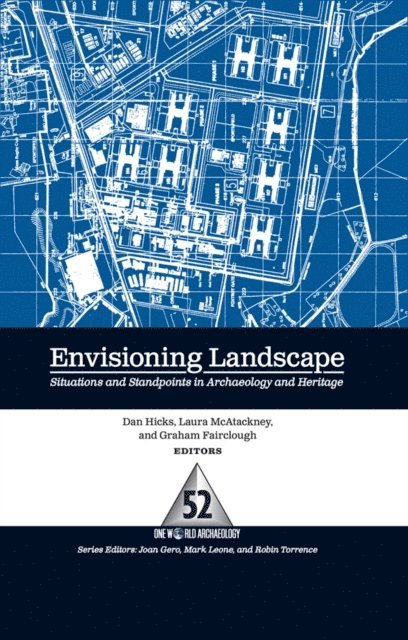
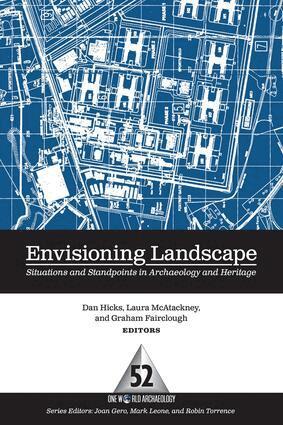
The common feature of landscape archaeology is its diversity – of method, field location, disciplinary influences and contemporary voices. The contributors to this volume take advantage of these many strands to investigate landscape archaeology in its multiple forms, focusing primarily on the link to heritage, the impact on our understanding of temporality, and the situated theory that arises out of landscape studies. Using examples from New York to Northern Ireland, Africa to the Argolid, these pieces capture the human significance of material objects in support of a more comprehensive, nuanced archaeology.
656 kr
Skickas inom 10-15 vardagar
The common feature of landscape archaeology is its diversity – of method, field location, disciplinary influences and contemporary voices. The contributors to this volume take advantage of these many strands to investigate landscape archaeology in its multiple forms, focusing primarily on the link to heritage, the impact on our understanding of temporality, and the situated theory that arises out of landscape studies. Using examples from New York to Northern Ireland, Africa to the Argolid, these pieces capture the human significance of material objects in support of a more comprehensive, nuanced archaeology.
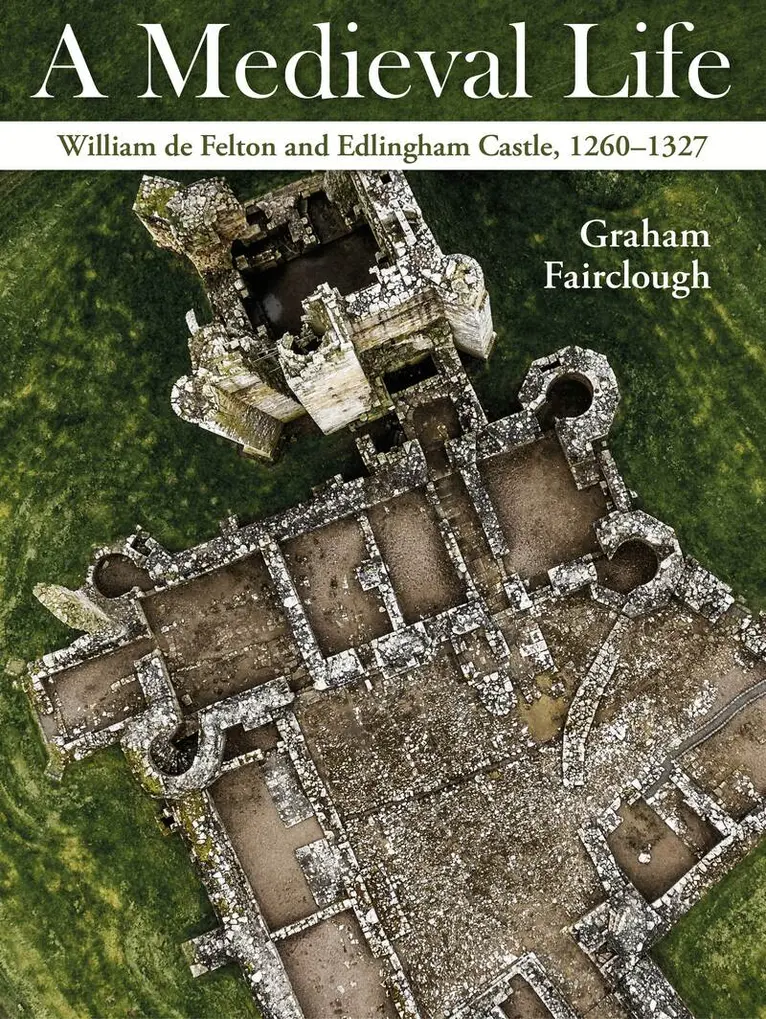
661 kr
Skickas
A Medieval Life: William de Felton and Edlingham Castle, 1260–1327 is a biography of a little-known man living in late thirteenth- and early fourteenth-century Britain. William’s precise birth and death dates are unrecorded, his place of origin has for a long time been unclear, and his parentage is still uncertain. Although somewhat wealthy and privileged, William does not represent either the high aristocracy or the ‘great and the good’ of his time, and a central theme of this book is how to write a biography of someone relatively anonymous in the Middle Ages. There are plenty of books about kings, queens and battles; this book offers a different perspective.Its origin lies in archaeological excavations between 1978 and 1982 at Edlingham, Northumberland. The first house here, which grew to be called a castle, was built in the years around 1300. It was abandoned before the 1660s after less than four centuries of habitation, and nearly three centuries before it was uncovered by excavation. This book is not an excavation report, however, nor an architectural survey, but an attempt to ‘excavate’ the buried and concealed life of the castle’s founder, and to understand the unusual building he created. It is a biographical approach to history framed by archaeological and landscape perspectives: the biography of one man, which illuminates the lives of those around him and serves as a biography of a place and landscape.William de Felton’s story can be told because he was unexpectedly well documented. His career as a middle-ranking servant in the royal households of Edward I and Edward II, combined with the bureaucratic habits of the king’s clerks, has bequeathed to historians two hundred documents that mention him. These documents are often individually banal, but taken together, and with other documentary evidence for William’s family, neighbours, friends and colleagues, they enable a reconstruction of his life. They show us William as husband and father, as a landowner, and as a traveller moving with the king’s armies and household from his native Shropshire, widely around England, into Wales, France, Flanders and Scotland, perhaps slightly contrary to the idea that medieval people travelled little. William began his career as an usher in the king’s bedchamber, and for many years was a soldier during Edward I’s ‘forever wars’, the early attempt to create by force a single nation on the British islands. He was an administrator or governor of occupied territories in Wales and Scotland, and later a local official in his adopted Northumberland. He was also a builder, notably for the king in Gascony and other places, but also in his own right, at Edlingham Castle, the centre-piece of this book, now an English Heritage public property.