
Graham McAleer – författare
Visar alla böcker från författaren Graham McAleer. Handla med fri frakt och snabb leverans.
5 produkter
5 produkter
726 kr
Skickas inom 10-15 vardagar
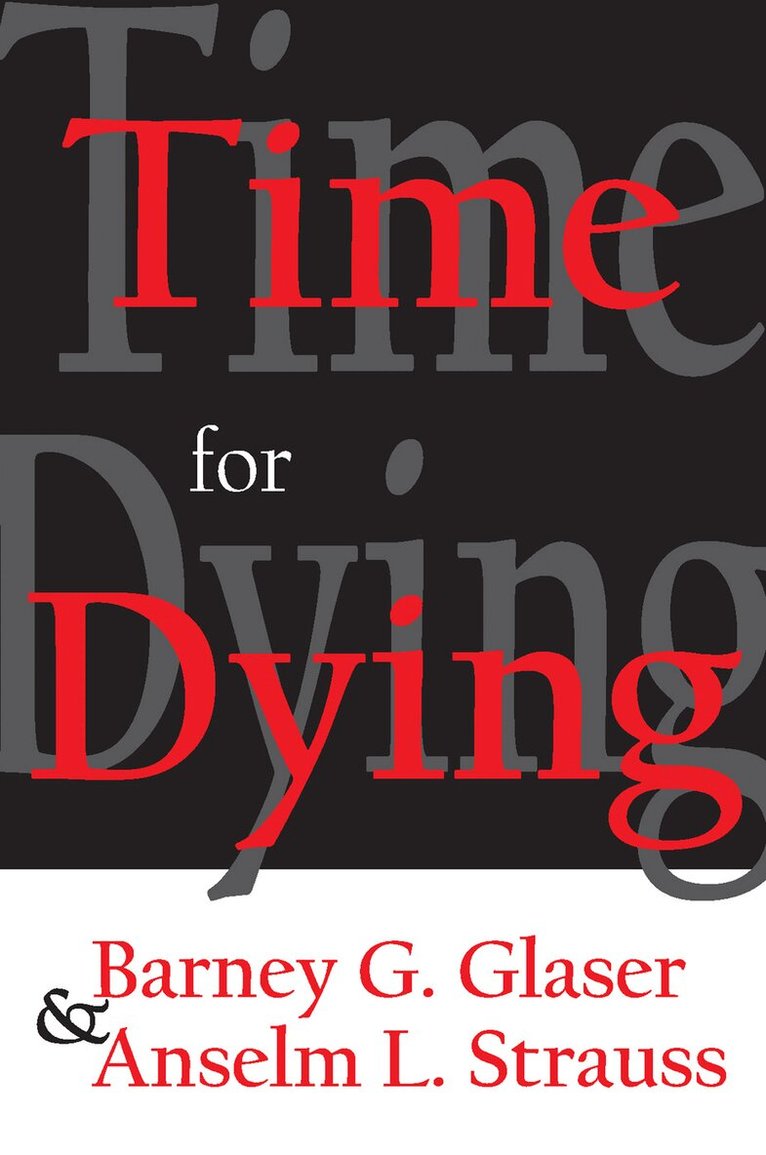
This book has been written for those who must work with and give care to the dying. Our discussion is not simple narrative or description; it is a "rendition of reality," informed by a rather densely woven and fairly abstract theoretical scheme. This scheme evolved gradually during the course of our research. The second audience for this volume is social scientists who are less interested in dying than they are in useful substantive theory. Our central concern is with the temporal aspects of work. The theory presented here may be useful to social scientists interested in areas far removed from health, medicine, or hospitals. The training of physicians and nurses equips them for the technical aspects of dealing with illness.Medical students learn not to kill patients through error, and to save lives through diagnosis and treatment. But their teachers put little or no emphasis on how to talk with dying patients; how-or whether-to disclose an impending death; or even how to approach the subject with the wives, husbands, children, and parents of the dying. Students of nursing are taught how to give nursing care to terminal patients, as well as how to give "post-mortem care." But the psychological aspects of dealing with the dying and their families are virtually absent from training. Although physicians and nurses are highly skilled at handling the bodies of terminal patients, their behavior to them otherwise is actually outside the province of professional standards. Much, if not most, nontechnical conduct toward, and in the presence of, dying patients and their families is profoundly influenced by "common sense" assumptions, essentially untouched by professional or even rational considerations or by current advancement in social-psychological knowledge. The process of dying in hospitals is much affected by professional training and codes, and by the particular conditions of work generated by hospitals as places of work. A third important consideration in interpreting dying as a temporal process is that dying is a social as well as a biological and psychological process. The term "social" underlines that the dying person is not simply leaving life. Unless he dies without kin or friends, and in such a way that his death is completely undiscovered his death is recorded. His dying is inextricably bound up with the life of society, however insignificant his particular life may have been or how small the impact his death makes upon its future course. This aspect of dying is treated in relationship to what the authors call "status passage."Time for Dying is an illumination of the temporal features of dying in hospitalsuas related both to the work of hospital personnel and to dying itself as a social process. Barney G. Glaser is the founder of the Grounded Theory Institute in Mill Valley, California, and has also been a research sociologist at the University of California Medical Center, San Francisco. He is the author or coauthor of several books, including The Grounded Theory Perspective II and Experts versus Laymen: A Study of the Patsy and the Subcontractor, published by Aldine Transaction. Anselm L. Strauss (1916-1996) was emeritus professor of sociology at the University of California, San Francisco. He was the author of numerous books, including Professions, Work and Careers, Mirrors and Masks: The Search for Identity, and Creating Sociological Awareness: Collective Images and Symbolic Representations, all published in new editions by Transaction.
317 kr
Skickas inom 10-15 vardagar
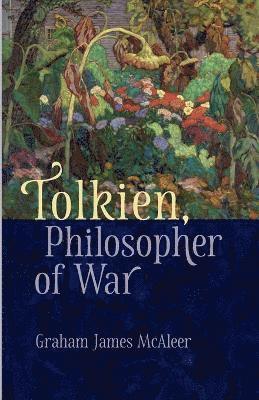
Book sales of the works of J.R.R. Tolkien keep pace with those of the Koran and the Bible. TV companies pay hundreds of millions to the Tolkien Trust to make adaptations of his work. In the UK, he routinely tops the list of the nation's favorite authors. An estimated 2 million war gamers use The Lord of the Rings figurines in their RPG. It is incontestable that Tolkien is the most influential Catholic writer of the last century. Tolkien, Philosopher of War fills a gap in the scholarship. It is the first book addressing the philosophical and theological understanding of war in Tolkien and will interest readers of Catholic Studies, the philosophy and theology of literature, war studies, Tolkien Studies, English studies, political theory, and aesthetics.In popular imagination, Tolkien is a Luddite, but recent scholarship has identified Tolkien's extensive modern sympathies. Tolkien, Philosopher of War, contributes to this growing literature. His is a modern critique of Enlightenment thinking, specifically those philosophies of history that wrest the initiative from God in divinizing man. His worry is apocalyptic politics, those political movements that take Christ's "Be ye therefore perfect, even as your Father which is in heaven is perfect" (Matt. 5: 48) out of the realm of grace and make it a platform for political action. Tolkien, Philosopher of War has three core theses: metaphysical, political, and aesthetic. In this, Tolkien is comparable to Cormac McCarthy, especially his Blood Meridian.Tolkien took note of a tight analytical connection between the vanity driving commercial civilization – which Hume, Smith, and Ferguson all identified – and the vanity driving the Promethean fantasies of apocalyptic politics. War – indeed, total war – is a predictable outcome of this analytical connection. The three theses run: 1) metaphysical: the apocalyptic anxiety of Tolkien's lore is traceable to the gnostic rejection of the analogy of being typical of the philosophies of history that dominated his day; 2) political: in the English context, Tolkien sided with the Tories against Whiggery, defending monarchy as a counterweight to the vanity driving progressive philosophy of history; 3) aesthetic: Futurism's philosophy of history celebrated the Machine; inverting the value order, the Futurism art movement encoded anti-Christianity, fascist politics, and apocalyptic war. Tolkien's "cosmogonical drama," with its pastoralism and portraits of angels (Gandalf) and gods (Nienna), dramatizes an aesthetic resistance to Futurism.
2 129 kr
Skickas inom 10-15 vardagar
This book has been written for those who must work with and give care to the dying. Our discussion is not simple narrative or description; it is a "rendition of reality," informed by a rather densely woven and fairly abstract theoretical scheme. This scheme evolved gradually during the course of our research. The second audience for this volume is social scientists who are less interested in dying than they are in useful substantive theory. Our central concern is with the temporal aspects of work. The theory presented here may be useful to social scientists interested in areas far removed from health, medicine, or hospitals. The training of physicians and nurses equips them for the technical aspects of dealing with illness.Medical students learn not to kill patients through error, and to save lives through diagnosis and treatment. But their teachers put little or no emphasis on how to talk with dying patients; how-or whether-to disclose an impending death; or even how to approach the subject with the wives, husbands, children, and parents of the dying. Students of nursing are taught how to give nursing care to terminal patients, as well as how to give "post-mortem care." But the psychological aspects of dealing with the dying and their families are virtually absent from training. Although physicians and nurses are highly skilled at handling the bodies of terminal patients, their behavior to them otherwise is actually outside the province of professional standards. Much, if not most, nontechnical conduct toward, and in the presence of, dying patients and their families is profoundly influenced by "common sense" assumptions, essentially untouched by professional or even rational considerations or by current advancement in social-psychological knowledge. The process of dying in hospitals is much affected by professional training and codes, and by the particular conditions of work generated by hospitals as places of work. A third important consideration in interpreting dying as a temporal process is that dying is a social as well as a biological and psychological process. The term "social" underlines that the dying person is not simply leaving life. Unless he dies without kin or friends, and in such a way that his death is completely undiscovered his death is recorded. His dying is inextricably bound up with the life of society, however insignificant his particular life may have been or how small the impact his death makes upon its future course. This aspect of dying is treated in relationship to what the authors call "status passage."Time for Dying is an illumination of the temporal features of dying in hospitalsuas related both to the work of hospital personnel and to dying itself as a social process. Barney G. Glaser is the founder of the Grounded Theory Institute in Mill Valley, California, and has also been a research sociologist at the University of California Medical Center, San Francisco. He is the author or coauthor of several books, including The Grounded Theory Perspective II and Experts versus Laymen: A Study of the Patsy and the Subcontractor, published by Aldine Transaction. Anselm L. Strauss (1916-1996) was emeritus professor of sociology at the University of California, San Francisco. He was the author of numerous books, including Professions, Work and Careers, Mirrors and Masks: The Search for Identity, and Creating Sociological Awareness: Collective Images and Symbolic Representations, all published in new editions by Transaction.
1 959 kr
Skickas inom 10-15 vardagar
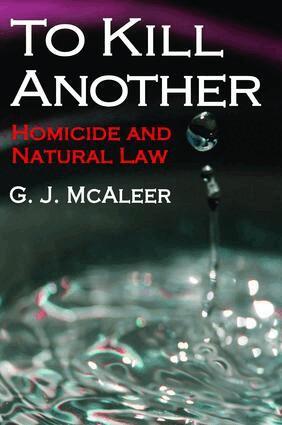
Basing his argument on natural law, Graham J. McAleer asserts that only public authority has the right to intentionally kill. He draws upon the work of Thomas Aquinas and Francisco de Vitoria, defending the claim that these natural law theorists have developed the best available theory of homicide. To have rule of law in any meaningful sense, the author argues, there must be protections for the guilty and prohibition against killing innocents.Western theories of law have drifted steadily towards the privatization of homicide,despite the fact that it runs counter to rule of law. Public acts of homicide like capital punishment are now viewed by many as barbaric, while a private act of homicide like the starvation of comatose patients is viewed by many as a caring gesture both to patient and family. This subversion of the rule of law is prompted by humanitarian ethics.McAleer argues that humanitarianism is a false friend to those committed to the rule of law. The problem of human vulnerability makes political theology an inescapable consideration for law. Readers will find much to reflect upon in this book. McAleer's argument can be read as a cultural chapter in the history of moral ideas, but also as a close and timely reading of a grim subject.

705 kr
Skickas inom 10-15 vardagar
Basing his argument on natural law, Graham J. McAleer asserts that only public authority has the right to intentionally kill. He draws upon the work of Thomas Aquinas and Francisco de Vitoria, defending the claim that these natural law theorists have developed the best available theory of homicide. To have rule of law in any meaningful sense, the author argues, there must be protections for the guilty and prohibition against killing innocents.Western theories of law have drifted steadily towards the privatization of homicide,despite the fact that it runs counter to rule of law. Public acts of homicide like capital punishment are now viewed by many as barbaric, while a private act of homicide like the starvation of comatose patients is viewed by many as a caring gesture both to patient and family. This subversion of the rule of law is prompted by humanitarian ethics.McAleer argues that humanitarianism is a false friend to those committed to the rule of law. The problem of human vulnerability makes political theology an inescapable consideration for law. Readers will find much to reflect upon in this book. McAleer's argument can be read as a cultural chapter in the history of moral ideas, but also as a close and timely reading of a grim subject.