Gregor Stewart - Böcker
Visar alla böcker från författaren Gregor Stewart. Handla med fri frakt och snabb leverans.
12 produkter
12 produkter
141 kr
Skickas inom 7-10 vardagar
Compiled by paranormal investigator Gregor Stewart, this new book contains a chilling range of spooky tales from around Kirkcaldy. From haunted public houses, which have left both customers and staff terrified, to the ruins of the ancient Ravenscraig Castle, which still attract a mysterious visitor many years after their death, this collection of ghostly goings-on, phantom footsteps and playful poltergeists is sure to appeal to everyone interested in the paranormal and the history of Fife’s largest town. Richly illustrated with over fifty images, Haunted Kirkcaldy is guaranteed to make your blood run cold.
178 kr
Skickas
The city of Perth in central Scotland can trace its history back to the Romans. As the lowest crossing point for the River Tay, the settlement has been much fought over through the centuries, earning the city the title ‘Gateway to the Highlands’. Established as a royal burgh, Perth is often stated to have been the capital of Scotland. It has been frequently besieged over the years, including during the Wars of Independence with England and in clan wars. King James I was assassinated in the city in 1437 and it was later one of the birthplaces for the Scottish Reformation during the sixteenth century. The seventeenth century was turbulent for Perth, with witch trials, plague and an assassination attempt on King James VI when he was kidnapped in the Gowrie Conspiracy. Oliver Cromwell built the Citadel in the South Inch area and, during the eighteenth century, Perth was occupied by the Jacobite forces in the 1715 and 1745 uprisings. At the same time Perth was growing as an industrial town, with agriculture also important, as are the tourist and financial sectors today.With tales of remarkable characters, unusual events and tucked-away or disappeared historical buildings and locations, Secret Perth will appeal to all those with an interest in the history of this city in the heart of Scotland.
172 kr
Skickas
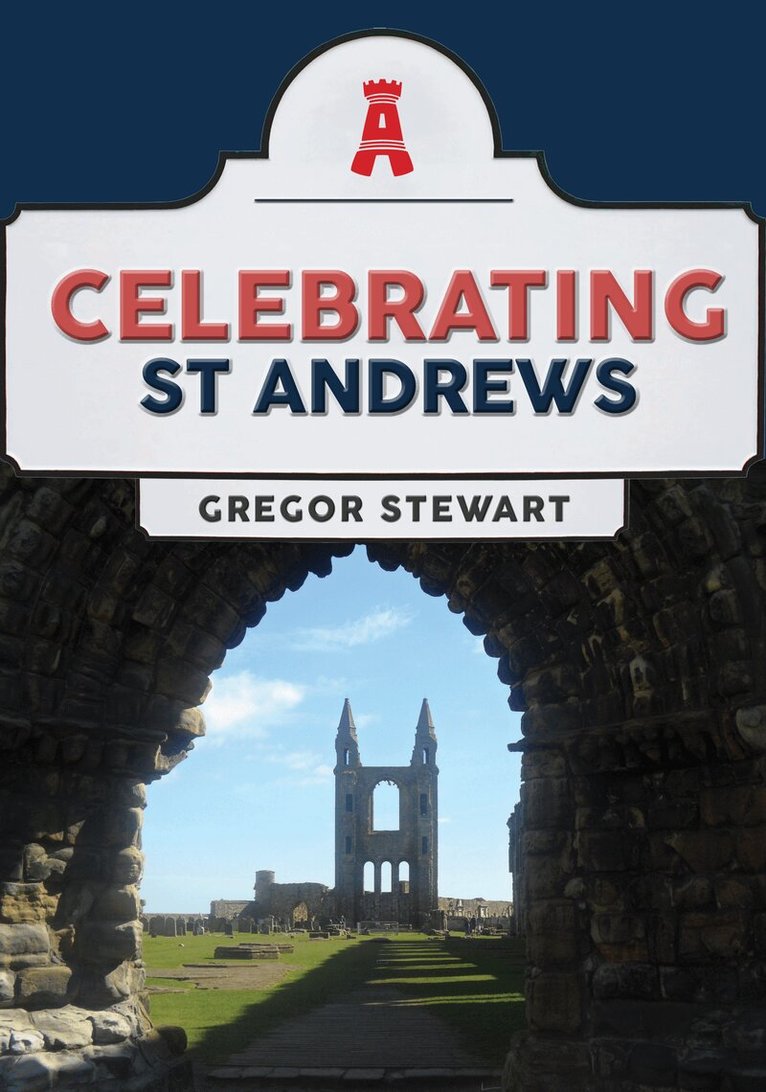
The town of St Andrews in Fife has much to celebrate. Its cathedral was the largest church built in Scotland and the bishops, and later archbishops, played an important role in ruling medieval Scotland. Scotland’s first university was established in St Andrews, which began teaching religious studies in 1410. The university has been the choice for many famous people and is also responsible for many of the town’s traditions. The town was a favourite of Mary, Queen of Scots, who owned a home in St Andrews. In 1663, astrologer and mathematician James Gregory published a design for the first reflecting telescope in St Andrews, and in 1673 Gregory laid the first Meridian line, which earned St Andrews the title ‘the place where time began’. St Andrews is best known, however, as the home of golf. The game had been played and developed in the town for centuries before the formation of the Royal and Ancient Golf Club in 1754, which is considered the headquarters of golf. The town is also famous for its long, sandy beaches, which attracted filmmakers who shot the opening sequence of Chariots of Fire on the West Sands. The Lammas market, the oldest surviving medieval market, is still held in the centre of town, and the annual St Andrew’s Day celebrations, the patron saint of Scotland from whom the town takes its name, are a major attraction. Yet not all of the big names from St Andrews are human: Hamish McHamish, a large ginger cat, became one of the best-known residents and is remembered by a statue in the town centre.Celebrating St Andrews chronicles the proud heritage of the town, its important moments and what draws so many to this fascinating place today. Illustrated throughout, this fascinating book offers a marvellous and refreshingly positive insight into St Andrews’ rich history.
178 kr
Skickas inom 11-20 vardagar
The ancient royal burgh of Dunfermline has a long and proud heritage. This erstwhile capital of Scotland had strong royal connections until James VI relocated the Scottish Crown to London following the Union of Crowns in 1603. The Reformation in the mid-sixteenth century had already seen a loss of the town’s ecclesiastical importance. These two events set in train a period of decline in Dunfermline’s fortunes until the introduction of the linen industry in the eighteenth century, and though the latter would not survive the First World War, the town’s economic future had by then been secured with the establishment of the Royal Navy dockyards at nearby Rosyth. Local historian Gregor Stewart delves into Dunfermline’s secret history to discover lesser-known stories and people from the town’s past.
178 kr
Skickas inom 11-20 vardagar
Although known worldwide as the ‘Home of Golf’, St Andrews was also the ecclesiastical powerhouse in Scotland for centuries prior to the Reformation. Author Gregor Stewart takes the reader on a fascinating journey through the town’s past, unearthing tales of double crossing and infighting while introducing the reader to the nefarious characters who were jostling for power. He reveals connections between St Andrews and the order of the Knights of St John, who owned buildings in the town, and James Gregory, who laid a meridian line from his laboratory that pre-dates Greenwich by 200 years and is now widely credited as the ‘place where time began’. The book also explores the macabre: St Andrews was a centre for execution, using an early version of the guillotine, and there are descriptions of the fates of those accused of witchcraft and heresy. Secret St Andrews delves beneath the surface of this attractive university town, revealing a lesser-known and less savoury history that even most local residents don’t know.
163 kr
Tillfälligt slut
St Andrews is famous the world over as being the home of golf but although golf clubs are still designed and manufactured here, there’s a lot more to the town than drivers and putters. The university, the third oldest in the English-speaking world, was founded in 1413 as a seat of religious learning and has grown to be a major local employer and world-renowned centre of excellence for research and teaching. The town used to be home to numerous breweries, and although these all closed down following a period of decline after the Reformation, the industry has been revived with the St Andrews Brewing Co., which now brews a number of local ales that are served in the many pubs and restaurants. Tourism is the largest employment sector in the town and people travel from all over the world not only to play on the famous local courses or to watch competitions, but also to experience its rich and often bloody religious past.St Andrews at Work explores the life of this Fife town and its people, from pre-industrial beginnings through to the present day in a fascinating series of contemporary photographs and illustrations, that show how the town has continued to grow throughout the years.
178 kr
Skickas
The city of Inverness sits at the northerly end of the Great Glen, a fault line in the earth’s crust that runs from one side of Scotland to the other. The current city’s origins date back to Pictish times; however there is evidence of the area being habited long before then, with the Clava Cairns, which sit just a short distance from the city, dating back to between 1500 and 200 BC, giving it a long and often forgotten history. Inverness has connections with several major figures in early Scottish history including St Columba, who ‘tamed’ the fabled Loch Ness Monster; MacBeth, who lived in a castle in the city; and David I, who built the first stone castle on the site of the earlier timber stronghold. The city grew to become an important trading port, which in turn brought conflict with others including the Vikings and Clan MacDonald, the Earls of the Isles. Despite this the city continued to grow, yet due to its remoteness from Edinburgh it was notable for not bowing to the political powers of the country. This was perhaps best demonstrated when Mary, Queen of Scots visited and was forced to stay in a small house after having been refused entry to the castle.The ‘Capital of the Highlands’ has many secrets just waiting to be discovered. In Secret Inverness, author Gregor Stewart pulls back the curtains of history to peer into the distant and not-so-distant past to reveal the forgotten, the strange and the unlikely.
178 kr
Skickas
Known as a major industrial centre, the city of Dundee has a long and eventful history. Following the development of a small trading port in the eleventh century, by the fourteenth century Dundee had grown to be one of the most important towns in Scotland. The city was also a significant religious centre, with the distinctive Dominican monks – known as the Black Friars due to their robes – choosing to mingle with the people of Dundee to share their preaching, despite the danger this could present in these difficult days. Dundee also has a darker and often forgotten past. The city was attacked and extensively damaged by invading English forces, following which defensive walls were constructed, only to be demolished again when the city was further attacked by Parliamentarian forces. A number of women were accused, tortured and executed during the witch hunts, and general living conditions at one point became so poor that the average life expectancy for a man was just thirty-three years old. With epidemics such as the plague also hitting, a large area of ground was given to the burgh to be used as a burial ground in 1564, and it is now considered to have one of the most important collections of gravestones in Scotland.Scotland’s fourth city has many secrets just waiting to be discovered. In Secret Dundee, author Gregor Stewart peers into the past to reveal the forgotten, the strange and the unlikely.
168 kr
Tillfälligt slut
Stirling may be one of the smallest cities in Scotland, but in terms of historical significance it is one of the most important. Originally a small settlement around the lowest crossing point for the River Forth, the nearby rocky outcrop offered an ideal position to construct a fort to defend the crossing. Stirling Castle is first documented around 1100 and by c. 1120 Stirling was granted a royal charter, creating the town. In the following centuries, due to its strategic position, Stirling was at the centre of many battles, leading to it being said ‘He who holds Stirling, holds Scotland.’ Major figures in Scottish history are associated with Stirling, including William Wallace, Robert the Bruce, Mary, Queen of Scots, King James IV and Bonnie Prince Charlie. Now a centre of tourism, many of these famous characters are significant in the city’s lesser-known past. King James IV is reported to have had a keen interest in alchemy with a hidden workshop at Stirling Castle. It was here that the Italian alchemist John Damian in the early 1500s attempted the first recorded attempted flight in Scotland, with wings made from feathers. He leapt from the battlements of Stirling Castle and broke his thigh in the fall. Secret Stirling is fully illustrated throughout and will appeal to all those with an interest in this ancient city.
163 kr
Tillfälligt slut
When the Romans invaded Scotland they constructed a fort in Cramond, a suburb of modern Edinburgh, near their frontier, the Antonine Wall. When the Romans retreated, the area was much fought over by the Angles of Northumbria and the Picts, with Edinburgh held by the Kingdom of Northumbria until the tenth century, before it was passed back to the Scots. The site of Edinburgh Castle is believed to have housed a military fort since the Roman invasion. By the twelfth century a defensive Royal household was developed on the site by King David I, and the importance of Edinburgh grew, leading to the castle becoming the most besieged in the whole of the United Kingdom.The Lang Siege of 1571 would have a devastating effect on Edinburgh. With Scotland in the grip of a civil war, opposing forces fought for control of both the town and its castle for almost two years. Edinburgh Castle was eventually taken, but with both the castle and many of the town’s buildings completely destroyed, massive rebuilding work was required. After centuries of peace Edinburgh once again experienced the devastating effects of war when it was bombed during the First World War.Many remnants of Edinburgh’s military past can be found today, with the castle being one of the main tourist attractions in the country. The one o’clock gun has been fired from Edinburgh Castle since 1861 and the castle houses the National War Museum, the Scottish National War Memorial, The Royal Scots and The Royal Scots Dragoon Guards Museums, and remains the headquarters for the Royal Regiment of Scotland, with parts of the castle still operating as a military base. The author discusses all this and more in this illustrated look at Edinburgh’s military history.
163 kr
Skickas inom 11-20 vardagar
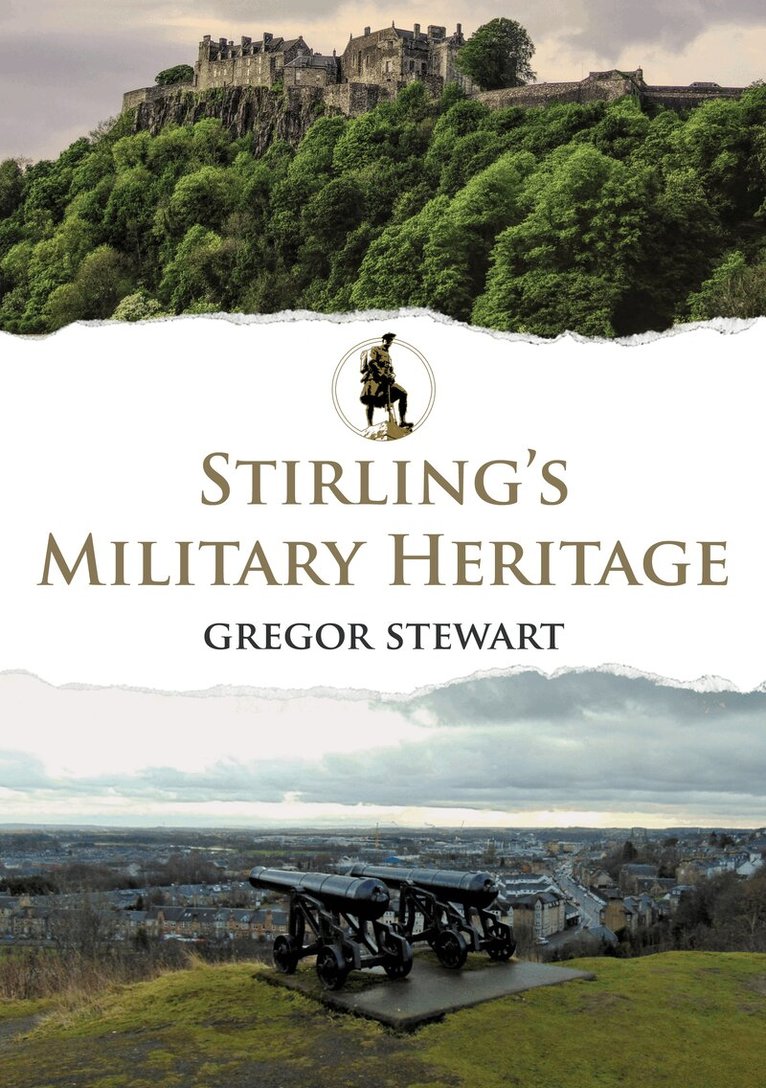
Stirling is associated with two of the most notable names and battles in Scottish history: William Wallace and the Battle of Stirling Bridge, and Robert the Bruce and the Battle of Bannockburn. Stirling’s military history, however, stretches back to when the Romans invaded Scotland and formed a line of fortresses as their first boundary just north of Stirling. A Roman road cuts through the town, and it became a road used by every military force to invade Scotland.A castle has existed in Stirling on Castle Hill since at least 1110, with the town growing on the slopes around it. During the Wars of Independence with England control of Stirling and its castle was much fought over, bringing some of the most famous characters from Scottish history to the town. It was said that ‘he who controls Stirling, controls Scotland’. After the Union of the Crown in 1603, Stirling Castle’s role as a royal residence declined, and instead it became a centre for the military. The Jacobite forces failed to take the castle in 1746, and by the 1800s the castle was adapted to create barracks and training facilities.Today, reminders of the importance of Stirling can be found all around the town. The battle sites and castle are popular tourist attractions, and the castle remains the headquarters of the Argyll and Sutherland Highlanders infantry regiment. An annual military show to honour and celebrate the armed forces is also held in the town, which is recognised as one of the main military events in Scotland.
59 kr
Skickas