Gregory B. Kaplan – författare
Visar alla böcker från författaren Gregory B. Kaplan. Handla med fri frakt och snabb leverans.
6 produkter
Origins of Democratic Zionism
Inbunden, 2019
2504 kr
Lägg i varukorg
This book is the first to link the modern appreciation for democratic freedom directly to Jewish political thought in seventeenth-century Amsterdam. The modern appreciation for democratic values is often assumed to have its roots in Classical thought. However, democracy has taken various forms in …
Origins of Democratic Zionism
Häftad, 2021
704 kr
Lägg i varukorg
This book is the first to link the modern appreciation for democratic freedom directly to Jewish political thought in seventeenth-century Amsterdam. The modern appreciation for democratic values is often assumed to have its roots in Classical thought. However, democracy has taken various forms in …
Origins of Democratic Zionism
E-bok, 2019
831 kr
Lägg i varukorg
This book is the first to link the modern appreciation for democratic freedom directly to Jewish political thought in seventeenth-century Amsterdam. The modern appreciation for democratic values is often assumed to have its roots in Classical thought. However, democracy has taken various forms in …
Origins of Democratic Zionism
E-bok, 2019
813 kr
Lägg i varukorg
This book is the first to link the modern appreciation for democratic freedom directly to Jewish political thought in seventeenth-century Amsterdam. The modern appreciation for democratic values is often assumed to have its roots in Classical thought. However, democracy has taken various forms in …
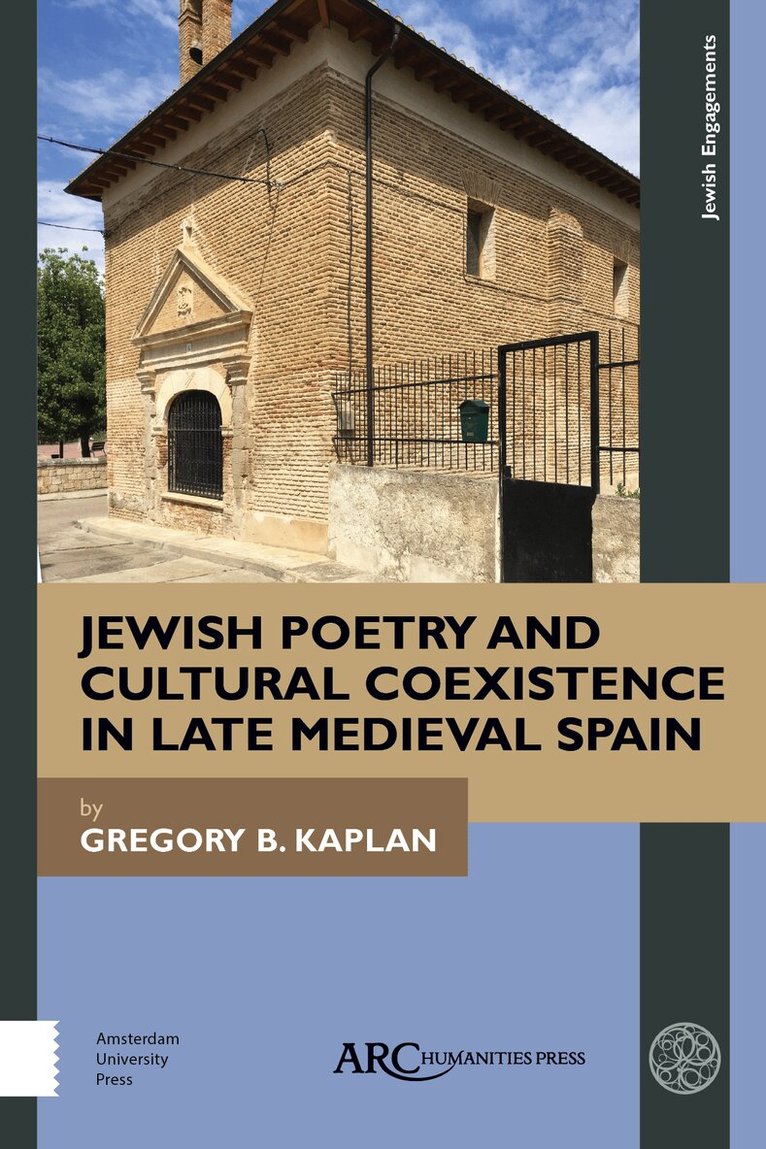
Jewish Poetry and Cultural Coexistence in Late Medieval Spain
Inbunden, 2019
1776 kr
Lägg i varukorg
This book offers a groundbreaking perspective on Judeo-Christian coexistence in medieval Spain, in particular on the Camino de Santiago (Way of St. James), one of the most important pilgrimage routes in Europe. The author uncovers new evidence of Judeo-Christian cooperation in Castilian monasteries …
Marginal Voices
Studies in Converso Literature of Medieval and Golden Age Spain
Av Amy I. Aronson-Friedman, Gregory B. Kaplan
Inbunden, 2012
2992 kr
Lägg i varukorg
The conversos of late medieval and Golden Age Spain were Christians whose Jewish ancestors had been forced to change faiths within a society that developed a preoccupation with pure Christian lineage. The aims of this book is to shed new light on the cultural impact of this social climate, in which …