Gregory Clancey - Böcker
Visar alla böcker från författaren Gregory Clancey. Handla med fri frakt och snabb leverans.
3 produkter
3 produkter
644 kr
Skickas inom 10-15 vardagar
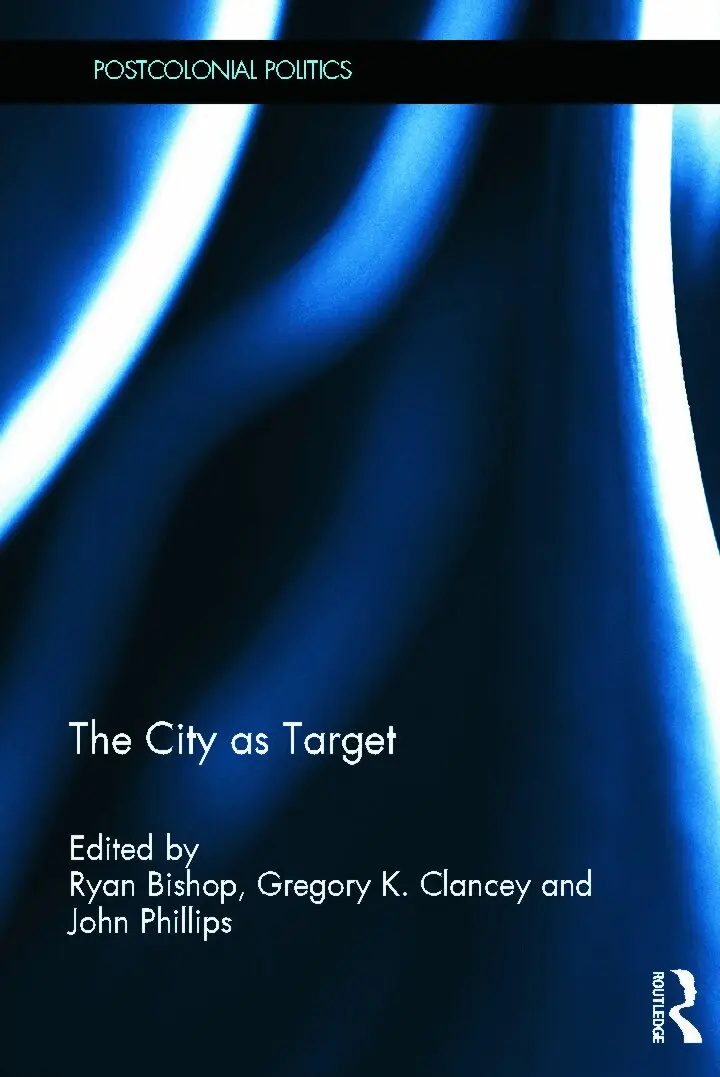
Bringing together scholars from a diverse range of disciplines, The City as Target provides a sustained and critical response to the relationship between the concept of targeting (in its many forms) and notions of understanding, imagining and shaping the urban. Among the many spatial and graphic terms used to describe cities in urban studies, the word target is rarely encountered. Though equally spatial, it differs from these others by implying some motive force, and, more than that, a force with some intentionality. To target is to aim, to project, and ultimately to impact. It suggests a space of violence, or at least action, or movement resulting in displacement, which most other terms do not. In that sense it is useful, underused, and perhaps revelatory. Rather than approach the city as simply a site of growth, processes, and developments, the contributors to this volume treat it as the recipient of attentions. The work draws on a wide variety of geographical sites and historic monuments in order to explore this concept, examining and challenging current urban theories. It seeks to highlight both the power of The Global City and the current vulnerability and fragility of urban culture, exploring the city as a recipient and a culprit in relation to issues including terrorism and urban warfare, the latest cyclical failure of global financial markets, and the relatively new spectre of environmental unsustainability.Offering a unique and relevant contribution to the literature, this work will be of great interest to scholars of urban theory, international relations, postcolonial politics and military studies.
820 kr
Skickas inom 7-10 vardagar
Japan’s oceans demand our attention. Violent, prolific, and changeful, they define life and death on the archipelago: pushing the shore under the rush of tsunami, charging typhoon circulation, feeding millions, and seeding conflicts over territory and resources. And yet, Japan studies remains largely beholden to a terrestrial view of the world that is at odds with the importance of the sea. This “terrestrial bias” also means that on those occasions when oceans are recognized they are most often presented as dividers or connectors—spaces in between rather than rich ecologies and meaningful sites. Oceanic Japan>/i> is meant to help readers re-envision Japanese history in order to show how the seas created the country that we know today.The book convenes a diverse, multinational, multidisciplinary group of scholars to expand the scope of Japan studies and the field of environmental humanities. The chapters draw from the broader turn to the sea—characterized by new oceanic and terraqueous perspectives—developing within these fields and in areas such as Pacific history and Indian Ocean studies. The volume editors’ vision is bifocal. On one hand, they aim to reorient East Asian studies and Japan studies to the sea, underlining how oceans have shaped dynamics from the Tokugawa Era forward into the age of empire and the crisis of the Anthropocene. On the other hand, they argue for a more nuanced environmental approach within the burgeoning field of Oceanic studies. Seeing oceanic spaces as more than entrepots or political spheres requires thinking in new, often vertical, volumetric ways. The chapters follow human and non-human actors to recognize the variegation of watery ecologies through winds, tides, coasts, seabeds, and currents such as the Kuroshio and Oyashio, which have always shaped life on the archipelago.
251 kr
Skickas inom 10-15 vardagar
Bringing together scholars from a diverse range of disciplines, The City as Target provides a sustained and critical response to the relationship between the concept of targeting (in its many forms) and notions of understanding, imagining and shaping the urban. Among the many spatial and graphic terms used to describe cities in urban studies, the word target is rarely encountered. Though equally spatial, it differs from these others by implying some motive force, and, more than that, a force with some intentionality. To target is to aim, to project, and ultimately to impact. It suggests a space of violence, or at least action, or movement resulting in displacement, which most other terms do not. In that sense it is useful, underused, and perhaps revelatory. Rather than approach the city as simply a site of growth, processes, and developments, the contributors to this volume treat it as the recipient of attentions. The work draws on a wide variety of geographical sites and historic monuments in order to explore this concept, examining and challenging current urban theories. It seeks to highlight both the power of The Global City and the current vulnerability and fragility of urban culture, exploring the city as a recipient and a culprit in relation to issues including terrorism and urban warfare, the latest cyclical failure of global financial markets, and the relatively new spectre of environmental unsustainability.Offering a unique and relevant contribution to the literature, this work will be of great interest to scholars of urban theory, international relations, postcolonial politics and military studies.