Gregory J Durston – författare
Visar alla böcker från författaren Gregory J Durston. Handla med fri frakt och snabb leverans.
11 produkter
11 produkter
412 kr
Skickas inom 5-8 vardagar
573 kr
Skickas inom 5-8 vardagar
493 kr
Skickas inom 5-8 vardagar
468 kr
Skickas inom 5-8 vardagar
893 kr
Skickas inom 5-8 vardagar
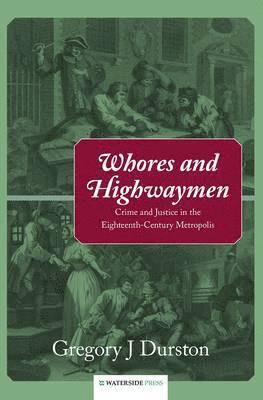
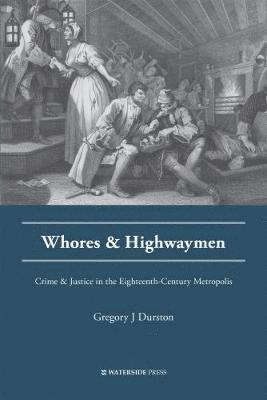
The 'whores' and 'highwaymen' of Gregory Durston's title are just some of the dubious characters met within this absorbing work, including thief-takers, trading justices, an upstart legal profession whose lower orders developed various ways to line their own pockets and magistrates and clerks who often preferred dealing with those cases which attracted fees. The book shows how little was planned by government or the authorities, and how much sprang up due to the efforts of individuals - so that the origins of social control, particularly at a local level, had much to do with personal ideas of morality, class boundaries and perceived threats, serious and otherwise. Based on news reports, Old Bailey and local archives, and other solid records the book weaves a compelling picture of a critical time in English history, through the voices of contemporary observers as well as the best of writings by experts ever since. At its broadest point, the book spans the period from the Glorious Revolution to the early 1820s. It falls into three parts: Crime and the Metropolis - including Metropolitan crime, attitudes to crime and policing, explanations for crime, and criminal law and procedure.Policing - including policing the metropolis, constables, the watch, beadles, the role of the military, and the detection of crime. Justice - including the magistracy and its work, ways of prosecution, trial in the lower and higher courts, and the penal regimes of the day. A colourful account, which captures the essence of the period. Review 'Gregory Durston is to be congratulated on producing a monumental work on crime and justice in eighteenth century London...treasures are contained in its 668 pages': John Hostettler, Legal Historian and author. Read the full review
574 kr
Skickas inom 5-8 vardagar
The contents include justices of the peace, policing, crimes, courts and judges as well as such matters as summary trial and disposal, jury trial, execution (and reprieve), a variety of offences including murder (and other homicides), violence and sexual offences, smuggling, poaching, property crimes, riots and disturbances.The book also looks at the various hierarchies that existed whether social, legal, judicial, religious, military or otherwise so as to exert a variety of social controls at a time of relative lawlessness. A fascinating and statistically absorbing account of crimes, responses and penal outcomes of the era.Neither a micro-history in the context of a parish, hundred, or small town nor national account, but a more unusual criminal justice history of a major English region with its own correlation with London and the rest of England in addition to its local differences and 'quirks'.
461 kr
Skickas
A fresh perspective on a crucial time for courts, policing and punishment. Shows how individuals, concerned parties and vested interests drove many of the era's developments. A colourful account, which captures the essence of the period. Running to nearly 700 pages, this comprehensive work on the development of summary jurisdiction, early policing and the emergence of London's embryonic modern criminal justice system looks at every aspect of these topics from numerous perspectives and across the eighteenth century. The 'whores' and 'highwaymen' of Gregory Durston's title are just some of the dubious characters met within this absorbing work, including thief-takers, trading justices, an upstart legal profession whose lower orders developed various ways to line their own pockets and magistrates and clerks who often preferred dealing with those cases which attracted fees. The book shows how little was planned by government or the authorities, and how much sprang up due to the efforts of individuals-so that the origins of social control, particularly at a local level, had much to do with personal ideas of morality, class boundaries and perceived threats, serious and otherwise.Based on news reports, Old Bailey and local archives, and other solid records the book weaves a compelling picture of a critical time in English history, through the voices of contemporary observers as well as the best of writings by experts ever since. At its broadest point, the book spans the period from the Glorious Revolution to the early 1820s. It falls into three parts: Crime and the Metropolis-including Metropolitan crime, attitudes to crime and policing, explanations for crime, and criminal law and procedure. Policing-including policing the metropolis, constables, the watch, beadles, the role of the military, and the detection of crime. Justice-including the magistracy and its work, ways of prosecution, trial in the lower and higher courts, and the penal regimes of the day. Whores and Highwaymen concentrates on the Metropolis but also compares other parts of England and Wales.
270 kr
Skickas inom 5-8 vardagar
Since the Financial Crisis of 2008, criminal prosecution has moved to centre-stage as the Financial Conduct Authority's preferred means of punishing and deterring insider dealing (the illegal practice of trading with access to sensitive non-public information). The Little Book of Insider Dealing looks at all aspects of the 'insider' offences established by the Criminal Justice Act 1993, including their history, punishment and rationale, as well as their (slightly uneasy) relationship with the overlapping civil regulatory regime that also governs such financial misconduct. Topics covered also include: detection, compliance, surveillance, suspicion, reporting obligations, enforcement and (civil and criminal) penalties and warnings, plus there is a strong focus on the evidential and a wealth of examples from real life cases.
363 kr
Skickas inom 5-8 vardagar
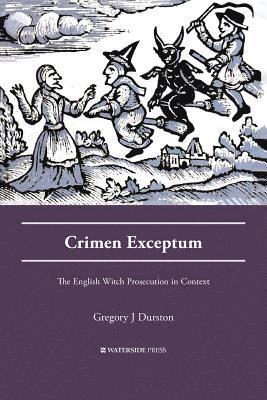
As the author notes, `The early-modern European witch-hunts were neither orchestrated massacres nor spontaneous pogroms. Alleged witches were not rounded up at night and summarily killed extra-judicially or lynched as the victims of mob justice. They were executed after trial and conviction with full legal process'.In this concise but highly-informed account of the persecution of witches, Gregory Durston demonstrates what a largely ordered process was the singling-out or hunting-down of perceived offenders. How a mix of superstition, fear, belief and ready explanations for ailments, misfortune or disasters caused law, politics and religion to indulge in criminalisation and the appearance of justice. Bearing echoes of modern-day `othering' and marginalisation of outsiders he shows how witchcraft became akin to treason (with its special rules), how evidentially speaking storms, sickness or coincidence might be attributed to conjuring, magic, curses and spells. All this reinforced by examples and detailed references to the law and practice through which a desired outcome was achieved.In another resonance with modern-times the author shows how decisions were often diverted into the hands of witch-hunters, witch-finders (including self-appointed Witchfinder General, Matthew Hopkins), witch-prickers and other experts as well as the quaintly titled `cunning-folk' consulted by prosecutors and `victims'. Crimen Exceptum (crimes apart).A straightforward and authoritative guide. Shows the rise and fall of prosecutions. Backed by a wealth of learning and research.
270 kr
Skickas inom 5-8 vardagar
Market manipulation comes in many forms. For a wrong that some say started life with groups of men dressed in Bourbon uniforms spreading false information in cod French accents, the speed of change has accelerated dramatically in the modern era, via the Internet, novel forms of electronic communication, ultra-fast computer-generated trading, new types of financial instrument, and increased globalisation. This means that opportunities for carrying-out new forms of manipulation now exist on an exponential scale. Looks at the mechanisms, criminal and civil, to confront market manipulation, its enforcement regimes, legal and evidential rules and potential loopholes. Shows how every individual involved in market transactions can fall foul of the law if they do not ensure integrity in their dealings. The 'tricks' used by those seeking to benefit from this special category of fraud and the relationship of dedicated provisions to the general law are outlined. With key statutory provisions set out in an appendix. A valuable accompaniment to (Waterside Press, 2018).
653 kr
Skickas inom 5-8 vardagar
Students of English history will have heard how benefit of clergy and the 'neck verse' might avoid a hanging, but what of other stratagems such as down-valuing stolen goods, cruentation, chance medley, pious perjury or John at Death (a non-existent culprit blamed by the accused and treated by juries as real); all devices used to mitigate the all-pervading death-for-felony rule.Together with other artifices deployed by courts to circumvent black-letter law the author also describes how poor, marginalised and illiterate citizens were those most likely to suffer unfairness, injustice and draconian punishment. He also describes the political intrigue and widescale corruption that were symptomatic of the era, alongside such diverse aspects as forfeiture of property, evidential ploys, the rise of the highwayman, religious persecution, witchcraft and infanticide crazes. At a time of shifting allegiances - and as Crown, church, judges, magistrates and officials wrestled over jurisdiction, central or local control, 'ungodly customs', laws of convenience or malleable definitions - never perhaps were facts or law so expertly engineered to justify or defend often curious outcomes.