Grégory Pierrot - Böcker
Visar alla böcker från författaren Grégory Pierrot. Handla med fri frakt och snabb leverans.
6 produkter
6 produkter
1 641 kr
Skickas inom 7-10 vardagar
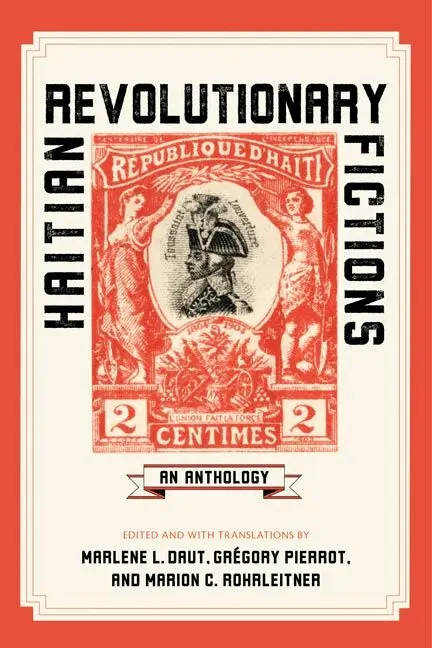
The Haitian Revolution (1791–1804) was the first antislavery and anticolonial uprising led by New World Africans to result in the creation of an independent and slavery-free nation state. The momentousness of this thirteen-year-long war generated thousands of pages of writing. This anthology brings together for the first time a transnational and multilingual selection of literature about the revolution, from the beginnings of the conflicts that resulted in it to the end of the nineteenth century.With over two hundred excerpts from novels, poetry, and plays published between 1787 and 1900, and depicting a wide array of characters including, Anacaona, Makandal, Boukman, Toussaint Louverture, Jean-Jacques Dessalines, and Henry Christophe, this anthology provides the perfect classroom text for exploring this fascinating revolution, its principal actors, and the literature it inspired, while also providing a vital resource for specialists in the field. This landmark volume includes many celebrated authors—such as Alexandre Dumas, Victor Hugo, Heinrich von Kleist, Alphonse de Lamartine, William Wordsworth, Harriet Martineau, and William Edgar Easton—but the editors also present here for the first time many less-well-known fictions by writers from across western Europe and both North and South America, as well as by nineteenth-century Haitian authors, refuting a widely accepted perception that Haitian representations of their revolution primarily emerged in the twentieth century. Each excerpt is introduced by contextualizing commentary designed to spark discussion about the ongoing legacy of slavery and colonialism in the Americas. Ultimately, the publication of this capacious body of literature that spans three continents offers students, scholars, and the curious reader alike a unique glimpse into the tremendous global impact the Haitian Revolution had on the print culture of the Atlantic world.
764 kr
Skickas inom 7-10 vardagar
The Haitian Revolution (1791–1804) was the first antislavery and anticolonial uprising led by New World Africans to result in the creation of an independent and slavery-free nation state. The momentousness of this thirteen-year-long war generated thousands of pages of writing. This anthology brings together for the first time a transnational and multilingual selection of literature about the revolution, from the beginnings of the conflicts that resulted in it to the end of the nineteenth century.With over two hundred excerpts from novels, poetry, and plays published between 1787 and 1900, and depicting a wide array of characters including, Anacaona, Makandal, Boukman, Toussaint Louverture, Jean-Jacques Dessalines, and Henry Christophe, this anthology provides the perfect classroom text for exploring this fascinating revolution, its principal actors, and the literature it inspired, while also providing a vital resource for specialists in the field. This landmark volume includes many celebrated authors—such as Alexandre Dumas, Victor Hugo, Heinrich von Kleist, Alphonse de Lamartine, William Wordsworth, Harriet Martineau, and William Edgar Easton—but the editors also present here for the first time many less-well-known fictions by writers from across western Europe and both North and South America, as well as by nineteenth-century Haitian authors, refuting a widely accepted perception that Haitian representations of their revolution primarily emerged in the twentieth century. Each excerpt is introduced by contextualizing commentary designed to spark discussion about the ongoing legacy of slavery and colonialism in the Americas. Ultimately, the publication of this capacious body of literature that spans three continents offers students, scholars, and the curious reader alike a unique glimpse into the tremendous global impact the Haitian Revolution had on the print culture of the Atlantic world.
1 849 kr
Skickas inom 3-6 vardagar
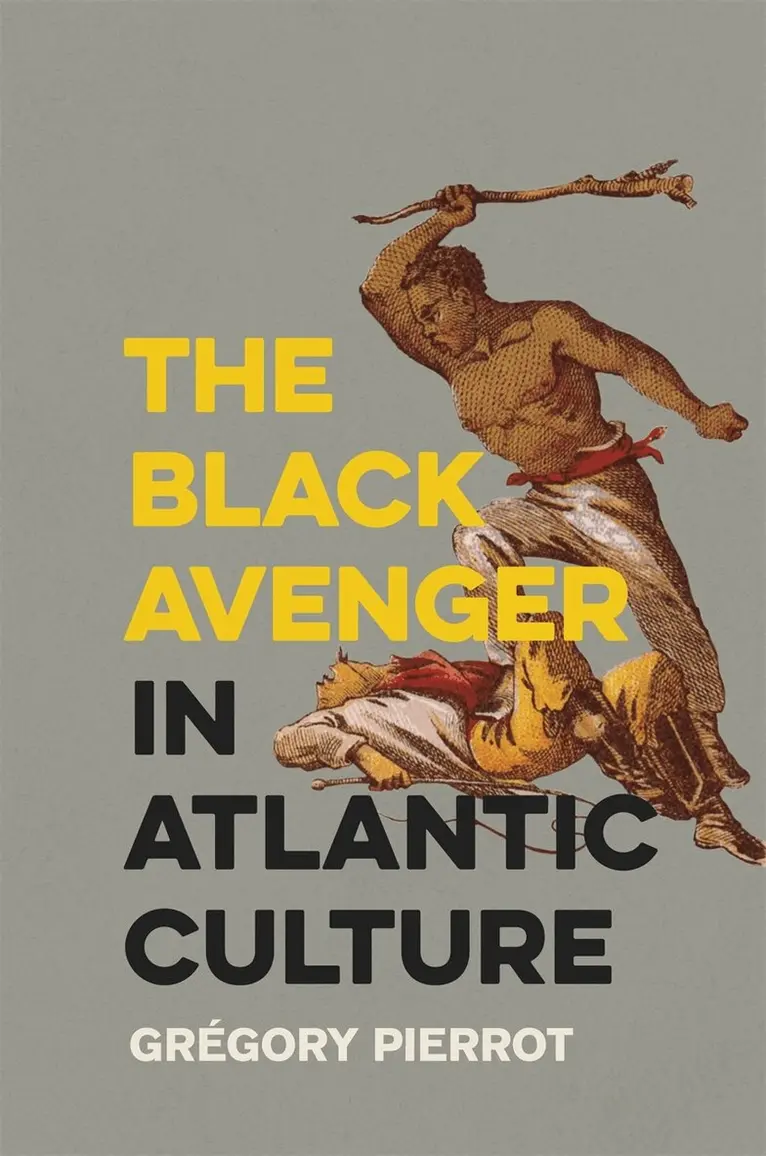
With the Ta-Nehisi Coates–authored Black Panther comic book series (2016); recent films Django Unchained (2012) and The Birth of a Nation (2016); Nate Parker’s cinematic imagining of the Nat Turner rebellion; and screen adaptations of Marvel’s Luke Cage (2016) and Black Panther (2018); violent black redeemers have rarely been so present in mainstream Western culture. Grégory Pierrot argues, however, that the black avenger has always been with us: the trope has fired the news and imaginations of the United States and the larger Atlantic World for three centuries.The black avenger channeled fresh anxieties about slave uprisings and racial belonging occasioned by European colonization in the Americas. Even as he is portrayed as a heathen and a barbarian, his values—honor, loyalty, love—reflect his ties to the West. Yet being racially different, he cannot belong, and his qualities in turn make him an anomaly among black people. The black avenger is thus a liminal figure defining racial borders. Where his body lies, lies the color line. Regularly throughout the modern era and to this day, variations on the trope have contributed to defining race in the Atlantic World and thwarting the constitution of a black polity.Pierrot’s The Black Avenger in Atlantic Culture studies this cultural history, examining a multicultural and cross-historical network of print material including fiction, drama, poetry, news, and historical writing as well as visual culture. It tracks the black avenger trope from its inception in the seventeenth century to the U.S. occupation of Haiti in 1915. Pierrot argues that this Western archetype plays an essential role in helping exclusive, hostile understandings of racial belonging become normalized in the collective consciousness of Atlantic nations. His study follows important articulations of the figure and how it has shifted based on historical and cultural contexts.
621 kr
Skickas inom 3-6 vardagar
With the Ta-Nehisi Coates–authored Black Panther comic book series (2016); recent films Django Unchained (2012) and The Birth of a Nation (2016); Nate Parker’s cinematic imagining of the Nat Turner rebellion; and screen adaptations of Marvel’s Luke Cage (2016) and Black Panther (2018); violent black redeemers have rarely been so present in mainstream Western culture. Grégory Pierrot argues, however, that the black avenger has always been with us: the trope has fired the news and imaginations of the United States and the larger Atlantic World for three centuries.The black avenger channeled fresh anxieties about slave uprisings and racial belonging occasioned by European colonization in the Americas. Even as he is portrayed as a heathen and a barbarian, his values—honor, loyalty, love—reflect his ties to the West. Yet being racially different, he cannot belong, and his qualities in turn make him an anomaly among black people. The black avenger is thus a liminal figure defining racial borders. Where his body lies, lies the color line. Regularly throughout the modern era and to this day, variations on the trope have contributed to defining race in the Atlantic World and thwarting the constitution of a black polity.Pierrot’s The Black Avenger in Atlantic Culture studies this cultural history, examining a multicultural and cross-historical network of print material including fiction, drama, poetry, news, and historical writing as well as visual culture. It tracks the black avenger trope from its inception in the seventeenth century to the U.S. occupation of Haiti in 1915. Pierrot argues that this Western archetype plays an essential role in helping exclusive, hostile understandings of racial belonging become normalized in the collective consciousness of Atlantic nations. His study follows important articulations of the figure and how it has shifted based on historical and cultural contexts.
332 kr
Skickas inom 7-10 vardagar
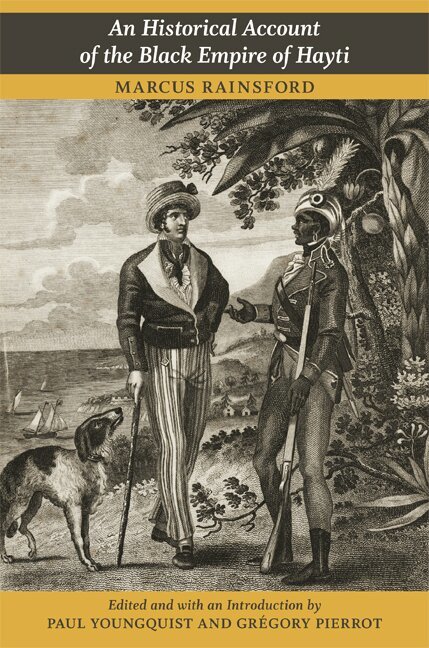
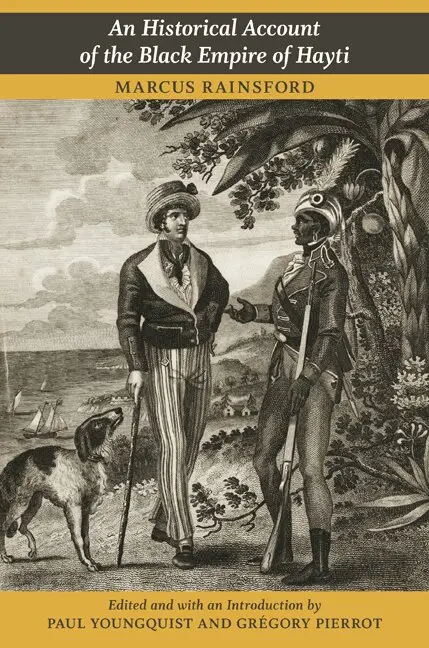
As the first complete narrative in English of the Haitian Revolution, Marcus Rainsford's An Historical Account of the Black Empire of Hayti was highly influential in establishing nineteenth-century world opinion of this momentous event. This new edition is the first to appear since the original publication in 1805. Rainsford, a career officer in the British army, went to Haiti to recruit black soldiers for the British. By publishing his observations of the prowess of black troops, and recounting his meetings with Toussaint Louverture, Rainsford offered eyewitness testimonial that acknowledged the intelligence and effectiveness of the Haitian rebels. Although not an abolitionist, Rainsford nonetheless was supportive of the independent state of Haiti, which he argued posed no threat to British colonial interests in the West Indies, an extremely unusual stance at the time. Rainsford's account made an immediate impact upon publication; it was widely reviewed, and translated twice in its first year. Paul Youngquist's and GrÉgory Pierrot's critical introduction to this new edition provides contextual and historical details, as well as new biographical information about Rainsford. Of particular interest is a newly discovered miniature painting of Louverture attributed to Rainsford, which is reproduced along with the twelve engravings that accompanied his original account.
158 kr
Skickas
Few urban critters are more reviled than the hipster. They are notoriously difficult to define, and yet we know one when we see one. No wonder: they were among the global cultural phenomena that ushered in the 21st century. They have become a bulwark of mainstream culture, cultural commodity, status, butt of all jokes and ready-made meme.But frightening as it is to imagine, for more than a century hipsters have been lurking among us. Defined by their appearances and the cloud of meaning attached to them—the cool vanguard of gentrification, the personification of capitalism with a conscience—hipsters are all looks, and these looks are a visual timeline to America’s past and present.Underlining this timeline is the pattern of American popular culture’s love/hate/theft relationship with Black culture. Yet the pattern of recycling has reached a chilling point: the 21st century hipster made all possible past fads into new trends, including and especially the old uncool. In Decolonize Hipsters, Grégory Pierrot gives us a field guide to the phenomenon, a symptom and vanguard of the wave of aggressive white supremacist sentiment now oozing from around the globe.