Bhakti Shringarpure - Böcker
Visar alla böcker från författaren Bhakti Shringarpure. Handla med fri frakt och snabb leverans.
10 produkter
10 produkter
2 401 kr
Skickas inom 10-15 vardagar
This book bridges the gap between the simultaneously unfolding histories of postcoloniality and the forty-five-year ideological and geopolitical rivalry between the U.S. and the U.S.S.R. Not only did the superpowers rely upon the decolonizing world to further imperial agendas, but the postcolony itself was shaped, epistemologically and materially, by Cold War discourses, policies, narratives, and paradigms. Ruptures and appropriated trajectories in the postcolonial world can be attributed to the ways in which the Cold War became the afterlife of European colonialism. Through a speculative assemblage, this book connects the dots, deftly taking the reader from Frantz Fanon to Aaron Swartz, and from assassinations in the Third World to American multiculturalism. Whether the Cold War subverted the dream of decolonization or created a compromised cultural sphere, this book makes those rich palimpsests visible.
756 kr
Skickas inom 10-15 vardagar
This book bridges the gap between the simultaneously unfolding histories of postcoloniality and the forty-five-year ideological and geopolitical rivalry between the U.S. and the U.S.S.R. Not only did the superpowers rely upon the decolonizing world to further imperial agendas, but the postcolony itself was shaped, epistemologically and materially, by Cold War discourses, policies, narratives, and paradigms. Ruptures and appropriated trajectories in the postcolonial world can be attributed to the ways in which the Cold War became the afterlife of European colonialism. Through a speculative assemblage, this book connects the dots, deftly taking the reader from Frantz Fanon to Aaron Swartz, and from assassinations in the Third World to American multiculturalism. Whether the Cold War subverted the dream of decolonization or created a compromised cultural sphere, this book makes those rich palimpsests visible.
413 kr
Skickas inom 7-10 vardagar
188 kr
Skickas inom 5-8 vardagar
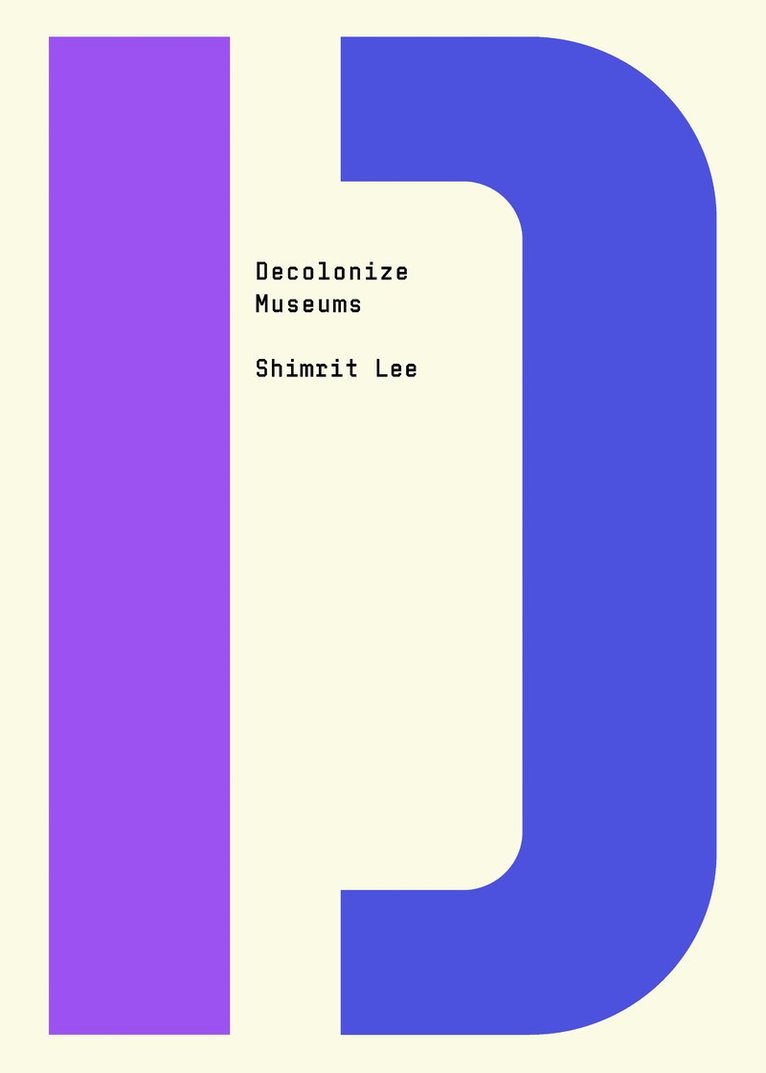
Behold thesleazy logic of museums: plunder dressed up as charity, conservation, and care.The idealizedWestern museum, as typified by the Metropolitan Museum of Art, the BritishMuseum, and the Museum of Natural History, has remained much the same for overa century: a uniquely rarified public space of cool stone, providing anexperience of leisure and education for the general public while carefullytending fragile artifacts from distant lands. As questions about representationand ethics have increasingly arisen, these institutions have proclaimed theirinterest in diversity and responsible conservation, asserting both theiradaptability and their immovably essential role in a flourishing and culturallyrich society.With DecolonizeMuseums, Shimrit Lee punctures this fantasy, tracing the essentiallycolonial origins of the concept of the museum. White Europeans’ atrocities werereimagined through narratives of benign curiosity and abundant respect for theoccupied or annihilated culture, and these racist narratives, Lee argues,remain integral to the authority exercised by museums today. Citing pop culturereferences from Indiana Jones to Black Panther,and highlighting crucial activist campaigns and legal action to redress theharms perpetrated by museums and their proxies, Decolonize Museums arguesthat we must face a dismantling of these seemingly eternal edifices, andconsider what, if anything, might take their place.
158 kr
Skickas
Few urban critters are more reviled than the hipster. They are notoriously difficult to define, and yet we know one when we see one. No wonder: they were among the global cultural phenomena that ushered in the 21st century. They have become a bulwark of mainstream culture, cultural commodity, status, butt of all jokes and ready-made meme.But frightening as it is to imagine, for more than a century hipsters have been lurking among us. Defined by their appearances and the cloud of meaning attached to them—the cool vanguard of gentrification, the personification of capitalism with a conscience—hipsters are all looks, and these looks are a visual timeline to America’s past and present.Underlining this timeline is the pattern of American popular culture’s love/hate/theft relationship with Black culture. Yet the pattern of recycling has reached a chilling point: the 21st century hipster made all possible past fads into new trends, including and especially the old uncool. In Decolonize Hipsters, Grégory Pierrot gives us a field guide to the phenomenon, a symptom and vanguard of the wave of aggressive white supremacist sentiment now oozing from around the globe.
180 kr
Skickas inom 5-8 vardagar
For radical twentieth-century feminists, it was a rallying cry for bodily autonomy and political power. For influencers and lifestyle brands, it’s buying fancy nutrition and body products at a premium. And it has now infiltrated nearly every food, leisure, and pop-culture space as a multi-billion-dollar industry.What is it? To quote a million memes: it’s called self-care.In Decolonize Self-Care Alyson K. Spurgas and Zoë C. Meleo-Erwin deliver a comprehensive sociological analysis and scathing critique of the catchphrase’s capitalist, racist undertones. To decolonize self-care, they argue, requires a full reckoning with the exclusionary, appropriative nature of most of the wellness industry, but this education is only the first step in the process. We must commit to new models of care and well-being that allow for health, pleasure, and community—for everyone.
180 kr
Skickas inom 5-8 vardagar
For those interested in continuing the struggle for decolonization, the word “multiculturalism” can seem like a sad joke. After all, institutionalized multiculturalism today is a muck of buzzwords, branding strategies, and virtue signaling that has nothing to do with real struggles against racism and colonialism. But Decolonize Multiculturalism unearths a buried history.The book focuses on the student and youth movements of the 1960s and 1970s, inspired by global movements for decolonization and anti-racism, which aimed to fundamentally transform their society, as well as the fierce repression of these movements by the state, corporations, and university administrations. Part of the response has been sheer violence—campus policing, for example, only began in the ’70s, paving the way for the militarized campuses of today—with institutionalized multiculturalism acting like the velvet glove around the iron fist of state violence.And yet today’s multiculturalism also contains residues of the original radical demands of the student and youth movements that it aims to repress: to open up the university, to wrench it from its settler colonial, white supremacist, and patriarchal capitalist origins, and to transform it into a place of radical democratic possibility.
257 kr
Skickas inom 3-6 vardagar
Although imagined as a queer subcultural practice, drag seems to be everywhere we look: from AI filters on TikTok to brunchtime entertainment, from state legislations to political rallies. Yet as drag enters the mainstream—largely due to the intense, global popularity of reality TV competition RuPaul’s Drag Race—some kinds of gender-based performance fall out of the purview of what we (could) call drag.Decolonize Drag details the ways that gender is used as a form of colonial governance to eliminate various types of expression, and tracks how contemporary drag, including that on Drag Race, both replicates and disrupts these institutional hierarchies. This book focuses on several gender performers that resist and laugh at colonial projects through their aesthetic practices. It also features the voice of Khubchandani's drag alter ego, judgmental South Asian aunty LaWhore Vagistan. From the firsthand perspective of a drag artist, LaWhore describes encounters with depoliticized versions of drag that leave her disappointed and perplexed, and prompts Khubchandani for context and analysis.Their dynamic sets the tone for the book, investigating how drag—and gender more broadly—has been privatized and delimited so that it's only available to certain people. Decolonize Drag argues for more abundance in and access to fashioning gender, and considers how drag changes meaning and efficacy as it shifts across geographies.
1 036 kr
Skickas inom 10-15 vardagar
India's Imperial Formations explores the ways in which empire building occurs and consolidates through the Indian and diasporic cultural landscape, where a collusion with whiteness, Hindu fundamentalism, casteism, and religious and racial bigotry are rampant, and create hegemonic imaginaries of an India that denies a democratic space of multiple Indias to coexist together. India is not only home to the world’s largest film industry but also has one of the oldest media ecosystems today with a prolific output in television, radio, print, and digital media. These systems shape hearts and minds in the large nation and also have significant impact in the region as well as in the world due to India’s vast diaspora population. This book argues that Indian culture industries are a crucial site to investigate constructions of Islamophobia, casteism, sinophobia, sexism, colorism and anti-Blackness. Within this work, the authors highlight the urgent need to evaluate the complicity of Indian and diasporic cultural production in perpetuating a casual and sometimes even aggressive normalization of bigotry and discrimination towards minoritized communities. This polemical book is written by three scholars of culture, gender and postcolonial studies providing an accessible yet rigorous study of these issues.
329 kr
Skickas