Gregory S. Alexander – författare
Visar alla böcker från författaren Gregory S. Alexander. Handla med fri frakt och snabb leverans.
15 produkter
Property and Human Flourishing
Inbunden, 2018
1869 kr
Lägg i varukorg
Many people assume that what morally justifies private ownership of property is either individual freedom or social welfare, defined in terms of maximizing personal preference-satisfaction. This book offers an alternative way of understanding the moral underpinning of private ownership of property. …
Property and Human Flourishing
E-bok, 2018
1299 kr
Lägg i varukorg
Many people assume that what morally justifies private ownership of property is either individual freedom or social welfare, defined in terms of maximizing personal preference-satisfaction. This book offers an alternative way of understanding the moral underpinning of private ownership of property. …
Property and Human Flourishing
E-bok, 2018
1299 kr
Lägg i varukorg
Many people assume that what morally justifies private ownership of property is either individual freedom or social welfare, defined in terms of maximizing personal preference-satisfaction. This book offers an alternative way of understanding the moral underpinning of private ownership of property. …
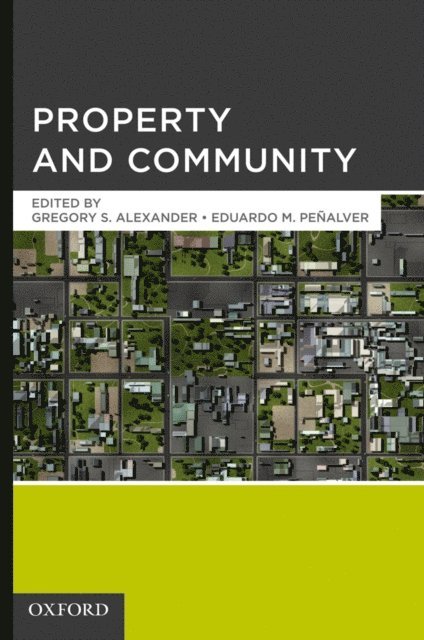
Property and Community
Av Gregory S. Alexander, Eduardo M. Penalver
Inbunden, 2010
1450 kr
Lägg i varukorg
Property and Community fills a major gap in the legal literature on property and its relationship to community. The essays included differ from past discussions, including those provided by law-and-economics, by providing richer accounts of community. By and large, prior discussions by property …
Property and Community
Av Eduardo M. Penalver, Gregory S. Alexander
E-bok, 2010
1181 kr
Lägg i varukorg
Property and Community fills a major gap in the legal literature on property and its relationship to community. The essays included differ from past discussions, including those provided by law-and-economics, by providing richer accounts of community. By and large, prior discussions by property …
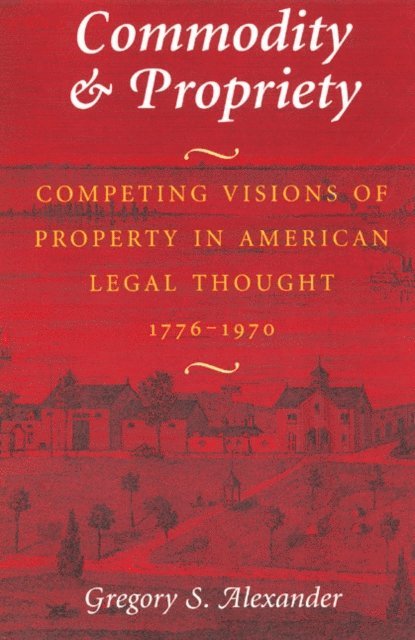
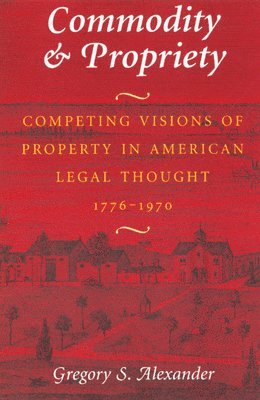
Commodity & Propriety
Competing Visions of Property in American Legal Thought, 1776-1970
E-bok, 2008
854 kr
Lägg i varukorg
Most people understand property as something that is owned, a means of creating individual wealth. But in Commodity and Propriety , the first full-length history of the meaning of property, Gregory Alexander uncovers in American legal writing a competing vision of property that has existed …
Commodity & Propriety
Competing Visions of Property in American Legal Thought, 1776-1970
Häftad, 1999
394 kr
Lägg i varukorg
Most people understand property as something that is owned, a means of creating individual wealth. However, in this text a history of the meaning of property, Gregory Alexander uncovers in American legal writing a competing vision of property that has existed alongside the traditional conception. …
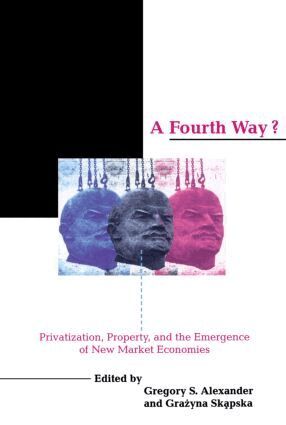
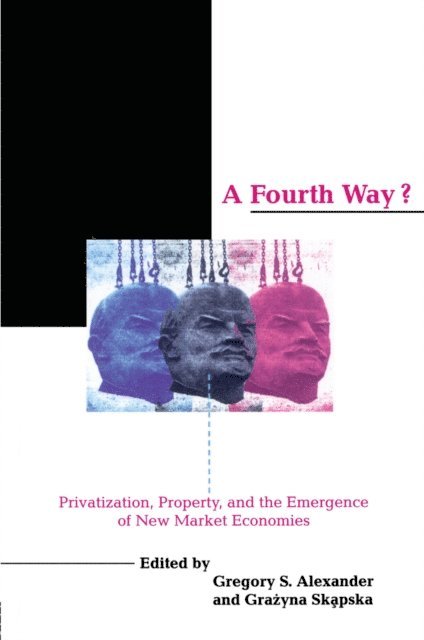
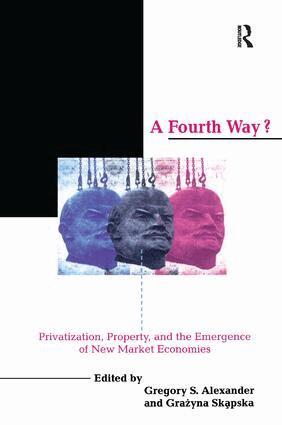
Fourth Way?
Privatization, Property, and the Emergence of New Market Economies
Av Gregory S. Alexander, Grazyna Skapska
Häftad, 1993
530 kr
Lägg i varukorg
The transition to market economies in Eastern Europe, considered in the light of Western experiences of seeking a middle way between classical liberalism and state socialism.
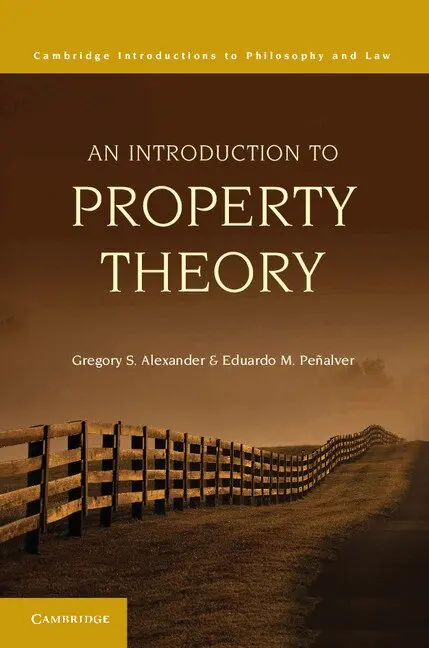
An Introduction to Property Theory
Av Gregory S. Alexander, Eduardo M. Peñalver
Inbunden, 2012
1055 kr
Lägg i varukorg
This book surveys the leading modern theories of property - Lockean, libertarian, utilitarian/law-and-economics, personhood, Kantian and human flourishing - and then applies those theories to concrete contexts in which property issues have been especially controversial. These include …
An Introduction to Property Theory
Av Gregory S. Alexander, Eduardo M. Peñalver
Häftad, 2012
448 kr
Lägg i varukorg
This book surveys the leading modern theories of property - Lockean, libertarian, utilitarian/law-and-economics, personhood, Kantian and human flourishing - and then applies those theories to concrete contexts in which property issues have been especially controversial. These include …
Fourth Way?
Privatization, Property, and the Emergence of New Market Economies
E-bok, 2017
624 kr
Lägg i varukorg
The transition to market economies in Eastern Europe, considered in the light of Western experiences of seeking a middle way between classical liberalism and state socialism.
Fourth Way?
Privatization, Property, and the Emergence of New Market Economies
E-bok, 2017
624 kr
Lägg i varukorg
The transition to market economies in Eastern Europe, considered in the light of Western experiences of seeking a middle way between classical liberalism and state socialism.
Fourth Way?
Privatization, Property, and the Emergence of New Market Economies
Av Gregory S. Alexander, Grazyna Skapska
Inbunden, 2017
2126 kr
Lägg i varukorg
The transition to market economies in Eastern Europe, considered in the light of Western experiences of seeking a middle way between classical liberalism and state socialism.
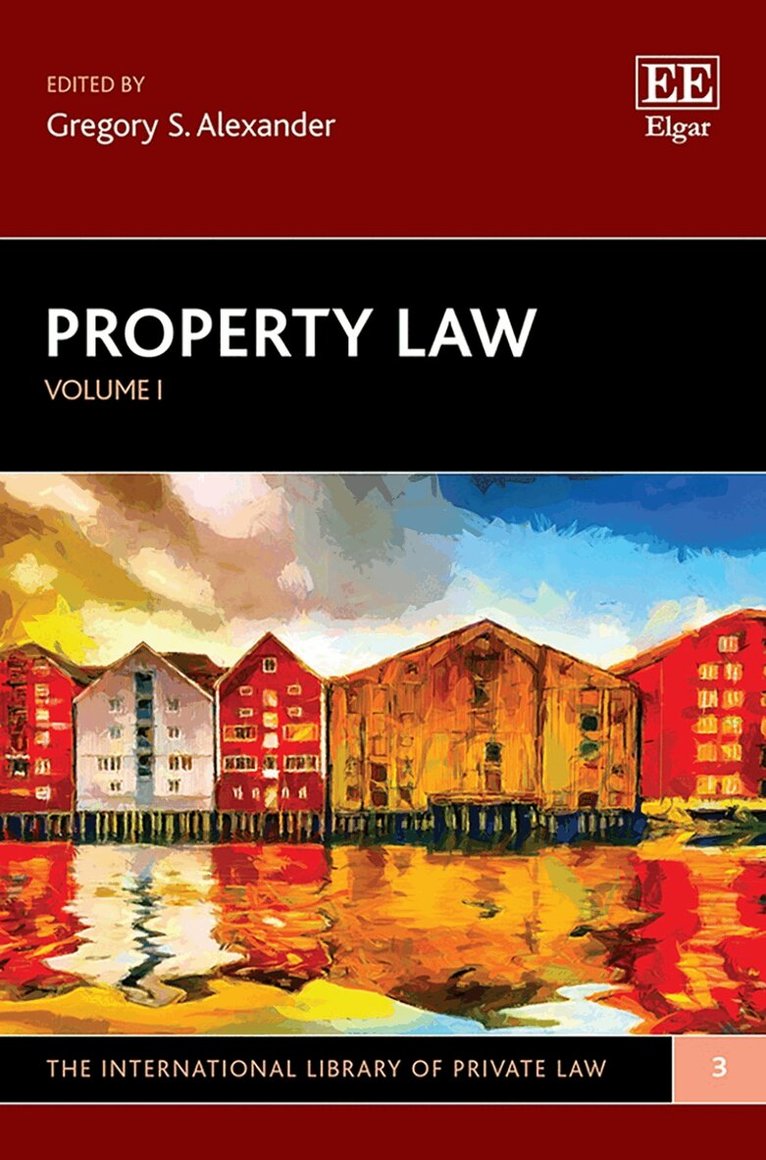
Property Law
Inbunden, 2020
11917 kr
Lägg i varukorg
This important research review considers the seminal legal articles in property law and its subtopics published during the 20th and 21st centuries. The coverage is broad, as comprehensive as possible, ranging from theoretical to practical and doctrinal. The authors of the pieces under discussion …
Commodity & Propriety
Competing Visions of Property in American Legal Thought, 1776-1970
Inbunden, 1998
788 kr
Tillfälligt slut
Most people understand property as something that is owned, a means of creating individual wealth. However, in this text a history of the meaning of property, Gregory Alexander uncovers in American legal writing a competing vision of property that has existed alongside the traditional conception. …