Gretchen Lemke-Santangelo - Böcker
Visar alla böcker från författaren Gretchen Lemke-Santangelo. Handla med fri frakt och snabb leverans.
2 produkter
2 produkter
440 kr
Skickas inom 7-10 vardagar
It was a sign of the sixties. Drawn by the promise of spiritual and creative freedom, thousands of women from white middle-class homes rejected the suburban domesticity of their mothers to adopt lifestyles more like those of their great-grandmothers. They eagerly learned 'new' skills, from composting to quilting, as they took up the decade's quest for self-realization. 'Hippie women' have alternately been seen as earth mothers or love goddesses, virgins or vamps - images that have obscured the real complexity of their lives. Gretchen Lemke-Santangelo now takes readers back to Haight Ashbury and country communes to reveal how they experienced and shaped the counterculture. She draws on the personal recollections of women who were there - including such pivotal figures as Lenore Kendall, Diane DiPrima, and Carolyn Adams - to gain insight into what made counterculture women tick, how they lived their days, and how they envisioned their lives. This is the first book to focus specifically on women of the counterculture. It describes how gender was perceived within the movement, with women taking on much of the responsibility for sustaining communes. It also examines the lives of younger runaways and daughters who shared the lifestyle. And while it explores the search for self enlightenment at the core of the counterculture experience, it also recounts the problems faced by those who resisted the expectations of 'free love' and discusses the sexism experienced by women in the arts. Lemke-Santangelo's work also extends our understanding of second-wave feminism. She argues that counterculture women, despite their embrace of traditional roles, claimed power by virtue of gender difference and revived an older agrarian ideal that assigned greater value to female productive labor. Perhaps most important, she shows how they used these values to move counterculture practices into the mainstream, helping transform middle-class attitudes toward everything from spirituality to childrearing to the environment. Featuring photographs and poster art that bring the era to life, ""Daughters of Aquarius"" provides both an inside look at a defining movement and a needed corrective to long-held stereotypes of the counterculture. For everyone who was part of that scene - or just wonders what it was like - this book offers a new perspective on those experiences and on cultural innovations that have affected all our lives.
460 kr
Skickas inom 10-15 vardagar
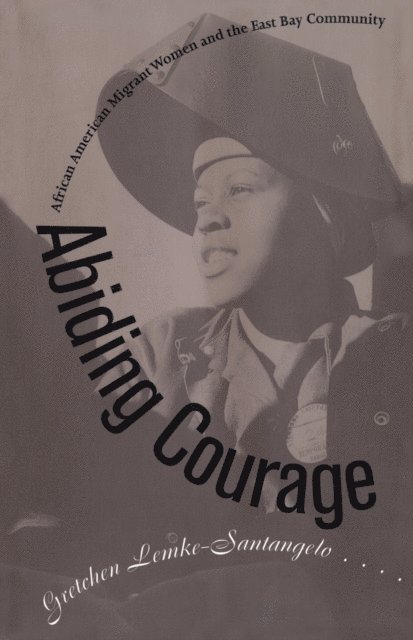
Between 1940 and 1945, thousands of African Americans migrated from the South to the East Bay Area of northern California in search of the social and economic mobility that was associated with the region's expanding defense industry and its reputation for greater racial tolerance. Drawing on fifty oral interviews with migrants as well as on archival and other written records, Abiding Courage examines the experiences of the African American women who migrated west and built communities there. Gretchen Lemke-Santangelo vividly shows how women made the transition from southern domestic and field work to jobs in an industrial, wartime economy. At the same time, they were struggling to keep their families together, establishing new households, and creating community-sustaining networks and institutions. While white women shouldered the double burden of wage labor and housework, black women faced even greater challenges: finding houses and schools, locating churches and medical services, and contending with racism. By focusing on women, Lemke-Santangelo provides new perspectives on where and how social change takes place and how community is established and maintained. |Between 1940 and 1945, thousands of African Americans migrated from the South to the East Bay Area of northern California in search of the social and economic mobility that was associated with the region's expanding defense industry and its reputation for greater racial tolerance. Gretchen Lemke-Santangelo vividly shows how women made the transition from southern domestic and field work to jobs in an industrial, wartime economy. At the same time, they were struggling to keep their families together, establishing new households, and creating community-sustaining networks and institutions. By focusing on women, Lemke-Santangelo provides new perspectives on where and how social change takes place and how community is established and maintained.