Grzegorz Sedek – författare
Visar alla böcker från författaren Grzegorz Sedek. Handla med fri frakt och snabb leverans.
11 produkter
11 produkter
E-bok
Engelska, 2021761 kr
Läs direkt efter köp
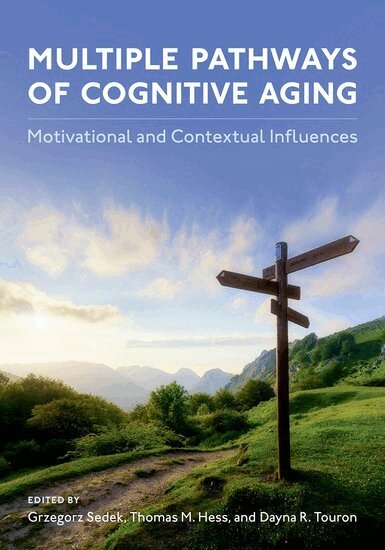
The study of aging and cognition has grown exponentially over the past 50 years, developing from a field dominated by experimentally based information-processing traditions to one represented by a more mature approach both conceptually and methodologically. In the past 10 years there has been growth in integrative approaches that incorporate behavioral, neuropsychological, and social information. In addition, there has been a growing recognition of the limitations associated with simple cross-sectional age-group comparisons, along with an increased use of more complex methods. This has resulted in the development of increasingly sophisticated research designs and analytic tools focused on understanding a multitude of potential mediators and moderators of cognitive change. The result has been a move away from negative-views of cognitive aging to one that is more nuanced and sensitive to contextual factors.Multiple Pathways of Cognitive Aging explores the factors associated with adaptive functioning in later life. Its emphasis is on understanding both the factors underlying individual differences in change in cognitive functioning in later life and the nature of the compensatory mechanisms developed by most successful and active middle-aged and older adults. This includes a consideration of motivational factors as a driver of both cognitive change and adaptive functioning.For students and researchers, Multiple Pathways of Cognitive Aging offers valuable insights into the field of cognitive development, along with innovative methodological approaches to help them in their own research.
E-bok
PDF, Engelska, 2021761 kr
Läs direkt efter köp
The study of aging and cognition has grown exponentially over the past 50 years, developing from a field dominated by experimentally based information-processing traditions to one represented by a more mature approach both conceptually and methodologically. In the past 10 years there has been growth in integrative approaches that incorporate behavioral, neuropsychological, and social information. In addition, there has been a growing recognition of the limitations associated with simple cross-sectional age-group comparisons, along with an increased use of more complex methods. This has resulted in the development of increasingly sophisticated research designs and analytic tools focused on understanding a multitude of potential mediators and moderators of cognitive change. The result has been a move away from negative-views of cognitive aging to one that is more nuanced and sensitive to contextual factors.Multiple Pathways of Cognitive Aging explores the factors associated with adaptive functioning in later life. Its emphasis is on understanding both the factors underlying individual differences in change in cognitive functioning in later life and the nature of the compensatory mechanisms developed by most successful and active middle-aged and older adults. This includes a consideration of motivational factors as a driver of both cognitive change and adaptive functioning.For students and researchers, Multiple Pathways of Cognitive Aging offers valuable insights into the field of cognitive development, along with innovative methodological approaches to help them in their own research.
Inbunden, Engelska, 1998
1 681 kr
Skickas inom 10-15 vardagar
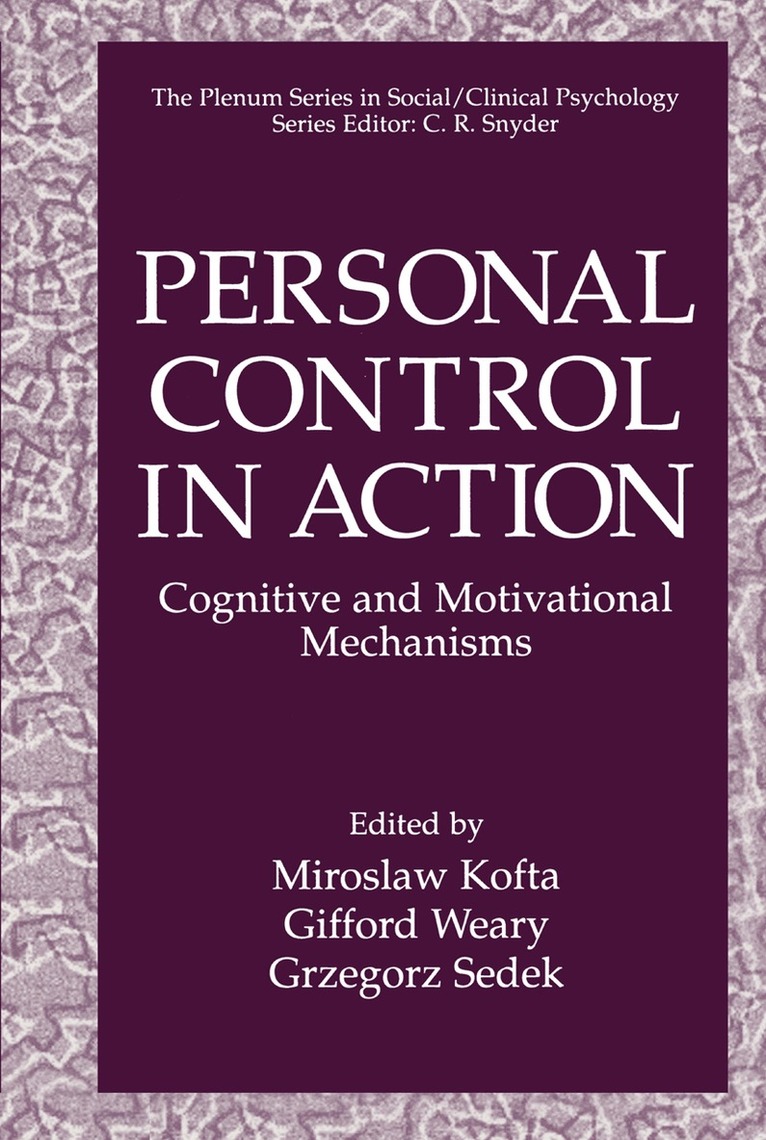
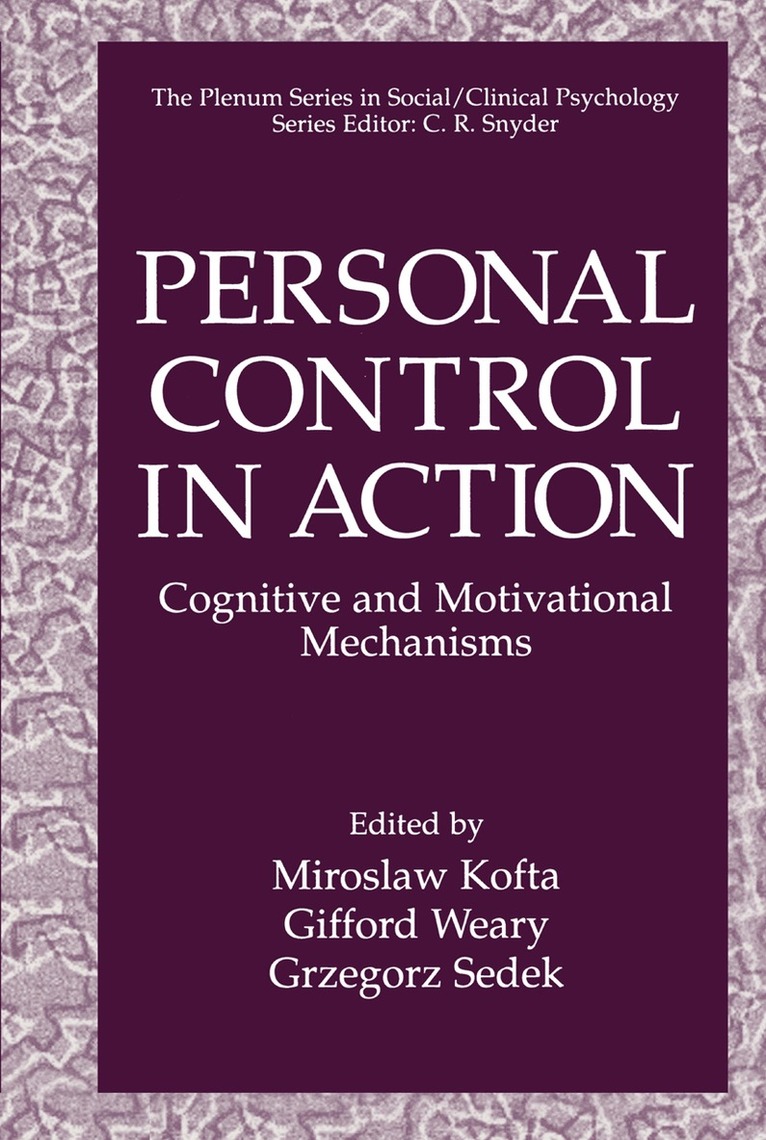
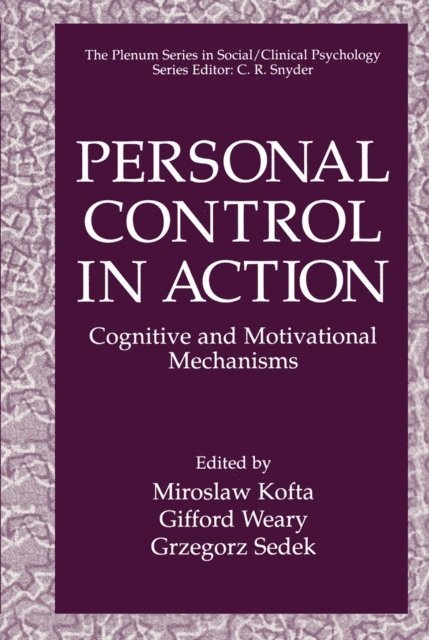
Human beings are agents: They may exert influence over their own fate. They initiate their actions, experience a considerable degree of freedom and control in their mundane activities, and respond adversely to external constraints to their agency; they are able to monitor and modify their moti- vation, affective states, and behavior. Since the sixties, the notion of person-as-agent has become increas- ingly accepted in scientific psychology. Nowadays, personal control is a standard topic in research on personality, motivation, and social behavior. The most popular approach identifies personal control with a feeling or judgment: To have control means to perceive the self as a source of causa- tion. Within this perspective, such consciously accessible contents like perceived freedom and self-determination, feelings and expectations of control, or perceived self-efficacy and competence emerge as natural tar- gets of research (see e.g., Alloy, Clements, & Koenig, 1993; Bandura, 1977; OeCharms, 1968; Oeci & Ryan, 1985; Harvey, 1976; Rotter, 1966; Thomp- son, 1993; Wortman, 1975).
Häftad, Engelska, 2005
587 kr
Skickas inom 7-10 vardagar
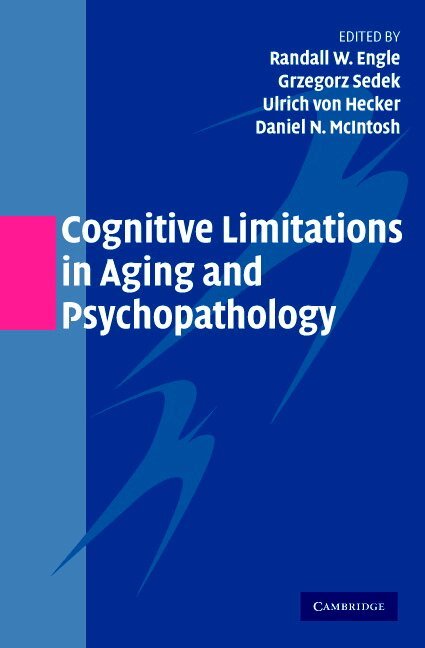
This book examines the major progress made in recent psychological science in understanding the cognitive control of thought, emotion, and behavior and what happens when that control is diminished as a result of aging, depression, developmental disabilities, or psychopathology. Each chapter of this volume reports the most recent research by a leading researcher on the international stage. Topics include the effects on thought, emotion, and behavior by limitations in working memory, cognitive control, attention, inhibition, and reasoning processes. Other chapters review standard and emerging research paradigms and new findings on limitations in cognitive functioning associated with aging and psychopathology. The explicit goal behind this volume was to facilitate cross-area research and training by familiarizing researchers with paradigms and findings in areas different from but related to their own.
Inbunden, Engelska, 2000
1 060 kr
Skickas inom 10-15 vardagar
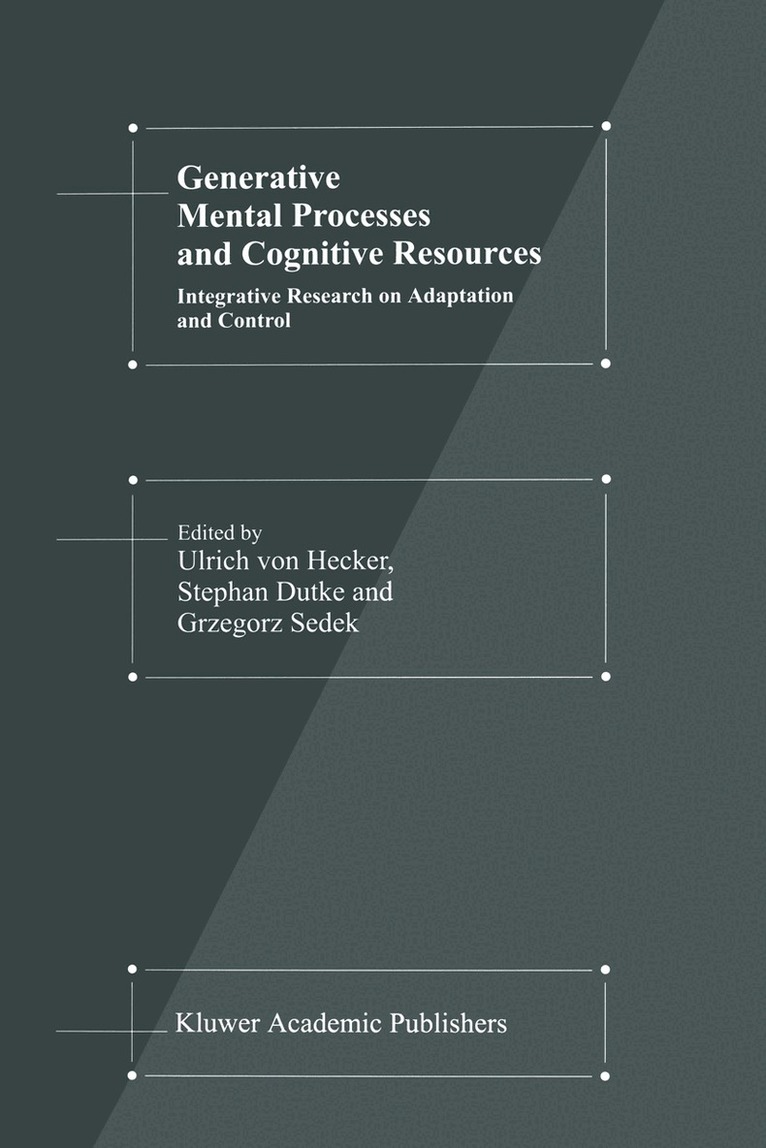
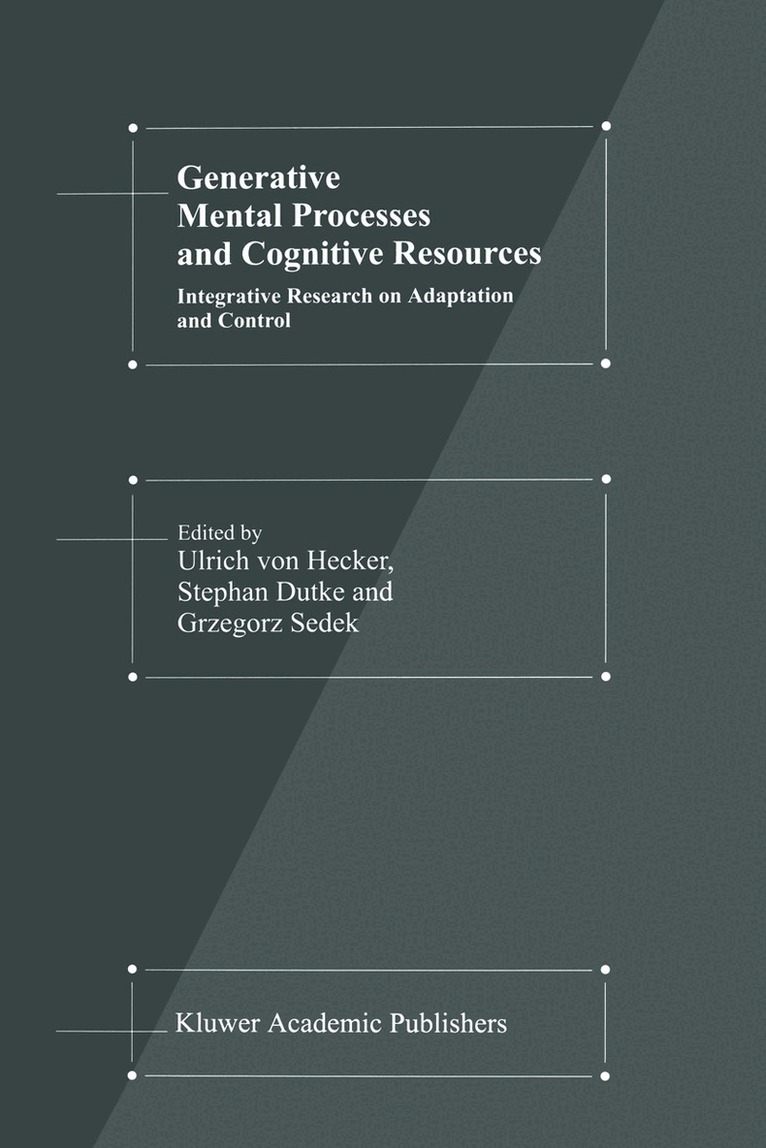
In recent years, a booming research interest has been observed in linking basic cognitive processes with a variety of social and clinical phenomena. Evidence comes from the increasing popularity of psychological paradigms such as social cognition, cognitive psychopathology or cognitive aging. What links those paradigms is their special focus on explaining cognitive phenomena by use of the concept of mental resources. Immediate reasons for such a focus are found in the growing emphasis on understanding everyday dynamics of thinking and acting within a complex world, as well as within personal constraints. Obviously, our current goals and choice of activities constrain and influence our reasoning as well as the processes of input to and retrieval from memory. Situational demands will act to the same effect, and the interplay between both, internal and external constraints, makes apparent a first and straightforward relevance of the resource notion in action-oriented cognitive research. For example, person perception is a dynamic process depending on what my goals in perception are, what the perceiving situation is that I find myself in, and how complex the target characteristics are. In fact, the amount of resources spent in this process may be reflected in its speed, the quality of the perceptual or mnemonic trace which is being created, or the kind of social or non-social behavior that can be supported.
Häftad, Engelska, 2017
674 kr
Skickas inom 10-15 vardagar
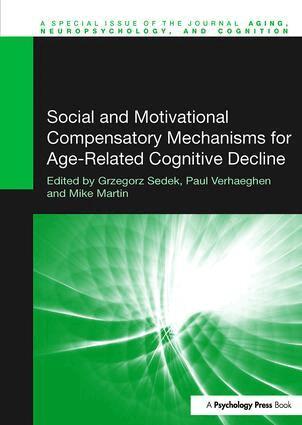
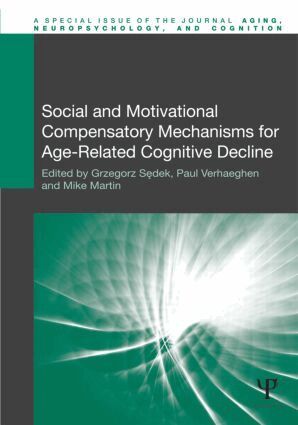
Although many aspects of fluid cognition decline with advancing age, simple observation in the wild suggests that older adults, generally speaking, do very well in their day-to-day life. The study of the orchestration of cognitive, social, and motivational compensatory mechanisms in the service of effective and healthy aging provides a meaningful challenge to traditional ways of examining developmental changes in cognitive performance. An additional impetus comes from recent discoveries in the neuroscience of aging, all demonstrating substantial amounts of functional modifiability, compensation, and plasticity of the human brain, even in very old age. Furthermore, the discovery of string relationships between engagement in mentally enriching and socially stimulating activities and cognitive health and longevity has sparked a new generation of training studies aimed at improving or sustaining cognitive fitness in old age. This book examines the role of compensatory mechanisms in such diverse facets of cognitive processing as perceptual processes, text comprehension, dual-task processing, and episodic and prospective memory. This ensemble of studies compellingly shows that older adults’ everyday cognitive life is governed not by the decline in elementary cognitive processes as measured in the lab, but by a multitude of compensatory mechanisms, most of which are of the social/motivational variety. Much of this compensatory behavior can be elicited with no or only little experimental prodding, underscoring the self-organizing or self-initiated nature of this type of behavior, even in advanced old age. This book was originally published as a special issue of Aging, Neuropsychology and Cognition.
Häftad, Engelska, 2010
1 681 kr
Skickas inom 10-15 vardagar
Human beings are agents: They may exert influence over their own fate. They initiate their actions, experience a considerable degree of freedom and control in their mundane activities, and respond adversely to external constraints to their agency; they are able to monitor and modify their moti- vation, affective states, and behavior. Since the sixties, the notion of person-as-agent has become increas- ingly accepted in scientific psychology. Nowadays, personal control is a standard topic in research on personality, motivation, and social behavior. The most popular approach identifies personal control with a feeling or judgment: To have control means to perceive the self as a source of causa- tion. Within this perspective, such consciously accessible contents like perceived freedom and self-determination, feelings and expectations of control, or perceived self-efficacy and competence emerge as natural tar- gets of research (see e.g., Alloy, Clements, & Koenig, 1993; Bandura, 1977; OeCharms, 1968; Oeci & Ryan, 1985; Harvey, 1976; Rotter, 1966; Thomp- son, 1993; Wortman, 1975).
E-bok
PDF, Engelska, 20132 036 kr
Läs direkt efter köp
Inbunden, Engelska, 2012
2 117 kr
Skickas inom 10-15 vardagar
Although many aspects of fluid cognition decline with advancing age, simple observation in the wild suggests that older adults, generally speaking, do very well in their day-to-day life. The study of the orchestration of cognitive, social, and motivational compensatory mechanisms in the service of effective and healthy aging provides a meaningful challenge to traditional ways of examining developmental changes in cognitive performance. An additional impetus comes from recent discoveries in the neuroscience of aging, all demonstrating substantial amounts of functional modifiability, compensation, and plasticity of the human brain, even in very old age. Furthermore, the discovery of string relationships between engagement in mentally enriching and socially stimulating activities and cognitive health and longevity has sparked a new generation of training studies aimed at improving or sustaining cognitive fitness in old age. This book examines the role of compensatory mechanisms in such diverse facets of cognitive processing as perceptual processes, text comprehension, dual-task processing, and episodic and prospective memory. This ensemble of studies compellingly shows that older adults’ everyday cognitive life is governed not by the decline in elementary cognitive processes as measured in the lab, but by a multitude of compensatory mechanisms, most of which are of the social/motivational variety. Much of this compensatory behavior can be elicited with no or only little experimental prodding, underscoring the self-organizing or self-initiated nature of this type of behavior, even in advanced old age. This book was originally published as a special issue of Aging, Neuropsychology and Cognition.
Häftad, Engelska, 2012
1 060 kr
Skickas inom 10-15 vardagar
In recent years, a booming research interest has been observed in linking basic cognitive processes with a variety of social and clinical phenomena. Evidence comes from the increasing popularity of psychological paradigms such as social cognition, cognitive psychopathology or cognitive aging. What links those paradigms is their special focus on explaining cognitive phenomena by use of the concept of mental resources. Immediate reasons for such a focus are found in the growing emphasis on understanding everyday dynamics of thinking and acting within a complex world, as well as within personal constraints. Obviously, our current goals and choice of activities constrain and influence our reasoning as well as the processes of input to and retrieval from memory. Situational demands will act to the same effect, and the interplay between both, internal and external constraints, makes apparent a first and straightforward relevance of the resource notion in action-oriented cognitive research. For example, person perception is a dynamic process depending on what my goals in perception are, what the perceiving situation is that I find myself in, and how complex the target characteristics are. In fact, the amount of resources spent in this process may be reflected in its speed, the quality of the perceptual or mnemonic trace which is being created, or the kind of social or non-social behavior that can be supported.
E-bok
PDF, Engelska, 20121 328 kr
Läs direkt efter köp
In recent years, a booming research interest has been observed in linking basic cognitive processes with a variety of social and clinical phenomena. Evidence comes from the increasing popularity of psychological paradigms such as social cognition, cognitive psychopathology or cognitive aging. What links those paradigms is their special focus on explaining cognitive phenomena by use of the concept of mental resources. Immediate reasons for such a focus are found in the growing emphasis on understanding everyday dynamics of thinking and acting within a complex world, as well as within personal constraints. Obviously, our current goals and choice of activities constrain and influence our reasoning as well as the processes of input to and retrieval from memory. Situational demands will act to the same effect, and the interplay between both, internal and external constraints, makes apparent a first and straightforward relevance of the resource notion in action-oriented cognitive research. For example, person perception is a dynamic process depending on what my goals in perception are, what the perceiving situation is that I find myself in, and how complex the target characteristics are. In fact, the amount of resources spent in this process may be reflected in its speed, the quality of the perceptual or mnemonic trace which is being created, or the kind of social or non-social behavior that can be supported.