Miroslaw Kofta - Böcker
Visar alla böcker från författaren Miroslaw Kofta. Handla med fri frakt och snabb leverans.
4 produkter
4 produkter
1 625 kr
Skickas inom 10-15 vardagar
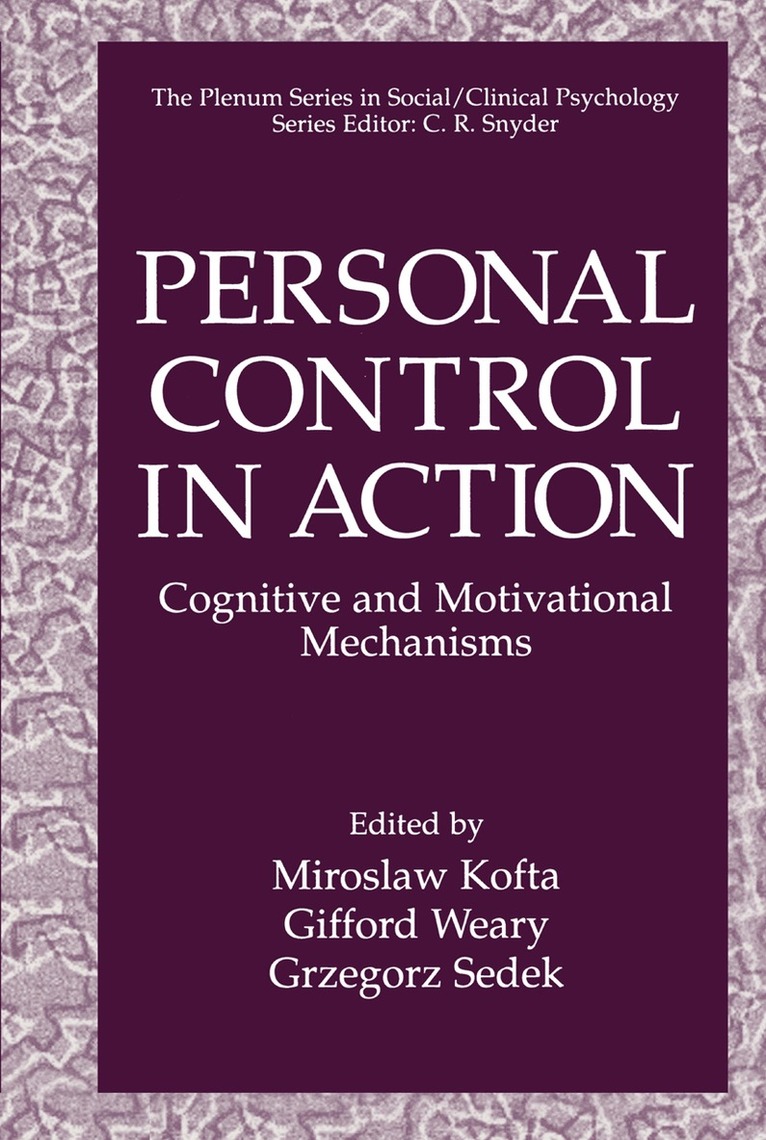
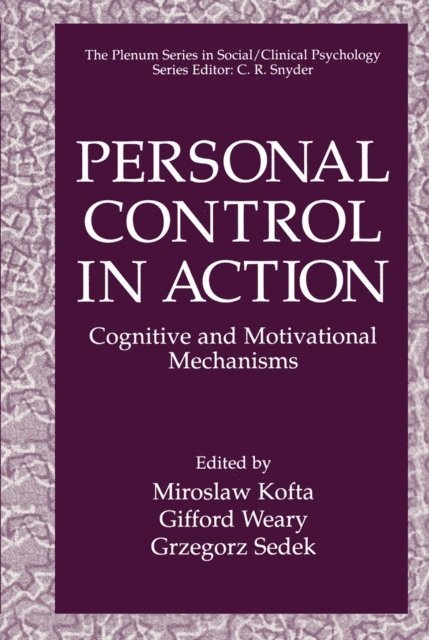
Human beings are agents: They may exert influence over their own fate. They initiate their actions, experience a considerable degree of freedom and control in their mundane activities, and respond adversely to external constraints to their agency; they are able to monitor and modify their moti- vation, affective states, and behavior. Since the sixties, the notion of person-as-agent has become increas- ingly accepted in scientific psychology. Nowadays, personal control is a standard topic in research on personality, motivation, and social behavior. The most popular approach identifies personal control with a feeling or judgment: To have control means to perceive the self as a source of causa- tion. Within this perspective, such consciously accessible contents like perceived freedom and self-determination, feelings and expectations of control, or perceived self-efficacy and competence emerge as natural tar- gets of research (see e.g., Alloy, Clements, & Koenig, 1993; Bandura, 1977; OeCharms, 1968; Oeci & Ryan, 1985; Harvey, 1976; Rotter, 1966; Thomp- son, 1993; Wortman, 1975).
2 159 kr
Skickas inom 10-15 vardagar
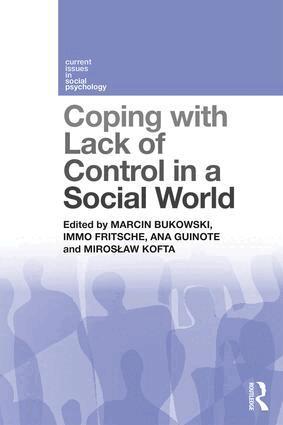
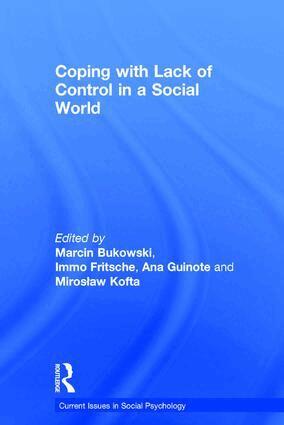
Coping with Lack of Control in a Social World offers an integrated view of cutting-edge research on the effects of control deprivation on social cognition. The book integrates multi-method research demonstrating how various types of control deprivation, related not only to experimental settings but also to real life situations of helplessness, can lead to variety of cognitive and emotional coping strategies at the social cognitive level. The comprehensive analyses in this book tackle issues such as: Cognitive, emotional and socio-behavioral reactions to threats to personal control How social factors aid in coping with a sense of lost or threatened control Relating uncontrollability to powerlessness and intergroup processes How lack of control experiences can influence basic and complex cognitive processesThis book integrates various strands of research that have not yet been presented together in an innovative volume that addresses the issue of reactions to control loss in a socio-psychological context. Its focus on coping as an active way of confronting a sense of uncontrollability makes this a unique, and highly original, contribution to the field. Practicing psychologists and students of psychology will be particularly interested readers.
810 kr
Skickas inom 10-15 vardagar
Coping with Lack of Control in a Social World offers an integrated view of cutting-edge research on the effects of control deprivation on social cognition. The book integrates multi-method research demonstrating how various types of control deprivation, related not only to experimental settings but also to real life situations of helplessness, can lead to variety of cognitive and emotional coping strategies at the social cognitive level. The comprehensive analyses in this book tackle issues such as: Cognitive, emotional and socio-behavioral reactions to threats to personal control How social factors aid in coping with a sense of lost or threatened control Relating uncontrollability to powerlessness and intergroup processes How lack of control experiences can influence basic and complex cognitive processesThis book integrates various strands of research that have not yet been presented together in an innovative volume that addresses the issue of reactions to control loss in a socio-psychological context. Its focus on coping as an active way of confronting a sense of uncontrollability makes this a unique, and highly original, contribution to the field. Practicing psychologists and students of psychology will be particularly interested readers.
1 625 kr
Skickas inom 10-15 vardagar
Human beings are agents: They may exert influence over their own fate. They initiate their actions, experience a considerable degree of freedom and control in their mundane activities, and respond adversely to external constraints to their agency; they are able to monitor and modify their moti- vation, affective states, and behavior. Since the sixties, the notion of person-as-agent has become increas- ingly accepted in scientific psychology. Nowadays, personal control is a standard topic in research on personality, motivation, and social behavior. The most popular approach identifies personal control with a feeling or judgment: To have control means to perceive the self as a source of causa- tion. Within this perspective, such consciously accessible contents like perceived freedom and self-determination, feelings and expectations of control, or perceived self-efficacy and competence emerge as natural tar- gets of research (see e.g., Alloy, Clements, & Koenig, 1993; Bandura, 1977; OeCharms, 1968; Oeci & Ryan, 1985; Harvey, 1976; Rotter, 1966; Thomp- son, 1993; Wortman, 1975).