Grzegorz Zabinski - Böcker
Visar alla böcker från författaren Grzegorz Zabinski. Handla med fri frakt och snabb leverans.
3 produkter
3 produkter
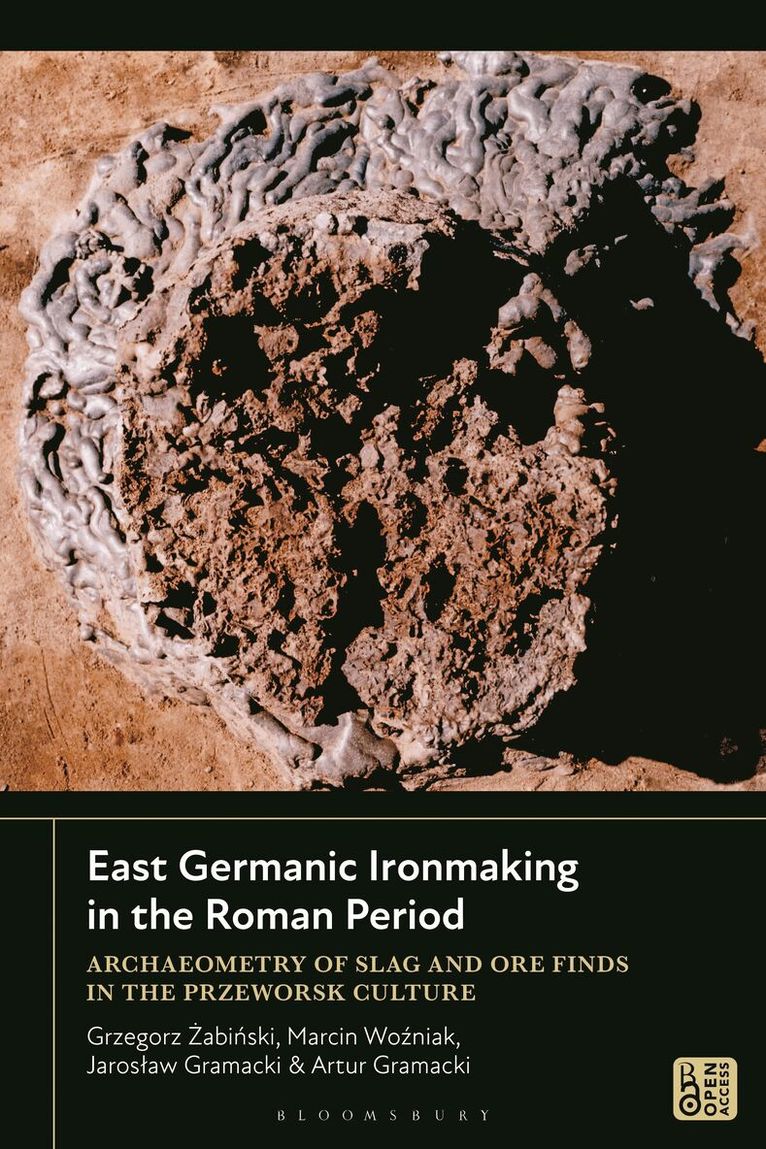
East Germanic Ironmaking in the Roman Period
Archaeometry of Slag and Ore Finds in the Przeworsk Culture
Inbunden, Engelska, 2025
1 152 kr
Skickas inom 7-10 vardagar
Making a study of East Germanic iron smelting in the Roman period, this open access book gives an in-depth account of the development of metallurgy in the Przeworsk Culture. Its two main ironmaking centres – the Holy Cross Mountains and Masovia – were the largest iron production regions beyond the borders of the Roman Empire. Apart from serving local demand – where it was used for artefacts of many kinds, which are abundantly found in grave furnishings – a considerable part of Przeworsk Culture iron is likely to have been exported to other territories. Despite more than 60 years of research and scholarship on Przeworsk Culture iron metallurgy, this is the first book to carry out smelting slag and ore analyses using the most up-to-date methods available in archaeological science. More specifically, this study also applies a variety of statistical methods to the results of the elemental analyses of nearly 270 smelting slag and ore samples from its territory. Offering an overview of statistical approaches used in iron provenance studies and a detailed step-by-step research methodology, this book paves the way for future studies, including artefact provenance analyses using the latest archaeometric methods.The ebook editions of this book are available open access under a CC BY-NC-ND 4.0 licence on bloomsburycollections.com. Research reported in this book was funded by the National Science Centre Poland. Open access was funded by Grzegorz Zabinski.
East Germanic Ironmaking in the Roman Period
Archaeometry of Slag and Ore Finds in the Przeworsk Culture
Häftad, Engelska, 2026
499 kr
Kommande
Making a study of East Germanic iron smelting in the Roman period, this open access book gives an in-depth account of the development of metallurgy in the Przeworsk Culture. Its two main ironmaking centres – the Holy Cross Mountains and Masovia – were the largest iron production regions beyond the borders of the Roman Empire. Apart from serving local demand – where it was used for artefacts of many kinds, which are abundantly found in grave furnishings – a considerable part of Przeworsk Culture iron is likely to have been exported to other territories. Despite more than 60 years of research and scholarship on Przeworsk Culture iron metallurgy, this is the first book to carry out smelting slag and ore analyses using the most up-to-date methods available in archaeological science. More specifically, this study also applies a variety of statistical methods to the results of the elemental analyses of nearly 270 smelting slag and ore samples from its territory. Offering an overview of statistical approaches used in iron provenance studies and a detailed step-by-step research methodology, this book paves the way for future studies, including artefact provenance analyses using the latest archaeometric methods.The ebook editions of this book are available open access under a CC BY-NC-ND 4.0 licence on bloomsburycollections.com. Research reported in this book was funded by the National Science Centre Poland. Open access was funded by Grzegorz Zabinski.
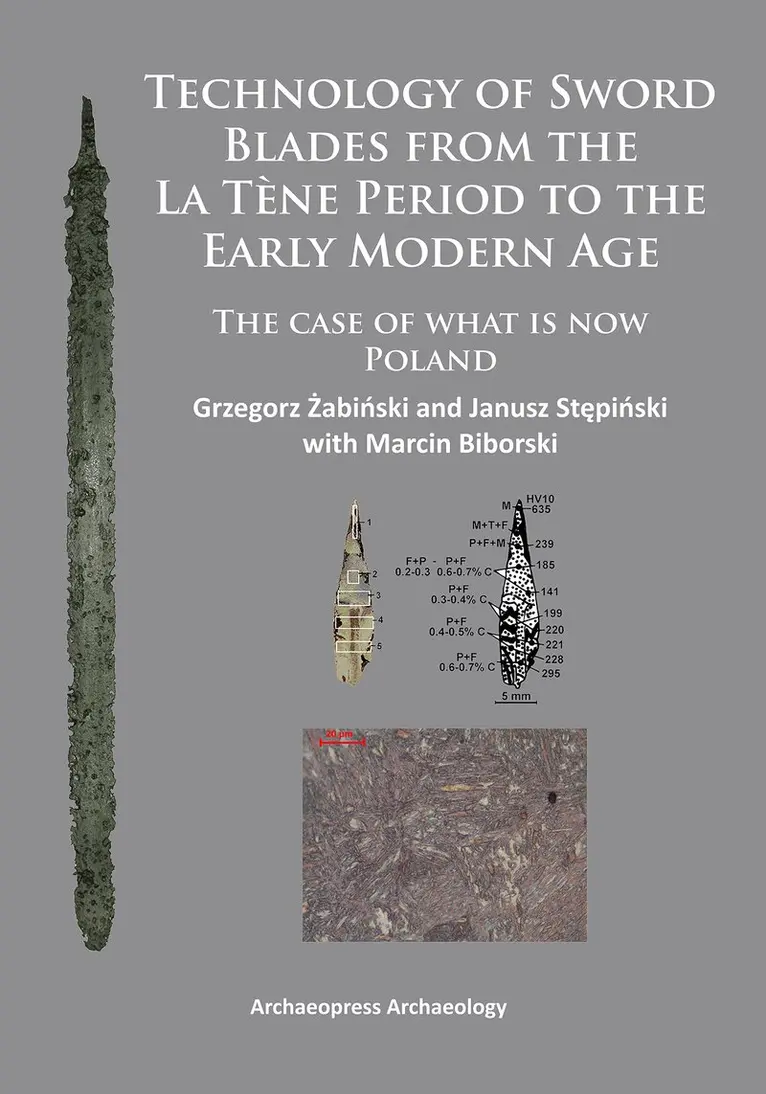
Technology of Sword Blades from the La Tène Period to the Early Modern Age
The case of what is now Poland
Häftad, Engelska, 2014
770 kr
Skickas
This book assesses the results of recent metallographic examination of 45 sword blades (mid-2nd century BC to early-16th century) from the territory of what is now Poland. Pre-Roman blades were usually made from one piece of metal of varying quality (better quality items were perhaps imported). Most high quality and complex technology Roman blades were in all probability of Roman provenance, while some low quality one-piece examples may have been made locally. The Migration Period and Early Middle Ages witnessed the greatest diversification of technological solutions. However it is much more difficult to define the provenance of blades based on their technology in these periods. The range of technologies in use strongly decreased in the High and Late Middle Ages.