G.S. Pearson – författare
Visar alla böcker från författaren G.S. Pearson. Handla med fri frakt och snabb leverans.
11 produkter
11 produkter
Inbunden, Engelska, 2000
2 222 kr
Skickas inom 10-15 vardagar
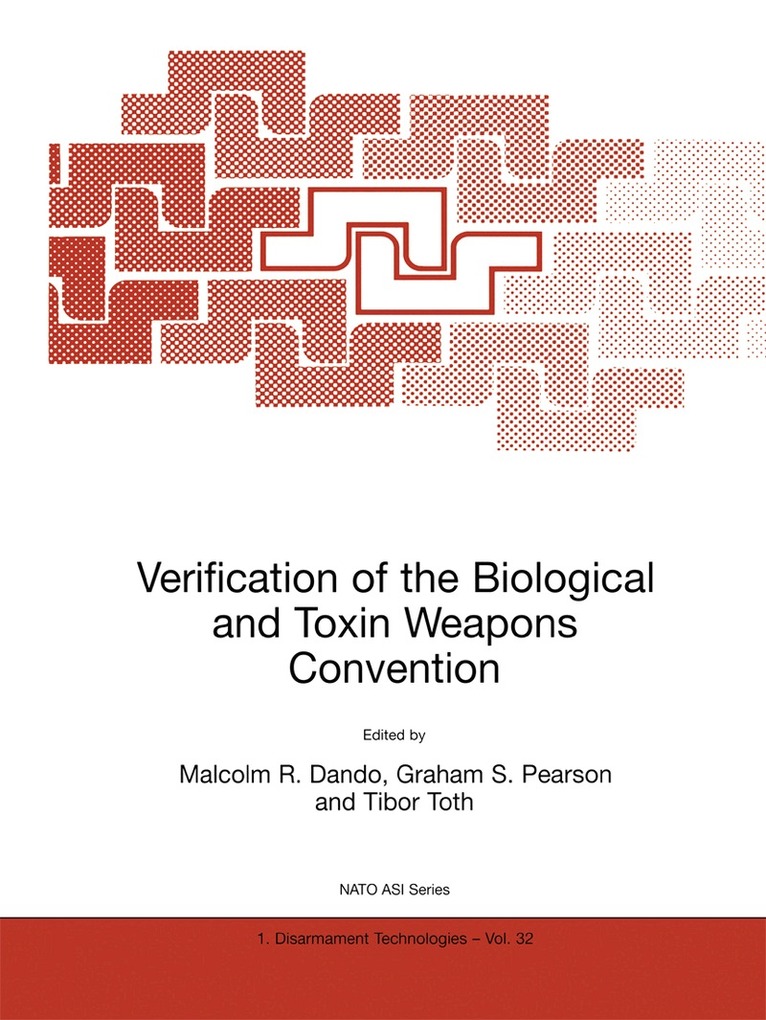
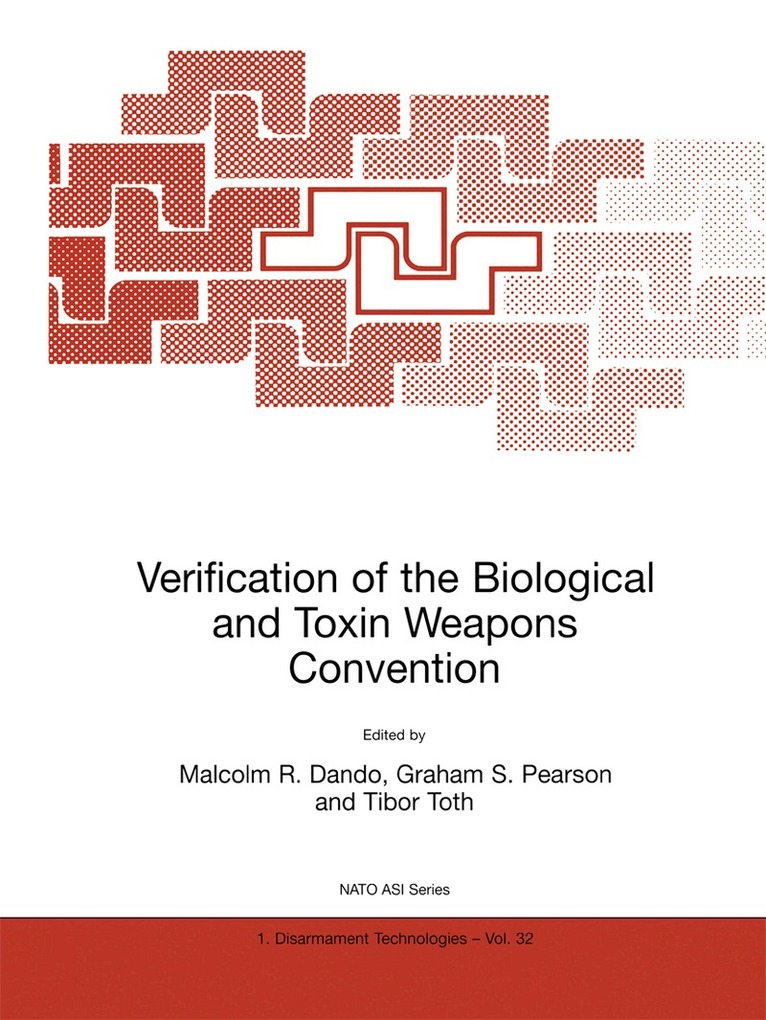
In the summer of 1997 some twelve lecturers and sixty students met for ten days in Budapest Hungary in a NATO Advanced Studies Institute (ASI) to consider "New Scientific and Technical Aspects of Verification of the Biological and Toxin Weapons Convention". In many ways the meeting was ahead of its time. The Ad Hoc Group was only then about to move to the discussion of a rolling text of the Protocol to the Biological and Toxin Weapons Convention (BTWC). It had been mandated to negotiate the Protocol by the Special Conference which had considered the work of the VEREX process that had taken place following the 1991 Third Review Conference of the Convention. Now, in late 1999, after much further negotiation of the text of the Protocol we are moving towards the endgame of the negotiations. Nevertheless, the scientific and technical issues discussed in the ASI in Hungary continue to be of direct relevance to the verification of the Convention and will continue to be relevant as the eventual Protocol moves from agreement through a Preparatory Commission stage and into full implementation over the next several years. The papers in this volume are much as they were presented in Budapest both in order of presentation and in content. They were designed by the ASI co-directors, Professor Graham Pearson and Ambassador Tibor Toth (Chairman of the Ad Hoc Group) to provide an integrated overview and in-depth analysis of the issues at stake.
Del 35 - NATO Science Partnership Subseries: 1
Scientific and Technical Means of Distinguishing Between Natural and Other Outbreaks of Disease
Inbunden, Engelska, 2001
1 115 kr
Skickas inom 10-15 vardagar
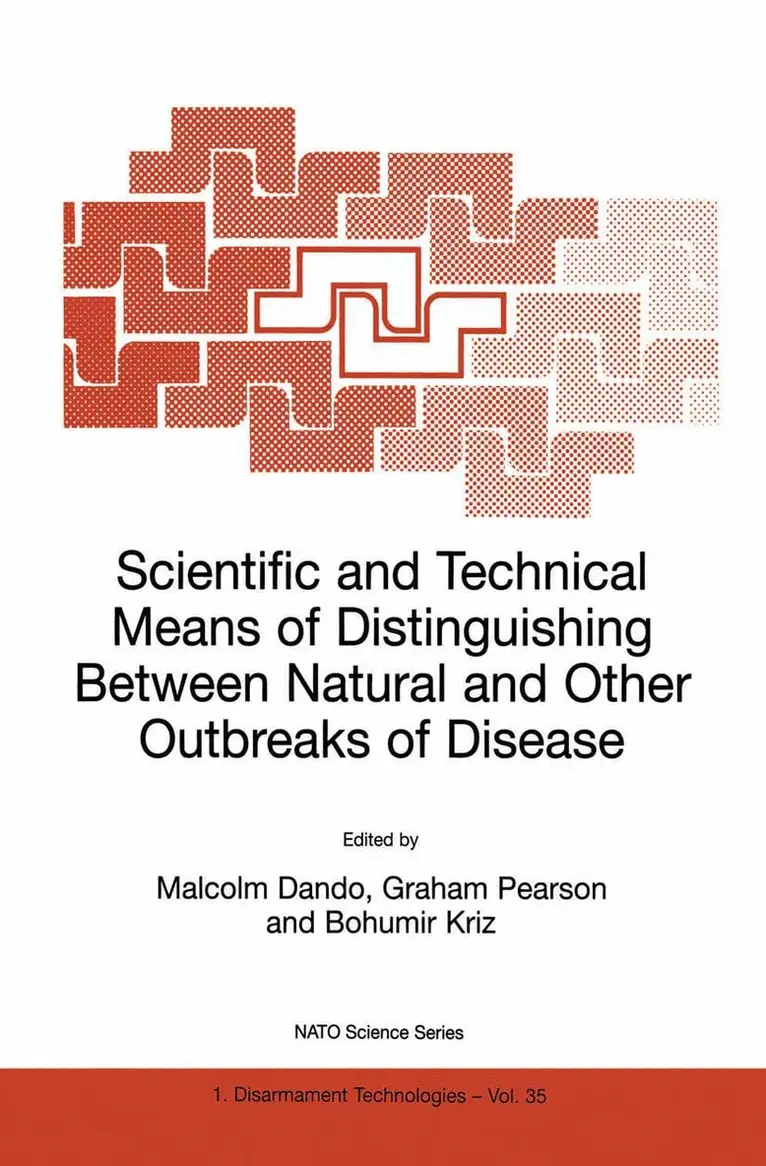
There is increasing concern over the possible use of biological weapons. If they are used, an attack will manifest as a disease outbreak among humans, animals or plants. It is thus important to be able to distinguish between natural disease outbreaks and the result of such an attack. The bok discusses the scientific and technical means available to investigate this question and then goes on to consider the agents of concern. The book concludes with a look forward to future developments.
Del 35 - NATO Science Partnership Subseries: 1
Scientific and Technical Means of Distinguishing Between Natural and Other Outbreaks of Disease
Häftad, Engelska, 2001
1 115 kr
Skickas inom 10-15 vardagar
There is increasing concern over the possible use of biological weapons. If they are used, an attack will manifest as a disease outbreak among humans, animals or plants. It is thus important to be able to distinguish between natural disease outbreaks and the result of such an attack. The bok discusses the scientific and technical means available to investigate this question and then goes on to consider the agents of concern. The book concludes with a look forward to future developments.
Del 36 - NATO Science Partnership Subseries: 1
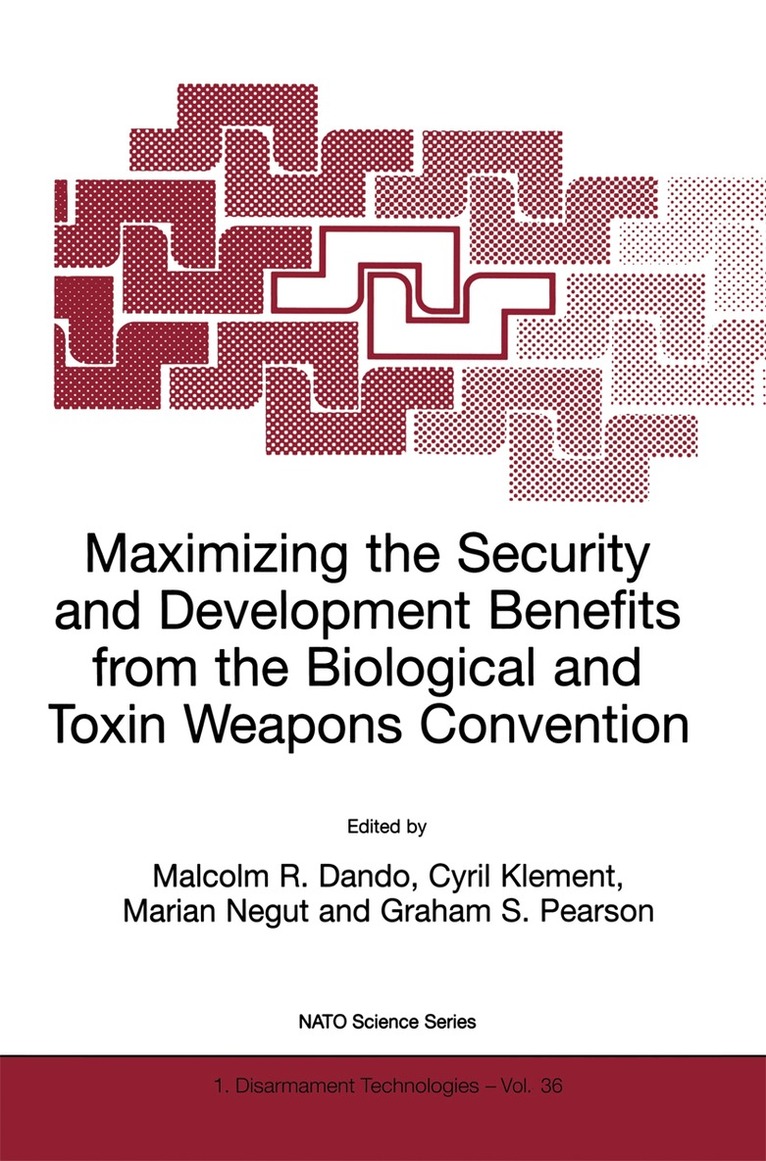
Maximizing the Security and Development Benefits from the Biological and Toxin Weapons Convention
Inbunden, Engelska, 2002
1 620 kr
Skickas inom 10-15 vardagar
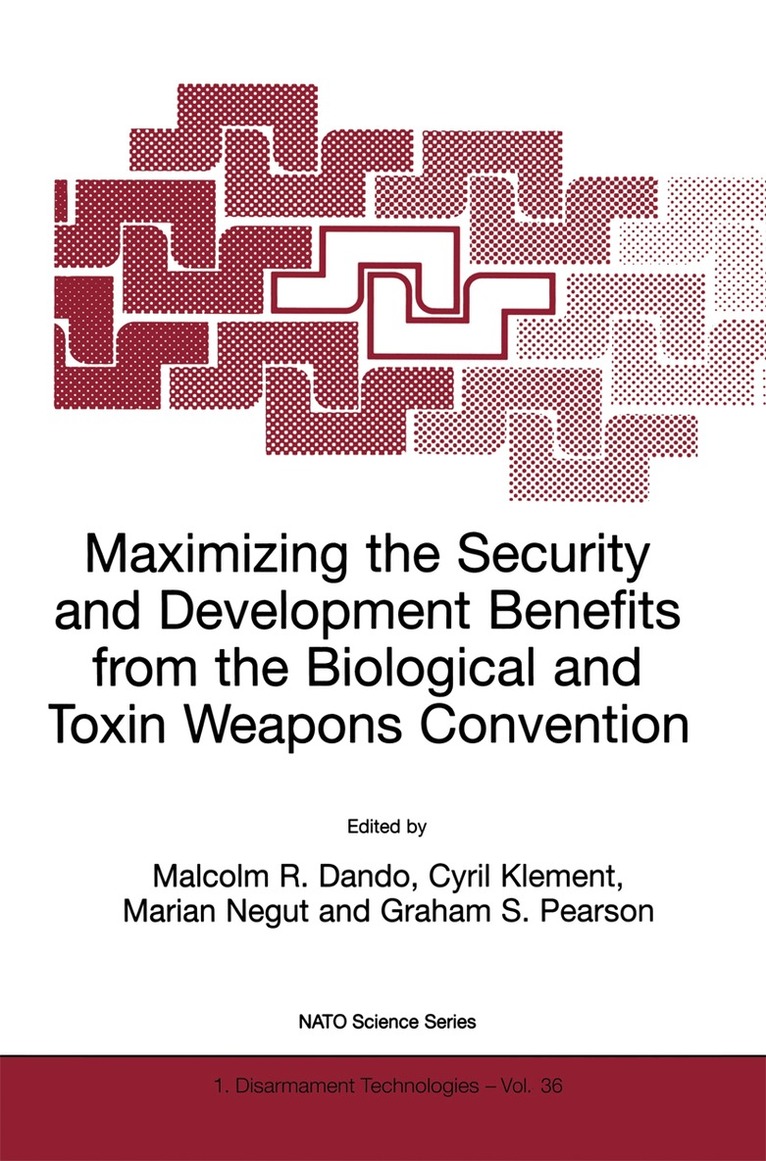
The Biological and Toxin Weapons Convention, while it is primarily a security treaty, does contain provisions for the promotion of technical co-operation and development. There is clearly a direct relationship between technical co-operation in regard to disease surveillance and reporting and the capability to distinguish between natural and deliberate outbreaks of disease. This book provides contributions related to this key linkage between security and development in the rapidly growing biotechnology field. The book's 31 chapters are all written by experts who attended two NATO Advanced Research Workshops on "BTWC Security Implications of Human, Animal and Plant Epidemiology" and "Maximising the Security Benefits from International Cooperation in Microbiology and Biotechnology" held in Romania at the turn of the 21st century.
Häftad, Engelska, 2002
1 620 kr
Skickas inom 10-15 vardagar
The Biological and Toxin Weapons Convention, while it is primarily a security treaty, does contain provisions for the promotion of technical co-operation and development. There is clearly a direct relationship between technical co-operation in regard to disease surveillance and reporting and the capability to distinguish between natural and deliberate outbreaks of disease. This book provides contributions related to this key linkage between security and development in the rapidly growing biotechnology field. The book's 31 chapters are all written by experts who attended two NATO Advanced Research Workshops on "BTWC Security Implications of Human, Animal and Plant Epidemiology" and "Maximising the Security Benefits from International Cooperation in Microbiology and Biotechnology" held in Romania at the turn of the 21st century.
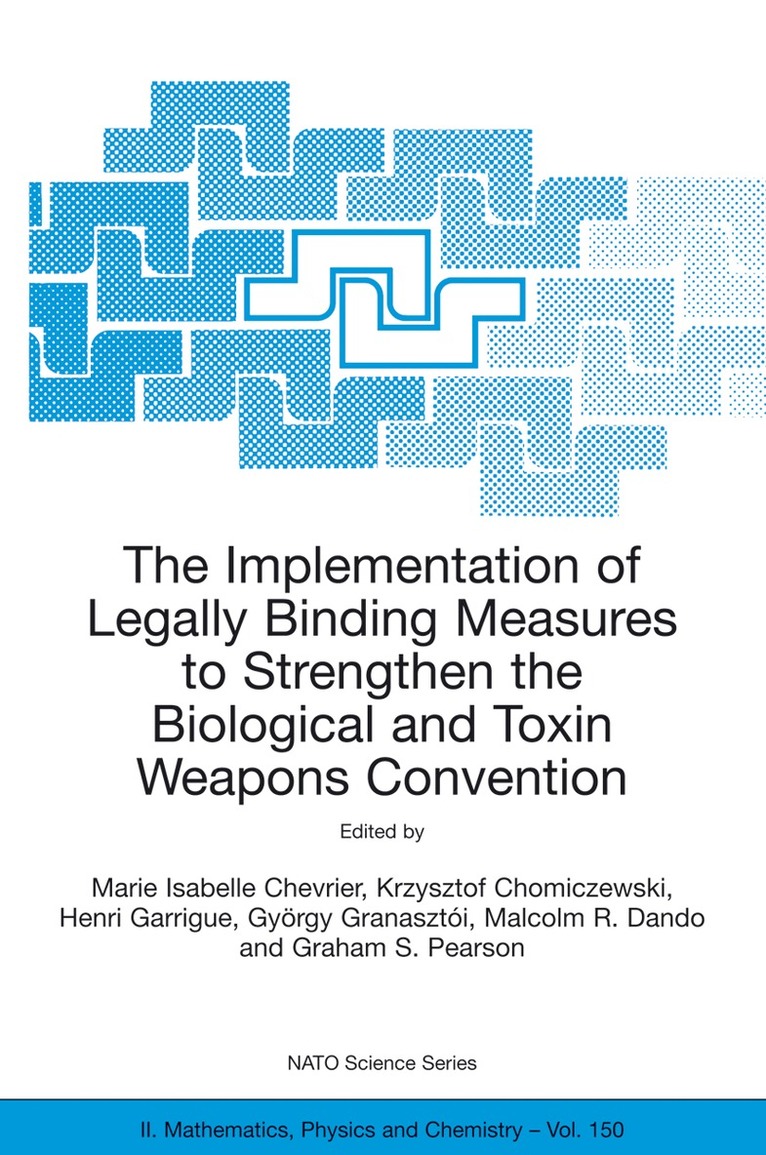
Inbunden, Engelska, 2004
1 980 kr
Skickas inom 10-15 vardagar
Incidents of bioterrorism and biowarfare are likely to recur, leading to increased public concern and government action. The deficiencies of the Biological and Toxin Weapons Convention (BTWC) are in urgent need of attention: the BTWC is the central international agreement to prevent the proliferation of biological warfare programmes. Uniquely, this book is written by diplomats involved in the decade-long effort (1991-2001) in which State Parties to the BTWC tried to agree a Protocol to the Convention with legally binding measures to strengthen its effectiveness, and academics concerned with the negotiations. Just before negotiations foundered, when the Chairman's proposed text was virtually complete, the problems and proposed solutions were examined thoroughly, leading to this book. The book is wide-ranging in its review of the history of biological warfare, the reasons why the current biological revolution is of such concern, and the main features of the BTWC itself. The core of the book examines the key elements of the proposed protocol - declarations, visits, challenge-type investigations, and enhanced international cooperation - and the implications for government, industry and biodefence, giving us all a better understanding of what still remains to be done to avert a biowarfare catastrophe.
Häftad, Engelska, 2004
1 980 kr
Skickas inom 10-15 vardagar
Incidents of bioterrorism and biowarfare are likely to recur, leading to increased public concern and government action. The deficiencies of the Biological and Toxin Weapons Convention (BTWC) are in urgent need of attention: the BTWC is the central international agreement to prevent the proliferation of biological warfare programmes. Uniquely, this book is written by diplomats involved in the decade-long effort (1991-2001) in which State Parties to the BTWC tried to agree a Protocol to the Convention with legally binding measures to strengthen its effectiveness, and academics concerned with the negotiations. Just before negotiations foundered, when the Chairman's proposed text was virtually complete, the problems and proposed solutions were examined thoroughly, leading to this book. The book is wide-ranging in its review of the history of biological warfare, the reasons why the current biological revolution is of such concern, and the main features of the BTWC itself. The core of the book examines the key elements of the proposed protocol - declarations, visits, challenge-type investigations, and enhanced international cooperation - and the implications for government, industry and biodefence, giving us all a better understanding of what still remains to be done to avert a biowarfare catastrophe.
Häftad, Engelska, 2010
1 980 kr
Skickas inom 10-15 vardagar
In the summer of 1997 some twelve lecturers and sixty students met for ten days in Budapest Hungary in a NATO Advanced Studies Institute (ASI) to consider "New Scientific and Technical Aspects of Verification of the Biological and Toxin Weapons Convention". In many ways the meeting was ahead of its time. The Ad Hoc Group was only then about to move to the discussion of a rolling text of the Protocol to the Biological and Toxin Weapons Convention (BTWC). It had been mandated to negotiate the Protocol by the Special Conference which had considered the work of the VEREX process that had taken place following the 1991 Third Review Conference of the Convention. Now, in late 1999, after much further negotiation of the text of the Protocol we are moving towards the endgame of the negotiations. Nevertheless, the scientific and technical issues discussed in the ASI in Hungary continue to be of direct relevance to the verification of the Convention and will continue to be relevant as the eventual Protocol moves from agreement through a Preparatory Commission stage and into full implementation over the next several years. The papers in this volume are much as they were presented in Budapest both in order of presentation and in content. They were designed by the ASI co-directors, Professor Graham Pearson and Ambassador Tibor Toth (Chairman of the Ad Hoc Group) to provide an integrated overview and in-depth analysis of the issues at stake.
E-bok
PDF, Engelska, 20121 885 kr
Läs direkt efter köp
The Editors would like to thank the authors of the papers at the Advanced Research Workshops for their excellent presentations at the workshops and the production of their drafts. We are indebted to those who helped in the preparation of this volume. We should particularly like to acknowledge the help of Piers Millett, who compiled the papers, set them into camera-ready format and produced the index and Dr. Simon Whitby who made the final changes to the manuscript. Any remaining errors are, of course, our responsibility. Malcolm R. Dando Cyril Klement Marian Negut Graham S. Pearson IX ACHIEVING SECURITY BENEFITS FROM TECHNICAL COOPERATION UNDER THE BIOLOGICAL AND TOXIN WEAPONS CONVENTION GRAHAM S. PEARSON Visiting Professor of International Security, Department of Peace Studies, University of Bradford, Bradford, West Yorkshire BD7 IDP, UK 1. Background l The Biological and Toxin Weapons Convention which opened for signature in 1972 2 and entered into force in 1975 currently has 144 States Parties and 18 Signatory States Article I of the Convention is all-embracing in its complete prohibition of biological weapons stating that: Each State Party to this Convention undertakes never in any circumstances to develop, produce, stockpile or otherwise acquire or retain: (1) Microbial or other biological agents, or toxins whatever their origin or method of production, of types and in quantities that have no justification for prophylactic, protective or other peaceful purposes; (2) Weapons, equipment or means of delivery designed to use such
E-bok
PDF, Engelska, 20121 257 kr
Läs direkt efter köp
There is increasing concern over the possible use of biological weapons. If they are used, an attack will manifest as a disease outbreak among humans, animals or plants. It is thus important to be able to distinguish between natural disease outbreaks and the result of such an attack. The bok discusses the scientific and technical means available to investigate this question and then goes on to consider the agents of concern. The book concludes with a look forward to future developments.
E-bok
PDF, Engelska, 20132 613 kr
Läs direkt efter köp
In the summer of 1997 some twelve lecturers and sixty students met for ten days in Budapest Hungary in a NATO Advanced Studies Institute (ASI) to consider "New Scientific and Technical Aspects of Verification of the Biological and Toxin Weapons Convention". In many ways the meeting was ahead of its time. The Ad Hoc Group was only then about to move to the discussion of a rolling text of the Protocol to the Biological and Toxin Weapons Convention (BTWC). It had been mandated to negotiate the Protocol by the Special Conference which had considered the work of the VEREX process that had taken place following the 1991 Third Review Conference of the Convention. Now, in late 1999, after much further negotiation of the text of the Protocol we are moving towards the endgame of the negotiations. Nevertheless, the scientific and technical issues discussed in the ASI in Hungary continue to be of direct relevance to the verification of the Convention and will continue to be relevant as the eventual Protocol moves from agreement through a Preparatory Commission stage and into full implementation over the next several years. The papers in this volume are much as they were presented in Budapest both in order of presentation and in content. They were designed by the ASI co-directors, Professor Graham Pearson and Ambassador Tibor Toth (Chairman of the Ad Hoc Group) to provide an integrated overview and in-depth analysis of the issues at stake.