Guadalupe Valdés – författare
2 133 kr
Skickas inom 10-15 vardagar
583 kr
Skickas inom 10-15 vardagar
2 123 kr
Skickas inom 5-8 vardagar
734 kr
Skickas inom 10-15 vardagar
393 kr
Skickas inom 11-20 vardagar
355 kr
Skickas inom 11-20 vardagar
425 kr
Skickas inom 11-20 vardagar
686 kr
Läs direkt efter köp
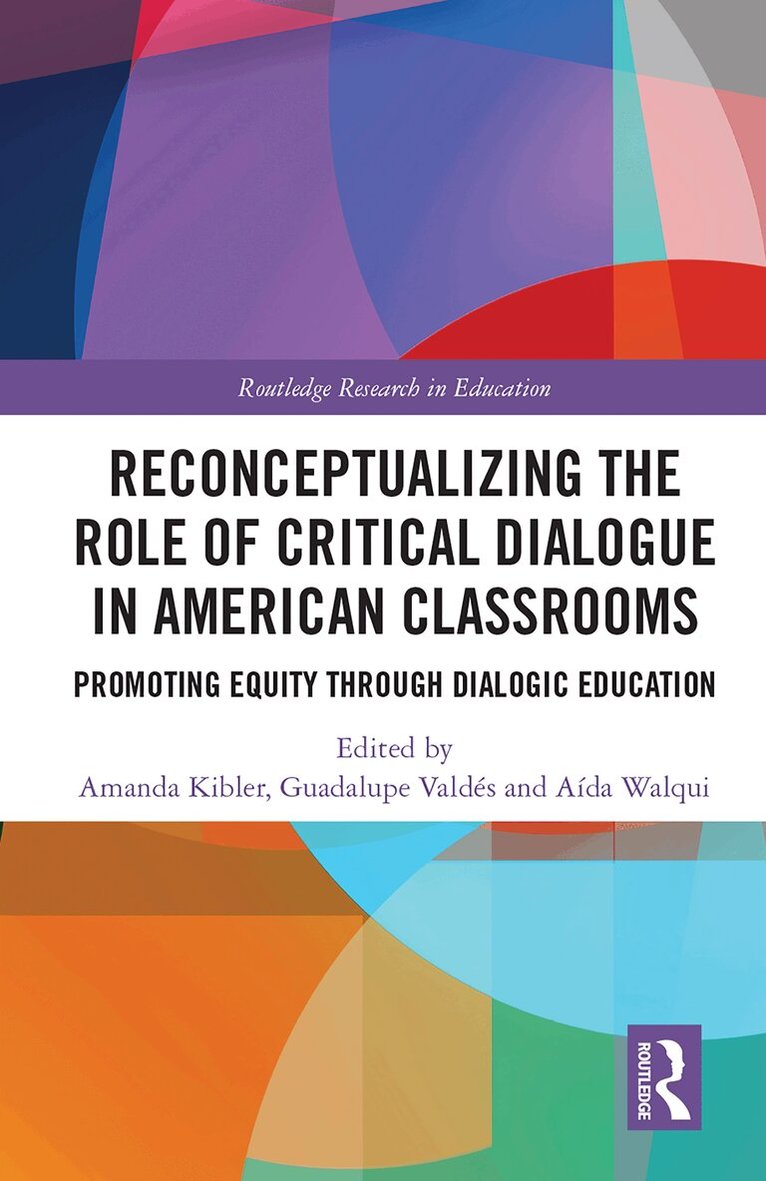
Acknowledging teacher and student dialogue as key to student development, this volume takes a critical perspective on notions of classroom participation, extending previous scholarship to illustrate how critical, dialogic pedagogies can promote equity and inclusivity.
In proposing and outlining the parameters of "critical dialogic education," the contributors to this volume document and discuss examples of classroom discourse practices that challenge the monolithic and uncritical discourse practices that traditionally silence minoritized students. Chapters draw on a range of empirical studies and present multimodal data to consider aspects of teacher education; classroom environments; and curricular innovations which promote critical and dialogical student interaction, civic engagement, and linguistic versatility.
This book will be of interest to scholars, postgraduate students, and researchers working in the fields of language, classroom discourse, social justice, and critical pedagogies, as well as teacher educators and professional development leaders who work with classroom teachers.
866 kr
Läs direkt efter köp
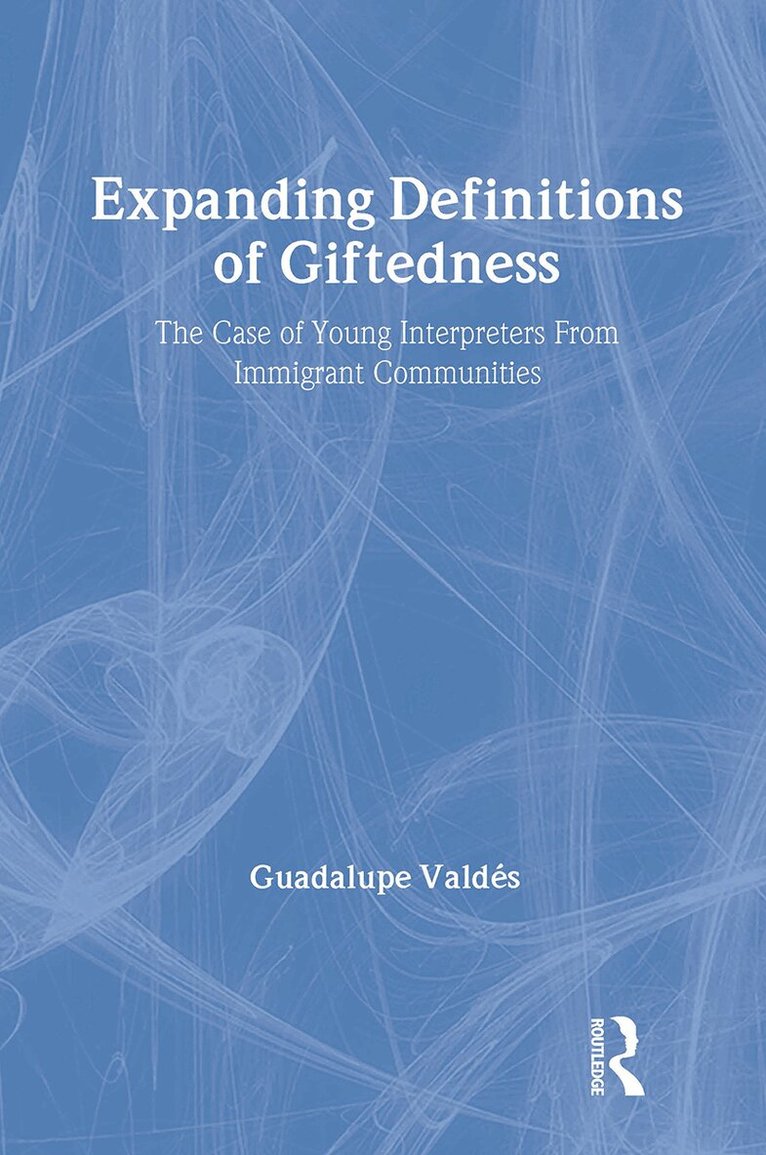
This book is about bilingual young people who have been selected by their families to carry out the hard work of interpreting and translating to mediate communication between themselves and the outside world--between minority and majority communities. It examines the experiences of these young interpreters and the skills they develop in order to fulfill this role. The authors'' purpose in this volume is to contribute to extending current definitions of gifted and talented, by proposing and offering evidence that the young people who are selected to serve as family interpreters perform at remarkably high levels of accomplishment when compared with others of their age, experience, and environment, and should thus clearly be included in the 1993 U.S. federal definition of giftedness. They maintain that not only are these capabilities currently overlooked by existing assessment procedures, but also that there is little understanding of the ways in which the unique talents of young interpreters might be nurtured and developed in academic settings. A strong case is made that in order for such students to be identified as gifted on the basis of their bilingual abilities, the field of gifted and talented education must embrace the concept that bilingualism is a strength. The field must also make developing bilingualism a focus of programs designed to meet the needs of the increasingly multilingual student population in the United States. The research this book reports--part of a larger five-year study of giftedness through linguistic and cultural lenses, funded by OERI through the National Research Center on the Gifted and Talented--was conducted by researchers whose background is very much outside the field of gifted education. Rather, their focus is on language, working within the traditions of qualitative sociolinguistics. Thus, this book offers a unique approach to the exploration of giftedness. It asks researchers and practitioners ordinarily accustomed to working with quantitative data to examine and make sense of detailed and rich analyses of students'' linguistic performance, and argues that it is only by understanding the challenges of such bilingual interactions that the field of gifted and talented education can expand and reframe its vision of giftedness.
866 kr
Läs direkt efter köp
This book is about bilingual young people who have been selected by their families to carry out the hard work of interpreting and translating to mediate communication between themselves and the outside world--between minority and majority communities. It examines the experiences of these young interpreters and the skills they develop in order to fulfill this role. The authors'' purpose in this volume is to contribute to extending current definitions of gifted and talented, by proposing and offering evidence that the young people who are selected to serve as family interpreters perform at remarkably high levels of accomplishment when compared with others of their age, experience, and environment, and should thus clearly be included in the 1993 U.S. federal definition of giftedness. They maintain that not only are these capabilities currently overlooked by existing assessment procedures, but also that there is little understanding of the ways in which the unique talents of young interpreters might be nurtured and developed in academic settings. A strong case is made that in order for such students to be identified as gifted on the basis of their bilingual abilities, the field of gifted and talented education must embrace the concept that bilingualism is a strength. The field must also make developing bilingualism a focus of programs designed to meet the needs of the increasingly multilingual student population in the United States. The research this book reports--part of a larger five-year study of giftedness through linguistic and cultural lenses, funded by OERI through the National Research Center on the Gifted and Talented--was conducted by researchers whose background is very much outside the field of gifted education. Rather, their focus is on language, working within the traditions of qualitative sociolinguistics. Thus, this book offers a unique approach to the exploration of giftedness. It asks researchers and practitioners ordinarily accustomed to working with quantitative data to examine and make sense of detailed and rich analyses of students'' linguistic performance, and argues that it is only by understanding the challenges of such bilingual interactions that the field of gifted and talented education can expand and reframe its vision of giftedness.
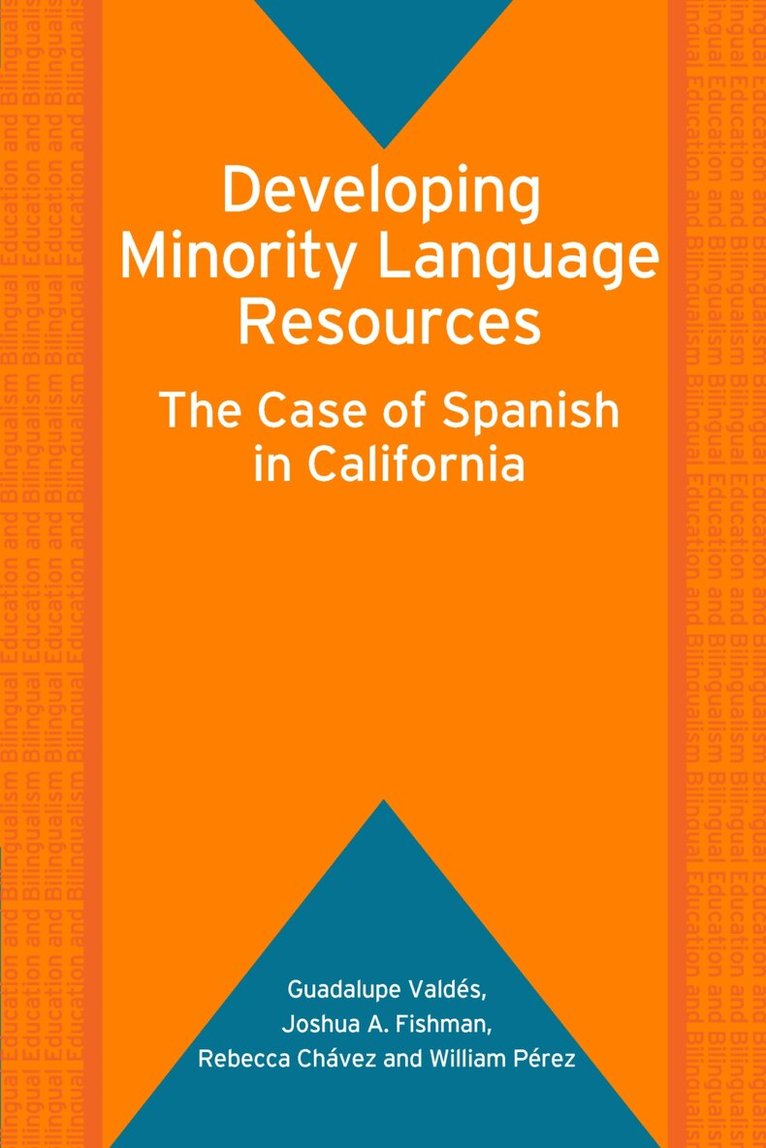
Developing Minority Language Resources
The Case of Spanish in California
404 kr
Skickas inom 5-8 vardagar
Developing Minority Language Resources
The Case of Spanish in California
1 399 kr
Skickas inom 5-8 vardagar
1 827 kr
Tillfälligt slut
This book documents ongoing language shift to English among Latino professionals in California 67% of which studied Spanish formally in high school and 54% of which studied Spanish in college. Taking into account the recommendations about the teaching of Spanish as a heritage language made by these professionals, the book then describes current instructional practices used in the teaching of Spanish as an academic subject at the high school and university levels to “heritage” language students who, although educated entirely in English, acquired Spanish at home as their first language. The suggestions made by the Professionals concentrated almost exclusively on Spanish language maintenance (e.g., making cultural/historical connections; showing relevance and significance of language to students’ lives, teaching other subjects in Spanish, teaching legal, medical, business terms in Spanish). The study of goals currently guiding instruction for heritage speakers of Spanish at both the high school and the college levels, on the other hand, raise questions about the potential contribution of educational institutions to the maintenance and retention of Spanish among the current Spanish-speaking population of California.