Guenter Langergraber – författare
Visar alla böcker från författaren Guenter Langergraber. Handla med fri frakt och snabb leverans.
7 produkter
7 produkter
1 571 kr
Tillfälligt slut
The ebook edition of this title is freely available as an Open Access text. Treatment Wetlands is the seventh volume in the Biological Wastewater Treatment series, which gives a state-of-the-art presentation of the science and technology of sewage treatment. The major variants of wetland systems are covered in this volume, namely: (i) horizontal flow wetlands; (ii) vertical flow wetlands; (iii) French vertical flow wetlands; (iv) intensified wetlands; (v) free water surface wetlands; (vi) other applications of treatment wetlands. The book presents in a clear and didactic way the main concepts, working principles, expected performance, design criteria, design examples, construction aspects and operational guidelines. The book has been written by an international team of top experts in the field of treatment wetlands.
Del 27 - Scientific and Technical Report Series
Wetland Technology
Practical Information on the Design and Application of Treatment Wetlands
Häftad, Engelska, 2019
1 321 kr
Tillfälligt slut
Water quality standards across the world are being re-written to promote healthier ecosystems, ensure safe potable water sources, increased biodiversity, and enhanced ecological functions. Treatment wetlands are used for treating a variety of pollutant waters, including municipal wastewater, agricultural and urban runoff, industrial effluents, and combined sewer overflows, among others. Treatment wetlands are particularly well-suited for sustainable water management because they can cope with variable influent loads, can be constructed of local materials, have low operations and maintenance requirements compared to other treatment technologies, and they can provide additional ecosystem services. The technology has been successfully implemented in both developed and developing countries.The first IWA Scientific and Technical Report (STR) on Wetland Technology was published in 2000. With the exponential development of the technology since then, the generation of a new STR was facilitated by the IWA Task Group on Mainstreaming Wetland Technology. This STR was conceptualized and written by leading experts in the field. The new report presents the latest technology applications within an innovative planning framework of multi-purpose wetland design. It also includes practical design information collected from over twenty years of experience from practitioners and academics, covering experiments at laboratory and pilot-scale up to full-scale applications.Scientific and Technical Report No.27
Tecnología de humedales para tratamiento
Información práctica para el diseño y aplicación de humedales para tratamiento
Häftad, Spanska, 2021
1 446 kr
Tillfälligt slut
Los estándares de calidad del agua alrededor del mundo están siendo actualizados para garantizar ecosistemas saludables, asegurar recursos hídricos para potabilización, incrementar la biodiversidad, y mejorar las funciones ecológicas. Los humedales para tratamiento son utilizados para depurar una variedad de aguas residuales o contaminadas, lo que incluye, aguas residuales municipales, escorrentía agrícola y urbana, efluentes industriales, y efluentes de los vertederos de excesos en alcantarillados combinados, entre otros. Los humedales para tratamiento son particularmente adecuados para la gestión sostenible del agua porque pueden manejar cargas variables en los afluentes, pueden ser construidos con materiales locales, tienen pocos requerimientos de operación y mantenimiento en comparación a otras tecnologías, y pueden proveer servicios ecosistémicos adicionales. La tecnología ha sido exitosamente implementada en países desarrollados y en vías de desarrollo.El primer Reporte Cientifico y Tecnológico (STR, por sus siglas del inglés, Scientific and Technical Report) sobre la tecnología de humedales fue publicado en el 2000. Con el desarrollo exponencial de la tecnología desde entonces, la generación de un nuevo STR fue desarrollada por el Grupo de trabajo de la IWA sobre la integración de la tecnología de humedales (IWA Task Group on Mainstreaming Wetland Technology). Este STR fue conceptualizado y escrito, junto con su traducción al castellano, por expertos líderes en la materia. Este nuevo reporte presenta las últimas aplicaciones de la tecnología dentro de un marco de planificación innovador del diseño de humedales para múltiples propósitos. También, incluye información práctica para el diseño recolectada a partir de 20 años de experiencias de profesionales y académicos, que abarca experimentos a escala de laboratorio, piloto y real.
1 446 kr
Tillfälligt slut
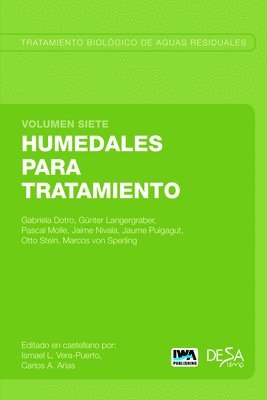
Humedales para tratamiento es el séptimo volumen de la serie “Tratamiento biológico de aguas residuales” (en inglés “Biological Waste Water Treatment Series”), que provee una presentación de vanguardia sobre la ciencia y tecnología del tratamiento de aguas residuales. Los principales tipos de sistemas de humedales son tratados en este volumen, a saber: (i) Humedales de flujo subsuperficial horizontal, (ii) Humedales de flujo vertical; (iii) Humedales de flujo vertical tipo francés; (iv) Humedales intensificados; (v) Humedales de flujo libre; (vi) otras aplicaciones de los humedales para tratamiento. El libro presenta en forma clara y didáctica, los conceptos básicos, los principios de la tecnología, desempeños esperados, criterios de diseño, ejemplos de diseño, aspectos constructivos y guías para la operación. El libro ha sido escrito en su versión inglesa, y traducido al castellano, por un equipo internacional de expertos en el campo de los humedales para tratamiento.
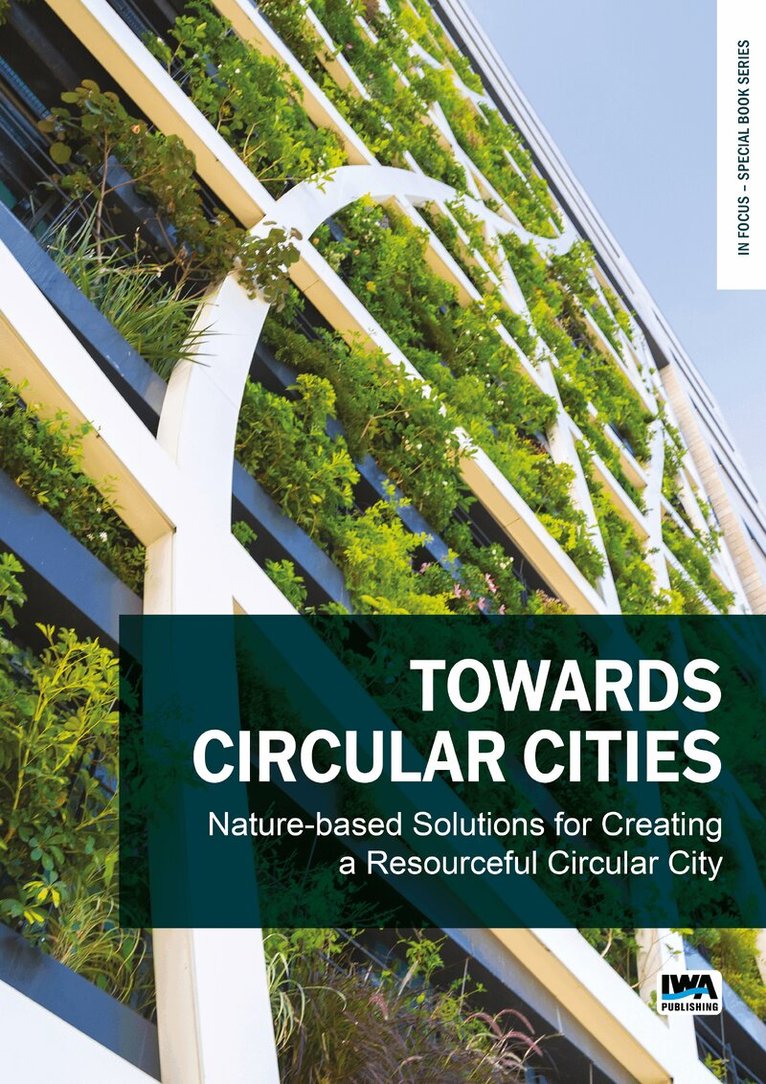
Towards Circular Cities: Nature based solutions for creating a resourceful circular city
Häftad, Engelska, 2023
1 384 kr
Tillfälligt slut
This book comprises six chapters prepared by the COST Action Circular City (https://circular-city.eu/). The Action aims to establish a network of researchers and stakeholders testing the hypothesis that: ‘A circular flow system that implements nature-based solutions (NBS) for managing nutrients and resources within the urban biosphere will lead to a resilient, sustainable and healthy urban environment.’ They are the starting point towards deeper exploration of how NBS can contribute to circular cities, gathering state-of-the-art knowledge of one of the biggest COST Actions so far. In Focus – a book series that showcases the latest accomplishments in water research. Each book focuses on a specialist area with papers from top experts in the field. It aims to be a vehicle for in-depth understanding and inspire further conversations in the sector.
946 kr
Tillfälligt slut
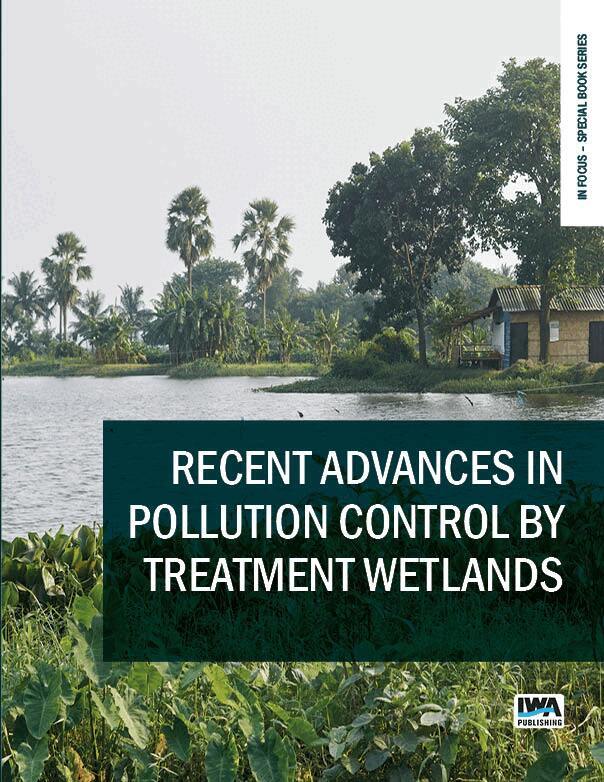
The goal of this book is to improve understanding of the role wetlands perform in processing nutrients and contaminants, and to discuss and demonstrate how restored and constructed wetlands in the future, via their associated ecosystem services, can contribute to ensure sustainable water management and resource recovery while at the same time regulating and mitigating impacts of global climate change. Topics covered include:•various treatment wetland types, e.g. free water surface wetlands, subsurface flow wetlands, and intensified wetlands•the performance of treatment wetlands for different types of water, e.g. greywater, industrial wastewater, and agricultural runoff•the performance of treatment wetlands for removing selected micro-pollutants•the impact of salinity on the treatment performance.In Focus – a book series that showcases the latest accomplishments in water research. Each book focuses on a specialist area with papers from top experts in the field. It aims to be a vehicle for in-depth understanding and inspire further conversations in the sector.
1 822 kr
Tillfälligt slut
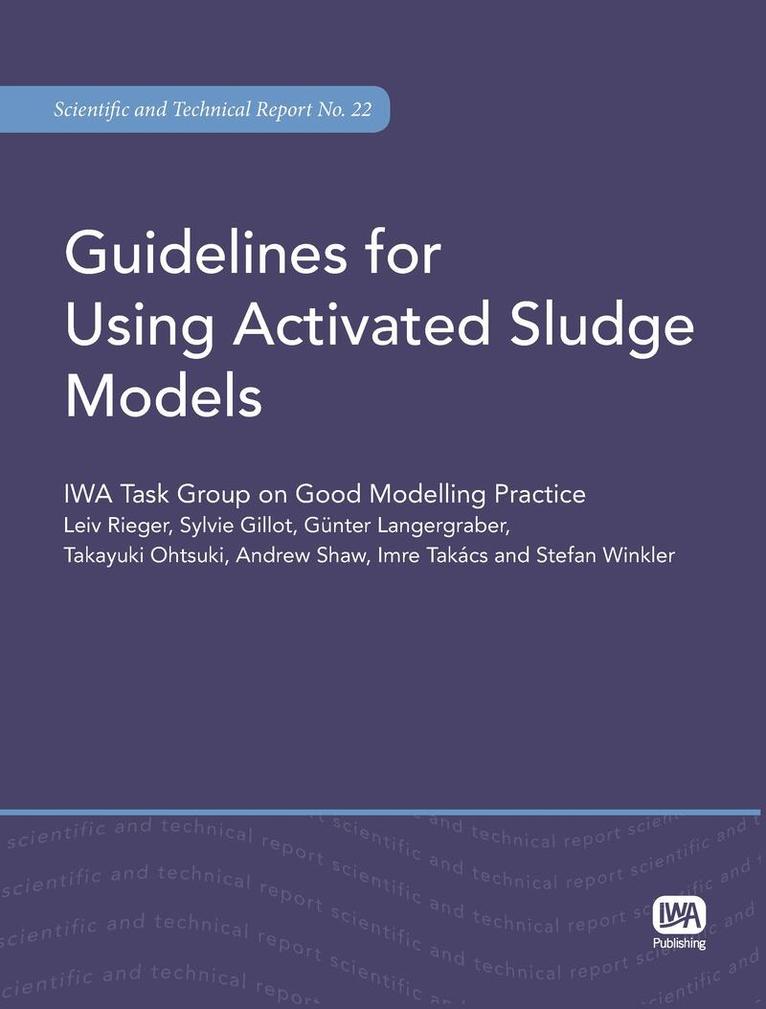
Mathematical modelling of activated sludge systems is used widely for plant design, optimisation, training, controller design and research. The quality of simulation studies varies depending on the project objectives, finances and expertise available. Consideration has to be given to the model accuracy and the amount of time required carrying out a simulation study to produce the desired accuracy. Inconsistent approaches and insufficient documentation make quality assessment and comparison of simulation results difficult or almost impossible. A general framework for the application of activated sludge models is needed in order to overcome these obstacles. The genesis of the Good Modelling Practice (GMP) Task Group lies in a workshop held at the 4th IWA World Water Congress in Marrakech, Morocco where members of research groups active in wastewater treatment modelling came together to develop plans to synthesize the best practices of modellers from all over the world. The most cited protocols were included in the work, amongst others from: HSG (Hochschulgruppe), STOWA, BIOMATH and WERF. The goal of the group is to set up an internationally accepted framework to deal with the ASM type models in practice. This framework shall make modelling more straightforward and systematic to use especially for practitioners and consultants. Additionally, it shall help to define quality levels for simulation results, a procedure to assess this quality and to assist in the proper use of the models. The framework will describe a methodology for goal-oriented application of activated sludge models demonstrated by means of a concise guideline about the procedure of a simulation study and some illustrative case studies. The case studies shall give examples for the required data quality and quantity and the effort for calibration/validation with respect to a defined goal. The final report will include an extended appendix with additional information and details of methodologies. Additional features in Guidelines for Using Activated Sludge Models include a chapter on modelling industrial wastewater, an overview on the history, current practice and future of activated sludge modelling and several explanatory case studies. It can be used as an introductory book to learn about Good Modelling Practice (GMP) in activated sludge modelling and will be of special interest for process engineers who have no prior knowledge of modelling or for lecturers who need a textbook for their students. The STR can also be used as a modelling reference book and includes an extended appendix with additional information and details of methodologies.Scientific and Technical Report No. 22