• Fri frakt över 249 kr
  • •
  • Snabba leveranser
  • •
  • Billiga böcker
Kundservice

Du är på sajten för privatpersoner.

Företag, bibliotek eller offentlig verksamhet?

Du handlar på classic.bokus.com, där alla dina funktioner finns intakta.
Till classic.bokus.com
Bokus logotyp. Gå till startsidan.
  • Erbjudanden
  • Student
  • Topplistor
  • Barn & ungdom
  • Bokus Play
  • E-böcker
  • Ljudböcker
  • Pocketböcker
  • Spel & pussel

10% rabatt på allt med kod NYSTART10 →

Sidfot

Mina sidor

    Hjälp

    • Kundservice
    • Vanliga frågor och svar
    • Frakt och leverans
    • Retur vid ångerrätt
    • Reklamera vara
    • Betalning
    • Köpvillkor
    • Allmänna villkor
    • Information om webbplatsens tillgänglighet

    Om Bokus

    • Om oss
    • Pressrum
    • För studenter
    • För företag
    • För bibliotek och offentlig verksamhet
    • För leverantörer
    • Hållbarhet

    Populärt

    • Aktuella erbjudanden
    • Presentkort
    • Studentlitteratur
    • Nya böcker
    • Topplistor
    • Signerade böcker
    • Engelska böcker

    Inspiration

    • Boktips
    • BookTok
    • Populära bokserier
    • Barnbokskaraktärer
    • Populära författare
    Logotyp för Bokus
    Följ oss på Facebook (extern länk)Följ oss på Instagram (extern länk)Följ oss på YouTube (extern länk)Följ oss på TikTok (extern länk)
    bokus @ CookiesAnpassa cookiesIntegritetspolicyKöpvillkor
    Till Citymail hemsida (extern länk)Till Budbee hemsida (extern länk)Till Postnord hemsida (extern länk)Till Schenker hemsida (extern länk)Till Early Bird hemsida (extern länk)Till Walleys hemsida (extern länk)
    1. Naturvetenskap och teknik
    2. Teknik och industri
    3. Miljöteknik

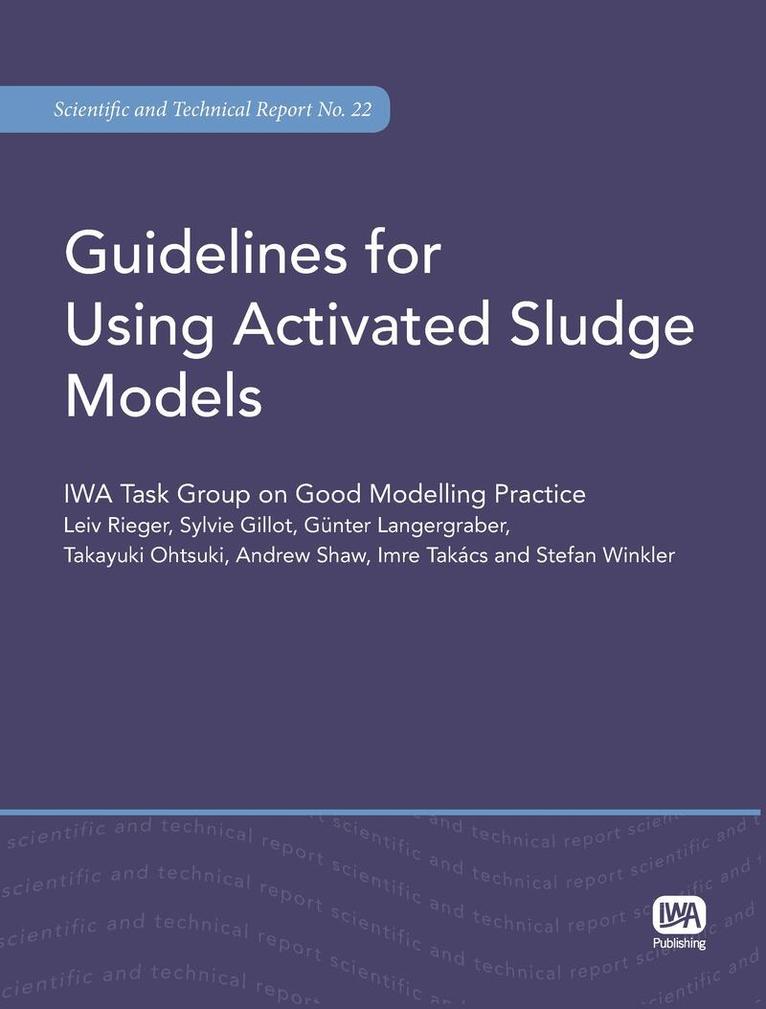
    Guidelines for Using Activated Sludge Models

    AvLeiv Rieger,Sylvie Gillot

    Häftad, Engelska, 2012

    Del i serien Scientific and Technical Report Series

    1 871 kr

    Skickas . Fri frakt över 249 kr.

    Beskrivning

    Mathematical modelling of activated sludge systems is used widely for plant design, optimisation, training, controller design and research. The quality of simulation studies varies depending on the project objectives, finances and expertise available. Consideration has to be given to the model accuracy and the amount of time required carrying out a simulation study to produce the desired accuracy. Inconsistent approaches and insufficient documentation make quality assessment and comparison of simulation results difficult or almost impossible. A general framework for the application of activated sludge models is needed in order to overcome these obstacles. The genesis of the Good Modelling Practice (GMP) Task Group lies in a workshop held at the 4th IWA World Water Congress in Marrakech, Morocco where members of research groups active in wastewater treatment modelling came together to develop plans to synthesize the best practices of modellers from all over the world. The most cited protocols were included in the work, amongst others from: HSG (Hochschulgruppe), STOWA, BIOMATH and WERF. The goal of the group is to set up an internationally accepted framework to deal with the ASM type models in practice. This framework shall make modelling more straightforward and systematic to use especially for practitioners and consultants. Additionally, it shall help to define quality levels for simulation results, a procedure to assess this quality and to assist in the proper use of the models. The framework will describe a methodology for goal-oriented application of activated sludge models demonstrated by means of a concise guideline about the procedure of a simulation study and some illustrative case studies. The case studies shall give examples for the required data quality and quantity and the effort for calibration/validation with respect to a defined goal. The final report will include an extended appendix with additional information and details of methodologies. Additional features in Guidelines for Using Activated Sludge Models include a chapter on modelling industrial wastewater, an overview on the history, current practice and future of activated sludge modelling and several explanatory case studies. It can be used as an introductory book to learn about Good Modelling Practice (GMP) in activated sludge modelling and will be of special interest for process engineers who have no prior knowledge of modelling or for lecturers who need a textbook for their students. The STR can also be used as a modelling reference book and includes an extended appendix with additional information and details of methodologies.Scientific and Technical Report No. 22

    Produktinformation

    • Utgivningsdatum:2012-09-14
    • Mått:156 x 234 x 18 mm
    • Vikt:556 g
    • Format:Häftad
    • Språk:Engelska
    • Serie:Scientific and Technical Report Series
    • Antal sidor:287
    • Förlag:IWA Publishing
    • ISBN:9781843391746

    Utforska kategorier

    • Miljöteknik inom Naturvetenskap och teknik

    Mer om författaren

    IWA (International Water Assocation) Task Group on Good Modelling Practice. The genesis of the Task Group lies in a workshop held at the 4th IWA World Water Congress in Marrakech, Morocco where members of 4 research groups - Hochschulgruppe, STOWA, BIOMATH and WERF - came together to develop plans to synthesize the best practices of modellers from all over the world. The goal of the group is to set up an internationally accepted framework to deal with the ASM type models in practice. This framework shall make modelling more straightforward and systematic to use especially for practitioners and consultants. Additionally, it shall help to define quality levels for simulation results, a procedure to assess this quality and to assist in the proper use of the models.

    Innehållsförteckning

    • Introduction State-of-the-art in activated sludge modelling Available protocols The GMP Unified Protocol Unified Protocol steps The GMP Application Matrix Using the GMP Unified Protocol by example Use of activated sludge models for industrial wastewater Frequently asked questions Glossary Appendix A Sub-model descriptions Appendix B Representation of biokinetic models - the Gujer Matrix Appendix C The numerical engine - solvers for beginners Appendix D1 New framework for standardized notation in wastewater treatment modelling Appendix D2 Example Fractionation according to New Notation Appendix E A Systematic approach for model verification - application on seven published activated sludge models Appendix F Activated sludge modelling: Development and potential use of a practical applications database Appendix G Typical sources of measurement errors Appendix H Sources of uncertainties Appendix I Mass balancing