Guido Noto La Diega - Böcker
Visar alla böcker från författaren Guido Noto La Diega. Handla med fri frakt och snabb leverans.
5 produkter
5 produkter
1 928 kr
Skickas inom 10-15 vardagar
This edited collection provides a forum for rigorous analysis of the necessity for both legal and social change with regard to regulation of same-sex relationships and rainbow families, the status of civil partnership as a concept and the lived reality of equality for LGBTQ+ persons. Twenty-eight jurisdictions worldwide have now legalised same-sex marriage and many others some level of civil partnership. In contrast other jurisdictions refuse to recognise or even criminalise same-sex relationships. At a Council of Europe level, there is no requirement for contracting states to legalise same-sex marriage. Whilst the Court of Justice of the European Union now requires contracting states to recognise same-sex marriages for the purpose of free movement and residency rights, unlike the US Supreme Court, it does not require EU Member States to legalise same-sex marriage. Law and Sociology scholars from five key jurisdictions (England and Wales, Italy, Australia, Canada, and the Republic of Ireland) examine the role of the Council of Europe, European Union and further international regimes. A balanced approach between the competing views of critically analytical rights based theorists and queer and feminist theorists interrogates the current international consensus in this fast moving area. The incrementalist theory whilst offering a methodology for future advances continues to be critiqued. All contributions from differing perspectives expose that even for those jurisdictions who have legalised same-sex marriage, still further and continuous work needs to be done. The book will be of interest to students and scholars in the field of human rights, family and marriage law and gender studies.
564 kr
Skickas inom 10-15 vardagar
This edited collection provides a forum for rigorous analysis of the necessity for both legal and social change with regard to regulation of same-sex relationships and rainbow families, the status of civil partnership as a concept and the lived reality of equality for LGBTQ+ persons. Twenty-eight jurisdictions worldwide have now legalised same-sex marriage and many others some level of civil partnership. In contrast other jurisdictions refuse to recognise or even criminalise same-sex relationships. At a Council of Europe level, there is no requirement for contracting states to legalise same-sex marriage. Whilst the Court of Justice of the European Union now requires contracting states to recognise same-sex marriages for the purpose of free movement and residency rights, unlike the US Supreme Court, it does not require EU Member States to legalise same-sex marriage. Law and Sociology scholars from five key jurisdictions (England and Wales, Italy, Australia, Canada, and the Republic of Ireland) examine the role of the Council of Europe, European Union and further international regimes. A balanced approach between the competing views of critically analytical rights based theorists and queer and feminist theorists interrogates the current international consensus in this fast moving area. The incrementalist theory whilst offering a methodology for future advances continues to be critiqued. All contributions from differing perspectives expose that even for those jurisdictions who have legalised same-sex marriage, still further and continuous work needs to be done. The book will be of interest to students and scholars in the field of human rights, family and marriage law and gender studies.
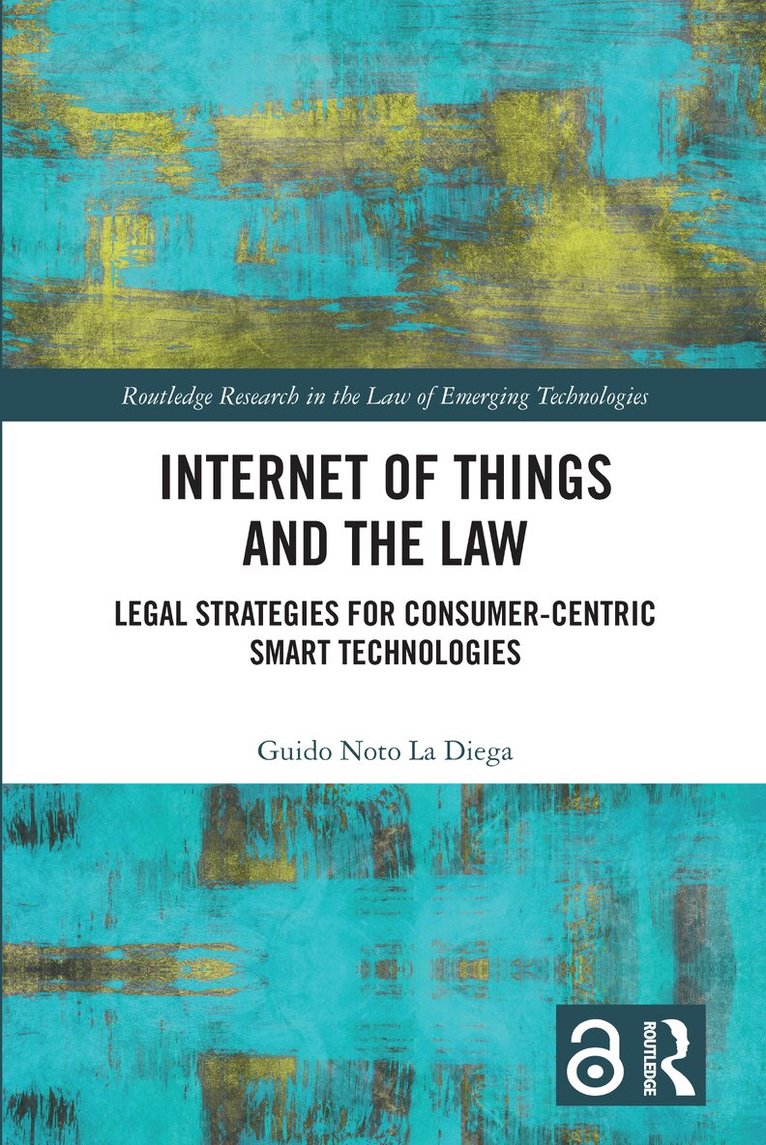
Internet of Things and the Law
Legal Strategies for Consumer-Centric Smart Technologies
Häftad, Engelska, 2024
527 kr
Skickas inom 10-15 vardagar
Internet of Things and the Law: Legal Strategies for Consumer-Centric Smart Technologies is the most comprehensive and up-to-date analysis of the legal issues in the Internet of Things (IoT). For decades, the decreasing importance of tangible wealth and power – and the increasing significance of their disembodied counterparts – has been the subject of much legal research. For some time now, legal scholars have grappled with how laws drafted for tangible property and predigital ‘offline’ technologies can cope with dematerialisation, digitalisation, and the internet. As dematerialisation continues, this book aims to illuminate the opposite movement: rematerialisation, namely, the return of data, knowledge, and power within a physical ‘smart’ world. This development frames the book’s central question: can the law steer rematerialisation in a human-centric and socially just direction? To answer it, the book focuses on the IoT, the sociotechnological phenomenon that is primarily responsible for this shift. After a thorough analysis of how existing laws can be interpreted to empower IoT end users, Noto La Diega leaves us with the fundamental question of what happens when the law fails us and concludes with a call for collective resistance against ‘smart’ capitalism.The Open Access version of this book, available at http://www.taylorfrancis.com, has been made available under a Creative Commons Attribution (CC-BY) 4.0 license.
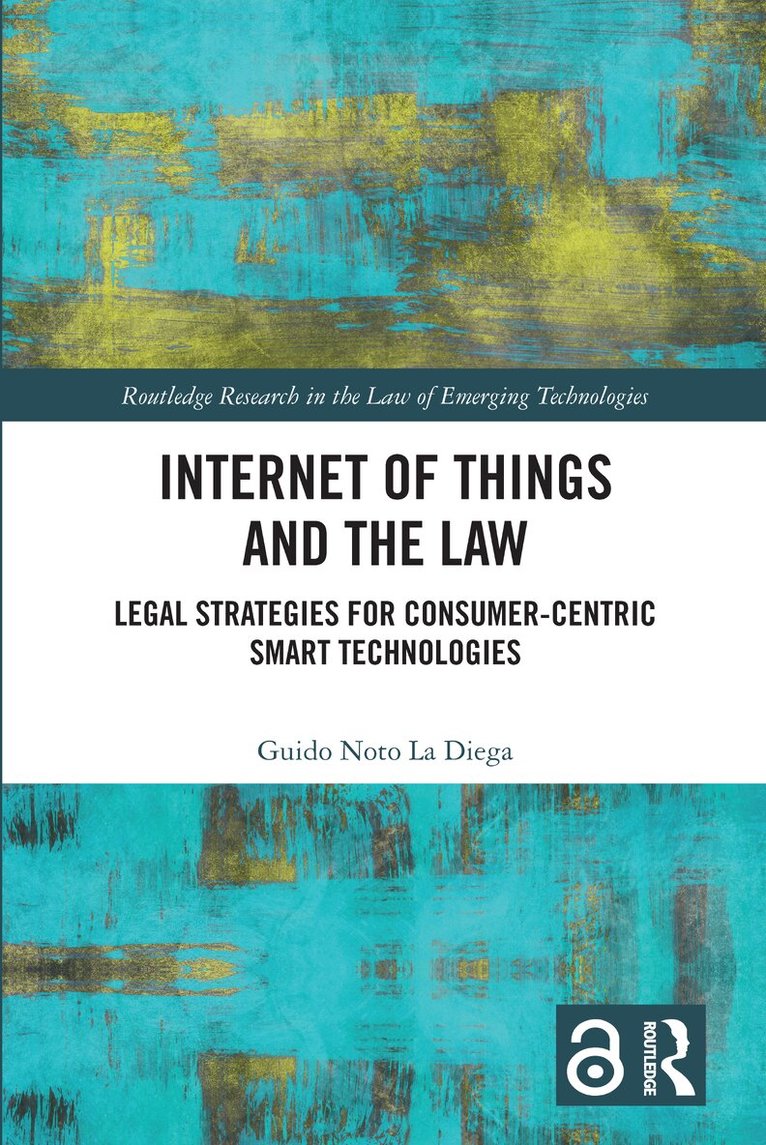
Internet of Things and the Law
Legal Strategies for Consumer-Centric Smart Technologies
Inbunden, Engelska, 2022
1 742 kr
Skickas inom 10-15 vardagar
Internet of Things and the Law: Legal Strategies for Consumer-Centric Smart Technologies is the most comprehensive and up-to-date analysis of the legal issues in the Internet of Things (IoT). For decades, the decreasing importance of tangible wealth and power – and the increasing significance of their disembodied counterparts – has been the subject of much legal research. For some time now, legal scholars have grappled with how laws drafted for tangible property and predigital ‘offline’ technologies can cope with dematerialisation, digitalisation, and the internet. As dematerialisation continues, this book aims to illuminate the opposite movement: rematerialisation, namely, the return of data, knowledge, and power within a physical ‘smart’ world. This development frames the book’s central question: can the law steer rematerialisation in a human-centric and socially just direction? To answer it, the book focuses on the IoT, the sociotechnological phenomenon that is primarily responsible for this shift. After a thorough analysis of how existing laws can be interpreted to empower IoT end users, Noto La Diega leaves us with the fundamental question of what happens when the law fails us and concludes with a call for collective resistance against ‘smart’ capitalism.The Open Access version of this book, available at http://www.taylorfrancis.com, has been made available under a Creative Commons Attribution (CC-BY) 4.0 license.
From Smart Technologies to Smart Consumer Law
Lessons from Germany and the United Kingdom
Inbunden, Engelska, 2027
1 369 kr
Kommande
This open access book critically analyses a wide range of consumer law issues generated or exacerbated by the Internet of Things.The Internet of Things challenges many of the dichotomies which have shaped current laws: goods-services, hardware-software, tangible-intangible, online-offline. The book focuses on 4 specific challenges: things-as-service, liability, bricking of physical devices through software control, and the potential for enhanced personalisation, especially for digital assistants.The chapters analyse specific applications such as smart homes, connected cars, and consumer wearables with a view to providing innovative solutions to the new challenges posed by the Internet of Things, and to steer the development of the Internet of Things in a fairer direction.As well as offering an important analysis of the potential for smart consumer laws in the Internet of Things, the book also provides important insights into the growing divergence between Germany’s and the UK’s consumer laws since Brexit.The ebook editions of this book are available open access under a CC BY 4.0 licence on bloomsburycollections.com. Open access was funded by UKRI (Arts and Humanities Research Council) and the German Research Foundation (DFG).