Guoqi Xu – författare
Visar alla böcker från författaren Guoqi Xu. Handla med fri frakt och snabb leverans.
6 produkter
6 produkter
Del 20 - Studies in the Social and Cultural History of Modern Warfare
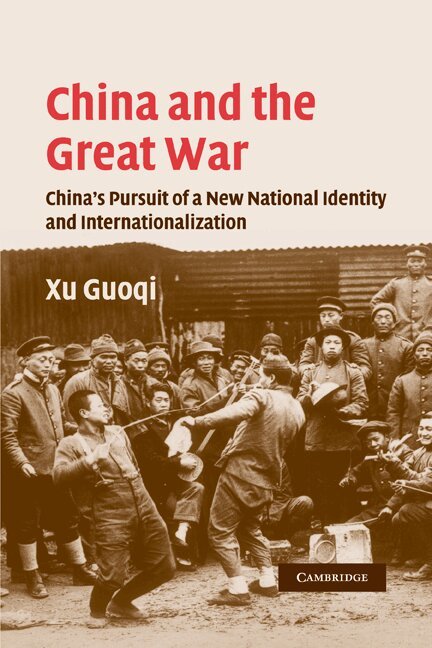
China and the Great War
China's Pursuit of a New National Identity and Internationalization
Häftad, Engelska, 2011
563 kr
Skickas inom 7-10 vardagar
China's role in the First World War has been a curiously neglected topic. This 2005 book is a full-length study of China's involvement in the conflict from perspectives of international history, using largely unknown archival materials from China, France, Germany, UK, and USA. It explains why China wanted to join the war and what were its contributions to the war effort and the emerging world order in the postwar period. The book also demonstrates that China's participation in the First World War was not only a defining moment in modern Chinese and world history, but also the beginning of China's long journey toward internationalization. In this provocative book, Professor Xu adds a new dimension to our collective memory of the war, its tragedy and its significance, and restores the China war memory into its rightful place.
Del 20 - Studies in the Social and Cultural History of Modern Warfare
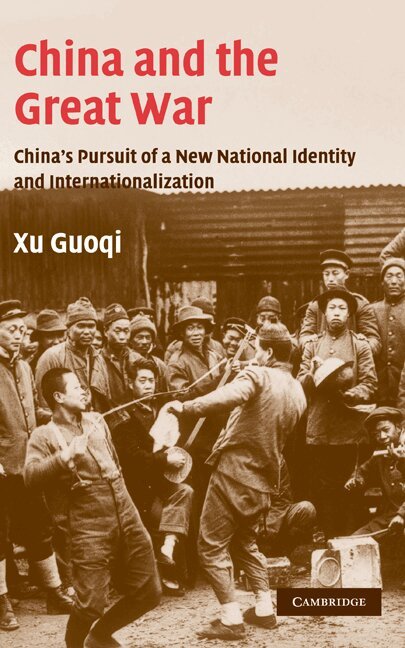
China and the Great War
China's Pursuit of a New National Identity and Internationalization
Inbunden, Engelska, 2005
1 295 kr
Skickas inom 7-10 vardagar
China's role in the First World War has been a curiously neglected topic. This 2005 book is a full-length study of China's involvement in the conflict from perspectives of international history, using largely unknown archival materials from China, France, Germany, UK, and USA. It explains why China wanted to join the war and what were its contributions to the war effort and the emerging world order in the postwar period. The book also demonstrates that China's participation in the First World War was not only a defining moment in modern Chinese and world history, but also the beginning of China's long journey toward internationalization. In this provocative book, Professor Xu adds a new dimension to our collective memory of the war, its tragedy and its significance, and restores the China war memory into its rightful place.
440 kr
Skickas inom 10-15 vardagar
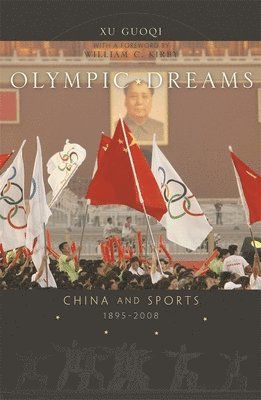
Already the world has seen the political, economic, and cultural significance of hosting the 2008 Olympics in Beijing—in policies instituted and altered, positions softened, projects undertaken. But will the Olympics make a lasting difference? This book approaches questions about the nature and future of China through the lens of sports—particularly as sports finds its utmost international expression in the Olympics.Drawing on newly available archival sources to analyze a hundred-year perspective on sports in China, Olympic Dreams explores why the country became obsessed with Western sports at the turn of the twentieth century, and how it relates to China’s search for a national and international identity. Through case studies of ping-pong diplomacy and the Chinese handling of various sporting events, the book offers unexpected details and unusual insight into the patterns and processes of China’s foreign policymaking—insights that will help readers understand China’s interactions with the rest of the world.Among the questions Xu Guoqi brings to the fore are: Why did Mao Zedong choose competitive ping-pong to manipulate world politics? How did the two-China issue nearly kill the 1976 Montreal Olympic Games? And why do the 2008 Olympics present Beijing with unprecedented dangers and opportunities? In exploring these questions, Xu brilliantly articulates a fresh and surprising perspective on China as an international sport superpower as well as a new “sick man of East Asia.” In Olympic Dreams, he presents an eloquent argument that in the deeply unsettled China of today, sport, as a focus of popular interest, has the capacity to bring about major social changes.
540 kr
Skickas inom 10-15 vardagar
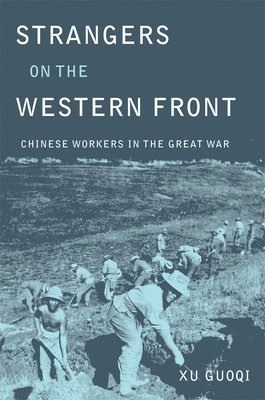
During World War I, Britain and France imported workers from their colonies to labor behind the front lines. The single largest group of support labor came not from imperial colonies, however, but from China. Xu Guoqi tells the remarkable story of the 140,000 Chinese men recruited for the Allied war effort.These laborers, mostly illiterate peasants from north China, came voluntarily and worked in Europe longer than any other group. Xu explores China’s reasons for sending its citizens to help the British and French (and, later, the Americans), the backgrounds of the workers, their difficult transit to Europe—across the Pacific, through Canada, and over the Atlantic—and their experiences with the Allied armies. It was the first encounter with Westerners for most of these Chinese peasants, and Xu also considers the story from their perspective: how they understood this distant war, the racism and suspicion they faced, and their attempts to hold on to their culture so far from home.In recovering this fascinating lost story, Xu highlights the Chinese contribution to World War I and illuminates the essential role these unsung laborers played in modern China’s search for a new national identity on the global stage.
463 kr
Skickas inom 10-15 vardagar
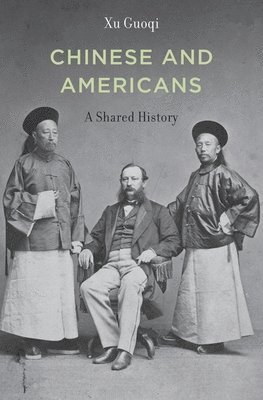
Chinese–American relations are often viewed through the prism of power rivalry and civilization clash. But China and America’s shared history is much more than a catalog of conflicts. Using culture rather than politics or economics as a reference point, Xu Guoqi highlights significant yet neglected cultural exchanges in which China and America have contributed to each other’s national development, building the foundation of what Zhou Enlai called a relationship of “equality and mutual benefit.”Xu begins with the story of Anson Burlingame, Abraham Lincoln’s ambassador to China, and the 120 Chinese students he played a crucial role in bringing to America, inaugurating a program of Chinese international study that continues today. Such educational crosscurrents moved both ways, as is evident in Xu’s profile of the remarkable Ge Kunhua, the Chinese poet who helped spearhead Chinese language teaching in Boston in the 1870s. Xu examines the contributions of two American scholars to Chinese political and educational reform in the twentieth century: the law professor Frank Goodnow, who took part in making the Yuan Shikai government’s constitution; and the philosopher John Dewey, who helped promote Chinese modernization as a visiting scholar at Peking University and elsewhere. Xu also shows that it was Americans who first introduced to China the modern Olympic movement, and that China has used sports ever since to showcase its rise as a global power. These surprising shared traditions between two nations, Xu argues, provide the best roadmap for the future of Sino–American relations.
292 kr
Skickas inom 7-10 vardagar
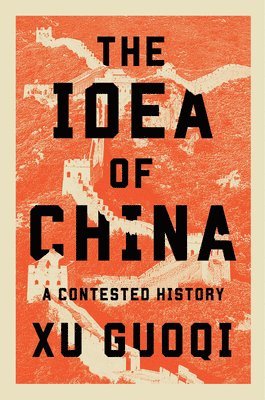
An acclaimed historian’s bold response to two simple, yet vexed, questions: What counts as China, and who counts as Chinese?China became a capitalist superpower by investing in globalization. Now that it has established its credentials—and emerged as a major US competitor—its leaders are looking within, focused on suppressing dissent and fostering cohesion. The result has been an increasingly nationalist cultural agenda, celebrating a Chinese identity steeped in the mystique of the Middle Kingdom and nostalgia for heroic twentieth-century resistance. Yet Chinese nationalism, like nationalism everywhere, is fraught. Few Westerners, and even fewer Chinese, recognize that the very idea of China is up for grabs.In this sweeping history, Xu Guoqi explores the transnational construction of Chineseness. The Idea of China describes an identity constantly under renovation. Through dialogue and confrontation with neighbors, more distant outsiders, and Chinese speakers and writers within the state, Hong Kong, Taiwan, and the diaspora, the idea of China has been reshaped repeatedly across time. Even bedrock cultural formations like Confucianism have been reimported to China after their translation in Korea, Japan, Vietnam, and elsewhere. The idea of China has always been and remains a continuing process, invented, subverted, and reinvented to serve the shifting needs of kings and bureaucrats, industrialists and intellectuals, allies and adversaries.Xu’s chronicle is as provocative as it is rigorous, and his conclusion could hardly be starker: China, fundamentally, is constituted by a shared history. To accept this is to begin moving past the heated great-power rivalries that threaten international peace and stability today.