Gustav Pomberger - Böcker
Visar alla böcker från författaren Gustav Pomberger. Handla med fri frakt och snabb leverans.
6 produkter
6 produkter
1 132 kr
Skickas inom 10-15 vardagar
Niklaus Wirth is one of the great pioneers of computer technology and winner of the ACM's A.M. Turing Award, the most prestigious award in computer science. he has made substantial contributions to the development of programming languages, compiler construction, programming methodology, and hardware design. While working at ERH Zurich, he developed the languages Pascal and Modula-2. He also designed an early high performance workstation, the Personal Computer Lilith, and most recently the language and operating system Oberon.While Wirth has often been praised for his excellent work as a language designer and engineer, he is also an outstanding educator-something for which he is not as well known. This book brings together prominent computer scientists to describe Wirth's contributions to education. With the exception of some of his colleagues such as Professors Dijkstra, Hoare, and Rechenberg, all of the contributors to this book are students of Wirth. The essays provide a wide range of contemporary views on modern programming practice and also illuminate the one persistent and pervasive quality found in all his work: his unequivocal demand for simple solutions. The authors and editors hope to pass on their enthusiasm for simple engineering solutions along with their feeling for a man to whom they are all so indebted.
567 kr
Skickas inom 10-15 vardagar
Dieses Buch, in dessen Titel sich "Einführung in die Programmierung" und "Programmierung mit Modula-2" verbinden, wendet sich sowohl an den Programmieranfänger, als auch an den erfahrenen Programmierer, der die Sprache Modula-2 erlernen will. Einerseits vermittelt es ein solides Grundwissen der Programmiertechnik und führt in zeitgemäße Methoden des Programmentwurfs ein, andererseits gibt es eine handbuchartige Beschreibung der Programmiersprache Modula-2 und übt ihren methodischen Gebrauch an vielen Beispielen ein. Die von Niklaus Wirth stammende Programmiersprache Modula-2 hat, im Gegensatz zu Programmiersprachen wie Ada, COBOL oder PL/I, einen geringen Sprachumfang und ist daher leicht erlernbar. Trotzdem enthält sie alle Sprachelemente, die zur Formulierung kompliziertester Algorithmen und zur Realisierung der modernen Konzepte des Software Engineering erforderlich sind. Modula-2 zeichnet sich durch einen systematischen Aufbau aus, ermöglicht das Schreiben gut lesbarer Programme, unterstützt moderne Prinzipien des Software Engineering und eignet sich zur Implementierung auf Mikrocomputern; all dies macht die Sprache zu einem wertvollen Instrument auch zur Einführung in die Grundlagen der Programmierung. Die meisten Kapitel und viele Abschnitte enthalten Übungsaufgaben, die dem Leser helfen sollen, das erlernte Wissen zu vertiefen und seinen Wissensstand zu überprüfen. Das Buch unterscheidet sich von vielen Büchern über Programmiersprachen vor allem dadurch, daß das Hauptgewicht nicht auf der Programmiersprache selbst, sondern auf der Programmiermethodik liegt. In der bereits 1 1/2 Jahre nach Erscheinen des Buches vorliegenden 2. Auflage wurden alle bekanntgewordenen Fehler und Unklarheiten beseitigt.
552 kr
Skickas inom 10-15 vardagar
This textbook is intended for the novice as well as for the experienced programmer who wants to learn Modula-2. The authors do not just describe Modula-2 but instead seek to familiarize the reader with the concept of algorithms and show how to implement algorithms in Modula-2. Compared to other programming languages, Modula-2 is a compact language, which makes it easy to learn, yet it contains all important language elements necessary for formulating complicated algorithms and for implementing the modern concepts of software engineering. Modula-2 has a systematic structure that makes it possible to write easily readable programs. All this makes Modula-2 a useful instrument for an introduction to the basics of programming. This textbook strives to establish a solid foundation in the techniques of programming with up-to-date methods of program development. Use of the programming language Modula-2 is reinforced with numerous hands-on exercises. The collective experience of the authors in teaching numerous courses in this area is evident from the contents and organization of the book.The book does not presuppose any knowledge of programming, but it requires a certain ability in the realm of abstract thinking, some pleasure in problem solving, and a desire to come to terms with complex interrelationships.
1 625 kr
Skickas inom 10-15 vardagar
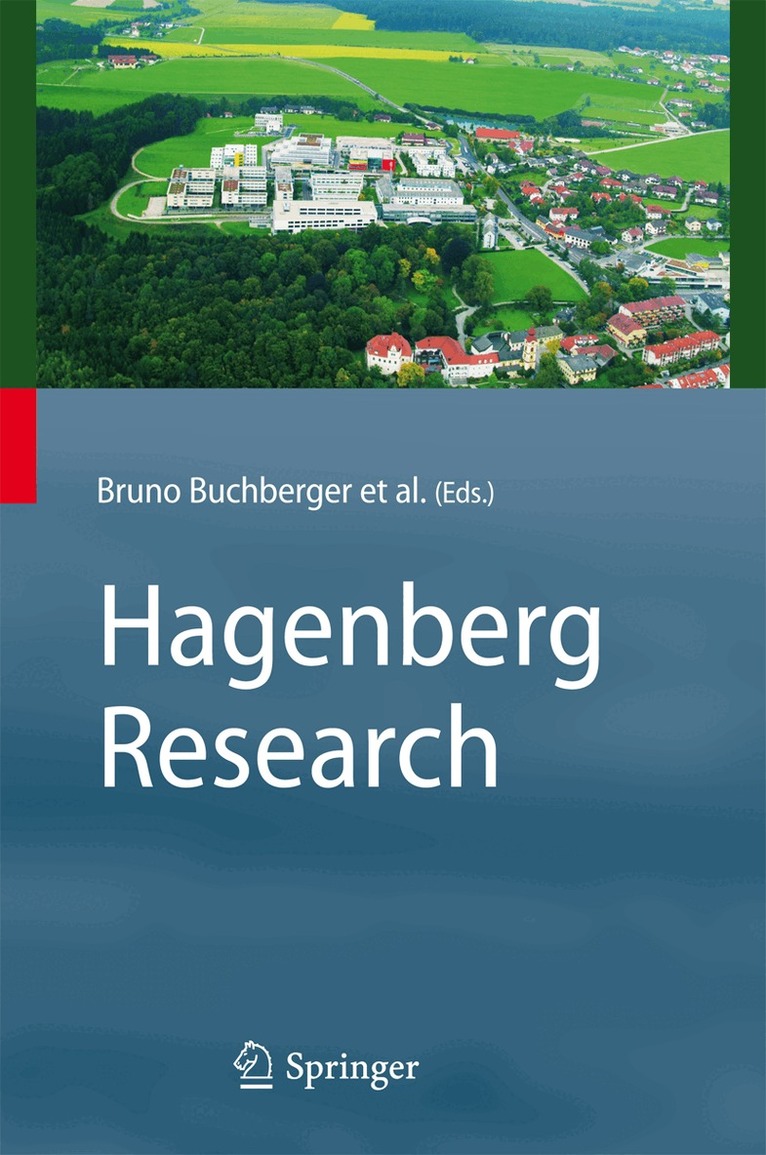
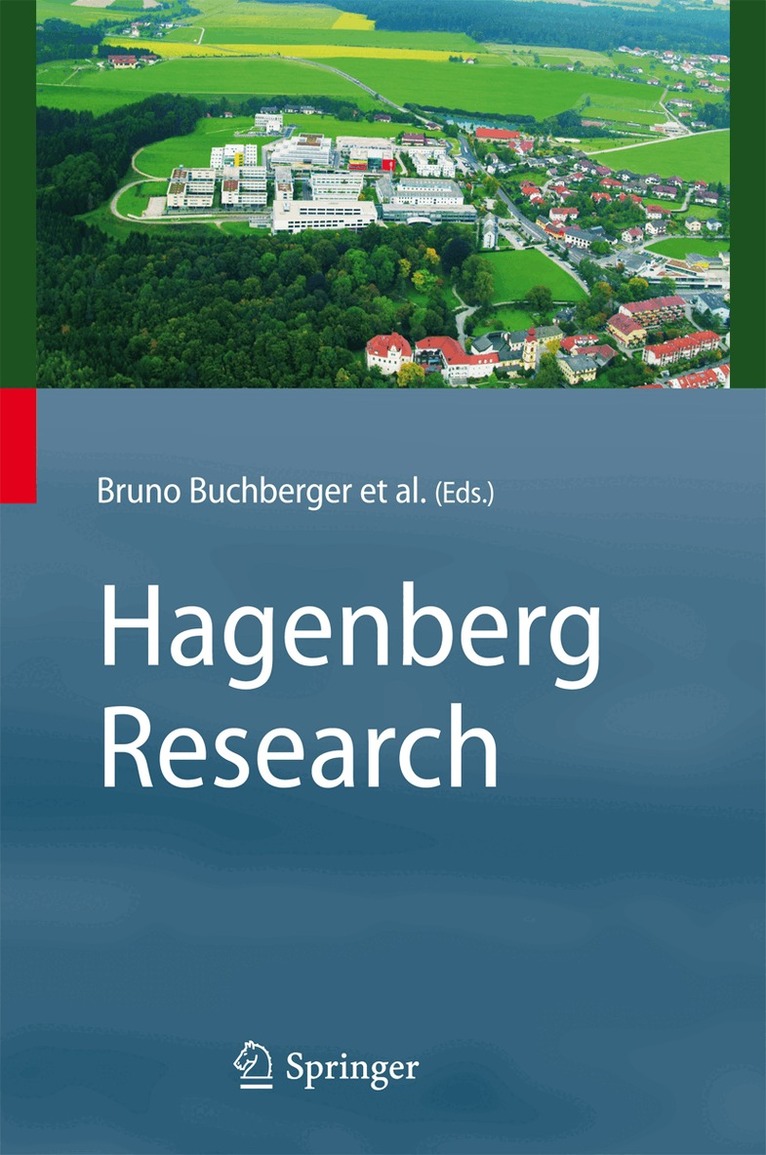
BrunoBuchberger This book is a synopsis of basic and applied research done at the various re search institutions of the Softwarepark Hagenberg in Austria. Starting with 15 coworkers in my Research Institute for Symbolic Computation (RISC), I initiated the Softwarepark Hagenberg in 1987 on request of the Upper Aus trian Government with the objective of creating a scienti?c, technological, and economic impulse for the region and the international community. In the meantime, in a joint e?ort, the Softwarepark Hagenberg has grown to the current (2009) size of over 1000 R&D employees and 1300 students in six research institutions, 40 companies and 20 academic study programs on the bachelor, master’s and PhD level. The goal of the Softwarepark Hagenberg is innovation of economy in one of the most important current technologies: software. It is the message of this book that this can only be achieved and guaranteed long term by “watering the root”, namely emphasis on research, both basic and applied. In this book, we summarize what has been achieved in terms of research in the various research institutions in the Softwarepark Hagenberg and what research vision we have for the imminent future. When I founded the Softwarepark Hagenberg, in addition to the “watering the root” principle, I had the vision that such a technology park can only prosper if we realize the “magic triangle”, i.e. the close interaction of research, academic education, and business applications at one site, see Figure 1.
1 625 kr
Skickas inom 10-15 vardagar
BrunoBuchberger This book is a synopsis of basic and applied research done at the various re search institutions of the Softwarepark Hagenberg in Austria. Starting with 15 coworkers in my Research Institute for Symbolic Computation (RISC), I initiated the Softwarepark Hagenberg in 1987 on request of the Upper Aus trian Government with the objective of creating a scienti?c, technological, and economic impulse for the region and the international community. In the meantime, in a joint e?ort, the Softwarepark Hagenberg has grown to the current (2009) size of over 1000 R&D employees and 1300 students in six research institutions, 40 companies and 20 academic study programs on the bachelor, master’s and PhD level. The goal of the Softwarepark Hagenberg is innovation of economy in one of the most important current technologies: software. It is the message of this book that this can only be achieved and guaranteed long term by “watering the root”, namely emphasis on research, both basic and applied. In this book, we summarize what has been achieved in terms of research in the various research institutions in the Softwarepark Hagenberg and what research vision we have for the imminent future. When I founded the Softwarepark Hagenberg, in addition to the “watering the root” principle, I had the vision that such a technology park can only prosper if we realize the “magic triangle”, i.e. the close interaction of research, academic education, and business applications at one site, see Figure 1.
552 kr
Skickas inom 10-15 vardagar
This book is intended for anyone who plans, designs and implements software systems, for anyone who is involved with quality assurance, and hence for anyone who is interested in the practicability of modern concepts, methods and tools in the software development process. The book aims at software engineers and at students with specialized interests in the area of software engineering. The reader is expected to be familiar with the fundamental concepts of software engineering. In writing the book, the authors tap years of experience in industrial projects and research work in the development of methods and tools that support the software development process. Perhaps now more than ever, the buzzword "software crisis" serves to alert us that software systems are often error-prone, that significant diffi culties arise in mastering complexity in the production of software systems, and that the acceptance and adequacy of software products is significantly lower than is the case with other technical products. The following goals have been suggested for the improvement of the software development process: • exact fulfillment of user requirements • increased reliability and robustness • greater modularity of both the development process and the product • simple and adequate operation, i. e. , better ergonomics • easy maintainability and extensibility • cost-effective portability • increased reusability of software components • reduced costs for production, operation and maintenance VI Preface Research and development work in the area of software engineering has in creased dramatically in recent years.