Gwendolyn DuBois Shaw - Böcker
Visar alla böcker från författaren Gwendolyn DuBois Shaw. Handla med fri frakt och snabb leverans.
6 produkter
6 produkter
281 kr
Skickas inom 10-15 vardagar
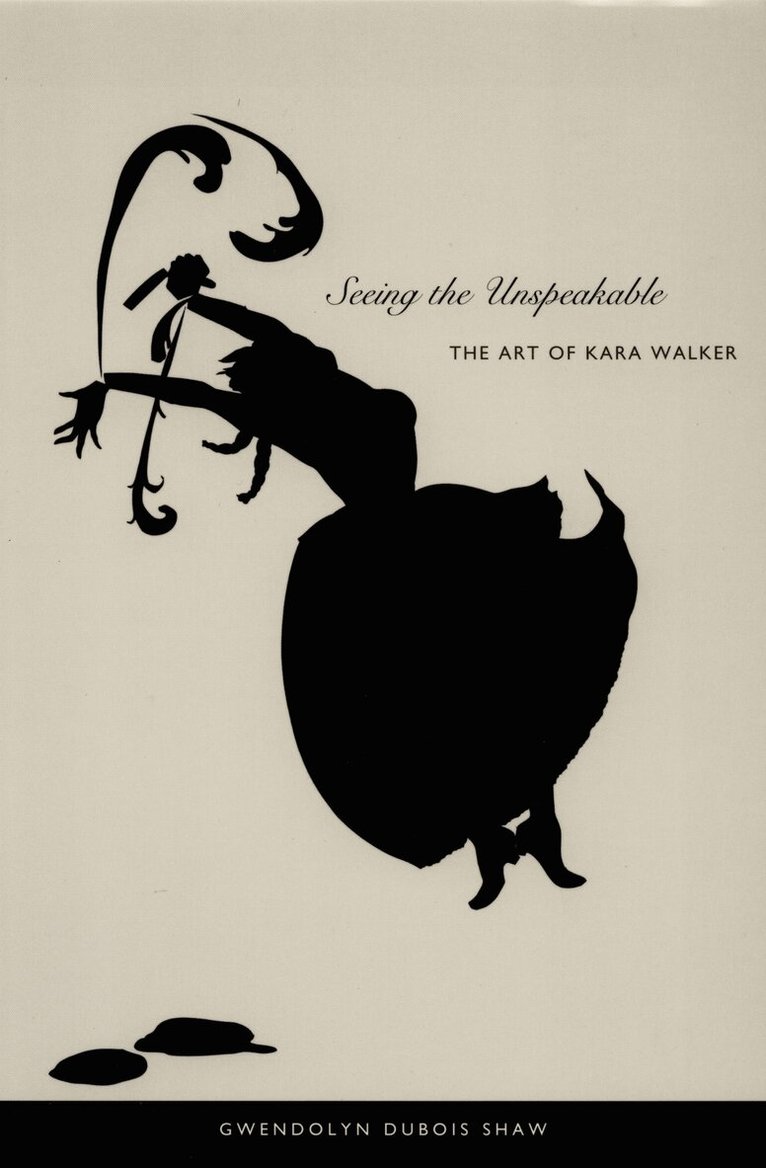
One of the youngest recipients of a MacArthur “genius” grant, Kara Walker, an African American artist, is best known for her iconic, often life-size, black-and-white silhouetted figures, arranged in unsettling scenes on gallery walls. These visually arresting narratives draw viewers into a dialogue about the dynamics of race, sexuality, and violence in both the antebellum South and contemporary culture. Walker’s work has been featured in exhibits around the world and in American museums including the Museum of Modern Art, the Guggenheim, and the Whitney. At the same time, her ideologically provocative images have drawn vociferous criticism from several senior African American artists, and a number of her pieces have been pulled from exhibits amid protests against their disturbing representations. Seeing the Unspeakable provides a sustained consideration of the controversial art of Kara Walker. Examining Walker’s striking silhouettes, evocative gouache drawings, and dynamic prints, Gwendolyn DuBois Shaw analyzes the inspiration for and reception of four of Walker’s pieces: The End of Uncle Tom and the Grand Allegorical Tableau of Eva in Heaven, John Brown, A Means to an End, and Cut. She offers an overview of Walker’s life and career, and contextualizes her art within the history of African American visual culture and in relation to the work of contemporary artists including Faith Ringgold, Carrie Mae Weems, and Michael Ray Charles. Shaw describes how Walker deliberately challenges viewers’ sensibilities with radically de-sentimentalized images of slavery and racial stereotypes. This book reveals a powerful artist who is questioning, rather than accepting, the ideas and strategies of social responsibility that her parents’ generation fought to establish during the civil rights era. By exploiting the racist icons of the past, Walker forces viewers to see the unspeakable aspects of America’s racist past and conflicted present.
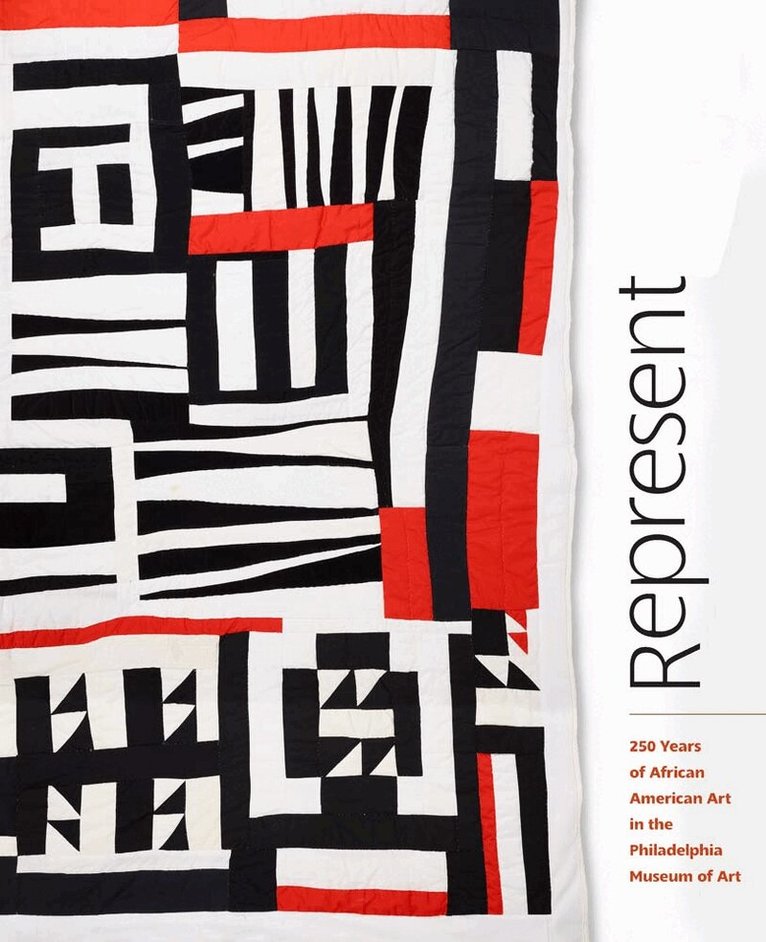
Represent
250 Years of African American Art in the Philadelphia Museum of Art
Inbunden, Engelska, 2026
520 kr
Kommande
A showcase of more than 180 works of art by African American artistsIn the twelve years since the first edition of Represent was published, the Philadelphia Museum of Art has acquired many more works of art by American artists of African descent. Emma Amos, Hale Woodruff, Senga Nengudi, and Rashid Johnson are among some forty artists newly represented in this expanded edition. Illustrations of key paintings, sculptures, decorative arts, textiles, and photography reveal the breadth of this increasingly rich collection. In thematic essays and individual object entries, such well-known as Jacob Lawrence, Kara Walker, and Faith Ringgold are discussed alongside many who are yet to become household names. In a new introductory conversation, author Gwendolyn DuBois Shaw and Imani Roach place the museum’s collection in context and assess the current cultural moment. Reflecting on the treatment of vast and varied works by Black practitioners, an essay by distinguished scholar Richard J. Powell addresses how to survey such a collection while avoiding racial essentialism. Distributed for the Philadelphia Museum of Art
1 165 kr
Skickas inom 7-10 vardagar
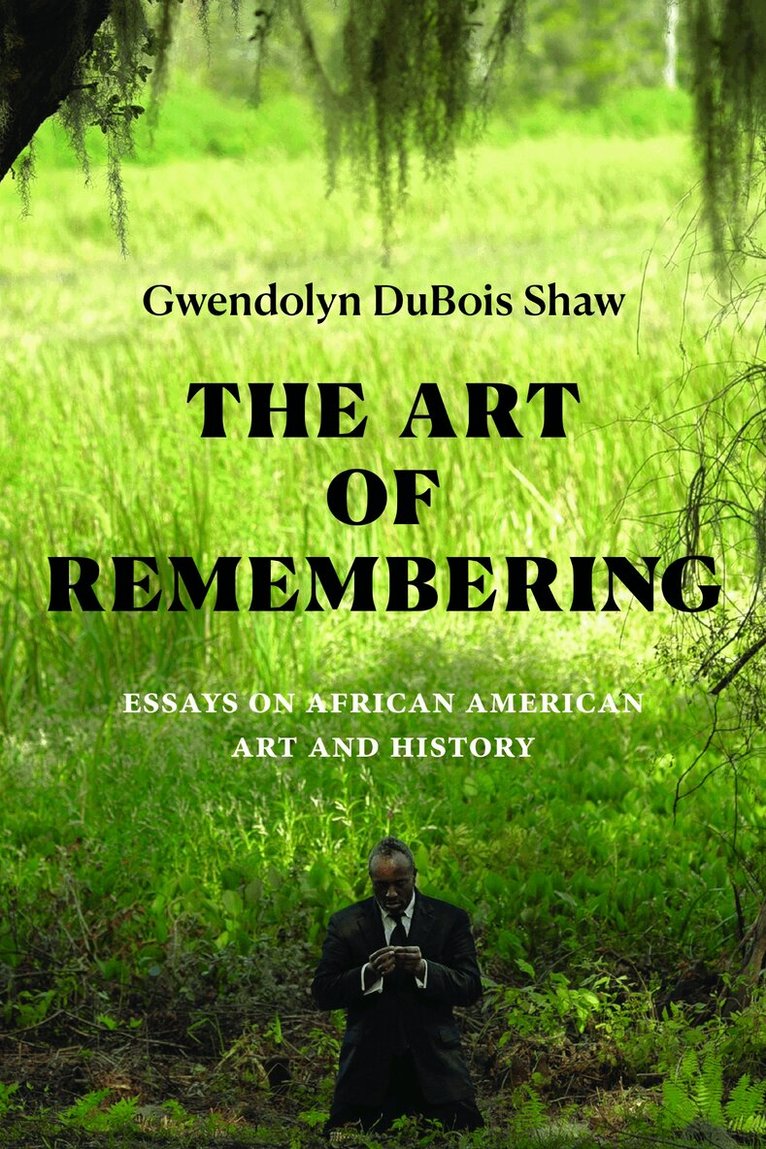
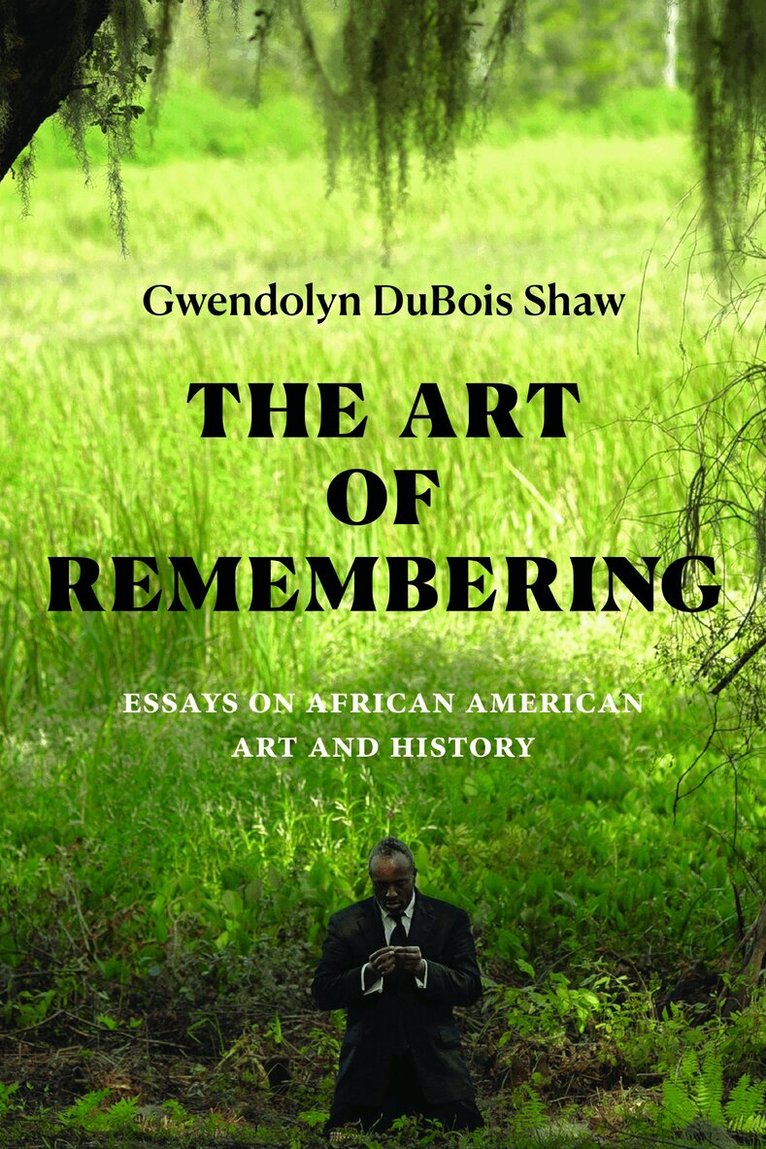
In The Art of Remembering art historian and curator Gwendolyn DuBois Shaw explores African American art and representation from the height of the British colonial period to the present. She engages in the process of "rememory"-the recovery of facts and narratives of African American creativity and self-representation that have been purposefully set aside, actively ignored, and disremembered. In analyses of the work of artists ranging from Scipio Moorhead, Moses Williams, and Aaron Douglas to Barbara Chase-Riboud, Kara Walker, Kehinde Wiley, and Deana Lawson, Shaw demonstrates that African American art and history may be remembered and understood anew through a process of intensive close looking, cultural and historical contextualization, and biographic recuperation or consideration. Shaw shows how embracing rememory expands the possibilities of history by acknowledging the existence of multiple forms of knowledge and ways of understanding an event or interpreting an object. In so doing, Shaw thinks beyond canonical interpretations of art and material and visual culture to imagine “what if,” asking what else did we once know that has been lost.
303 kr
Skickas inom 7-10 vardagar
In The Art of Remembering art historian and curator Gwendolyn DuBois Shaw explores African American art and representation from the height of the British colonial period to the present. She engages in the process of "rememory"-the recovery of facts and narratives of African American creativity and self-representation that have been purposefully set aside, actively ignored, and disremembered. In analyses of the work of artists ranging from Scipio Moorhead, Moses Williams, and Aaron Douglas to Barbara Chase-Riboud, Kara Walker, Kehinde Wiley, and Deana Lawson, Shaw demonstrates that African American art and history may be remembered and understood anew through a process of intensive close looking, cultural and historical contextualization, and biographic recuperation or consideration. Shaw shows how embracing rememory expands the possibilities of history by acknowledging the existence of multiple forms of knowledge and ways of understanding an event or interpreting an object. In so doing, Shaw thinks beyond canonical interpretations of art and material and visual culture to imagine “what if,” asking what else did we once know that has been lost.
241 kr
Skickas
546 kr
Skickas inom 7-10 vardagar
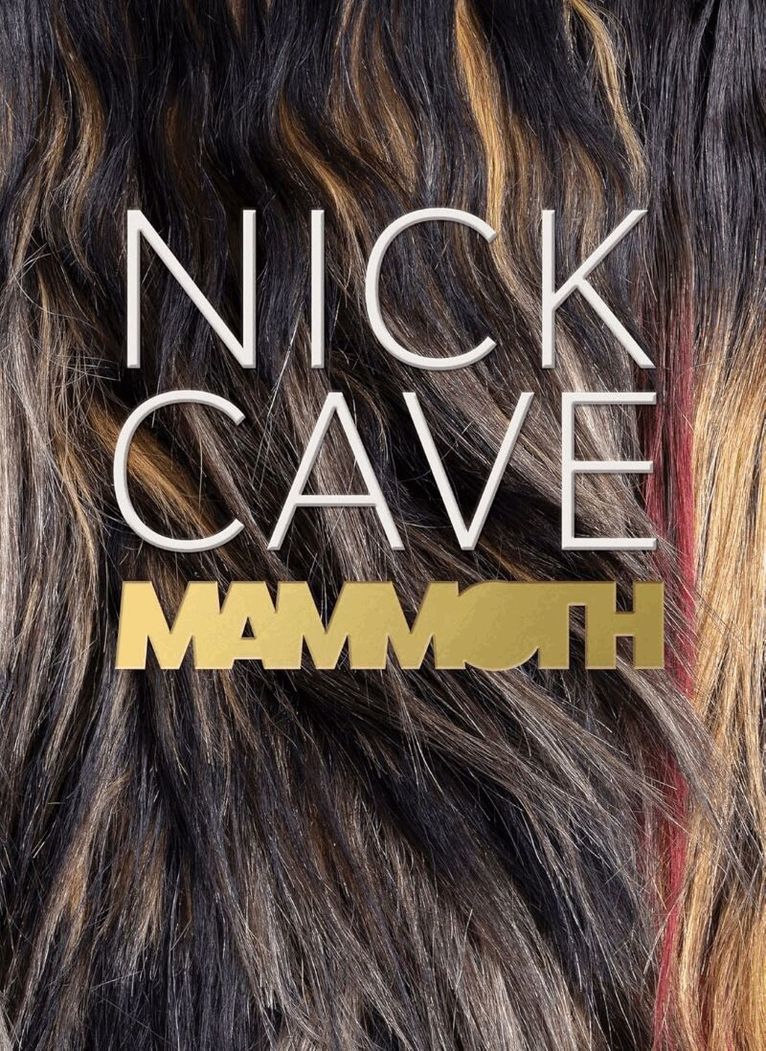
In keeping with the artist's eclectic style, this lavishly illustrated catalogue features a mix of poetic, narrative, and scholarly perspectives on Nick Cave's Mammoth. Accompanying a landmark exhibition, this publication is a creative excavation of shared and personal memory. Contributions from Sarah Newman, Cherise Smith, Gwendolyn DuBois Shaw, and J. Drew Lanham engage themes of identity, environmental crisis, and institutional critique. The catalogue also features a sketchbook-style exploration of Cave's studio and mind, including in-process photography, artist sketches, and handwritten notes. This wide-ranging book represents a significant contribution to scholarship on the artist, and will be a lasting resource for artists, art historians, and general readers. Accompanies the exhibition Nick Cave: Mammoth at the Smithsonian American Art Museum, February 13, 2026 January 3, 2027. AUTHORS: Sarah Newman is James Dicke Curator of Contemporary Art at the Smithsonian American Art Museum. Cherise Smith is professor of African and African Diaspora Studies and Art History at the University of Texas, Austin. Gwendolyn DuBois Shaw is associate professor of History of Art at the University of Pennsylvania. J. Drew Lanham is professor of Wildlife Ecology at Clemson University, and 2022 MacArthur Fellow. SELLING POINTS: . Nick Cave-born 1959 in Fulton, Missouri, and now active in Chicago, Illinois-is an artist who defies categorization. Working between sculpture, installation, performance, video and fashion, and best known for his exuberant Soundsuits, Cave has long been interested in the intersections of history and identity. . Cave's bronze sculptures, beaded wall hangings, video and found-object assemblages, tell stories of identity, environmental crisis, societal inequality, and institutional history. . Cave's art can be found nationally. Some examples are MOMA, NYC; Brooklyn Museum, NY; Times Square-42nd Street and 42nd Street-Bryant Park stations, New York City; Hirshhorn Museum and Sculpture Garden, Washington, D.C; Smithsonian American Art Museum, Washington, D.C; MFA, Boston; Philadelphia Museum of Art; Museum of Contemporary Art, Chicago; Detroit Institute of Arts; Crystal Bridges Museum of American Art, AR; Museum of Fine Arts, Houston; Weatherspoon Art Museum, Greensboro, NC; Nelson-Atkins Museum of Art, MO; High Museum of Art, Atlanta; Birmingham Museum of Art, AL; San Francisco Museum of Modern Art. 250 colour illustrations