Gwyneth Mellinger - Böcker
Visar alla böcker från författaren Gwyneth Mellinger. Handla med fri frakt och snabb leverans.
4 produkter
4 produkter
283 kr
Skickas inom 7-10 vardagar
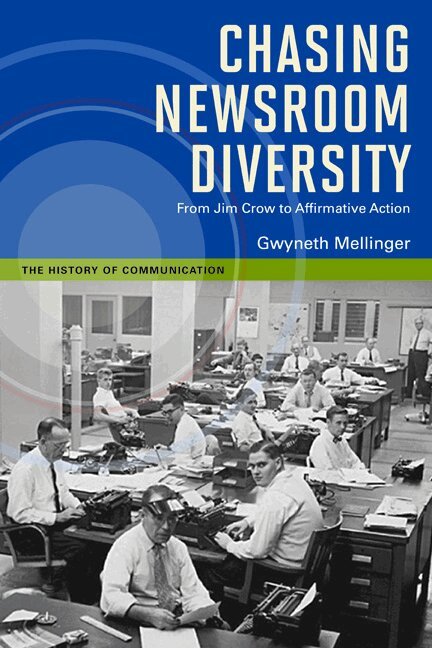
Social change triggered by the Civil Rights Movement in the 1960s sent the American Society of Newspaper Editors (ASNE) on a fifty-year mission to dismantle an exclusionary professional standard that envisioned the ideal journalist as white, straight, and male. In this book, Gwyneth Mellinger explores the complex history of the decades-long ASNE diversity initiative, which culminated in the failed Goal 2000 effort to match newsroom demographics with those of the U.S. population. Drawing upon exhaustive reviews of ASNE archival materials, Mellinger examines the democratic paradox through the lens of the ASNE, an elite organization that arguably did more than any other during the twentieth century to institutionalize professional standards in journalism and expand the concepts of government accountability and the free press. The ASNE would emerge in the 1970s as the leader in the newsroom integration movement, but its effort would be frustrated by structures of exclusion the organization had embedded into its own professional standards. Explaining why a project so promising failed so profoundly, Chasing Newsroom Diversity expands our understanding of the intransigence of institutional racism, gender discrimination, and homophobia within democracy.
Racializing Objectivity
How the White Southern Press Weaponized Journalism Standards to Defend Jim Crow
Häftad, Engelska, 2024
346 kr
Skickas inom 7-10 vardagar
When the civil rights movement began to challenge Jim Crow laws, the white southern press reframed the coverage of racism and segregation as a debate over journalism standards. Many white southern editors, for instance, designated Black Americans as “Negro” in news stories, claiming it was necessary for accuracy and “objectivity,” even as white subjects went unlabeled. These news professionals disparaged media outlets that did not adhere to these norms, such as the Black press. In this way, the southern white press weaponized journalism standards—and particularly the idea of objectivity—to counter and discredit reporting that challenged white supremacy.Through deep engagement with letters and other materials in numerous archives from editors, journalists, and leaders of newswire services, Racializing Objectivity interrogates and exposes how the white southern press used journalism standards as a professional rationalization for white supremacy and a political strategy to resist desegregation. Gwyneth Mellinger argues that white skin privilege gave these news professionals a stake in the racial status quo and was thus a conflict of interest as they defended Jim Crow. Her study includes an examination of the Southern Education Reporting Service, an objectivity project whose impartiality, she contends, instead affirmed systemic racism. In a pointed counternarrative, Mellinger highlights Black editors and academics who long criticized the supposed objectivity of the press and were consequently marginalized and often dismissed as illegitimate, fanciful, and even paranoid.Elegant and incisive, Racializing Objectivity unequivocally demonstrates that a full telling of twentieth-century press history must reckon with the white southern press’ cooptation of objectivity and other professional standards to skew racial narratives about Black Americans, as well as northern whites and democracy itself.
Racializing Objectivity
How the White Southern Press Weaponized Journalism Standards to Defend Jim Crow
Inbunden, Engelska, 2024
1 077 kr
Skickas inom 7-10 vardagar
When the civil rights movement began to challenge Jim Crow laws, the white southern press reframed the coverage of racism and segregation as a debate over journalism standards. Many white southern editors, for instance, designated Black Americans as “Negro” in news stories, claiming it was necessary for accuracy and “objectivity,” even as white subjects went unlabeled. These news professionals disparaged media outlets that did not adhere to these norms, such as the Black press. In this way, the southern white press weaponized journalism standards—and particularly the idea of objectivity—to counter and discredit reporting that challenged white supremacy.Through deep engagement with letters and other materials in numerous archives from editors, journalists, and leaders of newswire services, Racializing Objectivity interrogates and exposes how the white southern press used journalism standards as a professional rationalization for white supremacy and a political strategy to resist desegregation. Gwyneth Mellinger argues that white skin privilege gave these news professionals a stake in the racial status quo and was thus a conflict of interest as they defended Jim Crow. Her study includes an examination of the Southern Education Reporting Service, an objectivity project whose impartiality, she contends, instead affirmed systemic racism. In a pointed counternarrative, Mellinger highlights Black editors and academics who long criticized the supposed objectivity of the press and were consequently marginalized and often dismissed as illegitimate, fanciful, and even paranoid.Elegant and incisive, Racializing Objectivity unequivocally demonstrates that a full telling of twentieth-century press history must reckon with the white southern press’ cooptation of objectivity and other professional standards to skew racial narratives about Black Americans, as well as northern whites and democracy itself.
1 209 kr
Skickas inom 10-15 vardagar
Using case studies and historical analysis, this book traces changes in ways that journalists understood their ethical responsibilities during the pre-internet twentieth century. Each chapter in this book explores a historical development in the evolution of journalists’ perceptions of their role as professionals.