Gyorgy Peteri - Böcker
Visar alla böcker från författaren Gyorgy Peteri. Handla med fri frakt och snabb leverans.
2 produkter
2 produkter
721 kr
Skickas inom 7-10 vardagar
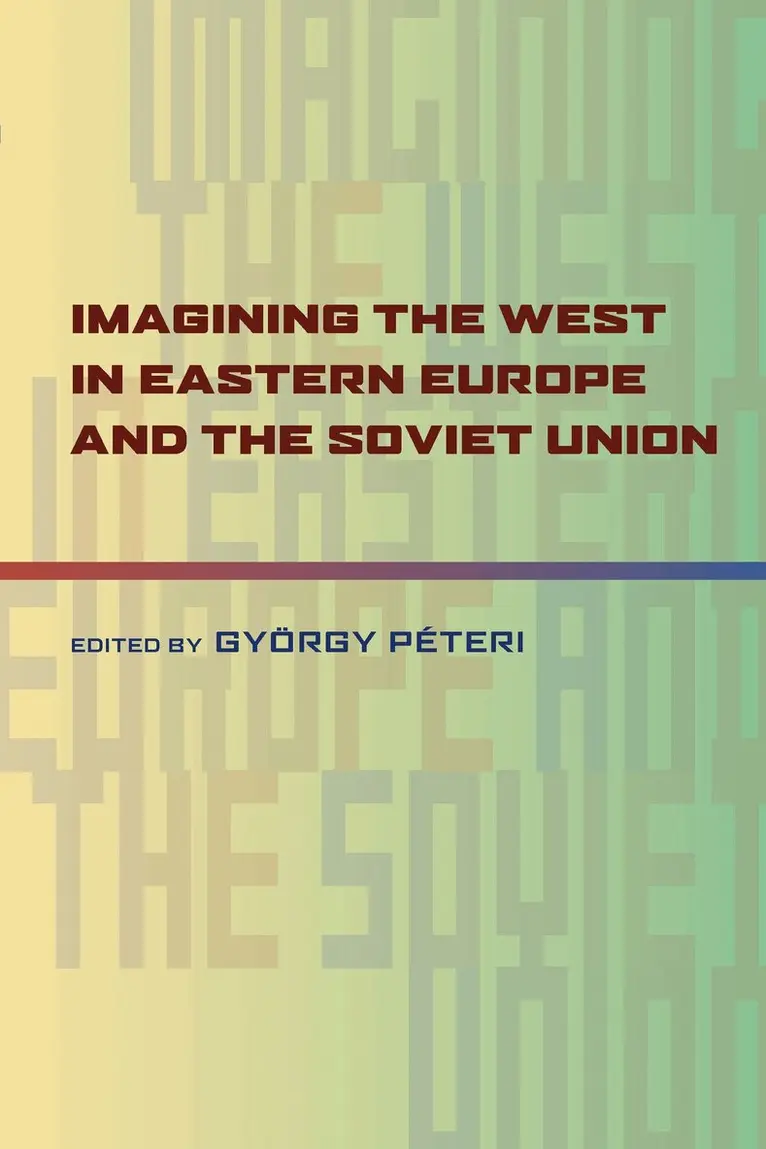
This volume presents work from an international group of writers who explore conceptualizations of what defined \u201cEast\u201d and \u201cWest\u201d in Eastern Europe, imperial Russia, and the Soviet Union. The contributors analyze the effects of transnational interactions on ideology, politics, and cultural production. They reveal that the roots of an East/West cultural divide were present many years prior to the rise of socialism and the cold war.The chapters offer insights into the complex stages of adoption and rejection of Western ideals in areas such as architecture, travel writings, film, music, health care, consumer products, political propaganda, and human rights. They describe a process of mental mapping whereby individuals \u201ccaptured and possessed\u201d Western identity through cultural encounters and developed their own interpretations from these experiences. Despite these imaginaries, political and intellectual elites devised responses of resistance, defiance, and counterattack to defy Western impositions.Socialists believed that their cultural forms and collectivist strategies offered morally and materially better lives for the masses and the true path to a modern society. Their sentiments toward the West, however, fluctuated between superiority and inferiority. But in material terms, Western products, industry, and technology, became the ever-present yardstick by which progress was measured. The contributors conclude that the commodification of the necessities of modern life and the rise of consumerism in the twentieth century made it impossible for communist states to meet the demands of their citizens. The West eventually won the battle of supply and demand, and thus the battle for cultural influence.
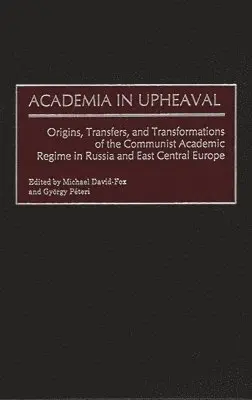
Academia in Upheaval
Origins, Transfers, and Transformations of the Communist Academic Regime in Russia and East Central Europe
Inbunden, Engelska, 2000
980 kr
Skickas inom 10-15 vardagar
Shows that the communist system in science and higher education was created less by an intentionally-imposed Soviet model than by the pressures and agendas developed within communist societies to reshape science and learning in successive periods of upheaval and consolidation. The communist academic regime was considerably more complex and historically contingent than previously recognized, as the persistence of many of its features after the fall of communism demonstrates.The latest archival research by an international team of scholars is brought together to produce the first comparative treatment of the periods of upheaval that shaped the rise and fall of the communist academic regime in Russia and East Central Europe. This volume sheds new light on the question of a Soviet model by examining how a particular Soviet system of science and higher education emerged, how it was exported and imported across varying local, national and international settings, and how key aspects of it outlived the political system that fostered it. The contemporary crises in science and higher education surrounding the demise of communism appear as a distinctive break from the patterns set into motion in the 1920s and 30s, but also as one more upheaval following a long line of previous reorderings throughout the 20th century that were conditioned by broader cataclysms in politics, society, ideology, and culture.