H. Haider – författare
Visar alla böcker från författaren H. Haider. Handla med fri frakt och snabb leverans.
6 produkter
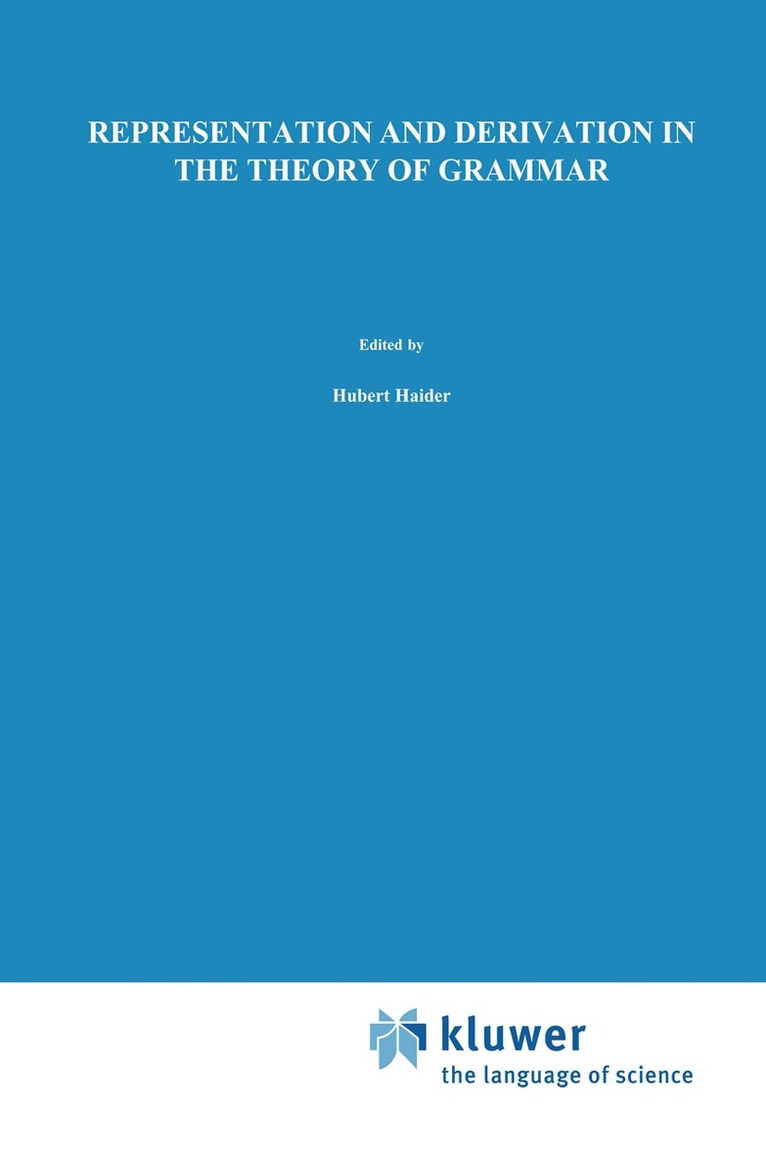
Representation and Derivation in the Theory of Grammar
Inbunden, 1991
1692 kr
Lägg i varukorg
Derivation or Representation? Hubert Haider & Klaus Netter 1 The Issue Derivation and Representation - these keywords refer both to a conceptual as well as to an empirical issue. Transformational grammar was in its outset (Chomsky 1957, 1975) a derivational theory which characterized a well-formed …
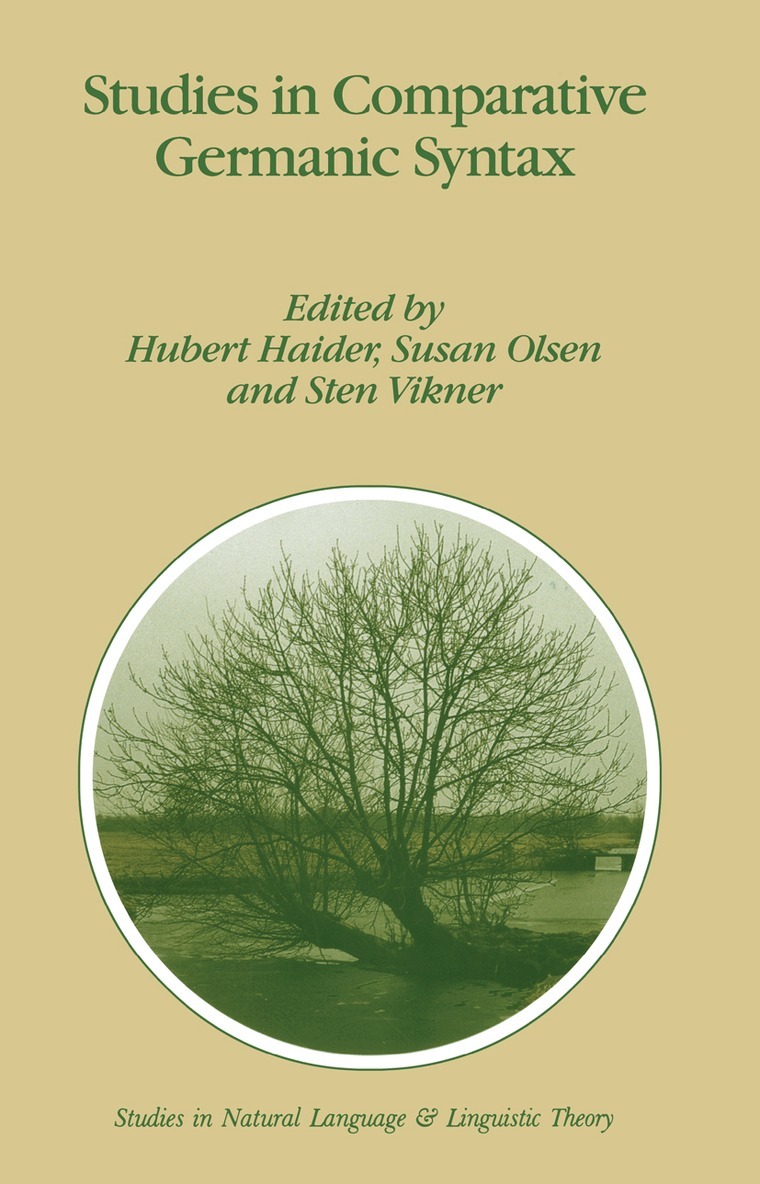
Studies in Comparative Germanic Syntax
Inbunden, 1995
2254 kr
Lägg i varukorg
o. COMPARATIVE GERMANIC SYNTAX This volume contains 13 papers that were prepared for the Seventh Workshop on Comparative Germanie Syntax at the University of Stuttgart in November 1991. In defining the theme both of the workshop and of this volume, we have taken "comparative" in "comparative …
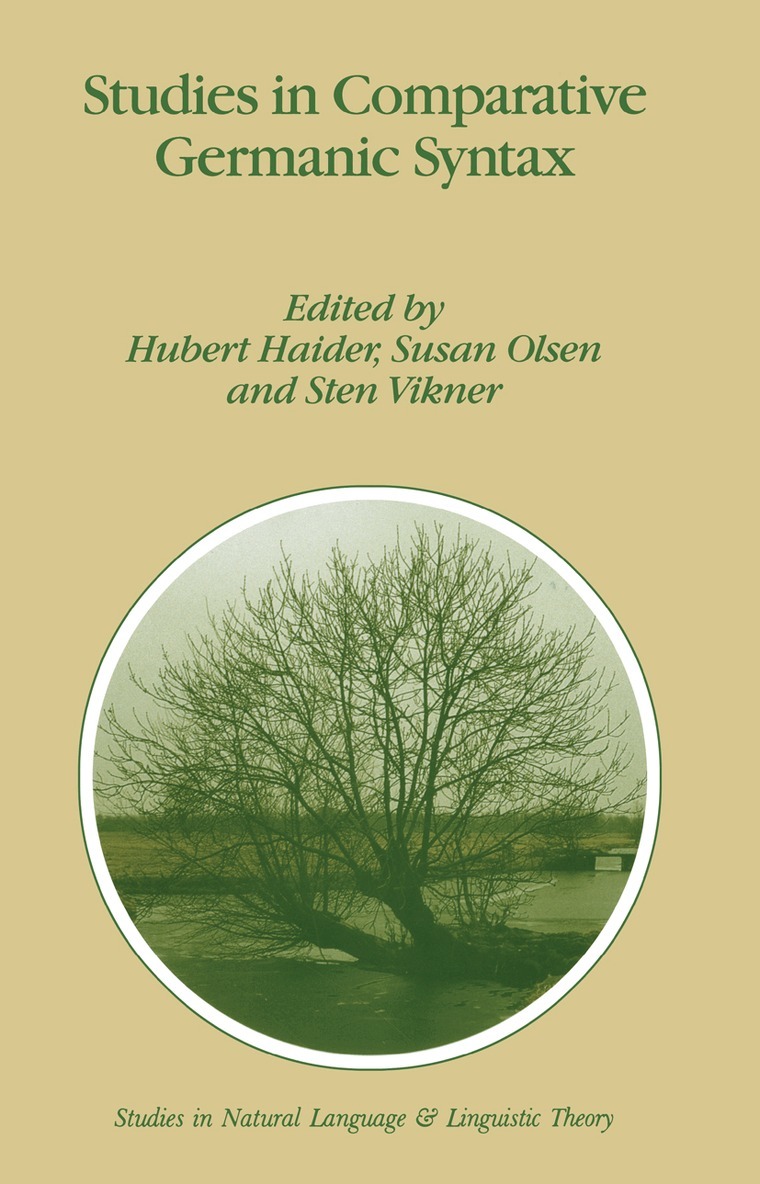
Studies in Comparative Germanic Syntax
Häftad, 2010
2254 kr
Lägg i varukorg
o. COMPARATIVE GERMANIC SYNTAX This volume contains 13 papers that were prepared for the Seventh Workshop on Comparative Germanie Syntax at the University of Stuttgart in November 1991. In defining the theme both of the workshop and of this volume, we have taken "comparative" in "comparative …
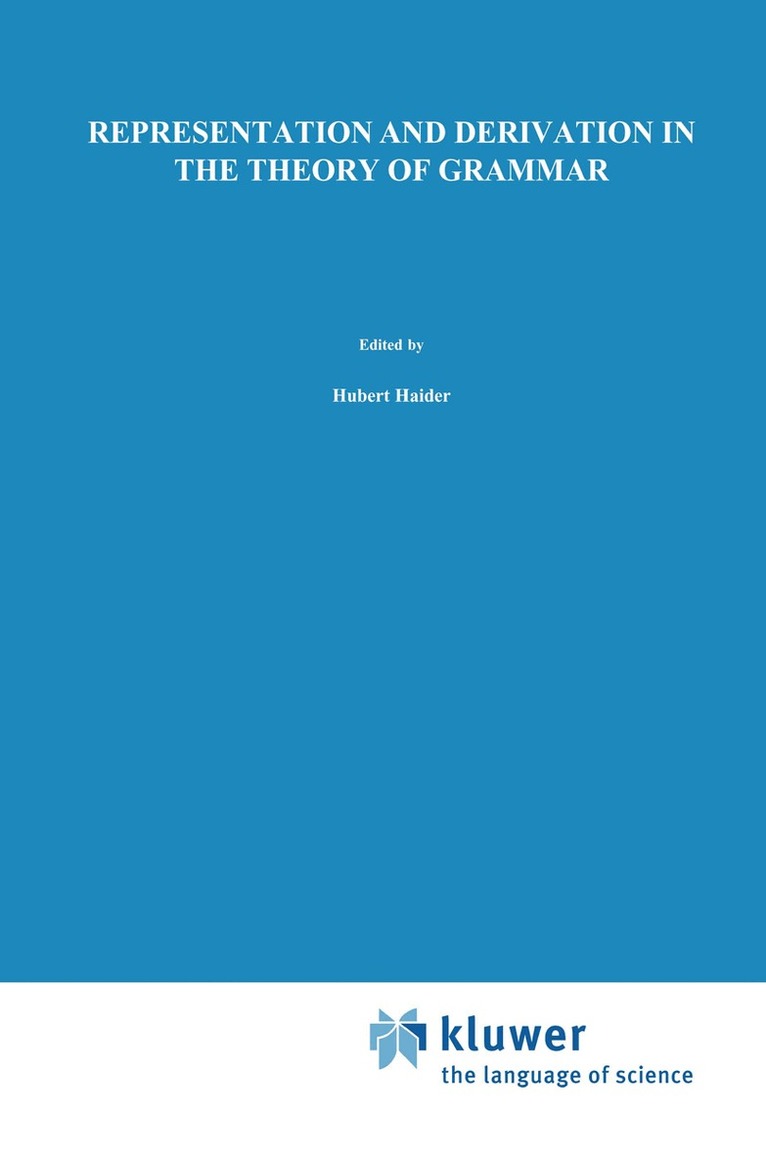
Representation and Derivation in the Theory of Grammar
Häftad, 2012
1692 kr
Lägg i varukorg
Derivation or Representation? Hubert Haider & Klaus Netter 1 The Issue Derivation and Representation - these keywords refer both to a conceptual as well as to an empirical issue. Transformational grammar was in its outset (Chomsky 1957, 1975) a derivational theory which characterized a well-formed …
Representation and Derivation in the Theory of Grammar
E-bok, 2012
2127 kr
Lägg i varukorg
Derivation or Representation? Hubert Haider & Klaus Netter 1 The Issue Derivation and Representation - these keywords refer both to a conceptual as well as to an empirical issue. Transformational grammar was in its outset (Chomsky 1957, 1975) a derivational theory which characterized a well-formed …
Studies in Comparative Germanic Syntax
E-bok, 2013
3013 kr
Lägg i varukorg
o. COMPARATIVE GERMANIC SYNTAX This volume contains 13 papers that were prepared for the Seventh Workshop on Comparative Germanie Syntax at the University of Stuttgart in November 1991. In defining the theme both of the workshop and of this volume, we have taken "comparative" in "comparative …