H. Prakken - Böcker
Visar alla böcker från författaren H. Prakken. Handla med fri frakt och snabb leverans.
4 produkter
4 produkter
1 560 kr
Skickas inom 10-15 vardagar
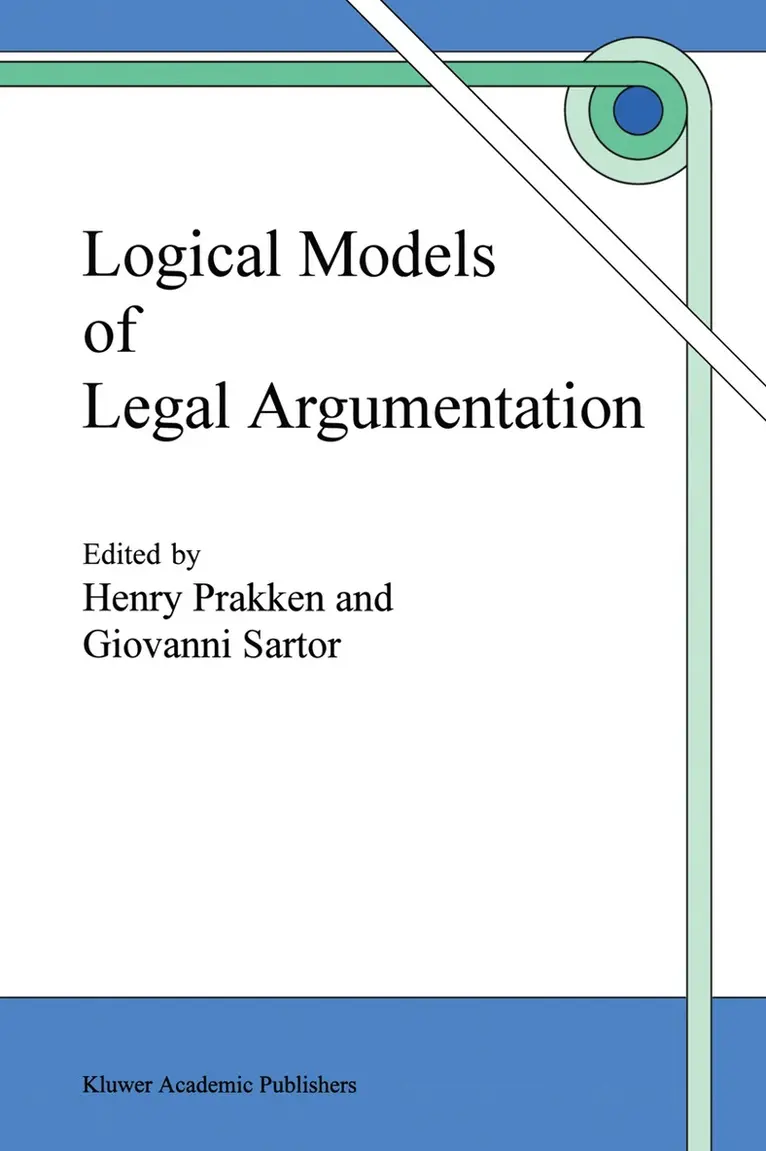
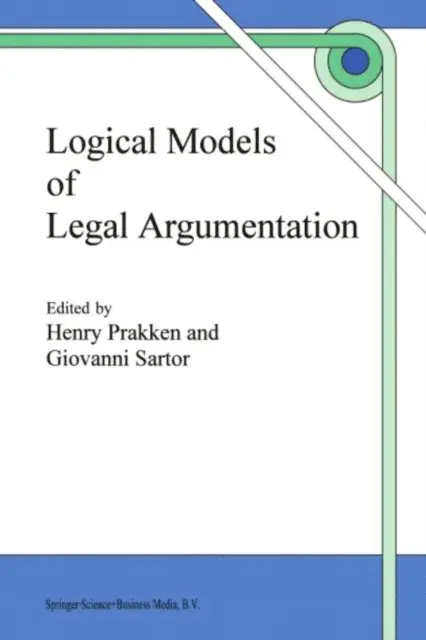
In the study of forms of legal reasoning, logic and argumentation theory long followed separate tracks. "Legal logicians" tended to focus on a deductive reconstruction of justifying a decision, disregarding the dialectical process leading to the chosen justification. Others instead emphasized the adversarial and discretionary nature of legal reasoning, involving reasonable evaluation of alternative choices, and the use of analogical reasoning. Recently, however, developments in artificial intelligence and law have paved the way for overcoming this separation. Logic has widened its scope to defensible argumentation, and informal accounts of analogy and dialectics have inspired the construction of computer programs. Thus the prospect is emerging of an integrated logical and dialectical account of legal argument, adding to the understanding of legal reasoning, and providing a formal basis for computer tools that assist and mediate legal debates while leaving room for human initiative. This book presents contributions to this development.From a logical point of view it covers topics such as evaluating conflicting arguments, weighing reasons, modelling legal disputes as a dialogue game, the role of the burden of proof, the relation between principles, rules, reasons and facts, and the relation between deductive and nondeductive arguments. Written by leading scholars in the field and building on recent developments in logic and artificial intelligence, the chapters provide a state-of-the-art account of research on the logical aspects of legal argument.
Del 32 - Law and Philosophy Library
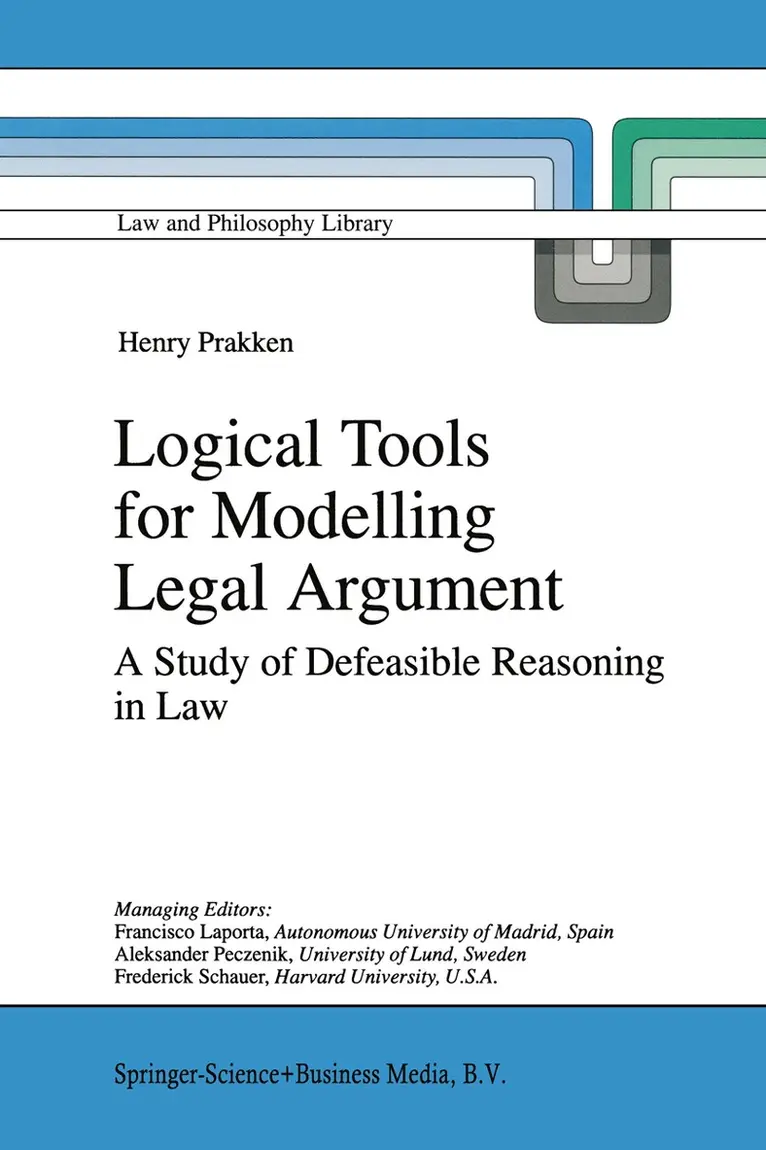
Logical Tools for Modelling Legal Argument
A Study of Defeasible Reasoning in Law
Inbunden, Engelska, 1997
1 949 kr
Skickas inom 10-15 vardagar
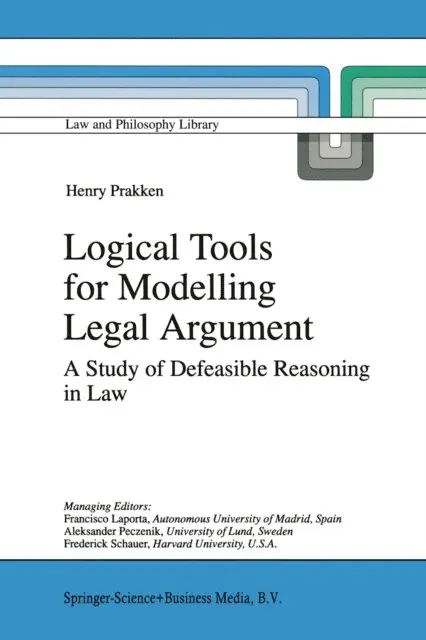
This book, the expanded and completely revised text of the author's 1993 dissertation, studies the logical aspects of legal reasoning, in order to provide philosophical foundations for legal applications of artificial intelligence. It respects that legal reasoning often takes place in a disputational setting, and observes that the law leaves ample room for disagreement, which means that lawyers reason under the possibility of exceptions and with contradictory legal sources, and cannot do without non-deductive reasoning forms, such as analogical reasoning. The study shows that, contrary to what is often said, these features do not escape a logical analysis if recent developments in logic and artificial intelligence on non-monotonic reasoning and defeasible argumentation are used, and if logic is regarded as a tool in, rather than as a model of, legal argument. This book should be relevant for scholars in legal philosophy, artificial intelligence, logic and argumentation theory, and can also serve as a textbook for graduate courses in Artifical Intelligence and Law, non-monotonic reasoning and legal argumentation.
Del 32 - Law and Philosophy Library
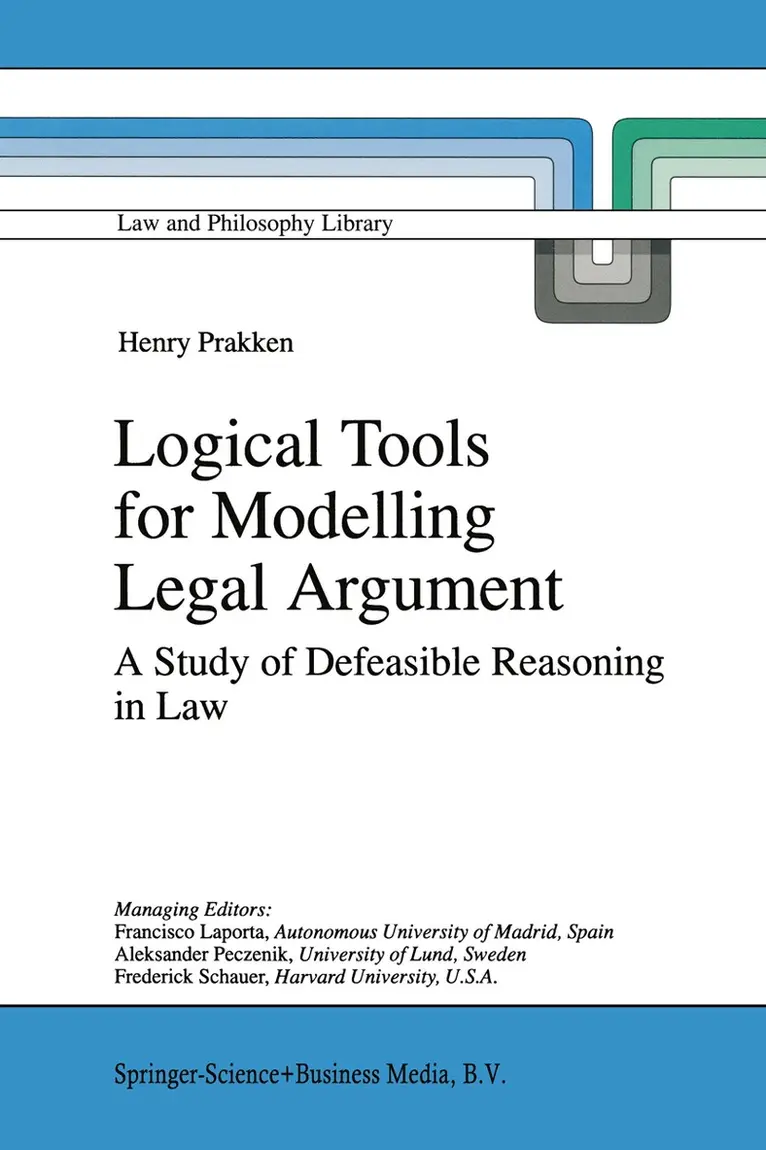
Logical Tools for Modelling Legal Argument
A Study of Defeasible Reasoning in Law
Häftad, Engelska, 2010
2 118 kr
Skickas inom 10-15 vardagar
This book, the expanded and completely revised text of the author's renowned 1993 dissertation, studies the logical aspects of legal reasoning, in order to provide philosophical foundations for legal applications of Artificial Intelligence. It respects that legal reasoning often takes place in a disputational setting, and observes that the law leaves ample room for disagreement, which means that lawyers reason under the possibility of exceptions and with contradictory legal sources, and cannot do without non-deductive reasoning forms, such as analogical reasoning. The study shows that, contrary to what is often said, these features do not escape a logical analysis if recent developments in logic and Artificial Intelligence on so-called non-monotonic reasoning and defeasible argumentation are used, and if logic is regarded as a tool in, rather than as, a model of legal argument. This book is relevant for scholars in legal philosophy, artificial intelligence, logic and argumentation theory, and can also serve as a textbook for graduate courses in AI & Law, non-monotonic reasoning and legal argumentation.
1 696 kr
Skickas inom 10-15 vardagar
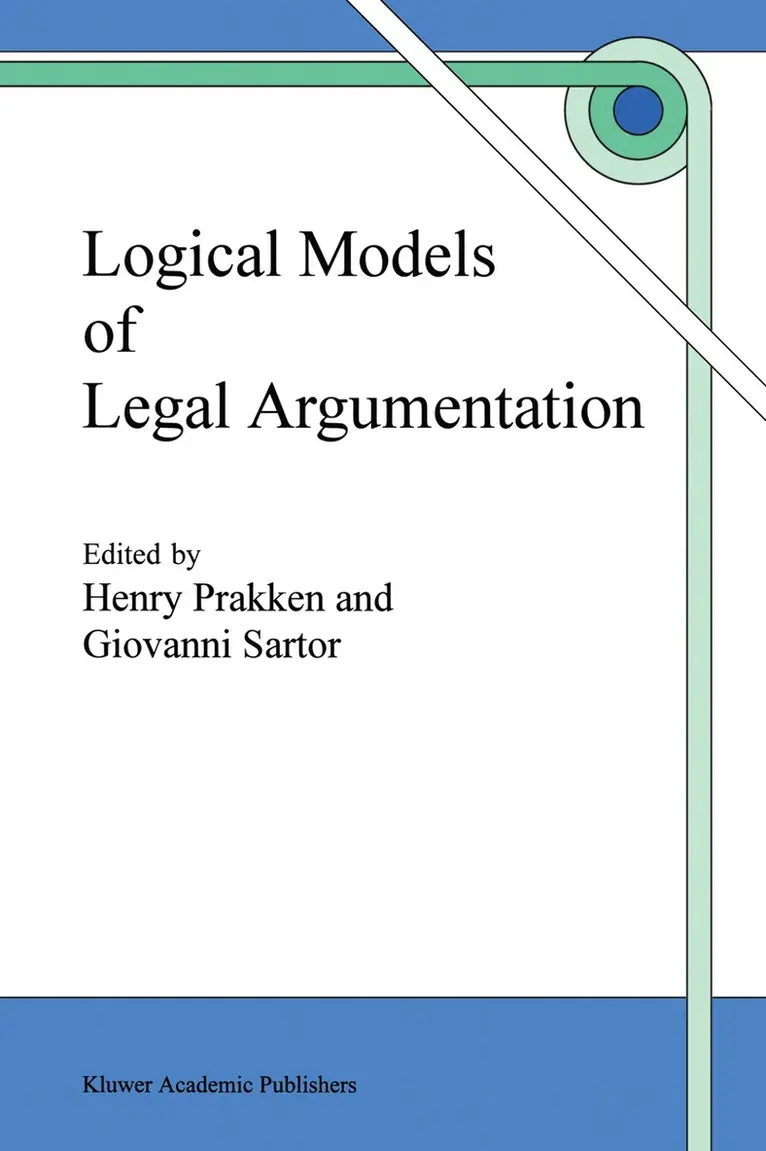
In the study of forms of legal reasoning, logic and argumentation theory long followed separate tracks. `Legal logicians' tended to focus on a deductive reconstruction of justifying a decision, disregarding the dialectical process leading to the chosen justification. Others instead emphasized the adversarial and discretionary nature of legal reasoning, involving reasonable evaluation of alternative choices, and the use of analogical reasoning. Recently, however, developments in Artificial Intelligence and Law have paved the way for overcoming this separation. Logic has widened its scope to defensible argumentation, and informal accounts of analogy and dialectics have inspired the construction of computer programs. Thus the prospect is emerging of an integrated logical and dialectical account of legal argument, adding to the understanding of legal reasoning, and providing a formal basis for computer tools that assist and mediate legal debates while leaving room for human initiative. This book presents contributions to this development. From a logical point of view it covers topics such as evaluating conflicting arguments, weighing reasons, modelling legal disputes as a dialogue game, the role of the burden of proof, the relation between principles, rules, reasons and facts, and the relation between deductive and nondeductive arguments. Written by leading scholars in the field and building on recent developments in logic and Artificial Intelligence, the chapters provide a state-of-the-art account of research on the logical aspects of legal argument.