Habib Ahmed – författare
Visar alla böcker från författaren Habib Ahmed. Handla med fri frakt och snabb leverans.
4 produkter
4 produkter
1 425 kr
Skickas inom 7-10 vardagar
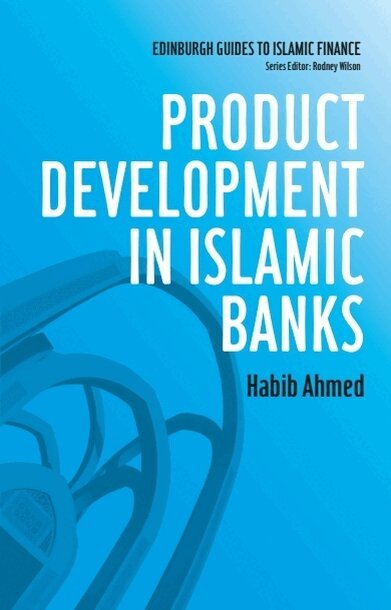
A systematic study of the process of developing Islamic financial products for banks.Islamic banking began in the 1970s with the aim of providing financial services compatible with Islamic law. Driven by market forces it has grown rapidly in Muslim countries and in international financial sectors. It is projected to grow at an annual rate of 15-20% and a key factor determining this future growth is the availability of new products that will satisfy the needs of various segments of society.While other texts discuss the basic principles and contracts used in Islamic banking and finance, few discuss how these can be used to develop financial products. This book fills that gap, starting with the basic principles that form the building blocks of contemporary Islamic financial products and then discussing the more intricate issues relating to product development processes.Key FeaturesDiscusses the different stages of the product development cycle in detailIncludes case studies showing the structures of various productsCritically evaluates the issues related to product development including the types of products used by Islamic banks and the approaches adopted in developing themThe author is well-positioned to write this text, having been an economist at the Islamic Development Bank Group in Saudi Arabia (1999-2007)
448 kr
Skickas inom 7-10 vardagar
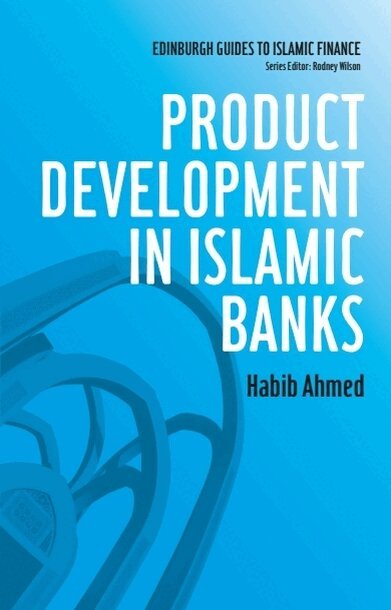
A systematic study of the process of developing Islamic financial products for banks.Islamic banking began in the 1970s with the aim of providing financial services compatible with Islamic law. Driven by market forces it has grown rapidly in Muslim countries and in international financial sectors. It is projected to grow at an annual rate of 15-20% and a key factor determining this future growth is the availability of new products that will satisfy the needs of various segments of society.While other texts discuss the basic principles and contracts used in Islamic banking and finance, few discuss how these can be used to develop financial products. This book fills that gap, starting with the basic principles that form the building blocks of contemporary Islamic financial products and then discussing the more intricate issues relating to product development processes.Key FeaturesDiscusses the different stages of the product development cycle in detailIncludes case studies showing the structures of various productsCritically evaluates the issues related to product development including the types of products used by Islamic banks and the approaches adopted in developing themThe author is well-positioned to write this text, having been an economist at the Islamic Development Bank Group in Saudi Arabia (1999-2007)
257 kr
Skickas inom 7-10 vardagar
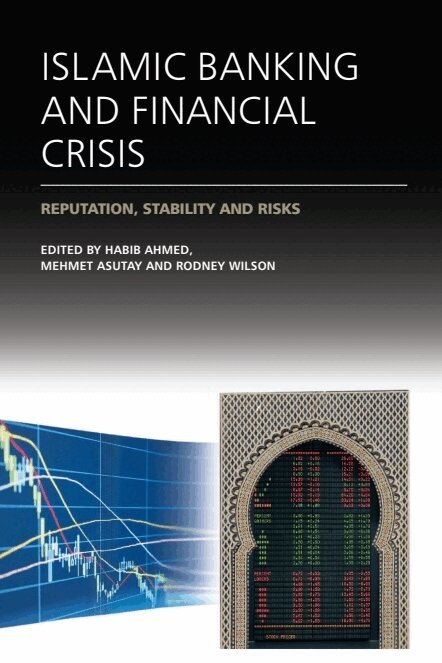
Do Islamic financial institutions perform better than their Western counterparts during periods of financial stress? How do Islamic financial institutions manage risk, given their unique characteristics and the need for Shari’ah compliance?Islamic Banking and Financial Crisis looks at the challenges for Islamic financial institutions in an international post-Basel II system where banks are required to have more capital and liquidity. It also examines the influence of governance on client and investor perceptions and their implications for institutional stability and sustainability. It concludes by suggesting how the Islamic financial industry can better fulfil both the legal and social requirements of Shari’ah.
Corporate Governance and Disclosure in GCC Banks
Islamic Perspectives, Empirical Insights and Policy Implications
Inbunden, Engelska, 2026
1 271 kr
Kommande
Gulf Cooperation Council (GCC) banks have seen recent regulatory shifts, evolving prominence and growing international scrutiny over governance practices; these recent developments have caused a gap in the literature. The research here fills in these gaps by integrating Islamic perspectives on governance and disclosure, a dimension often underexplored in empirical banking studies, in addition the author systematically explores both corporate governance (including board structure, audit committees, and internal controls) and Shariah governance (such as the structure of Shariah boards and the audit mechanisms used in Islamic banks). It further evaluates how these elements influence financial disclosure, stakeholder trust, and institutional resilience.The text offers a unique blend of theoretical insight, empirical analysis, and practical policy recommendations, making it valuable for academics, policymakers, financial regulators, and banking professionals.Emerald Studies in Islamic Economy and Finance (ESIEF) is a ground breaking series dedicated to advancing the knowledge and understanding of Islamic economics and finance. In an era where the global economic landscape is constantly evolving this will series seeks to contribute significantly to the academic discourse surrounding Islamic economy and finance building on the rich heritage of Islamic economic thought while embracing contemporary perspectives and challenges.