Habiba Ibrahim - Böcker
Visar alla böcker från författaren Habiba Ibrahim. Handla med fri frakt och snabb leverans.
3 produkter
3 produkter
329 kr
Skickas inom 10-15 vardagar
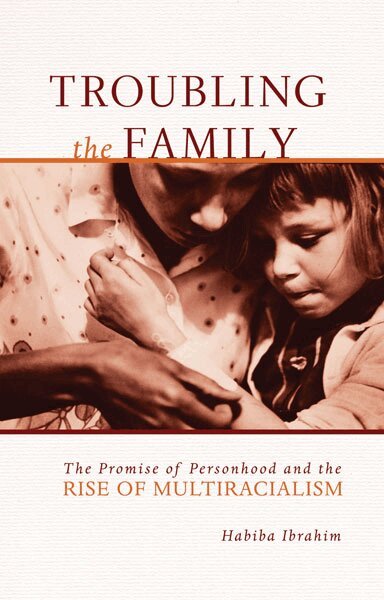
Troubling the Family argues that the emergence of multiracialism during the 1990s was determined by underlying and unacknowledged gender norms. Opening with a germinal moment for multiracialism-the seemingly massive and instantaneous popular appearance of Tiger Woods in 1997-Habiba Ibrahim examines how the shifting status of racial hero for both black and multiracial communities makes sense only by means of an account of masculinity.Ibrahim looks across historical events and memoirs-beginning with the Loving v. Virginia case in 1967 when miscegenation laws were struck down-to reveal that gender was the starting point of an analytics that made categorical multiracialism, and multiracial politics, possible. Producing a genealogy of multiracialism’s gendered basis allows Ibrahim to focus on a range of stakeholders whose interests often ran against the grain of what the multiracial movement of the 1990s often privileged: the sanctity of the heteronormative family, the labor of child rearing, and more precise forms of racial tabulation-all of which, when taken together, could form the basis for creating so-called neutral personhood.Ibrahim concludes with a consideration of Barack Obama as a representation of the resurrection of the assurance that multiracialism extended into the 2000s: a version of personhood with no memory of its own gendered legacy, and with no self-account of how it became so masculine that it can at once fill the position of political leader and the promise of the end of politics.
1 095 kr
Skickas inom 10-15 vardagar
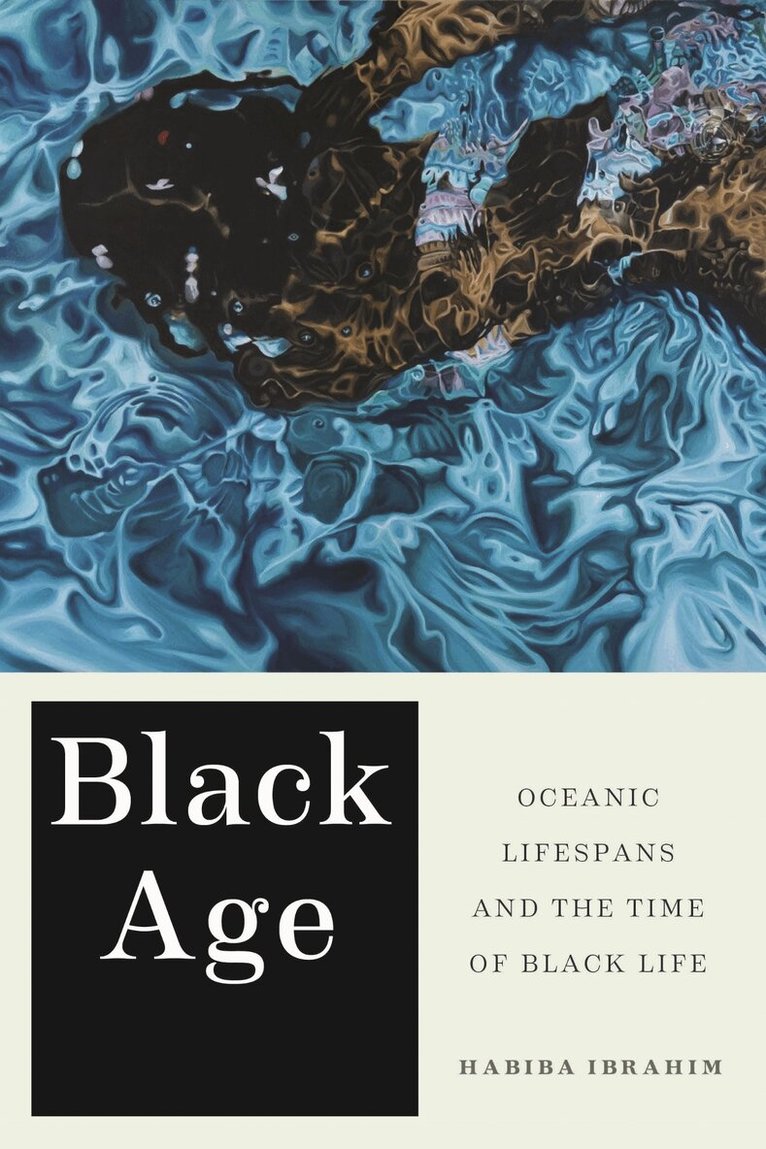
HONORABLE MENTION, HARRY SHAW AND KATRINA HAZZARD-DONALD AWARD FOR OUTSTANDING WORK IN AFRICAN-AMERICAN POPULAR CULTURE STUDIES, GIVEN BY THE POP CULTURE ASSOCIATION A view of transatlantic slavery's afterlife and modern Blackness through the lens of ageAlthough more than fifty years apart, the murders of Emmett Till and Trayvon Martin share a commonality: Black children are not seen as children. Time and time again, excuses for police brutality and aggression—particularly against Black children— concern the victim "appearing" as a threat. But why and how is the perceived "appearance" of Black persons so completely separated from common perceptions of age and time? Black Age: Oceanic Lifespans and the Time of Black Life posits age, life stages, and lifespans as a central lens through which to view Blackness, particularly with regard to the history of transatlantic slavery. Focusing on Black literary culture of the late twentieth and early twenty-first centuries, Habiba Ibrahim examines how the history of transatlantic slavery and the constitution of modern Blackness has been reimagined through the embodiment of age. She argues that Black age—through nearly four centuries of subjugation— has become contingent, malleable, and suited for the needs of enslavement. As a result, rather than the number of years lived or a developmental life stage, Black age came to signify exchange value, historical under-development, timelessness, and other fantasies borne out of Black exclusion from the human.Ibrahim asks: What constitutes a normative timeline of maturation for Black girls when "all the women"—all the canonically feminized adults—"are white"? How does a "slave" become a "man" when adulthood is foreclosed to Black subjects of any gender? Black Age tracks the struggle between the abuses of Black exclusion from Western humanism and the reclamation of non-normative Black life, arguing that, if some of us are brave, it is because we dare to live lives considered incomprehensible within a schema of "human time."
370 kr
Skickas inom 7-10 vardagar
HONORABLE MENTION, HARRY SHAW AND KATRINA HAZZARD-DONALD AWARD FOR OUTSTANDING WORK IN AFRICAN-AMERICAN POPULAR CULTURE STUDIES, GIVEN BY THE POP CULTURE ASSOCIATION A view of transatlantic slavery's afterlife and modern Blackness through the lens of ageAlthough more than fifty years apart, the murders of Emmett Till and Trayvon Martin share a commonality: Black children are not seen as children. Time and time again, excuses for police brutality and aggression—particularly against Black children— concern the victim "appearing" as a threat. But why and how is the perceived "appearance" of Black persons so completely separated from common perceptions of age and time? Black Age: Oceanic Lifespans and the Time of Black Life posits age, life stages, and lifespans as a central lens through which to view Blackness, particularly with regard to the history of transatlantic slavery. Focusing on Black literary culture of the late twentieth and early twenty-first centuries, Habiba Ibrahim examines how the history of transatlantic slavery and the constitution of modern Blackness has been reimagined through the embodiment of age. She argues that Black age—through nearly four centuries of subjugation— has become contingent, malleable, and suited for the needs of enslavement. As a result, rather than the number of years lived or a developmental life stage, Black age came to signify exchange value, historical under-development, timelessness, and other fantasies borne out of Black exclusion from the human.Ibrahim asks: What constitutes a normative timeline of maturation for Black girls when "all the women"—all the canonically feminized adults—"are white"? How does a "slave" become a "man" when adulthood is foreclosed to Black subjects of any gender? Black Age tracks the struggle between the abuses of Black exclusion from Western humanism and the reclamation of non-normative Black life, arguing that, if some of us are brave, it is because we dare to live lives considered incomprehensible within a schema of "human time."