Haizhou Huang - Böcker
Visar alla böcker från författaren Haizhou Huang. Handla med fri frakt och snabb leverans.
4 produkter
4 produkter
291 kr
Skickas inom 7-10 vardagar
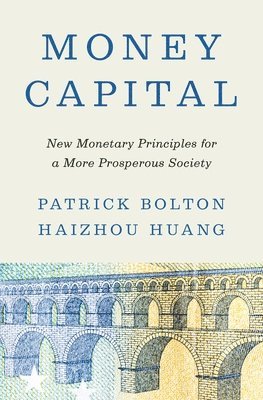
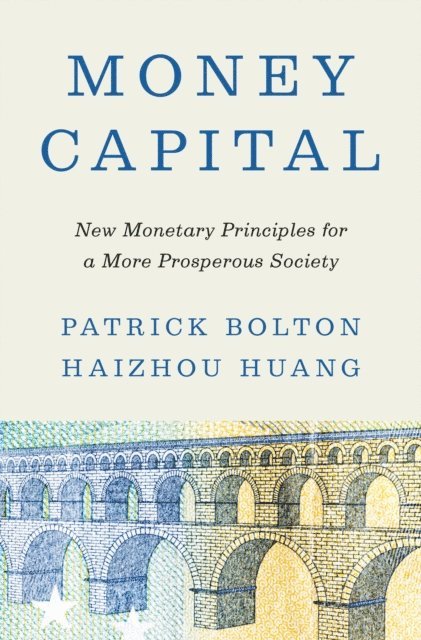
A novel perspective on monetary and fiscal policy that views money as the equity capital of a nationA conventional economic theory, monetarism, holds that inflation is a monetary phenomenon driven by changes in the supply of money. Yet recent experience—including the aftermath of the financial crisis of 2008 and the economic development of China—contradicts this basic prediction. In this book, leading economists Patrick Bolton and Haizhou Huang offer a novel perspective, viewing monetary economics through the lens of corporate finance. They propose a rich theory of money supply where money can be seen as the equity capital of a nation, playing a similar role as stocks for a company. This innovative framework integrates the real and monetary sides of the economy, with a banking sector and debt at its core.In the financial world, companies issue new shares only if it results in some kind of value creation; this is a basic principle of corporate finance that Bolton and Huang argue can be applied to monetary economics. When the government increases the money supply to finance positive net value investments—when it prints money to keep the economy going—it increases output, not inflation. This is evidenced by the strong growth in GDP and money in China over the last four decades, and in the United States during World War II. The effect of increasing money supply, they argue, depends on how money enters the system and what the money buys. The principles outlined by Bolton and Huang shed new light on a range of issues, including inflation, monetary and fiscal policy, central banking, money and growth, and the international monetary system.
234 kr
Skickas inom 7-10 vardagar
A novel perspective on monetary and fiscal policy that views money as the equity capital of a nationA conventional economic theory, monetarism, holds that inflation is a monetary phenomenon driven by changes in the supply of money. Yet recent experience—including the aftermath of the financial crisis of 2008 and the economic development of China—contradicts this basic prediction. In this book, leading economists Patrick Bolton and Haizhou Huang offer a novel perspective, viewing monetary economics through the lens of corporate finance. They propose a rich theory of money supply where money can be seen as the equity capital of a nation, playing a similar role as stocks for a company. This innovative framework integrates the real and monetary sides of the economy, with a banking sector and debt at its core.In the financial world, companies issue new shares only if it results in some kind of value creation; this is a basic principle of corporate finance that Bolton and Huang argue can be applied to monetary economics. When the government increases the money supply to finance positive net value investments—when it prints money to keep the economy going—it increases output, not inflation. This is evidenced by the strong growth in GDP and money in China over the last four decades, and in the United States during World War II. The effect of increasing money supply, they argue, depends on how money enters the system and what the money buys. The principles outlined by Bolton and Huang shed new light on a range of issues, including inflation, monetary and fiscal policy, central banking, money and growth, and the international monetary system.
1 133 kr
Skickas inom 7-10 vardagar
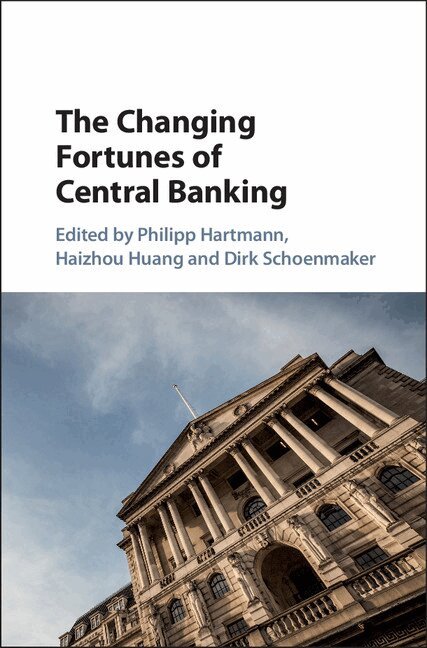
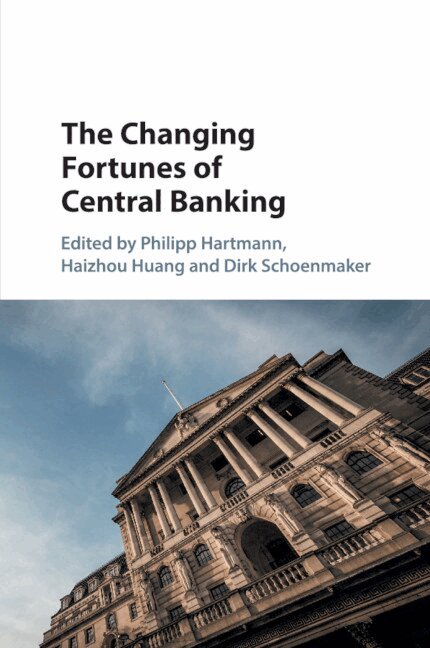
Understanding the changing role of central banks and their recent novel policies is essential for analysing many economic and financial issues, ranging from financial regulation and crisis, to exchange rate dynamics and regime changes, and QE and prolonged low interest rates. This book features contributions by the world's leading experts on central banking, providing in accessible essays a fascinating review of today's key issues for central banks. Luminaries including Stephen Cecchetti, Takatoshi Ito, Anil Kashyap, Mervyn King, Donald Kohn, Otmar Issing and Hyun Shin are joined by Charles Goodhart of the London School of Economics and Political Science, whose many achievements in the field of central banking are honoured as the inspiration for this book. The Changing Fortunes of Central Banking discusses the developing role of central banks in seeking monetary and financial stabilisation, while also giving suggestions for model strategies. This comprehensive review will appeal to central bankers, financial supervisors and academics.
523 kr
Skickas inom 7-10 vardagar
Understanding the changing role of central banks and their recent novel policies is essential for analysing many economic and financial issues, ranging from financial regulation and crisis, to exchange rate dynamics and regime changes, and QE and prolonged low interest rates. This book features contributions by the world's leading experts on central banking, providing in accessible essays a fascinating review of today's key issues for central banks. Luminaries including Stephen Cecchetti, Takatoshi Ito, Anil Kashyap, Mervyn King, Donald Kohn, Otmar Issing and Hyun Shin are joined by Charles Goodhart of the London School of Economics and Political Science, whose many achievements in the field of central banking are honoured as the inspiration for this book. The Changing Fortunes of Central Banking discusses the developing role of central banks in seeking monetary and financial stabilisation, while also giving suggestions for model strategies. This comprehensive review will appeal to central bankers, financial supervisors and academics.