Hajimu Masuda - Böcker
Visar alla böcker från författaren Hajimu Masuda. Handla med fri frakt och snabb leverans.
3 produkter
3 produkter
459 kr
Skickas inom 10-15 vardagar
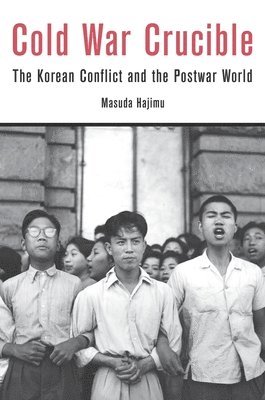
The end of World War II did not mean the arrival of peace. The major powers faced social upheaval at home, while anticolonial wars erupted around the world. American–Soviet relations grew chilly, but the meaning of the rivalry remained disputable. Cold War Crucible reveals the Korean War as the catalyst for a new postwar order. The conflict led people to believe in the Cold War as a dangerous reality, a belief that would define the fears of two generations.In the international arena, North Korea’s aggression was widely interpreted as the beginning of World War III. At the domestic level, the conflict generated a wartime logic that created dividing lines between “us” and “them,” precipitating waves of social purges to stifle dissent. The United States allowed McCarthyism to take root; Britain launched anti-labor initiatives; Japan conducted its Red Purge; and China cracked down on counterrevolutionaries. These attempts to restore domestic tranquility were not a product of the Cold War, Masuda Hajimu shows, but driving forces in creating a mindset for it. Alarmed by the idea of enemies from within and faced with the notion of a bipolar conflict that could quickly go from chilly to nuclear, ordinary people and policymakers created a fantasy of a Cold War world in which global and domestic order was paramount.In discovering how policymaking and popular opinion combined to establish and propagate the new postwar reality, Cold War Crucible offers a history that reorients our understanding of what the Cold War really was.
1 318 kr
Skickas inom 10-15 vardagar
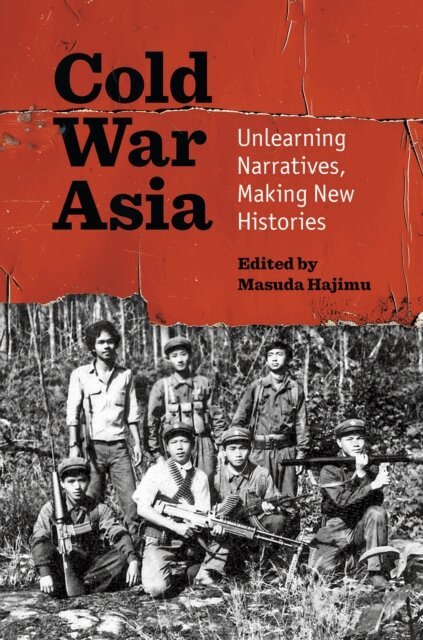
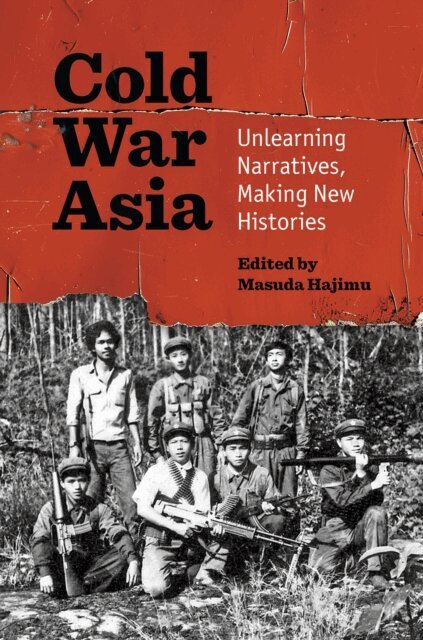
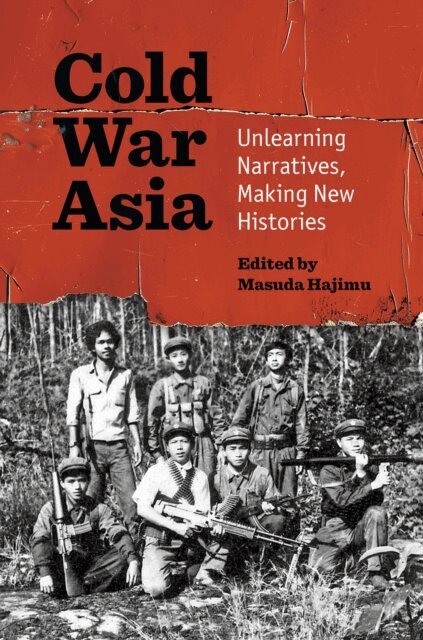
Conventional narratives of the Cold War revolve around high-level diplomats and state leaders in Washington, Beijing, and Moscow, but this anthology challenges those narratives by revealing how ordinary people across Asia experienced the era. Heavily rooted in oral history, this study takes readers to the villages of rural Java; the jungles of northern Thailand; the indigenous tribal communities of Kerala, India; and many other places in this vast region.The essays in this collection demonstrate how the world took shape far away from the voluminously analyzed epicenters of the Soviet Union, the United States, and China. Masuda organizes each chapter around the theme of "many Cold Wars," or, more precisely, many local and social wars that were imagined as part of the global Cold War. These histories raise fundamental questions about standard Cold War narratives, encouraging readers to rethink why the Cold War still matters. Contributors are Mary Grace Concepcion, Simon Creak, Cui Feng, David Engerman, Prasit Leepreecha, Luong Thi Hong, Muhammad Kunhi Mahin Udma, Masuda Hajimu, Alan McPherson, Imam Muhtarom, Sim Chi Yin, Kisho Tsuchiva, Odd Arne Westad, Matthew Woolgar, Kinuko Maehara Yamazato, Bin Yang, and Taomo Zhou. InterConnections is home to innovative global, international, and transregional histories of the long twentieth century. Books emphasize interactions and connections across three principal areas of inquiry: governments, militaries, and nonstate actors, including businesses; international organizations, nation-states, and individuals; and foreign and domestic policies. The series showcases work that transcends conventional geographic, temporal, and disciplinary borders, offering fresh and original perspectives on the making of the contemporary world.
403 kr
Skickas inom 10-15 vardagar
Conventional narratives of the Cold War revolve around high-level diplomats and state leaders in Washington, Beijing, and Moscow, but this anthology challenges those narratives by revealing how ordinary people across Asia experienced the era. Heavily rooted in oral history, this study takes readers to the villages of rural Java; the jungles of northern Thailand; the indigenous tribal communities of Kerala, India; and many other places in this vast region.The essays in this collection demonstrate how the world took shape far away from the voluminously analyzed epicenters of the Soviet Union, the United States, and China. Masuda organizes each chapter around the theme of "many Cold Wars," or, more precisely, many local and social wars that were imagined as part of the global Cold War. These histories raise fundamental questions about standard Cold War narratives, encouraging readers to rethink why the Cold War still matters. Contributors are Mary Grace Concepcion, Simon Creak, Cui Feng, David Engerman, Prasit Leepreecha, Luong Thi Hong, Muhammad Kunhi Mahin Udma, Masuda Hajimu, Alan McPherson, Imam Muhtarom, Sim Chi Yin, Kisho Tsuchiva, Odd Arne Westad, Matthew Woolgar, Kinuko Maehara Yamazato, Bin Yang, and Taomo Zhou. InterConnections is home to innovative global, international, and transregional histories of the long twentieth century. Books emphasize interactions and connections across three principal areas of inquiry: governments, militaries, and nonstate actors, including businesses; international organizations, nation-states, and individuals; and foreign and domestic policies. The series showcases work that transcends conventional geographic, temporal, and disciplinary borders, offering fresh and original perspectives on the making of the contemporary world.