Hakan Ulukan – författare
Visar alla böcker från författaren Hakan Ulukan. Handla med fri frakt och snabb leverans.
5 produkter
Ancient Wheats
Av Nusret Zencirci, Hakan Ulukan m. fl.
Inbunden, 2022
1643 kr
Lägg i varukorg
Wheat (Triticum L.), an annual herbaceous plant in Poacae (Gramineae) family, settles in the Triticeae (Hordeae) subfamily. The grasses (Poaceae Barnhart) are the fifth largest (monocotyledonous flowering) plant family and of great importance for human civilization and life. Cereal crops such as …
Ancient Wheats
Av Awais Rasheed, Shahid Mansoor m. fl.
E-bok, 2022
2065 kr
Lägg i varukorg
Wheat ( Triticum L.), an annual herbaceous plant in Poacae (Gramineae) family, settles in the Triticeae (Hordeae) subfamily. The grasses (Poaceae Barnhart) are the fifth largest (monocotyledonous flowering) plant family and of great importance for human civilization and life. Cereal crops such as …
Ancient Wheats
Av Nusret Zencirci, Hakan Ulukan m. fl.
Häftad, 2023
1643 kr
Lägg i varukorg
Wheat (Triticum L.), an annual herbaceous plant in Poacae (Gramineae) family, settles in the Triticeae (Hordeae) subfamily. The grasses (Poaceae Barnhart) are the fifth largest (monocotyledonous flowering) plant family and of great importance for human civilization and life. Cereal crops such as …
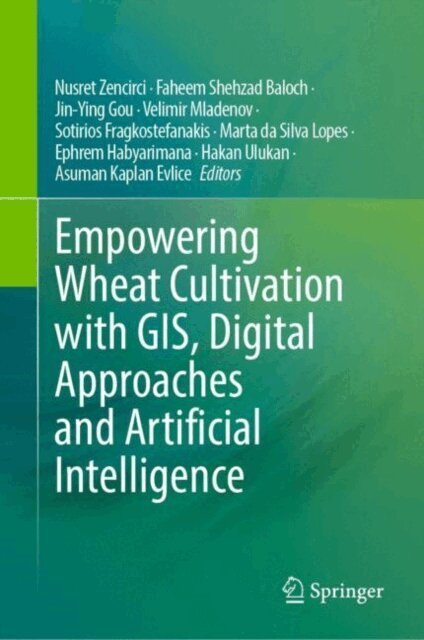
Empowering Wheat Cultivation with GIS, Digital Approaches and Artificial Intelligence
Av Nusret Zencirci, Faheem Shehzad Baloch m. fl.
Inbunden, 2025
2188 kr
Lägg i varukorg
The global population is projected to exceed 9 billion by 2050, leading to imminent food shortages not only for the current but also future generations. Anticipated increases in appetite coming 50 years will pose significant challenges to food production. This demand will exert additional pressure …
Empowering Wheat Cultivation with GIS, Digital Approaches and Artificial Intelligence
Av Asuman Kaplan Evlice, Hakan Ulukan m. fl.
E-bok, 2025
2925 kr
Lägg i varukorg
The global population is projected to exceed 9 billion by 2050, leading to imminent food shortages not only for the current but also future generations. Anticipated increases in appetite coming 50 years will pose significant challenges to food production. This demand will exert additional pressure …