Hans Kippenberg - Böcker
Visar alla böcker från författaren Hans Kippenberg. Handla med fri frakt och snabb leverans.
2 produkter
2 produkter
444 kr
Skickas inom 7-10 vardagar
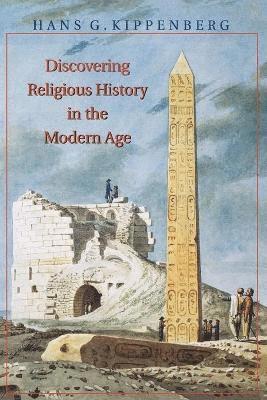
This book makes an unparalleled attempt to analyze the rise of comparative religion as a particular response to modernization. In the mid-nineteenth century and continuing into the twentieth, Western scholars began to interpret religion's history, drawing on prehistorical evidence, recently deciphered texts, and ethnographical reports. Religions that had been rejected as irrational by Enlightenment philosophers were now studied with enthusiasm. Using comparative methods, scholars identified in their own culture traces of ancient, oriental, and tribal religions--not merely as survivals but increasingly as powerful manifestations of a human existence not subdued by rationality. Hans Kippenberg shows how F. Max Muller, E. B. Tylor, W. Robertson Smith, J. G. Frazer, Jane Harrison, R. R. Marett, E. Durkheim, Max Weber, William James, and Rudolf Otto included in their reconstruction of the religious past a diagnosis of modern culture. Mysticism, soul, ritual, magic, pre-animism, world-rejection, and other notions were developed into a theory, disclosing in modern culture an ignored continuity of worldviews and attitudes.These scholars saw the modern world as still dependent on religion and believed that a history of religion could speak to questions about morality and identity that Enlightened thinkers or theologians could no longer answer. The study of ancient and non-Western religions, they believed, could help establish awareness of a genuine human culture threatened by an increasingly mechanized world. Their work shows how the historical concept of religion emerged and became plausible in the context of modernization, and peoples' experiences of modernization determined the meanings that religion assumed.
9/11 Handbook
Arabic Text, Annotated Translation and Interpretation of the Attacker's Spiritual Manual
Häftad, Engelska, 2006
369 kr
Skickas inom 5-8 vardagar
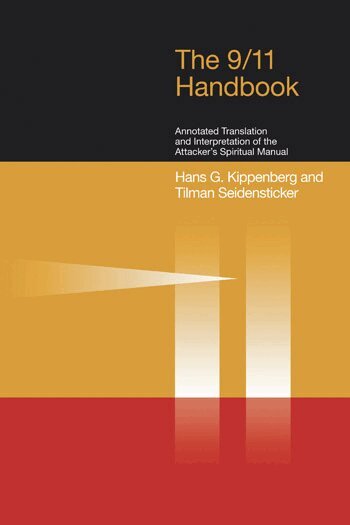
After the attack of 9/11, the FBI discovered at three different locations a document disclosing how the attackers of 9/11 conceived of their violence and prepared for it. The book contains the first scholarly edition of the "Arabic text of the Manual of the Attackers of 9/11", along with an English translation and commentary, and studies concerning its context. The 19 young attackers prepared for their action by spiritual means and this preparation is at the centre of the exercises of the "Manual", while the military character of the attack on the economic, military and political centres of today's "paganism" is merely tacitly presumed. Religious practices during the last night turn the young man into a warrior hero. A second stage addresses the perils at the airport. By recitations, the "warrior" gets protection in a world dominated by the mighty technology of the "Western Civilization". Finally, at the third stage in the plane, the perpetrator prays to become a martyr. By his readiness to die, he gives a practical proof for the existence of a power superior to "Western Civilization". Though it is based on scholarly research, this book is written for a broader audience.It makes a document available that is crucial in understanding the attacks of 9/11. It addresses all the issues debated in public: is the text a forgery? What is its content? Are suicidal attacks typical for Islam? Does Islam allow such kind of violence? How did the perpetrators perceive of the situation of Islam today? How did they justify the massacre? Were the attackers convicted Muslims? How did the theology of Usama bin Ladin affect the "Manual" and the attack? And is the "War on terror" an adequate response? The book is of interest for scholars in Islamic and Religious Studies and other disciplines dealing with the issue of 9/11, for journalists and politicians, and will serve as textbook in colleges and universities.