Hans Radder - Böcker
Visar alla böcker från författaren Hans Radder. Handla med fri frakt och snabb leverans.
6 produkter
6 produkter
382 kr
Tillfälligt slut
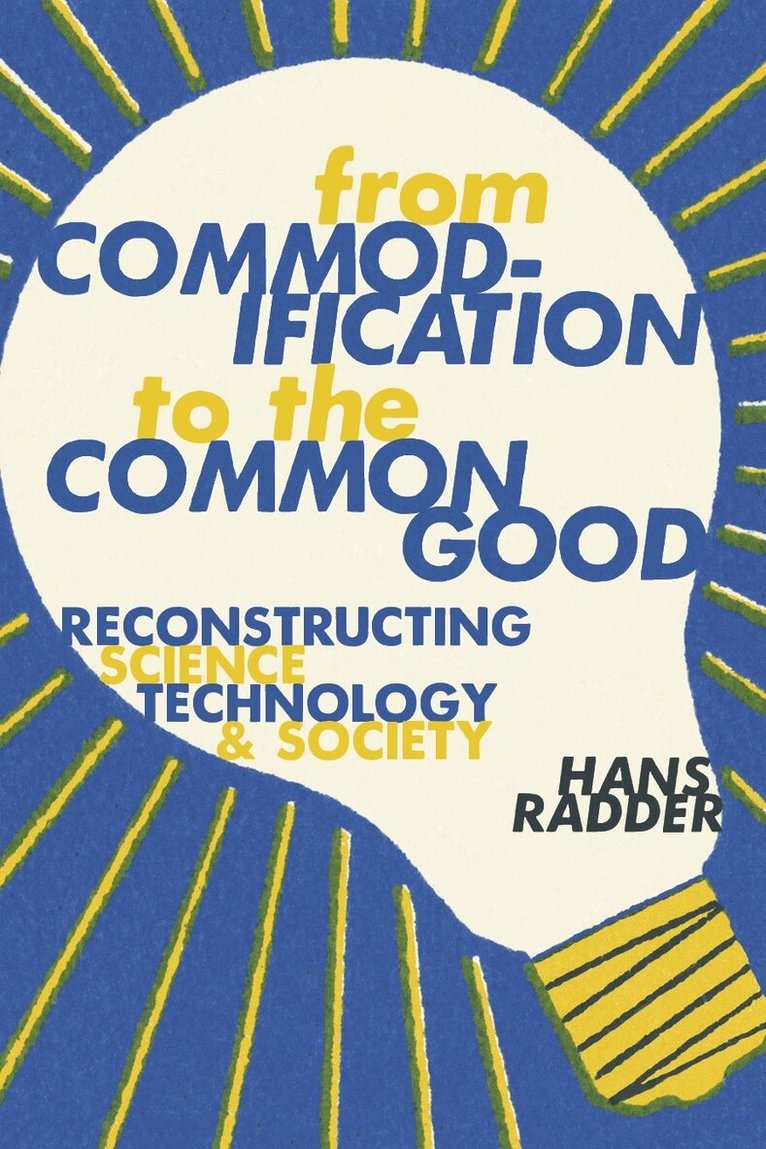
Offers a new approach to a number of central issues concerning the theoretical interpretation and normative evaluation of contemporary science and technology.
870 kr
Skickas inom 3-6 vardagar
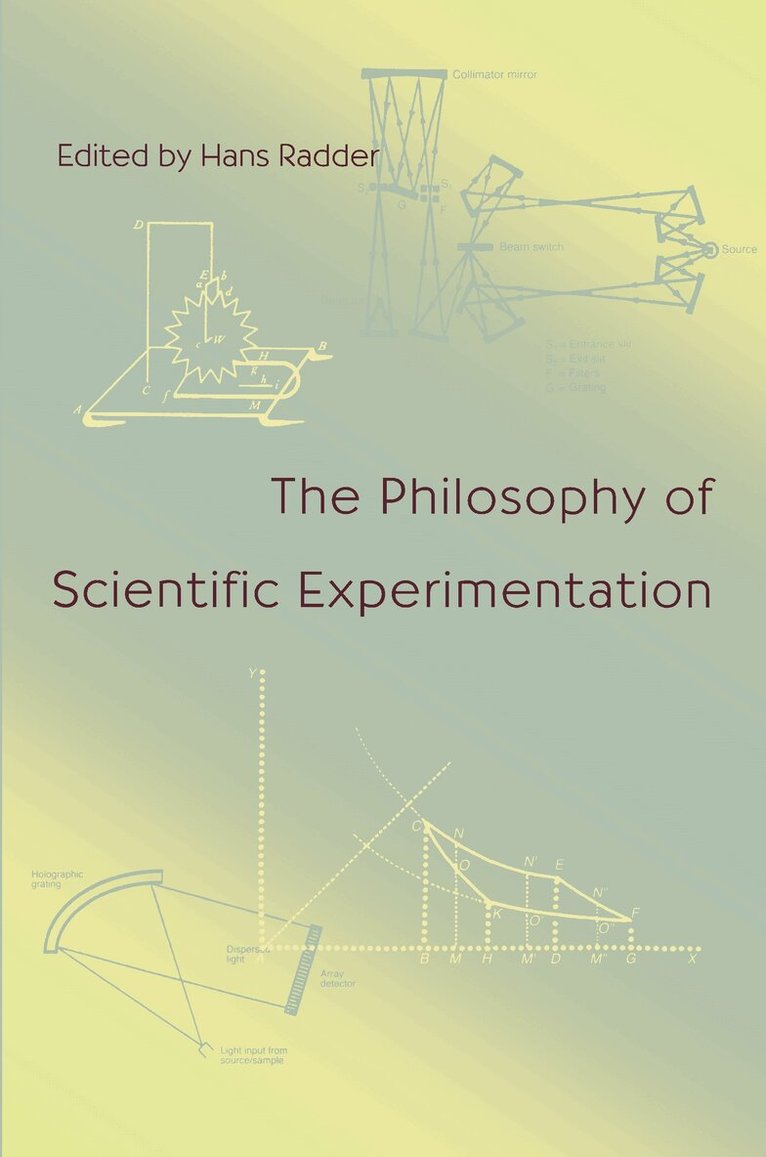
Since the late 1980s, the neglect of experiment by philosophers and historians of science has been replaced by a keen interest in the subject. In this volume, a number of prominent philosophers of experiment directly address basic theoretical questions, develop existing philosophical accounts, and offer novel perspectives on the subject, rather than rely exclusively on historical cases of experimental practice.Each essay examines one or more of six interconnected themes that run throughout the collection: the philosophical implications of actively and intentionally interfering with the material world while conducting experiments; issues of interpretation regarding causality; the link between science and technology; the role of theory in experimentation involving material and causal intervention; the impact of modeling and computer simulation on experimentation; and the philosophical implications of the design, operation, and use of scientific instruments.
702 kr
Skickas inom 7-10 vardagar
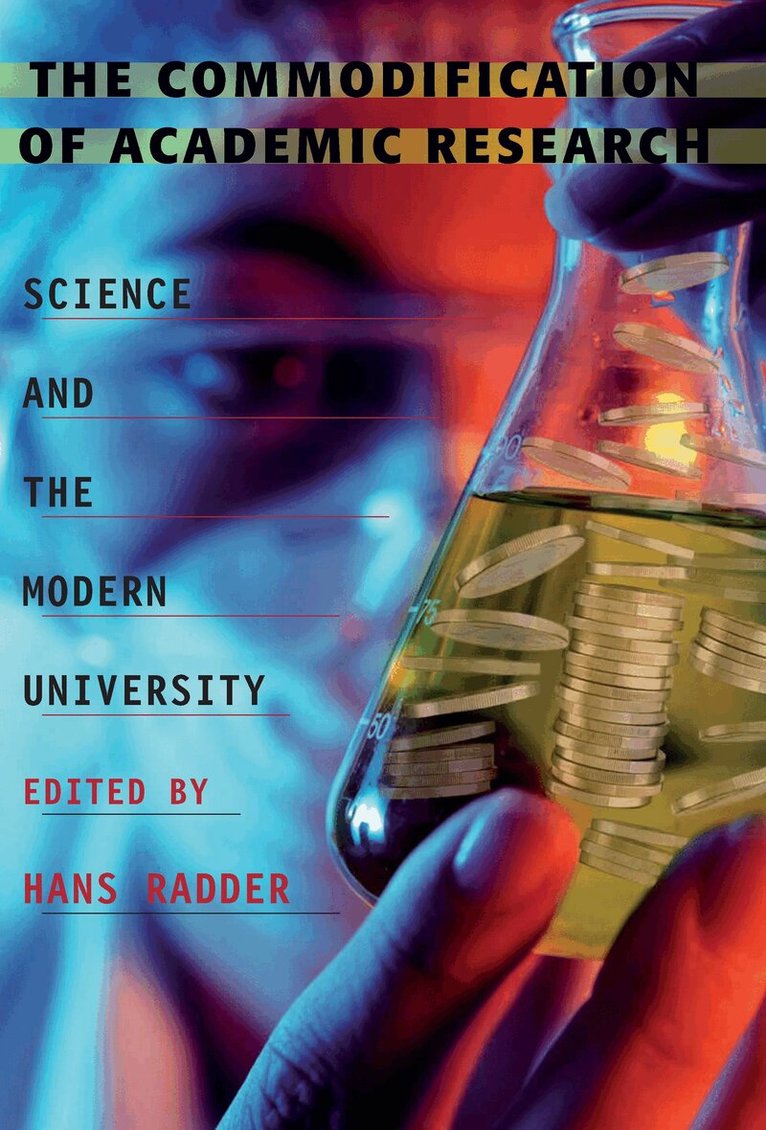
Selling science has become a common practice in contemporary universities. This commodification of academia pervades many aspects of higher education, including research, teaching, and administration. As such, it raises significant philosophical, political, and moral challenges. This volume offers the first book-length analysis of this disturbing trend from a philosophical perspective and presents views by scholars of philosophy of science, social and political philosophy, and research ethics. The epistemic and moral responsibilities of universities, whether for-profit or nonprofit, are examined from several philosophical standpoints. The contributors discuss the pertinent epistemological and methodological questions, the sociopolitical issues of the organization of science, the tensions between commodified practices and the ideal of \u201cscience for the public good,\u201d and the role of governmental regulation and personal ethical behavior. In order to counter coercive and corruptive influences of academic commodification, the contributors consider alternatives to commodified research and offer practical recommendations for establishing appropriate research standards, methodologies and institutional arrangements, and a corresponding normative ethos.
645 kr
Skickas inom 7-10 vardagar
Observation and conceptual interpretation constitute the two major ways through which human beings engage the world. The World Observed/The World Conceived presents an innovative analysis of the nature and role of observation and conceptualization. While these two actions are often treated as separate, Hans Radder shows that they are inherently interconnected-that materially realized observational processes are always conceptually interpreted and that the meaning of concepts depends on the way they structure observational processes and abstract from them. He examines the role of human action and conceptualization in realizing observational processes and develops a detailed theory of the relationship between observation, abstraction, and the meaning of concepts.The World Observed/The World Conceived will prove useful to many areas of scholarly study including ontology, epistemology, philosophy of language, philosophy of science, science studies, and cognitive science.
Del 294 - Boston Studies in the Philosophy and History of Science
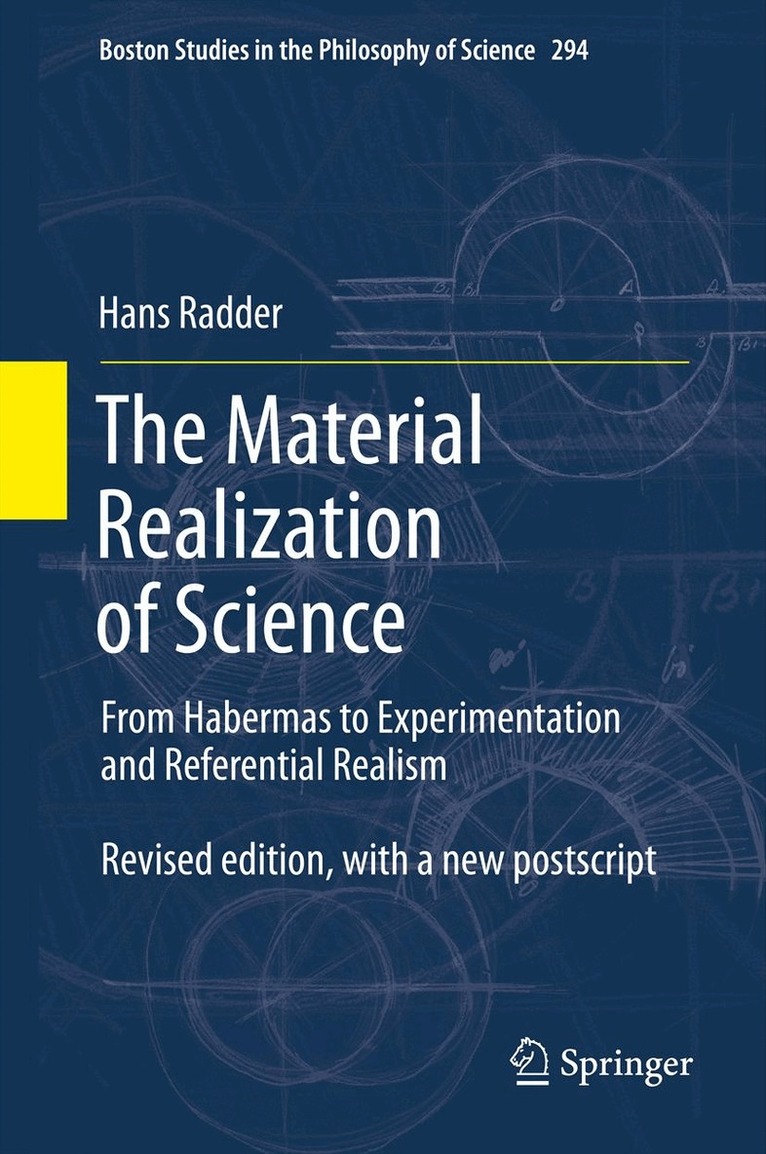
Material Realization of Science
From Habermas to Experimentation and Referential Realism
Inbunden, Engelska, 2012
1 062 kr
Skickas inom 10-15 vardagar
This book develops a conception of science as a multi-dimensional practice, which includes experimental action and production, conceptual-theoretical interpretation, and formal-mathematical work. On this basis, it addresses the topical issue of scientific realism and expounds a detailed, referentially realist account of the natural sciences. This account is shown to be compatible with the frequent occurrence of conceptual discontinuities in the historical development of the sciences. Referential realism exploits several fruitful ideas of Jürgen Habermas, especially his distinction between objectivity and truth; it builds on a in-depth analysis of scientific experiments, including their material realization; and it is developed through an extensive case study in the history and philosophy of quantum mechanics. The new postscript explains how the book relates to several important issues in recent philosophy of science and science studies.“I highly recommend this book. Radder is probably the first philosopher of science to make productive epistemological use of the notion of ‘experimental system’. The postscript is most valuable since it connects his work not only to the topical debates in philosophy of science, but also to history of science and science studies.”Hans-Jörg Rheinberger, Max Planck Institute for the History of Science, BerlinAbout the first edition:“The debate on realism has recently become rather stale by repetition, but Radder introduces original insights and has written a lively and well-argued contribution to it. The book is to be recommended also as a clear introduction to the complex of relevant issues.”Mary Hesse, University of Cambridge“Radder presents an ingenious approach to the issue of scientific realism and conceptual discontinuity. I believe his idea that conceptual discontinuity presupposes other types of continuity is extremely important.”Mark Rowlands, Universityof Alabama, Tuscaloosa Hans Radder is professor of philosophy of science and technology at VU University Amsterdam. He is the author of In and About the World and The World Observed/The World Conceived. He edited The Philosophy of Scientific Experimentation and The Commodification of Academic Research: Science and the Modern University, and is coeditor of Science Transformed? Debating Claims of an Epochal Break.
Del 294 - Boston Studies in the Philosophy and History of Science
Material Realization of Science
From Habermas to Experimentation and Referential Realism
Häftad, Engelska, 2014
1 062 kr
Skickas inom 10-15 vardagar
This book develops a conception of science as a multi-dimensional practice, which includes experimental action and production, conceptual-theoretical interpretation, and formal-mathematical work. On this basis, it addresses the topical issue of scientific realism and expounds a detailed, referentially realist account of the natural sciences. This account is shown to be compatible with the frequent occurrence of conceptual discontinuities in the historical development of the sciences. Referential realism exploits several fruitful ideas of Jürgen Habermas, especially his distinction between objectivity and truth; it builds on a in-depth analysis of scientific experiments, including their material realization; and it is developed through an extensive case study in the history and philosophy of quantum mechanics. The new postscript explains how the book relates to several important issues in recent philosophy of science and science studies.“I highly recommend this book. Radder is probably the first philosopher of science to make productive epistemological use of the notion of ‘experimental system’. The postscript is most valuable since it connects his work not only to the topical debates in philosophy of science, but also to history of science and science studies.”Hans-Jörg Rheinberger, Max Planck Institute for the History of Science, BerlinAbout the first edition:“The debate on realism has recently become rather stale by repetition, but Radder introduces original insights and has written a lively and well-argued contribution to it. The book is to be recommended also as a clear introduction to the complex of relevant issues.”Mary Hesse, University of Cambridge“Radder presents an ingenious approach to the issue of scientific realism and conceptual discontinuity. I believe his idea that conceptual discontinuity presupposes other types of continuity is extremely important.”Mark Rowlands, Universityof Alabama, Tuscaloosa Hans Radder is professor of philosophy of science and technology at VU University Amsterdam. He is the author of In and About the World and The World Observed/The World Conceived. He edited The Philosophy of Scientific Experimentation and The Commodification of Academic Research: Science and the Modern University, and is coeditor of Science Transformed? Debating Claims of an Epochal Break.