Harold D. Clarke – författare
Visar alla böcker från författaren Harold D. Clarke. Handla med fri frakt och snabb leverans.
23 produkter
Political Choice in Britain
Av Harold D. Clarke, David Sanders m. fl.
Inbunden, 2004
1316 kr
Lägg i varukorg
Why do people vote as they do? Indeed, why do they vote at all? What do they think about elections, political parties, and democracy? This important book by four leading scholars addresses these questions. Using a wealth of data from the 1964-2001 British election studies, monthly Gallup polls, and …
Political Choice in Britain
Av Harold D. Clarke, David Sanders m. fl.
Häftad, 2004
1078 kr
Lägg i varukorg
Why do people vote as they do? Indeed, why do they vote at all? What do they think about elections and democracy? This book addresses these questions by focusing on the explanatory power of rival sociological and "individual rationality" models. Data from the latest British Election Study, earlier …
Controversies In Political Economy
Canada, Great Britain, The United States
Inbunden, 2019
2506 kr
Lägg i varukorg
This book addresses a number of controversies in political economy of political support in three Anglo-American polities—Canada, Great Britain, and the United States. It addresses a range of theoretical issues concerning which variables properly belong in political economy models.
Controversies In Political Economy
Canada, Great Britain, The United States
Häftad, 2020
690 kr
Lägg i varukorg
This book addresses a number of controversies in political economy of political support in three Anglo-American polities—Canada, Great Britain, and the United States. It addresses a range of theoretical issues concerning which variables properly belong in political economy models.
Controversies In Political Economy
Canada, Great Britain, The United States
E-bok, 2019
814 kr
Lägg i varukorg
This book addresses a number of controversies in political economy of political support in three Anglo-American polities-Canada, Great Britain, and the United States. It addresses a range of theoretical issues concerning which variables properly belong in political economy models.
Controversies In Political Economy
Canada, Great Britain, The United States
E-bok, 2019
814 kr
Lägg i varukorg
This book addresses a number of controversies in political economy of political support in three Anglo-American polities-Canada, Great Britain, and the United States. It addresses a range of theoretical issues concerning which variables properly belong in political economy models.
Citizens and Community
Political Support in a Representative Democracy
Av Allan Kornberg, Harold D. Clarke
Häftad, 2011
569 kr
Lägg i varukorg
The related subjects of political legitimacy and system support are key theoretical concerns of students of democratic societies. They have received very little scholarly attention, however, because of the conceptual and methodological complexities they engender. In this book the authors address …
Citizens and Community
Political Support in a Representative Democracy
Av Allan Kornberg, Harold D. Clarke
Inbunden, 1992
1644 kr
Lägg i varukorg
The related subjects of political legitimacy and system support are key theoretical concerns of students of democratic societies. They have received very little scholarly attention, however, because of the conceptual and methodological complexities they engender. In this book the authors address …
Performance Politics and the British Voter
Av Harold D. Clarke, David Sanders m. fl.
Häftad, 2009
549 kr
Lägg i varukorg
What matters most to voters when they choose their leaders? This book suggests that performance politics is at the heart of contemporary democracy, with voters forming judgments about how well competing parties and leaders perform on important issues. Given the high stakes and uncertainty involved, …
Performance Politics and the British Voter
Av Harold D. Clarke, David Sanders m. fl.
Inbunden, 2009
1139 kr
Lägg i varukorg
What matters most to voters when they choose their leaders? This book suggests that performance politics is at the heart of contemporary democracy, with voters forming judgments about how well competing parties and leaders perform on important issues. Given the high stakes and uncertainty involved, …
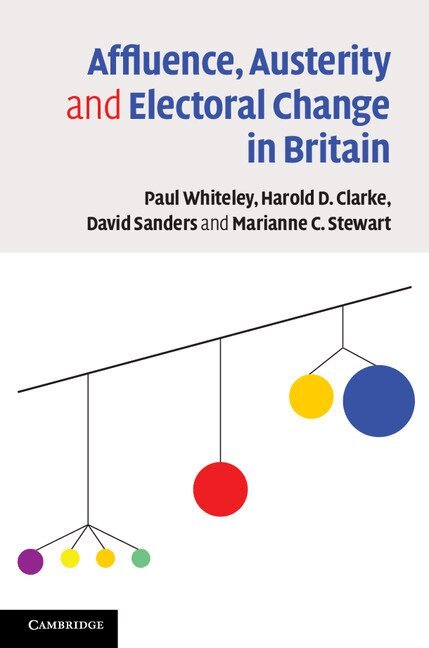
Affluence, Austerity and Electoral Change in Britain
Av Paul Whiteley, Harold D. Clarke m. fl.
Inbunden, 2013
1351 kr
Lägg i varukorg
Affluence, Austerity and Electoral Change in Britain investigates the political economy of party support for British political parties since Tony Blair led New Labour to power in 1997. Using valence politics models of electoral choice and marshalling an unprecedented wealth of survey data collected …
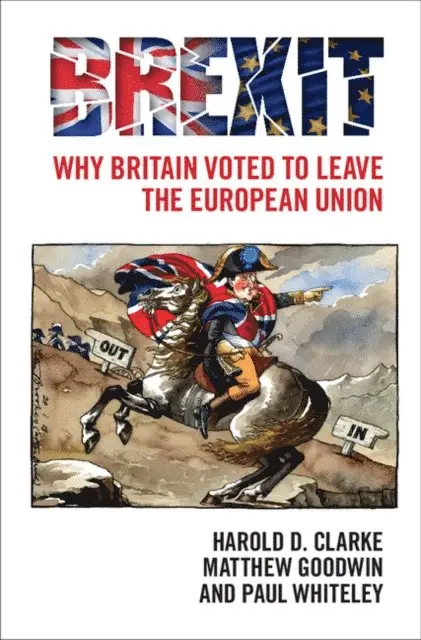
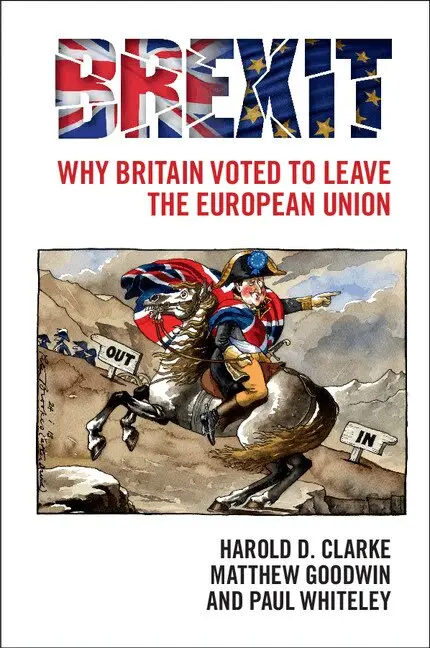
Brexit
Why Britain Voted to Leave the European Union
Av Harold D. Clarke, Matthew Goodwin m. fl.
Inbunden, 2017
1322 kr
Lägg i varukorg
In June 2016, the United Kingdom shocked the world by voting to leave the European Union. As this book reveals, the historic vote for Brexit marked the culmination of trends in domestic politics and in the UK's relationship with the EU that have been building over many years. Drawing on a wealth of …
Affluence, Austerity and Electoral Change in Britain
Av Marianne C. Stewart, David Sanders m. fl.
E-bok, 2013
431 kr
Lägg i varukorg
Affluence, Austerity and Electoral Change in Britain investigates the political economy of party support for British political parties since Tony Blair led New Labour to power in 1997. Using valence politics models of electoral choice and marshalling an unprecedented wealth of survey data collected …
Affluence, Austerity and Electoral Change in Britain
Av Marianne C. Stewart, David Sanders m. fl.
E-bok, 2013
440 kr
Lägg i varukorg
Affluence, Austerity and Electoral Change in Britain investigates the political economy of party support for British political parties since Tony Blair led New Labour to power in 1997. Using valence politics models of electoral choice and marshalling an unprecedented wealth of survey data collected …
Affluence, Austerity and Electoral Change in Britain
Av Paul Whiteley, Harold D. Clarke m. fl.
Häftad, 2013
455 kr
Lägg i varukorg
Affluence, Austerity and Electoral Change in Britain investigates the political economy of party support for British political parties since Tony Blair led New Labour to power in 1997. Using valence politics models of electoral choice and marshalling an unprecedented wealth of survey data collected …
Brexit
Why Britain Voted to Leave the European Union
Av Paul Whiteley, Matthew Goodwin m. fl.
E-bok, 2017
424 kr
Lägg i varukorg
In June 2016, the United Kingdom shocked the world by voting to leave the European Union. As this book reveals, the historic vote for Brexit marked the culmination of trends in domestic politics and in the UK''s relationship with the EU that have been building over many years. Drawing on a wealth …
Brexit
Why Britain Voted to Leave the European Union
Av Paul Whiteley, Matthew Goodwin m. fl.
E-bok, 2017
411 kr
Lägg i varukorg
In June 2016, the United Kingdom shocked the world by voting to leave the European Union. As this book reveals, the historic vote for Brexit marked the culmination of trends in domestic politics and in the UK''s relationship with the EU that have been building over many years. Drawing on a wealth …
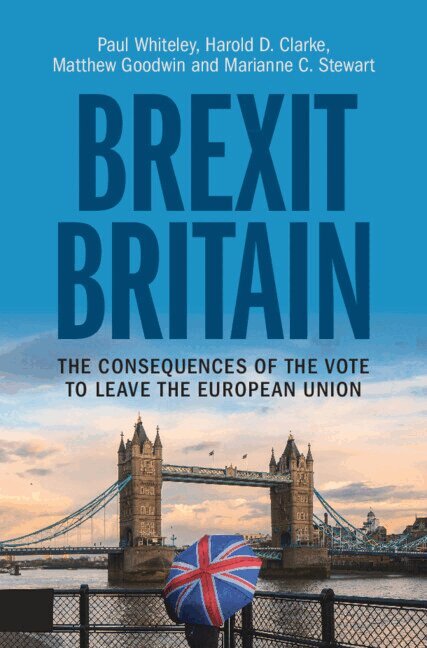
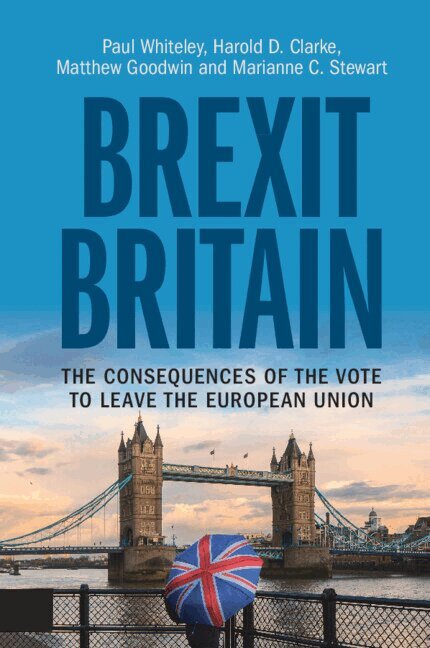
Brexit Britain
The Consequences of the Vote to Leave the European Union
Av Paul Whiteley, Harold D. Clarke m. fl.
Inbunden, 2023
901 kr
Lägg i varukorg
In June 2016, more than 17 million people voted for Britain to leave the European Union. The fallout of this momentous referendum has been tumultuous and unpredictable. Now, from the authors of the highly-acclaimed Brexit: Why Britain Voted to Leave the European Union (Cambridge University Press, …
Brexit Britain
The Consequences of the Vote to Leave the European Union
Av Paul Whiteley, Harold D. Clarke m. fl.
Häftad, 2023
173 kr
Lägg i varukorg
In June 2016, more than 17 million people voted for Britain to leave the European Union. The fallout of this momentous referendum has been tumultuous and unpredictable. Now, from the authors of the highly-acclaimed Brexit: Why Britain Voted to Leave the European Union (Cambridge University Press, …
Brexit Britain
The Consequences of the Vote to Leave the European Union
Av Marianne C. Stewart, Matthew Goodwin m. fl.
E-bok, 2023
256 kr
Lägg i varukorg
In June 2016, more than 17 million people voted for Britain to leave the European Union. The fallout of this momentous referendum has been tumultuous and unpredictable. Now, from the authors of the highly-acclaimed Brexit: Why Britain Voted to Leave the European Union (Cambridge University Press, …
Brexit Britain
The Consequences of the Vote to Leave the European Union
Av Marianne C. Stewart, Matthew Goodwin m. fl.
E-bok, 2023
261 kr
Lägg i varukorg
In June 2016, more than 17 million people voted for Britain to leave the European Union. The fallout of this momentous referendum has been tumultuous and unpredictable. Now, from the authors of the highly-acclaimed Brexit: Why Britain Voted to Leave the European Union (Cambridge University Press, …
Brexit
Why Britain Voted to Leave the European Union
Av Harold D. Clarke, Matthew Goodwin m. fl.
Häftad, 2017
404 kr
Lägg i varukorg
In June 2016, the United Kingdom shocked the world by voting to leave the European Union. As this book reveals, the historic vote for Brexit marked the culmination of trends in domestic politics and in the UK's relationship with the EU that have been building over many years. Drawing on a wealth of …
Political Elites in Anglo-American Democracies
Av Harold D. Clarke, Moshe M. Czudnowski
Inbunden, 1987
274 kr
Tillfälligt slut