Harold Hongju Koh - Böcker
Visar alla böcker från författaren Harold Hongju Koh. Handla med fri frakt och snabb leverans.
6 produkter
6 produkter
421 kr
Skickas
Will Donald trump international law? Since Trump's Administration took office, this question has haunted almost every issue area of international law. One of our leading international lawyers-a former Legal Adviser of the US State Department, Assistant Secretary of State for Human Rights, and Yale Law Dean-argues that President Trump has thus far enjoyed less success than many believe, because he does not own the pervasive "transnational legal process" that governs these issue areas. This book shows how those opposing Trump's policies during his administration's first two years have successfully triggered that process as part of a collective counter-strategy akin to Muhammad Ali's "rope-a-dope." The book surveys immigration and refugee law, human rights, climate change, denuclearization, trade diplomacy, relations with North Korea, Russia and Ukraine, America's "Forever War" against Al Qaeda and the Islamic State, and the ongoing tragedy in Syria. Koh's tour d'horizon illustrates the many techniques that players in the transnational legal process have used to blunt Trump's early initiatives. The high stakes of this struggle, and its broader implications for the future of global governance-now challenged by the rise of populist authoritarians-make this exhausting counter-strategy both worthwhile and necessary.
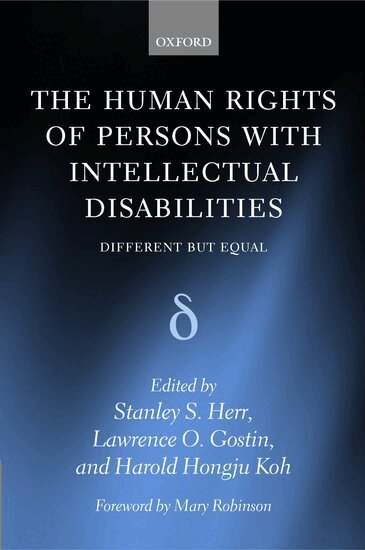
The Human Rights of Persons with Intellectual Disabilities
Different but Equal
Inbunden, Engelska, 2003
3 569 kr
Skickas inom 7-10 vardagar
This volume brings together two important contemporary social movements: human rights and disability rights. It analyses the global struggle to realize equality, dignity, and comprehensive human and civil rights for persons with intellectual disabilities. In twenty original chapters, distinguished contributors from a range of disciplines address the latest international developments in the field. These include international human rights standards and other sources of legal protection, nondiscrimination laws and the economics of equality, preventative technology, remediation and habilitation, and lifestyle chices and autonomy. The volume is unique in specifically considering the human rights of persons with intellectual disabilities from an international perspective. It identifies recent internatinal advances in their human rights and public policy positions, in addition to making recommendations for further advances at both the national and international levels.Although human rights are universal and persons with intellectual disabilities are entitled to protection under general human rights law, the authors argue that there are differences that must be taken into account in order that the intellectually disabled can enjoy even the most basic of rights. This volume explores the implications of altering the status quo, and offers policy-makers and professionals ways to learn from each other's innovations in protecting rights, implementing quality assurance measures, and applying the concepts of inclusion and the 'least restrictive environment'.
1 088 kr
Skickas inom 5-8 vardagar
This volume brings together two important contemporary social movements: human rights and disability rights. It analyses the global struggle to realize equality, dignity, and comprehensive human and civil rights for persons with intellectual disabilities. In 20 chapters, contributors from a range of disciplines address the latest international developments in the field. These include international human rights standards and other sources of legal protection, nondiscrimination laws and the economics of equality, preventative technology, remediation and habilitation, and lifestyle chices and autonomy. The volume specifically considers the human rights of persons with intellectual disabilities from an international perspective. It identifies recent internatinal advances in their human rights and public policy positions, in addition to making recommendations for further advances at both the national and international levels.
538 kr
Skickas inom 5-8 vardagar
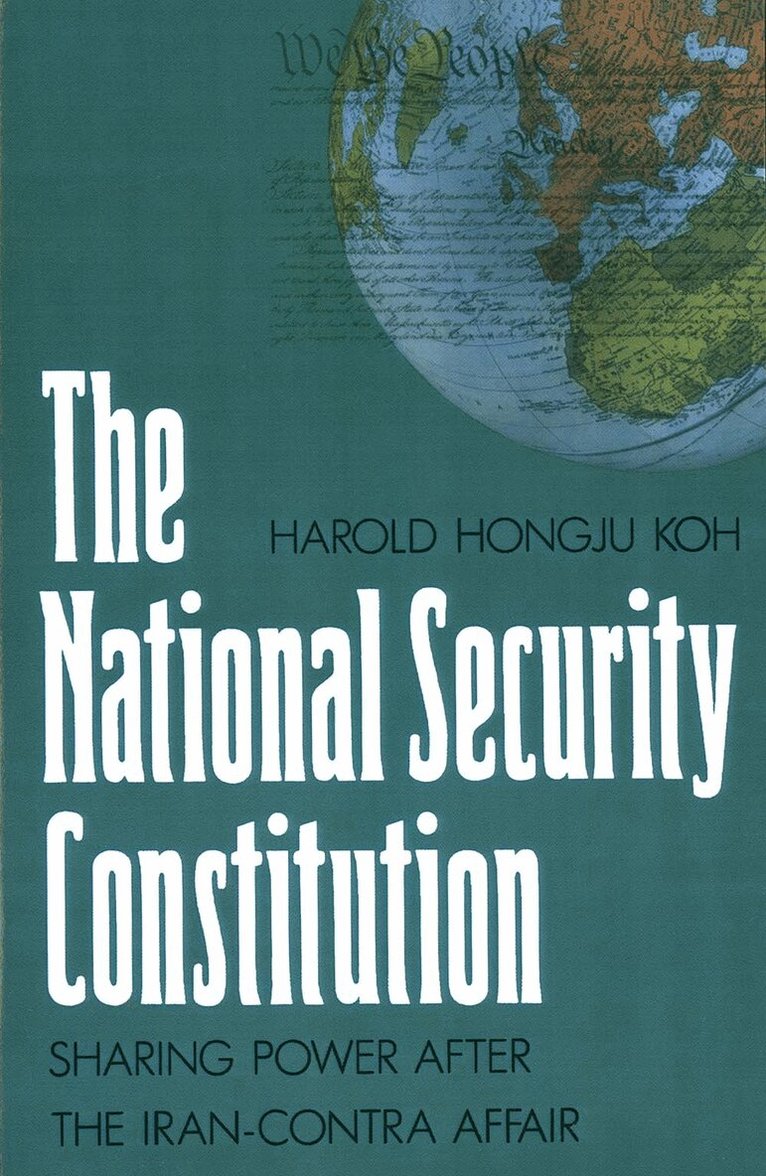
Was the Iran-Contra affair caused by executive lawlessness or legislative folly? Or did it result instead from structural defects in our national security decision-making system? In this important book, Harold Hongju Koh argues that the affair was not aberrational but symptomatic of a chronic dysfunction in America’s foreign policy process. Combining practical knowledge of government with insights from law, history, and political science, Koh presents the definitive historical and constitutional analysis of the Iran-Contra affair, the subsequent investigations, and the trial of Oliver North. He then discusses the implications of the Iran-Contra scandal for the constitutional conduct of national security policy and offers prescriptions to improve this decision-making system. Koh contends that the Iran-Contra affair arose not from Watergate, as many have claimed, but from Vietnam, for it was only the latest episode in a series of foreign policy decisions made by unrestrained executive discretion. Koh shows that throughout its history America has operated under a “National Security Constitution,” a constitutionally defined national security process that views that administration of foreign affairs as a power shared by the president, Congress, and the courts. Yet the executive branch has increased its role in making foreign policy at the expense of the other branches, placing in jeopardy this vision of constitutional balance. Koh advocates a national security charter to reform the foreign policy-making process and offers innovative proposals about war powers, international agreements, emergency economic powers, intelligence oversight, and information control. His proposals would restrain the executive and restore and reinvigorate the constitutional roles of Congress and the federal judiciary in national security decision-making. This challenging book forces government decision-makers, scholars, and concerned citizens to reexamine the process by which the United States will conduct its foreign affairs into the next century.
479 kr
Skickas inom 5-8 vardagar
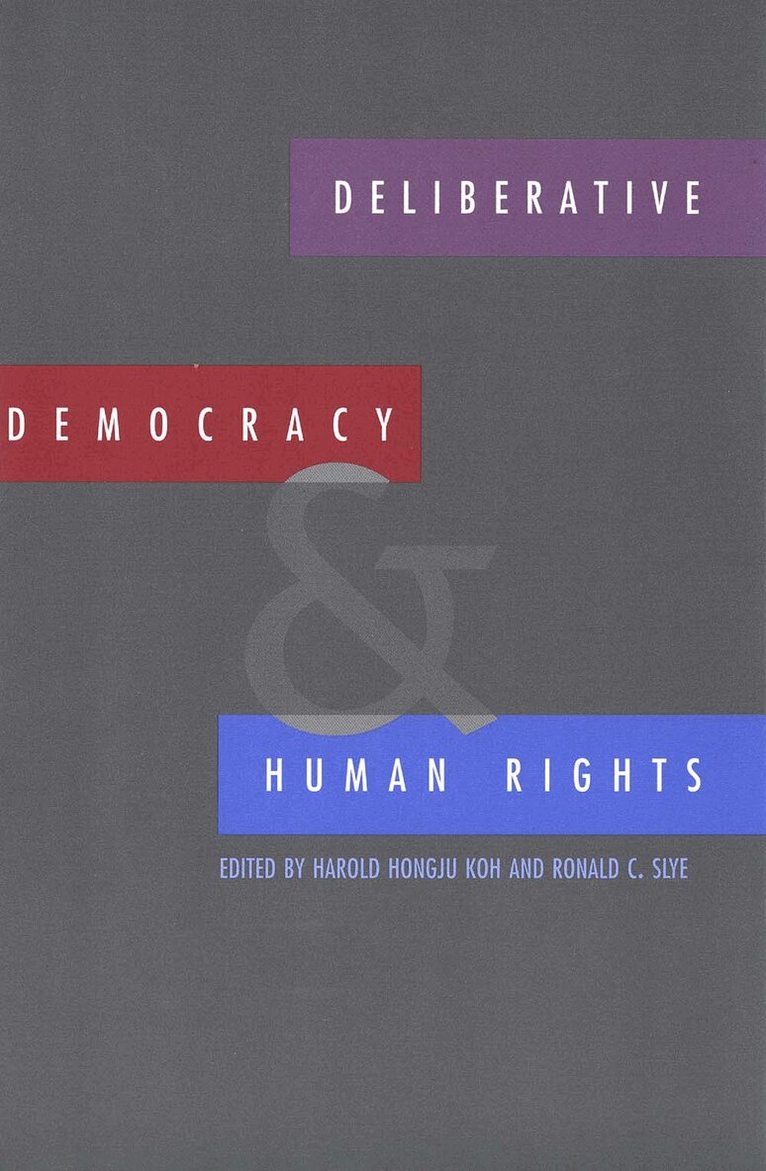
In this important collection of writings, leading legal and political thinkers address a wide array of issues that confront societies undergoing a transition to democratic rule. Bridging the gap between theory and practice in international human rights law and policy, the contributors continue discussions that were begun with the late Argentine philosopher-lawyer Carlos Santiago Nino, then extend those conversations in new directions inspired by their own and Nino’s work.The book focuses on some of the key questions that confront the international human rights movement today. What is the moral justification for the concept and content of universal human rights? What is the relationship among nation-building, constitutionalism, and democracy? What are the political implications for a conception of universal human rights? What is the relationship between moral principles and political practice? How should a society confront what Kant called radical evil? And how does a successor regime justly and practically hold a prior regime accountable for gross violations of human rights?
375 kr
Skickas inom 7-10 vardagar
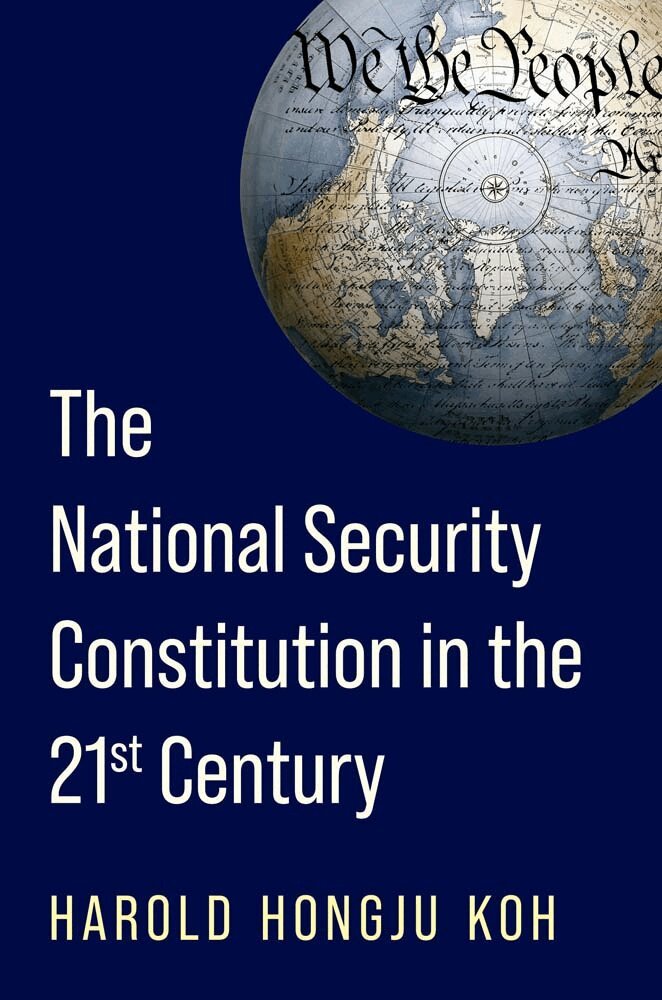
A deeply researched, fully updated edition of The National Security Constitution that explores the growing imbalance of institutional powers in American foreign affairs and national security policy Since the beginning of the American Republic, a package of norms has evolved in the U.S. Constitution to protect the operation of checks and balances in national security policy. This “National Security Constitution” promotes shared powers and balanced institutional participation in foreign policymaking. Today it is under attack from a competing claim of executive unilateralism generated by recurrent patterns of presidential activism, congressional passivity, and judicial tolerance. This dynamic has pushed presidents of both parties to press the limits of law in foreign affairs. In his award-winning National Security Constitution (1990), Harold Hongju Koh traced the evolution of this constitutional struggle across America’s history. This new book, based on the earlier volume but with roughly 70 percent new material, brings the story to the present, placing recent events into constitutional perspective. Reviewing the presidencies of the twenty-first century, he explains why modern national security threats have given presidents of both parties incentives to monopolize foreign policy decision-making, Congress incentives to defer, and the courts reasons to rubber-stamp. Koh suggests both a workable strategy and crucial prescriptions to restore the balance of our constitutional order in addressing modern global crises.