Harold M. Hyman - Böcker
Visar alla böcker från författaren Harold M. Hyman. Handla med fri frakt och snabb leverans.
4 produkter
4 produkter
305 kr
Skickas inom 5-8 vardagar
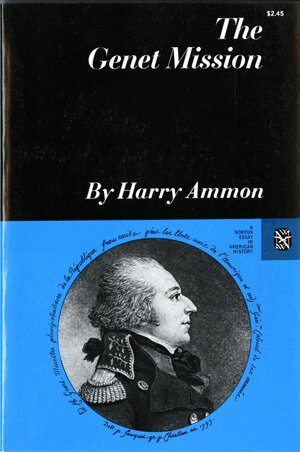
While Genet had considerable shortcomings as a diplomat, more important was his inability to accept the irreconcilable differences between the two countries, particularly in their commitment to popular sovereignty and the doctrine of the rights of man. In addition, neither Genet nor his government understood the nature or power of the presidency; in his efforts to win popular support for the French cause, Genet provoked Washington and his cabinet, and the administration eventually demanded the minister’s recall. While the mission ended in failure, the public controversy stirred up by Genet constituted a vital step in the formation of the first political parties in the United States. The debate over his demands, which involved common people to an unprecedented degree, led to the infusion of a more democratic strain into the political process, long dominated by an elite leadership.
835 kr
Skickas inom 3-6 vardagar
To Try Men’s Souls: Loyalty Tests in American History offers the first comprehensive narrative of how governments in the United States have used oaths and other tests to define, demand, and police allegiance. Harold M. Hyman traces these practices from their medieval and Reformation antecedents to their transplantation in the New World, where they became recurring features of American political life. Structured episodically to reflect their crisis-driven character, the book examines loyalty tests during wars, rebellions, and fears of subversion, showing how they emerged, the forms they took, and what purposes they served. Drawing on wide-ranging archival sources, Hyman avoids simple partisan or ideological categories: champions and critics of loyalty tests span the American political spectrum, from Sam Adams and Jefferson to Lincoln, Franklin Roosevelt, and Eisenhower. The result is a nuanced account of loyalty tests as both instruments of state power and symbols of partisan solidarity, marked by convenience, controversy, and contradiction.Central to the study is the oath—of office, allegiance, or conformity—as the quintessential loyalty test. Hyman demonstrates how oaths functioned to expose dissenters, secure regimes, and enforce religious and political orthodoxy, while also sparking resistance, especially once the passions of emergencies had passed. He shows how loyalty tests have repeatedly been judged “cruel and oppressive” in retrospect, yet reemerged in subsequent crises, from the Civil War to the Cold War. By situating American loyalty tests within broader historical traditions and following their transformations into modern indices of allegiance, To Try Men’s Souls provides a powerful lens on the tensions between liberty and security. Scholars of constitutional history, political culture, and civil liberties—as well as citizens concerned with the balance between dissent and patriotism—will find in this book an indispensable, thought-provoking history.This title is part of UC Press's Voices Revived program, which commemorates University of California Press’s mission to seek out and cultivate the brightest minds and give them voice, reach, and impact. Drawing on a backlist dating to 1893, Voices Revived makes high-quality, peer-reviewed scholarship accessible once again using print-on-demand technology. This title was originally published in 1959.
1 513 kr
Skickas inom 3-6 vardagar
To Try Men’s Souls: Loyalty Tests in American History offers the first comprehensive narrative of how governments in the United States have used oaths and other tests to define, demand, and police allegiance. Harold M. Hyman traces these practices from their medieval and Reformation antecedents to their transplantation in the New World, where they became recurring features of American political life. Structured episodically to reflect their crisis-driven character, the book examines loyalty tests during wars, rebellions, and fears of subversion, showing how they emerged, the forms they took, and what purposes they served. Drawing on wide-ranging archival sources, Hyman avoids simple partisan or ideological categories: champions and critics of loyalty tests span the American political spectrum, from Sam Adams and Jefferson to Lincoln, Franklin Roosevelt, and Eisenhower. The result is a nuanced account of loyalty tests as both instruments of state power and symbols of partisan solidarity, marked by convenience, controversy, and contradiction.Central to the study is the oath—of office, allegiance, or conformity—as the quintessential loyalty test. Hyman demonstrates how oaths functioned to expose dissenters, secure regimes, and enforce religious and political orthodoxy, while also sparking resistance, especially once the passions of emergencies had passed. He shows how loyalty tests have repeatedly been judged “cruel and oppressive” in retrospect, yet reemerged in subsequent crises, from the Civil War to the Cold War. By situating American loyalty tests within broader historical traditions and following their transformations into modern indices of allegiance, To Try Men’s Souls provides a powerful lens on the tensions between liberty and security. Scholars of constitutional history, political culture, and civil liberties—as well as citizens concerned with the balance between dissent and patriotism—will find in this book an indispensable, thought-provoking history.This title is part of UC Press's Voices Revived program, which commemorates University of California Press’s mission to seek out and cultivate the brightest minds and give them voice, reach, and impact. Drawing on a backlist dating to 1893, Voices Revived makes high-quality, peer-reviewed scholarship accessible once again using print-on-demand technology. This title was originally published in 1959.
American Singularity
The 1787 Northwest Ordinance, The 1862 Homestead And Morrill Acts, and the 1944 G.I. Bill
Häftad, Engelska, 2008
349 kr
Skickas inom 5-8 vardagar
Since the first shots rang out at Lexington and Concord, signaling the beginning of open war between the colonies and England, America has been credited with a singular conviction, a concern for military veterans' and others' economic and political rights. The idea of America as a promised land of economic opportunity, social mobility, and political freedom has not always flourished. Historians have both given it reality and shaken its substance as they exposed an undercurrent of greed, class conflict, and corruption.In this book Harold Hyman explores the question of American singularity, using the Northwest Ordinance, the Homestead and Morrill acts, and the G.I Bill to measure individual access to land, education, and law.The Northwest Ordinance, enacted in 1787 to encourage settlement of the nation's untamed territories, mandated the establishment of public schools and stable property rights in newly settled lands--specific terms which enshrined the basic liberties secured by the Revolutionary War. Hyman shows that through the Homestead and Morrill acts of 1862, legislators sought to preserve the values of the Union and to prepare for the entrance of the black man into citizenship. Equal access to public lands in the West and to state land-grant universities, countered the economic and social injustices blacks and poor whites would face after the Civil War. Finally, Hyman asserts that the G.I. Bill preserved beneficial social programs forged during the depression, carrying into post-World War II America a widespread concern for education and housing opportunities.Examining the legislation that emerged from three periods of conflict in American history, Hyman reveals a consistent pattern favoring equal access to land, education, and law--a progression of singular, if sometimes flawed, attempts to embody in our statutes the values and aspirations that sparked our major wars.