Harold Rich - Böcker
Visar alla böcker från författaren . Handla med fri frakt och snabb leverans.
4 produkter
4 produkter
338 kr
Skickas inom 10-15 vardagar
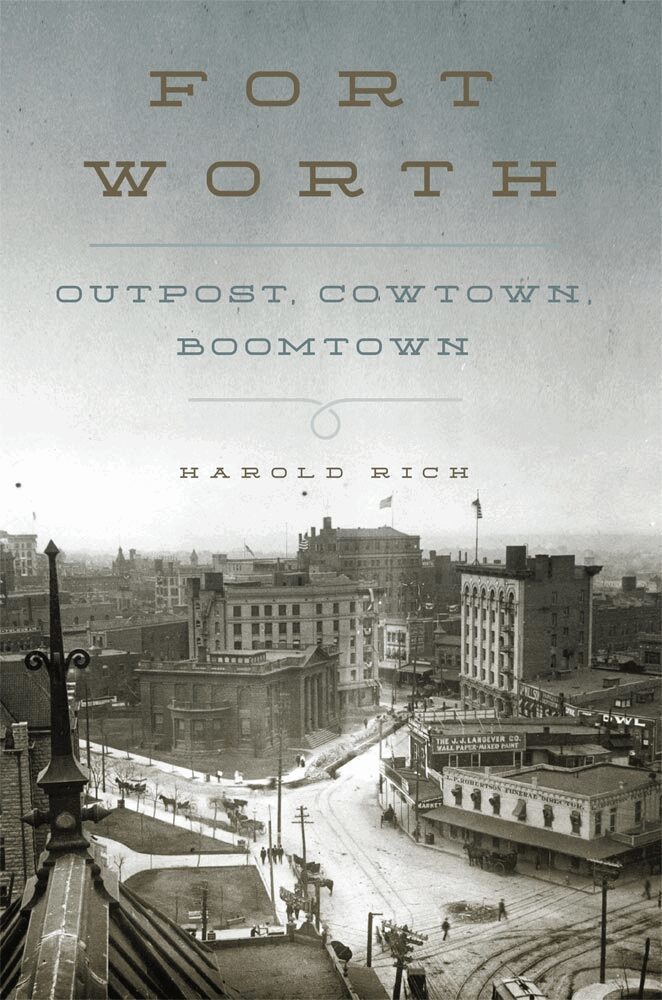
From its beginnings as an army camp in the 1840s, Fort Worth has come to be one of Texas's - and the nation's - largest cities, a thriving center of culture and commerce. But along the way, the city's future, let alone its present prosperity, was anything but certain. Fort Worth tells the story of how this landlocked outpost on the arid plains of Texas made and remade itself in its early years, setting a pattern of boom-and-bust progress that would see the city through to the twenty-first century.Harold Rich takes up the story in 1880, when Fort Worth found itself in the crosshairs of history as the cattle drives that had been such an economic boon became a thing of the past. He explores the hard-fought struggle that followed - with its many stops, failures, missteps, and successes - beginning with a single-minded commitment to attracting railroads. Rail access spurred the growth of a modern municipal infrastructure, from paved streets and streetcars to waterworks, and made Fort Worth the transportation hub of the Southwest. Although the Panic of 1893 marked another setback, the arrival of Armour and Swift in 1903 turned the city's fortunes once again by expanding its cattle-based economy to include meatpacking.With a rich array of data, Fort Worth documents the changes wrought upon Fort Worth's economy in succeeding years by packinghouses and military bases, the discovery of oil and the growth of a notorious vice district, Hell's Half Acre. Throughout, Rich notes the social trends woven inextricably into this economic history and details the machinations of municipal politics and personalities that give the story of Fort Worth its unique character. The first thoroughly researched economic history of the city's early years in more than five decades, this book will be an invaluable resource for anyone interested in Fort Worth, urban history and municipal development, or the history of Texas and the West.
241 kr
Skickas inom 10-15 vardagar
From its beginnings as an army camp in the 1840s, Fort Worth has come to be one of Texas’s-and the nation’s-largest cities, a thriving center of culture and commerce. But along the way, the city’s future, let alone its present prosperity, was anything but certain. Fort Worth tells the story of how this landlocked outpost on the arid plains of Texas made and remade itself in its early years, setting a pattern of boom-and-bust progress that would see the city through to the twenty-first century.Harold Rich takes up the story in 1880, when Fort Worth found itself in the crosshairs of history as the cattle drives that had been such an economic boon became a thing of the past. He explores the hard-fought struggle that followed-with its many stops, failures, missteps, and successes-beginning with a single-minded commitment to attracting railroads. Rail access spurred the growth of a modern municipal infrastructure, from paved streets and streetcars to waterworks, and made Fort Worth the transportation hub of the Southwest. Although the Panic of 1893 marked another setback, the arrival of Armour and Swift in 1903 turned the city’s fortunes once again by expanding its cattle-based economy to include meatpacking.With a rich array of data, Fort Worth documents the changes wrought upon Fort Worth’s economy in succeeding years by packinghouses and military bases, the discovery of oil and the growth of a notorious vice district, Hell’s Half Acre. Throughout, Rich notes the social trends woven inextricably into this economic history and details the machinations of municipal politics and personalities that give the story of Fort Worth its unique character. The first thoroughly researched economic history of the city’s early years in more than five decades, this book will be an invaluable resource for anyone interested in Fort Worth, urban history and municipal development, or the history of Texas and the West.
432 kr
Skickas inom 3-6 vardagar
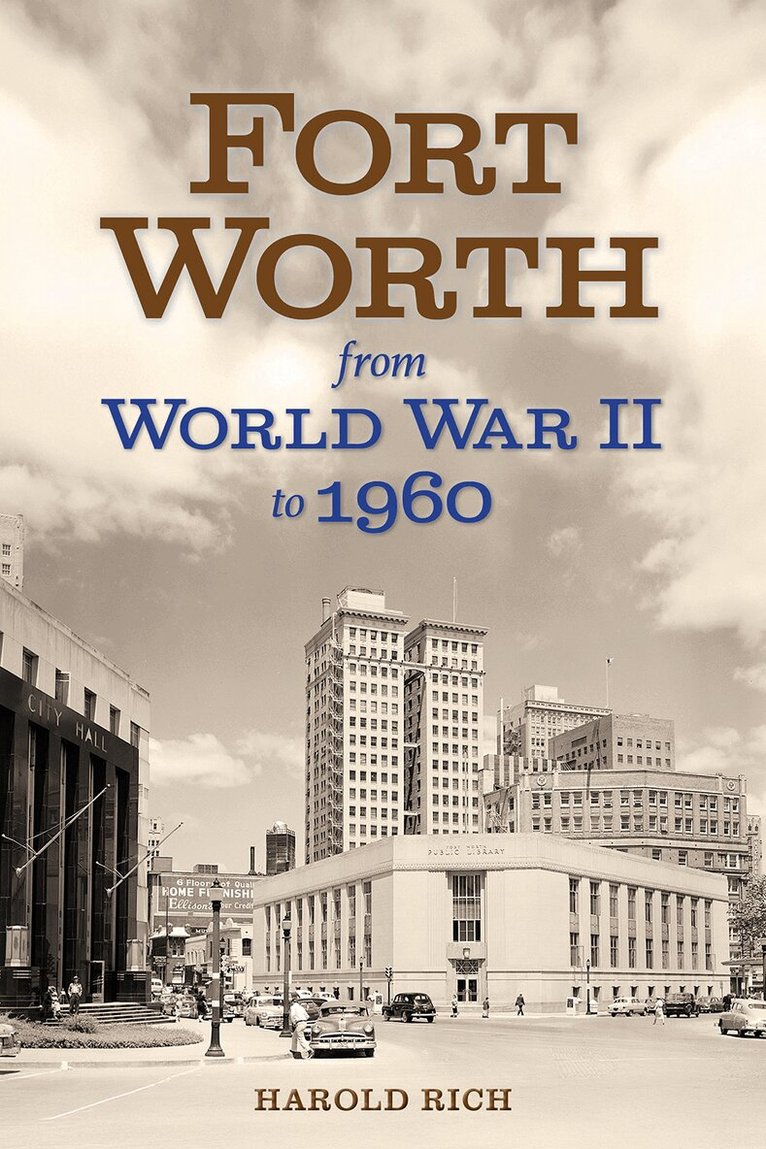
Fort Worth from World War II to 1960 reviews Fort Worth’s history during the challenging times of World War II, the postwar adjustment period, and the first full decade of the Cold War. Harold Rich tells the story in broad strokes with foci on local crime and criminals, vice, the police, race relations, and economic development. What emerges is a portrait of a growing city developing major urban accoutrements such as industrialization, freeways, and an art infrastructure while also struggling with an active and sizable criminal underworld and the emerging Civil Rights Movement. The overall impression is that the nearly two decades from 1942 to 1960 were critical to transitioning Fort Worth from a nineteenth- to a twentieth-century city, but the end result was not an unqualified success. Fort Worth would achieve significant economic progress in the 1940s, especially from the addition of Convair, that would expand its population at a fast pace but would lose much of that momentum in the 1950s. During both decades the police confronted rising demands related to traffic control and internal corruption that most notably affected their ability to deal with gambling and prostitution, both of which seemed to be everywhere. As the 1950s drew to a close, both vices began to subside, more from a decline in public acceptance than from police activity. In the 1940s and 1950s, Fort Worth’s criminal underworld was a major presence, heavily involved in vice and in several daring robberies, including a thwarted plan to rob Carswell Air Force Base. The most notorious gangsters met their ends in a long-running series of internal conflicts that began during the war and destroyed most of that underworld. At the same time, the postwar period witnessed the spread of illegal drug use across broad societal lines, sparking a corresponding response by police. In contrast, little changed regarding race relations despite the efforts of many local activists and favorable rulings emanating from the nation’s courts. More significant progress would come in the 1960s and accelerate thereafter.
342 kr
Skickas inom 11-20 vardagar
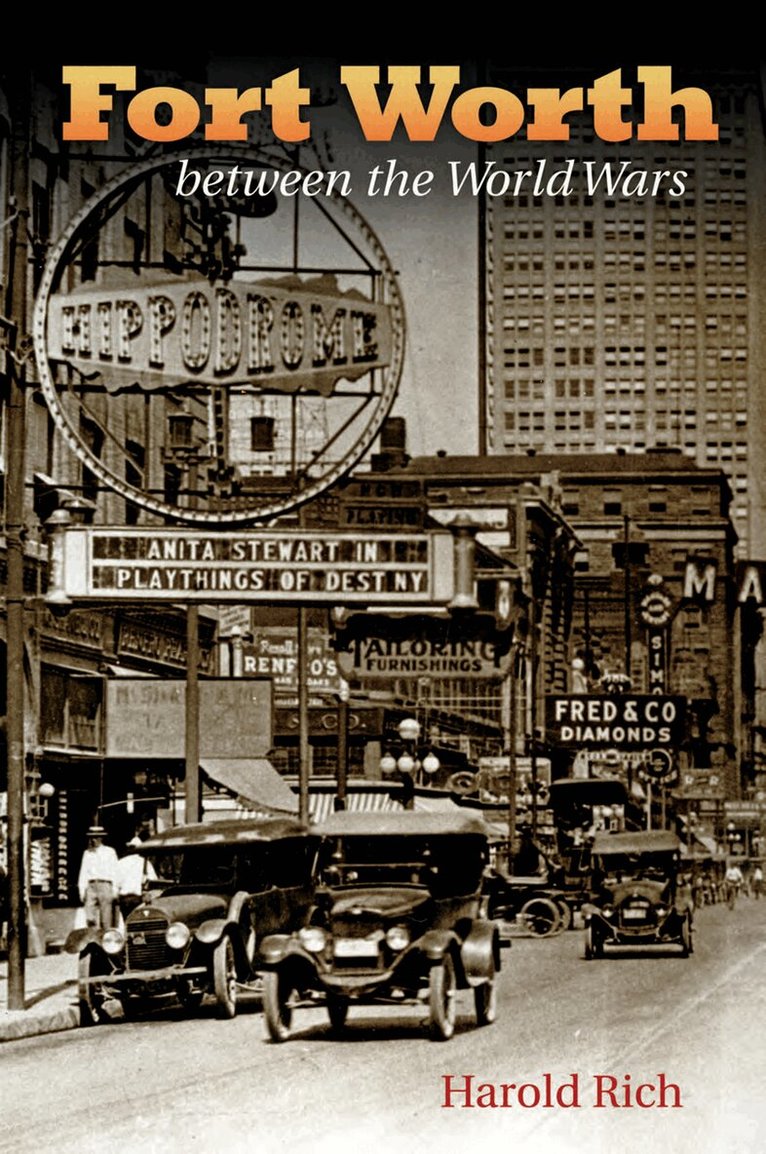
From its early days as a nineteenth-century army outpost through the boom years of cattle drives, culminating with the arrival of Armour and Swift in the twentieth century to secure the community's economic base, Fort Worth established itself as a major city that, to many, was 'where the West began.' Historian Harold Rich focuses on the successes and struggles that Fort Worth enjoyed and endured in the 1920s and 1930s as the city's fortunes began to be eclipsed by Dallas, Houston, and San Antonio.Featuring a solid foundation of economic history, Rich also explores the political and social challenges of a big city facing an uncertain future. Tense race relations, the chilling rise of the Ku Klux Klan, and the dangerous thrills of a notorious vice district 'Hell's Half-Acre' show that this Texas city was a microcosm of the state and the nation when the roar of the 1920s came to an abrupt halt in the Great Depression.Fort Worth between the World Wars is an important contribution not only to local history but also to the larger story of urban change during a tumultuous time.