Harper Montgomery - Böcker
Visar alla böcker från författaren Harper Montgomery. Handla med fri frakt och snabb leverans.
4 produkter
4 produkter
Del 4 - Stone Art Theory Institutes
Beyond the Aesthetic and the Anti-Aesthetic
Häftad, Engelska, 2013
571 kr
Skickas inom 5-8 vardagar
Each of the five volumes in the Stone Art Theory Institutes series, and the seminars on which they are based, brings together a range of scholars who are not always directly familiar with one another’s work. The outcome of each of these convergences is an extensive and “unpredictable conversation” on knotty and provocative issues about art. This fourth volume in the series, Beyond the Aesthetic and the Anti-Aesthetic, focuses on questions revolving around the concepts of the aesthetic, the anti-aesthetic, and the political. The book is about the fact that now, almost thirty years after Hal Foster defined the anti-aesthetic, there is still no viable alternative to the dichotomy between aesthetics and anti- or nonaesthetic art. The impasse is made more difficult by the proliferation of identity politics, and it is made less negotiable by the hegemony of anti-aesthetics in academic discourse on art. The central question of this book is whether artists and academicians are free of this choice in practice, in pedagogy, and in theory.The contributors are Stéphanie Benzaquen, J. M. Bernstein, Karen Busk-Jepsen, Luis Camnitzer, Diarmuid Costello, Joana Cunha Leal, Angela Dimitrakaki, Alexander Dumbadze, T. Brandon Evans, Geng Youzhuang, Boris Groys, Beáta Hock, Gordon Hughes, Michael Kelly, Grant Kester, Meredith Kooi, Cary Levine, Sunil Manghani, William Mazzarella, Justin McKeown, Andrew McNamara, Eve Meltzer, Nadja Millner-Larsen, Maria Filomena Molder, Carrie Noland, Gary Peters, Aaron Richmond, Lauren Ross, Toni Ross, Eva Schürmann, Gregory Sholette, Noah Simblist, Jon Simons, Robert Storr, Martin Sundberg, Timotheus Vermeulen, and Rebecca Zorach.
400 kr
Skickas inom 7-10 vardagar
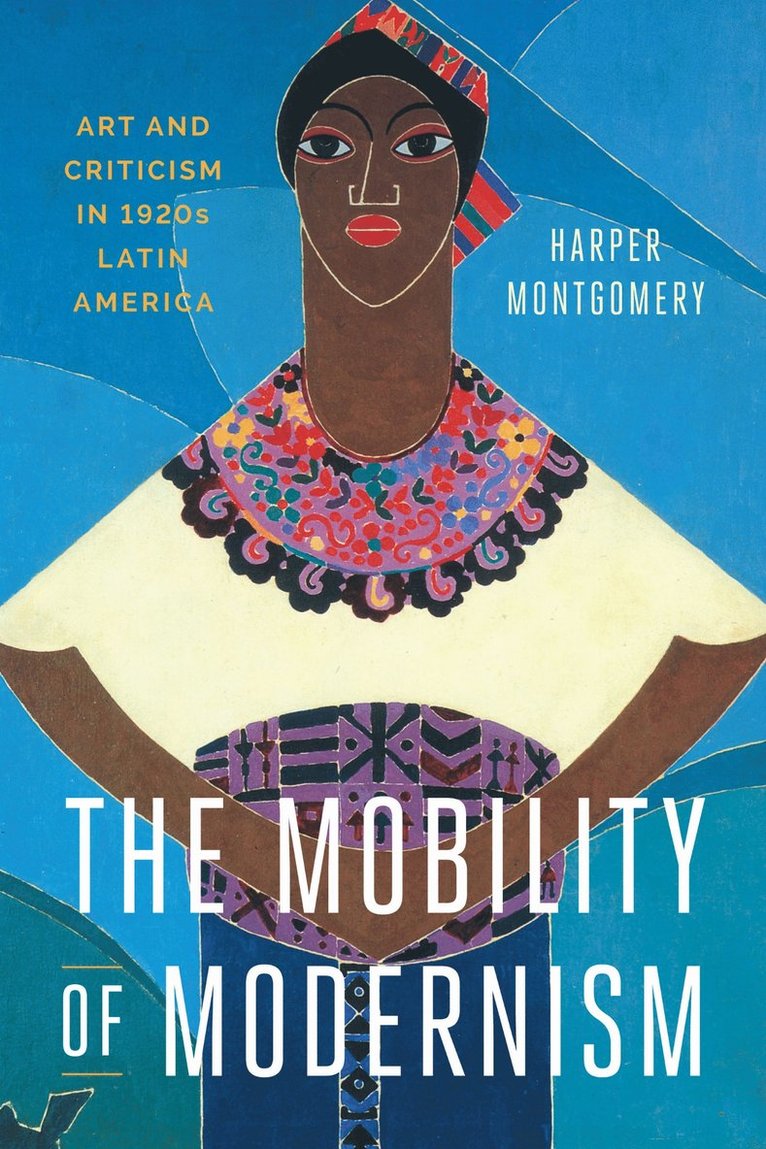
Arvey Foundation Book Award, Association for Latin American Art, 2018Many Latin American artists and critics in the 1920s drew on the values of modernism to question the cultural authority of Europe. Modernism gave them a tool for coping with the mobility of their circumstances, as well as the inspiration for works that questioned the very concepts of the artist and the artwork and opened the realm of art to untrained and self-taught artists, artisans, and women. Writing about the modernist works in newspapers and magazines, critics provided a new vocabulary with which to interpret and assign value to the expanding sets of abstracted forms produced by these artists, whose lives were shaped by mobility.The Mobility of Modernism examines modernist artworks and criticism that circulated among a network of cities, including Buenos Aires, Mexico City, Havana, and Lima. Harper Montgomery maps the dialogues and relationships among critics who published in avant-gardist magazines such as Amauta and Revista de Avance and artists such as Carlos MÉrida, Xul Solar, and Emilio Pettoruti, among others, who championed esoteric forms of abstraction. She makes a convincing case that, for these artists and critics, modernism became an anticolonial stance which raised issues that are still vital today-the tensions between the local and the global, the ability of artists to speak for blighted or unincorporated people, and, above all, how advanced art and its champions can enact a politics of opposition.
414 kr
Kommande
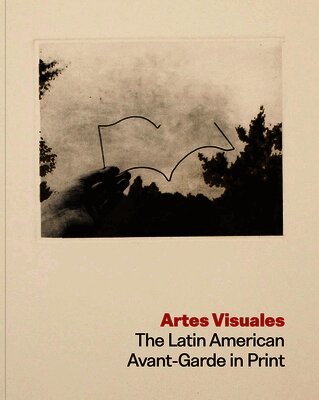
A deeply researched guide to the periodical that helped shape the Latin American avant-garde of the 1970sPublished with Hunter College Art Galleries .Compiling artworks that appeared in the influential magazine Artes Visuales—published by Mexico's Museo de Arte Moderno and directed by Carla Stellweg from 1973 to 1981—this volume spotlights a community of experimental artists from Latin America. Featuring work by Álvaro Barrios, Luis Camnitzer, Jorge Caraballo, Antonio Caro, Manuel Felguérez, Anna Bella Geiger, Victor Grippo, Cildo Meireles, , Alfredo Portillos, Vicente Rojo, Francisco Toledo, Regina Vater and others, this rigorously researched book testifies to the periodical's daring editorial aim: to establish a space in which Latin Americans could exercise unfettered self-determination. It also includes an interview with Carla Stellweg, essays on painting, page art, photography and performance, as well as a bibliography related to the activities and publications of Stellweg and the circle of artists and critics she gathered on the pages of Artes Visuales.
287 kr
Skickas inom 7-10 vardagar
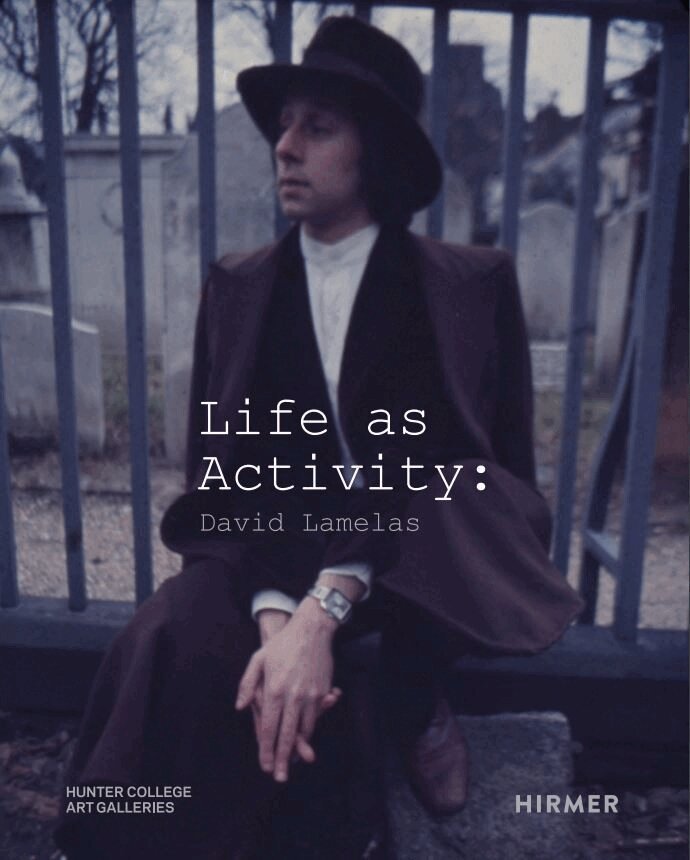
Plotting narratives that blur the line between fact and fiction, David Lamelas is a pioneering figure of conceptual art. "Life as Activity: David Lamelas" draws vivid connections within the artist’s multifaceted practice and explores how his sculpture, film, video, and photography invite us to participate in fictional narratives while moving through space and time. Life as Activity: David Lamelas developed from a graduate seminar in Hunter College’s Advanced Certificate in Curatorial Studies and is supported by the Institute for Studies on Latin American Art (ISLAA), which advances scholarship and public engagement with art from Latin America. ISLAA proudly sponsors Hunter College as its inaugural university partner in the ISLAA Artist Seminar Initiative, an education and curatorial program that fosters intimate exchanges between students and living Latin American and Latinx artists.David Lamelas's works experiment with conventional formats in ways that make us acutely aware of the constructed nature of narrative and identity. Featuring his investigations of different media – including sculpture, photography, and film – the book charts new ground through a body of work that spans from 1966 to 2020. Made in Argentina, Europe and the United States, the twelve projects that make up the focus of the book demonstrate the inventive ways Lamelas produces works in which he directs his critical eye toward diverse contexts to reveal the proximity of fantasy and truth.