Harry McGurk - Böcker
Visar alla böcker från författaren Harry McGurk. Handla med fri frakt och snabb leverans.
3 produkter
3 produkter
651 kr
Skickas inom 10-15 vardagar
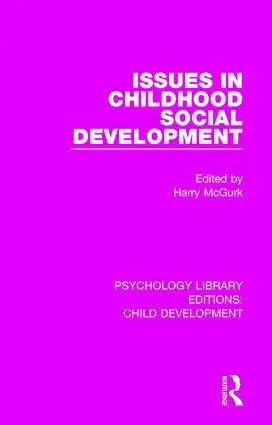
This book provides an account of research in action and debate in progress in a selection of areas of childhood social development where significant progress is underway. The chapters are written by an eminent group of British and American developmental psychologists each of whom has made primary contributions to research in the areas covered in the volume. The contributors were invited to reflect upon the current scene in social developmental research and to develop their own distinctive viewpoint and contribution to the field. The book addresses issues in social development from infancy to adolescence. The topics examined include: interactions between biological and social factors in social development; sex role development; the development of friendships; the role of peer interaction in social and cognitive development; and the influence of cultural artifacts in the social and cognitive development of children. Although each chapter is concerned with a different aspect of social development, there are a number of themes that recur throughout the volume. One concerns the nature of social development: the acquisition of social understanding and the development of social skills are not individual achievements of children reared in isolation. Rather, they are the outcome of social processes in which the developing child engages, sometimes in an unequal partnership with experienced adults; at other times in more equal partnership with peers and playmates. In both cases the development change is a constructive outcome. A second recurrent theme is a concern for developmental researchers to take fuller account than they may traditionally have done of the nature of the cultural settings in which social development occurs. Different cultures have different customs and artifacts, and these can constrain development in different ways. This issue is considered throughout the book and is the specific focus of the final chapter.
1 847 kr
Skickas inom 10-15 vardagar
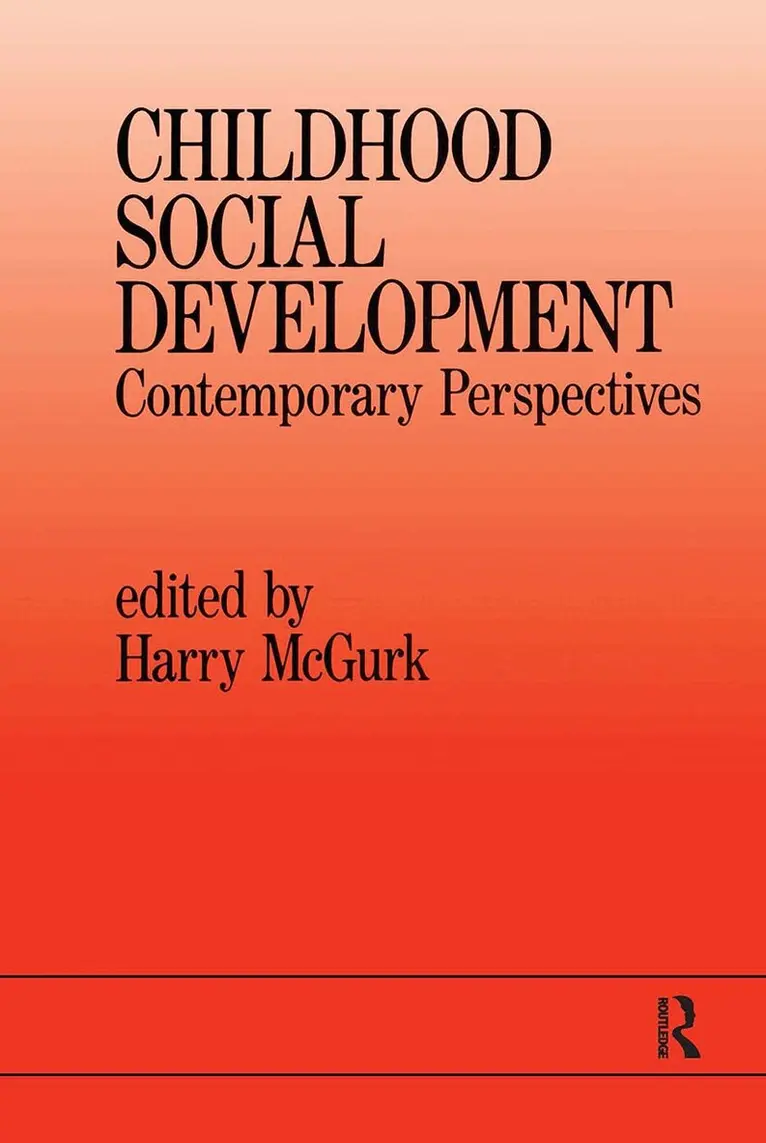
Originally published in 1978, contemporary theory and research into childhood social development had demonstrated the necessity to re-appraise the notion that socialization is merely a process of shaping the behaviour of the child to fit the mores of society. It was now evident that, from the beginnings of post-partum life, the human infant is an active participant in social encounters, modifying the behaviour of others as well as being influenced by them. Hence, social development must be construed as an interactive process, to which the young organism makes his own dynamic contribution. This book, comprising a collection of original essays by prominent investigators in the field, considers issues arising from this modified perspective. It examines the biological basis of social development, the role of child-caretaker interaction, the significance of sex differences, the influence of peer relations and the perceptual-cognitive factors which contribute to childhood social development and to the developing child’s understanding of society.
480 kr
Skickas inom 10-15 vardagar
Originally published in 1978, contemporary theory and research into childhood social development had demonstrated the necessity to re-appraise the notion that socialization is merely a process of shaping the behaviour of the child to fit the mores of society. It was now evident that, from the beginnings of post-partum life, the human infant is an active participant in social encounters, modifying the behaviour of others as well as being influenced by them. Hence, social development must be construed as an interactive process, to which the young organism makes his own dynamic contribution. This book, comprising a collection of original essays by prominent investigators in the field, considers issues arising from this modified perspective. It examines the biological basis of social development, the role of child-caretaker interaction, the significance of sex differences, the influence of peer relations and the perceptual-cognitive factors which contribute to childhood social development and to the developing child’s understanding of society.