Harry W. Paul - Böcker
Visar alla böcker från författaren Harry W. Paul. Handla med fri frakt och snabb leverans.
7 produkter
7 produkter
1 784 kr
Skickas inom 7-10 vardagar
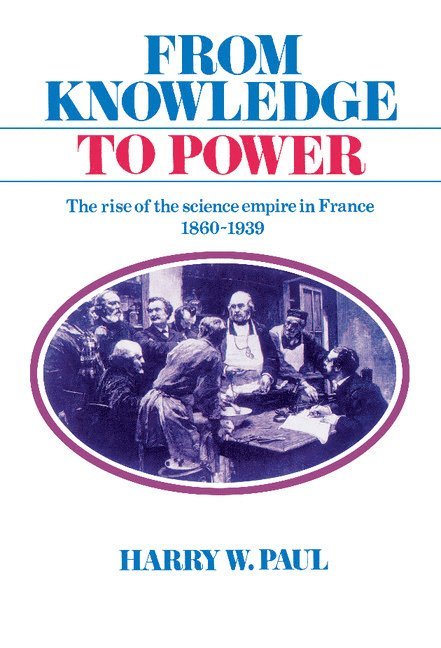
France has played a pivotal role in the development of modern science. Especially striking and controversial has been the way in which the state has organized scientific endeavor. After the 1880s reinvigorated university faculties played a key role in the growth of science in France, and many faculty scientists enjoyed close relations with industry, agriculture, the military, and politics. During the Third Republic the idea of governmental responsibility to support research became a dogma, due to the stimulus that science was perceived to give to the French economy. By 1939 a working mechanism of state funding for science, buttressed by a complex scientific ideology, had come into existence and provided the foundations for the development of a new structure of scientific research and education in the postwar era. From Knowledge to Power is the first full-scale treatment of this dramatic expansion of French science between 1860 and 1939.
1 390 kr
Skickas inom 7-10 vardagar
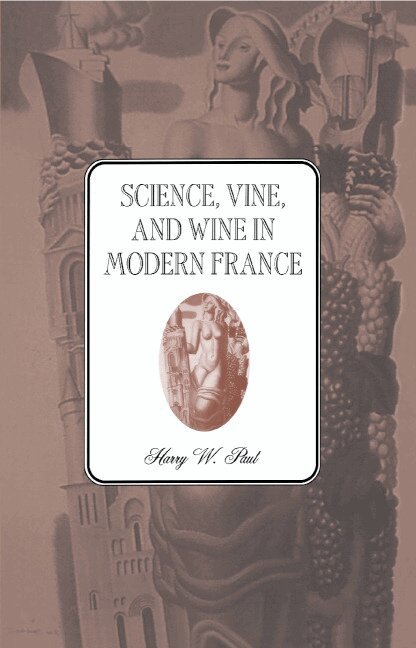
Science, Vine and Wine in Modern France examines the role of science in the civilization of wine in modern France. Viticulture, the science of the vine itself, and oenology, the science of winemaking, are its subjects. Together they can boast of at least two major triumphs: the creation of the post-phylloxera vines that repopulated late-nineteenth-century vineyards devastated by the disease; and the understanding of the complex structure of wine that eventually resulted in the development of the widespread wine models of Bordeaux, Burgundy, and Champagne. This is the first analysis of the scientific battle over the best way to save the French vineyards and the first account of the growth of oenological science in France since Chaptal and Pasteur.
626 kr
Skickas inom 7-10 vardagar
Science, Vine and Wine in Modern France examines the role of science in the civilization of wine in modern France. Viticulture, the science of the vine itself, and oenology, the science of winemaking, are its subjects. Together they can boast of at least two major triumphs: the creation of the post-phylloxera vines that repopulated late-nineteenth-century vineyards devastated by the disease; and the understanding of the complex structure of wine that eventually resulted in the development of the widespread wine models of Bordeaux, Burgundy, and Champagne. This is the first analysis of the scientific battle over the best way to save the French vineyards and the first account of the growth of oenological science in France since Chaptal and Pasteur.
665 kr
Skickas inom 7-10 vardagar
France has played a pivotal role in the development of modern science. Especially striking and controversial has been the way in which the state has organized scientific endeavor. After the 1880s reinvigorated university faculties played a key role in the growth of science in France, and many faculty scientists enjoyed close relations with industry, agriculture, the military, and politics. During the Third Republic the idea of governmental responsibility to support research became a dogma, due to the stimulus that science was perceived to give to the French economy. By 1939 a working mechanism of state funding for science, buttressed by a complex scientific ideology, had come into existence and provided the foundations for the development of a new structure of scientific research and education in the postwar era. From Knowledge to Power is the first full-scale treatment of this dramatic expansion of French science between 1860 and 1939.
870 kr
Skickas inom 10-15 vardagar
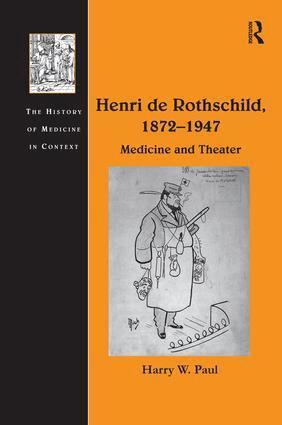
Dr Henri de Rothschild was a fifth generation Rothschild and perhaps the most famous of the Paris Rothschilds of the fin-de-siècle period. A 'sleeping partner' of the bank and the non-drinking owner of Mouton-Rothschild, Henri spent much of his life building medical institutions and promoting scientific medicine, including the promotion of Ehrlich's Salvarsan to cure syphilis and the use of radium to cure cancer. His hospital in a working class area of northern Paris boasted the latest in medical advances. Henri was particularly influential in developing the new science of infant feeding, while his broader concerns with infant health led to his playing a prominent role in the development of the specialty of pediatrics. This biography of Henri de Rothschild focuses on his medical achievements and that of his close family in France. Henri, his wife Mathilde and his mother Thérèse all had busy medical careers during World War I. The book also gives an account of both women's experiences of the war. Along with his explicitly scientific medical concerns, Henri was also a prolific playwright and, under the pseudonym André Pascal, wrote several plays about doctors. This book situates the plays, and particularly the themes of charlatanism, women doctors and medical ethics, in their contemporary context of the social and medical life of Paris. A fascinating and vividly written study of a somewhat neglected figure in the history of the illustrious Rothschild family, this book will make a valuable addition to the libraries of scholars in the history of medicine and those studying child health and welfare, the portrayal of doctors in literature, and more broadly the social and cultural life of early-twentieth century Paris.
2 478 kr
Skickas inom 10-15 vardagar
Dr Henri de Rothschild was a fifth generation Rothschild and perhaps the most famous of the Paris Rothschilds of the fin-de-siècle period. A 'sleeping partner' of the bank and the non-drinking owner of Mouton-Rothschild, Henri spent much of his life building medical institutions and promoting scientific medicine, including the promotion of Ehrlich's Salvarsan to cure syphilis and the use of radium to cure cancer. His hospital in a working class area of northern Paris boasted the latest in medical advances. Henri was particularly influential in developing the new science of infant feeding, while his broader concerns with infant health led to his playing a prominent role in the development of the specialty of pediatrics. This biography of Henri de Rothschild focuses on his medical achievements and that of his close family in France. Henri, his wife Mathilde and his mother Thérèse all had busy medical careers during World War I. The book also gives an account of both women's experiences of the war. Along with his explicitly scientific medical concerns, Henri was also a prolific playwright and, under the pseudonym André Pascal, wrote several plays about doctors. This book situates the plays, and particularly the themes of charlatanism, women doctors and medical ethics, in their contemporary context of the social and medical life of Paris. A fascinating and vividly written study of a somewhat neglected figure in the history of the illustrious Rothschild family, this book will make a valuable addition to the libraries of scholars in the history of medicine and those studying child health and welfare, the portrayal of doctors in literature, and more broadly the social and cultural life of early-twentieth century Paris.
Del 64 - Clio Medica
Bacchic Medicine
Wine and Alcohol Therapies from Napoleon to the French Paradox
Inbunden, Engelska, 2001
2 214 kr
Skickas inom 3-6 vardagar
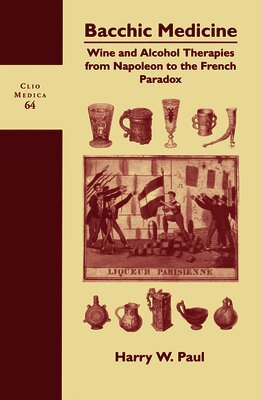
Wine has always been a part of popular medicine. Bacchic Medicine analyses the historical role of wine in the treatment of disease and preservation of health. The Hippocratic texts gave wine therapy a canonical statement over two millennia ago; but the nineteenth century was the golden age of alcohol and wine therapy. The Germans and the British gave us early canons of wine therapy and, heavily endowed with wine cultural capital, the French followed. But like all therapies, alcohol and wine therapies were not without danger and some of the ‘iatrogenic’ tales are still with us. In the twentieth century, many doctors rallied to the defence of wine both as a substitute for more dangerous alcoholic drinks and as an efficacious medicament, with an impressive case for the efficacy of wine in fighting bacteria, heart disease and cancer. New science based on animal models and ionic theory fortified their arguments. According to the controversial ‘French Paradox’, wine drinking makes it possible for a population to enjoy a high fat diet yet suffer little. Bacchic Medicine also discusses the contemporary debate over the role of alcohol and wine in preventive medicine.