Hayrettin Yücesoy - Böcker
Visar alla böcker från författaren Hayrettin Yücesoy. Handla med fri frakt och snabb leverans.
3 produkter
3 produkter
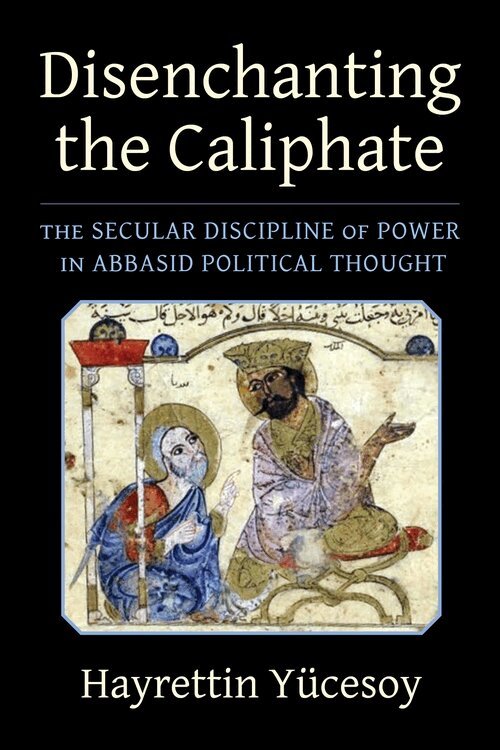
Disenchanting the Caliphate
The Secular Discipline of Power in Abbasid Political Thought
Inbunden, Engelska, 2023
1 108 kr
Skickas inom 7-10 vardagar
The political thought of Muslim societies is all too often defined in religious terms, in which the writings of clerics are seen as representative and ideas about governance are treated as an extension of commentary on sacred texts. Disenchanting the Caliphate offers a groundbreaking new account of political discourse in Islamic history by examining Abbasid imperial practice, illuminating the emergence and influence of a vibrant secular tradition.Closely reading key eighth-century texts, Hayrettin Yücesoy argues that the ulema’s discourse of religious governance and the political thought of lay intellectuals diverged during this foundational period, with enduring consequences. He traces how notions of good governance and reflections on prudent statecraft arose among cosmopolitan literati who envisioned governing as an art. Competent in nonreligious branches of knowledge and trained in administrative professions, these belletrists articulated and defended secular political practices, reimagining the caliphal realm as politically constituted rather than natural. They sought to improve administrative efficiency and bolster state control for an empire made up of diverse cultures. Their ideas about moral cultivation, temporal reasoning, and governmental rationality endured for centuries as a counterpoint to religious rulership. Drawing on this history, Yücesoy critiques the concept of “Islamic political thought,” calling for decolonizing debates about “secular” and “religious” politics.Theoretically rich and historically grounded, Disenchanting the Caliphate is an insightful and provocative reconsideration of key strands of political discourse in the intellectual history of Muslim societies.
Disenchanting the Caliphate
The Secular Discipline of Power in Abbasid Political Thought
Häftad, Engelska, 2023
282 kr
Skickas inom 7-10 vardagar
The political thought of Muslim societies is all too often defined in religious terms, in which the writings of clerics are seen as representative and ideas about governance are treated as an extension of commentary on sacred texts. Disenchanting the Caliphate offers a groundbreaking new account of political discourse in Islamic history by examining Abbasid imperial practice, illuminating the emergence and influence of a vibrant secular tradition.Closely reading key eighth-century texts, Hayrettin Yücesoy argues that the ulema’s discourse of religious governance and the political thought of lay intellectuals diverged during this foundational period, with enduring consequences. He traces how notions of good governance and reflections on prudent statecraft arose among cosmopolitan literati who envisioned governing as an art. Competent in nonreligious branches of knowledge and trained in administrative professions, these belletrists articulated and defended secular political practices, reimagining the caliphal realm as politically constituted rather than natural. They sought to improve administrative efficiency and bolster state control for an empire made up of diverse cultures. Their ideas about moral cultivation, temporal reasoning, and governmental rationality endured for centuries as a counterpoint to religious rulership. Drawing on this history, Yücesoy critiques the concept of “Islamic political thought,” calling for decolonizing debates about “secular” and “religious” politics.Theoretically rich and historically grounded, Disenchanting the Caliphate is an insightful and provocative reconsideration of key strands of political discourse in the intellectual history of Muslim societies.
Messianic Beliefs and Imperial Politics in Medieval Islam
The 'Abbasid Caliphate in the Early Ninth Century
Inbunden, Engelska, 2009
533 kr
Skickas inom 7-10 vardagar
This book presents an analysis of the dynamic relationship between apocalyptic prophesies and medieval Muslim politics. ""Messianic Beliefs and Imperial Politics in Medieval Islam"" analyzes the role of Muslim messianic and apocalyptic beliefs in the development of the 'Abbasid Caliphate to highlight connections between charismatic authority and institutional developments in the early ninth century. Hayrettin Yucesoy studies the relationship between rulers and religion to advance understanding of the era's political actions and, more specifically, to illustrate how messianic beliefs influenced 'Abbasid imperial politics and contributed to the reshaping of the caliphate under al-Ma'mun (809-33) after a decade-long civil war. Yucesoy challenges traditional sociological views that marginalize messianic beliefs as oppositional ideologies of disfranchised social classes to be used against the political establishment. Instead he finds a mode of symbiosis between messianic beliefs, political reform, and imperial ambitions put in motion by al-Ma'mun's acute understanding of the sociopolitical and ideological context of his time. Yucesoy demonstrates how the caliphate absorbed influences from the late antique world and Near Eastern cultures to fashion a prophetic vision that served to undergird al-Ma'mun's imperial aspirations. A comprehensive portrait of the caliph and his reign emerges from this study as a result. By drawing on records of Muslim and non-Muslim apocalyptic prophecies circulating among the general public and educated elites alike, this study demonstrates the pertinence of messianic beliefs to medieval Muslim politics and illustrates the manner in which the caliph responded and shaped societal concerns on three distinct fronts: domestic fiscal and administrative reforms, an increase in missionary and military activities, and religious reform. Yucesoy shows that political usefulness contributed to the longevity of charismatic ideologies by addressing how the 'Abbasid ruling class adopted such beliefs as a medium to initiate governmental reforms and expand their authority. This work adds new layers to ongoing interdisciplinary discourse about the importance of religion in Islamic sociopolitical life, both historically and in the contemporary Muslim world.