Hazem Danny Nakib - Böcker
Visar alla böcker från författaren Hazem Danny Nakib. Handla med fri frakt och snabb leverans.
4 produkter
4 produkter
1 264 kr
Skickas
As more of our lives are spent interacting digitally — sending and receiving payments, interacting on social media, using certified delivery, playing games online, and generally participating in the digital world — the fair exchange of our digital belongings becomes increasingly essential.This book delves into the theory of fair exchange, from the historic to the cutting-edge, and presents a unified framework for understanding fair exchange protocols. Every exchange starts with a handshake, which is followed by four additional operations: deposit; verification; synchronization; and release or restoration. The environments in which these operations take place determine the properties of the resulting protocol, and the characteristics of the items that can be exchanged.Existing protocols are examined through this framework, including escrow-based protocols, optimistic protocols, and gradual release protocols. A new family of fair exchange protocols is developed which make use of attestables, a novel interface for exfiltration-resistant computing. An attestable-based protocol called FEWD is also introduced and several variations are described which are suitable for the exchange of different classes of items.Finally, a number of special topics for fair exchange are introduced, including legal issues that can emerge in practical applications of fair exchange, a legal analysis of the basic operations of fair exchange, commercial applications of FEWD, and an analysis of additional risks including participant expectations and implementations of attestable-based protocols. We conclude with a collection of topics for future research in making fair exchange more ubiquitous in our lives for a fairer digital world.
876 kr
Skickas inom 10-15 vardagar
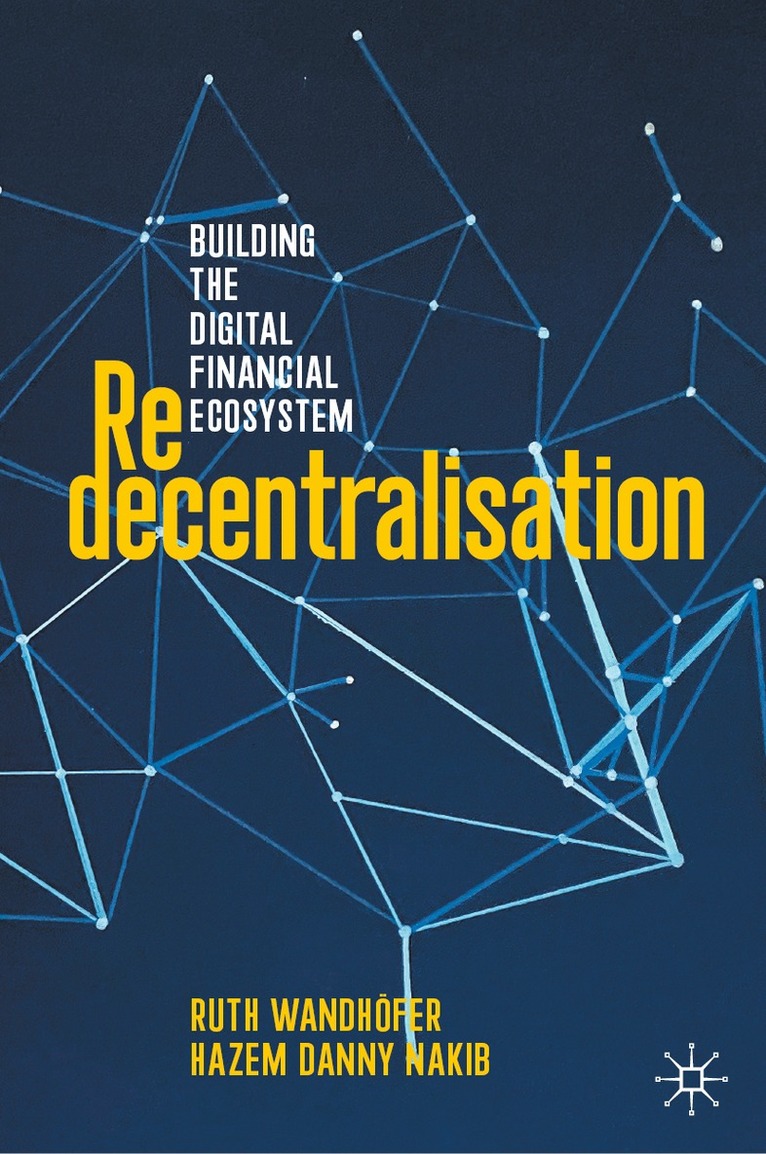
The rise of smartphones, social media, cryptocurrencies and digital assets has changed our lives profoundly over the last decade. In tandem, the relationship between governments, citizens and businesses has evolved, creating new sets of challenges and imbalances, but also opportunities.This book focuses on the evolving digitisation of the financial industry and the impact this has on users. Particular attention is given to the emergence of new technologies such as blockchain, smart contracts and AI. The increasingly interconnected, data-driven digital economy, which includes many aspects of an individual’s and organisation’s life, has become a challenge for regulators, too. Matters are complex but also increasingly centralised, with a growing trend of distrust. Should we push for more decentralisation?To shed light on this question we begin by providing an overview of key concepts and develop a high-level qualitative framework and approach to what we call ‘Redecentralisation'.Delving into those technology areas that form part of the tectonic plate shift of our financial system we explore the pillars of money and payments that are at a turning point with the replacement of key infrastructural components necessary for the future of what we call the Digital Financial Ecosystem. Digital identity and data privacy also form part of this broader puzzle.We then look to the future to consider some of the latest trends and ‘what if’ scenarios. Where do we see Redecentralisation at play in the Digital Financial Ecosystem? What is the role of technology in this, e.g. Web3, the Metaverse and Decentralised Finance? Can Redecentralisation support an alignment of values across people, governments and businesses? What is the role of technology in this? And finally, do we need a new digital social contract to underpin and protect our digital lives?
573 kr
Skickas inom 5-8 vardagar
659 kr
Skickas inom 10-15 vardagar
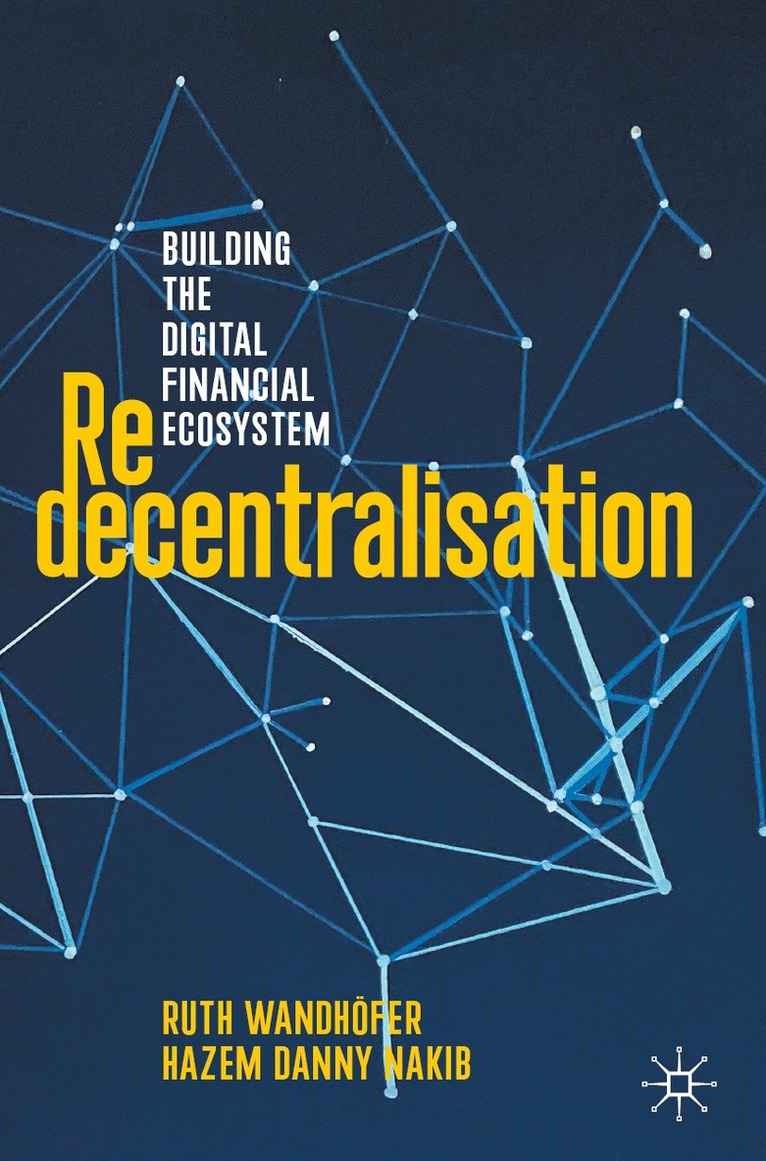
The rise of smartphones, social media, cryptocurrencies and digital assets has changed our lives profoundly over the last decade. In tandem, the relationship between governments, citizens and businesses has evolved, creating new sets of challenges and imbalances, but also opportunities.This book focuses on the evolving digitisation of the financial industry and the impact this has on users. Particular attention is given to the emergence of new technologies such as blockchain, smart contracts and AI. The increasingly interconnected, data-driven digital economy, which includes many aspects of an individual’s and organisation’s life, has become a challenge for regulators, too. Matters are complex but also increasingly centralised, with a growing trend of distrust. Should we push for more decentralisation?To shed light on this question we begin by providing an overview of key concepts and develop a high-level qualitative framework and approach to what we call ‘Redecentralisation'.Delving into those technology areas that form part of the tectonic plate shift of our financial system we explore the pillars of money and payments that are at a turning point with the replacement of key infrastructural components necessary for the future of what we call the Digital Financial Ecosystem. Digital identity and data privacy also form part of this broader puzzle.We then look to the future to consider some of the latest trends and ‘what if’ scenarios. Where do we see Redecentralisation at play in the Digital Financial Ecosystem? What is the role of technology in this, e.g. Web3, the Metaverse and Decentralised Finance? Can Redecentralisation support an alignment of values across people, governments and businesses? What is the role of technology in this? And finally, do we need a new digital social contract to underpin and protect our digital lives?