Heather Milne – författare
Visar alla böcker från författaren Heather Milne. Handla med fri frakt och snabb leverans.
4 produkter
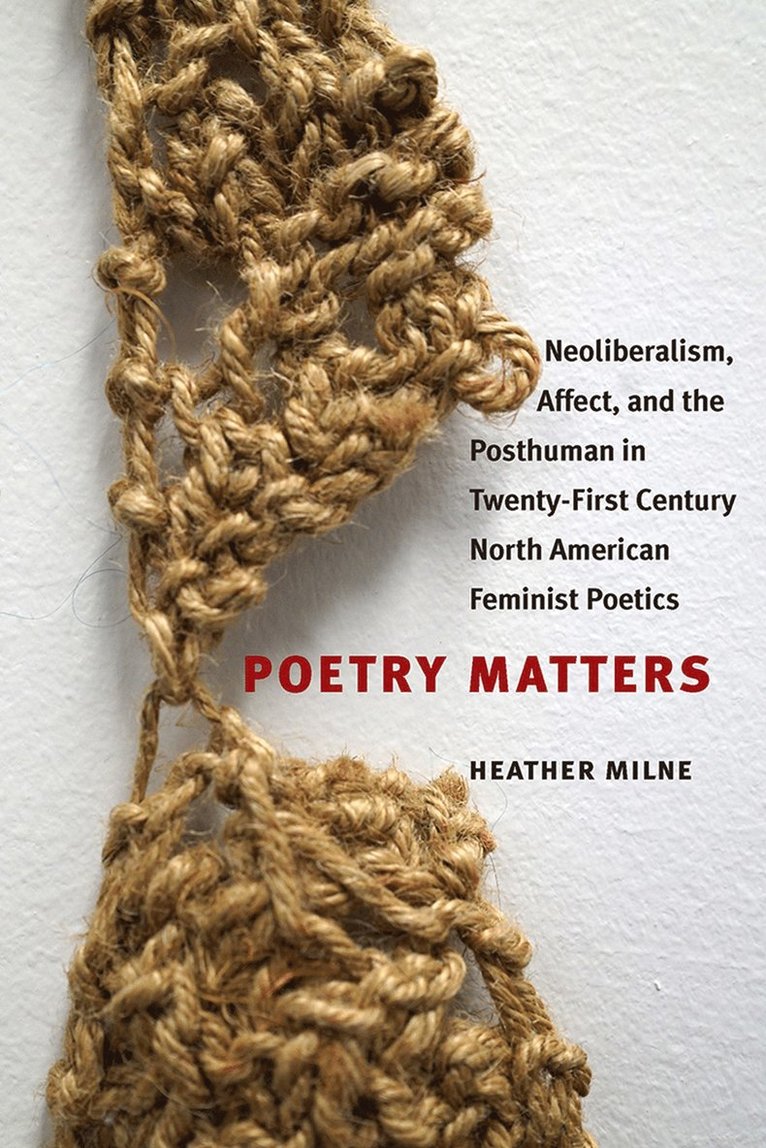
Poetry Matters
Neoliberalism, Affect, and the Posthuman in Twenty-First Century North American Feminist Poetics
Häftad, 2018
801 kr
Lägg i varukorg
Poetry Matters explores poetry written by women from the United States and Canada, which documents the social and political turmoil of the early twenty-first century and places this poetry in dialogue with recent currents of feminist theory including new materialism, affect theory, posthumanism, …
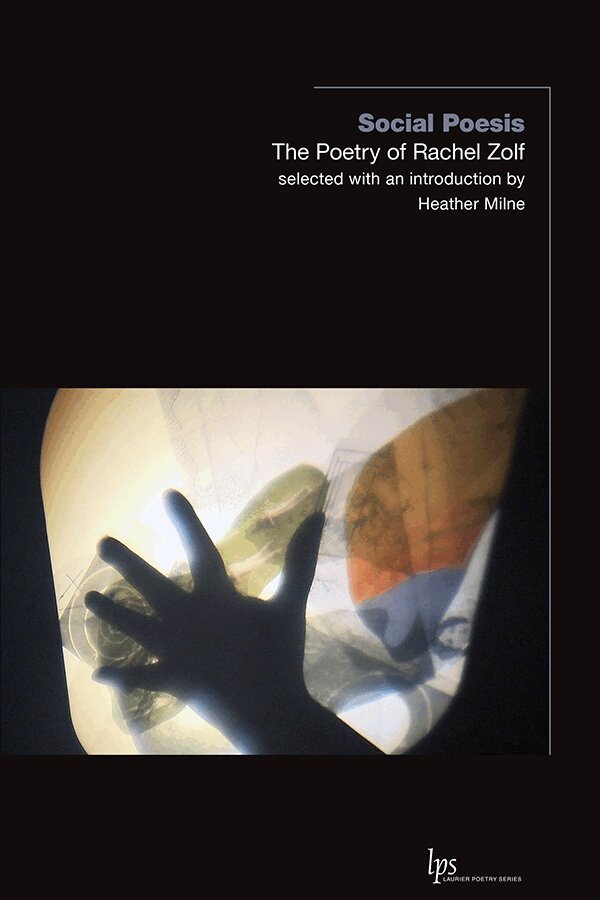
Social Poesis
The Poetry of Rachel Zolf
Häftad, 2019
276 kr
Lägg i varukorg
Social Poesis introduces readers to the work of one of Canada's most exciting and challenging poets. Through selections from across Rachel Zolf's poetic oeuvre, this book foregrounds the philosophical, ethical, and political questions that inform Zolf's poetry. Selections range from early poems in …
Museum Queeries: Two-Spirit, Indigiqueer, and LGBTTQ* Interventions into Museums, Archives, and Curating
Av Angela Failler, Sabrina Mark m. fl.
Häftad, 2026
617 kr
Lägg i varukorg
This book explores Two-Spirit and LGBTTQ* contributions to and interventions in museums and museum studies, both as a means of addressing structural exclusions and of opening new modes of productive inquiry and activism. Building on the inroads that have been made into existing museological …
Prismatic Publics
Av Kate Eichhorn, Heather Milne
Häftad, 2005
275 kr
Tillfälligt slut
Nicole Brossard, Margaret Christakos, Susan Holbrook, Dorothy Lusk, Karen Mac Cormack, Daphne Marlatt, Erin Moure, M. NourbeSe Philip, Sina Queyras, Lisa Robertson, Gail Scott, Nathalie Stephens, Catriona Strang, Rita Wong, Rachel Zolf. These fifteen women are some of the best writers engaged in …