Heewon Chang - Böcker
Visar alla böcker från författaren Heewon Chang. Handla med fri frakt och snabb leverans.
10 produkter
10 produkter
1 324 kr
Skickas inom 10-15 vardagar
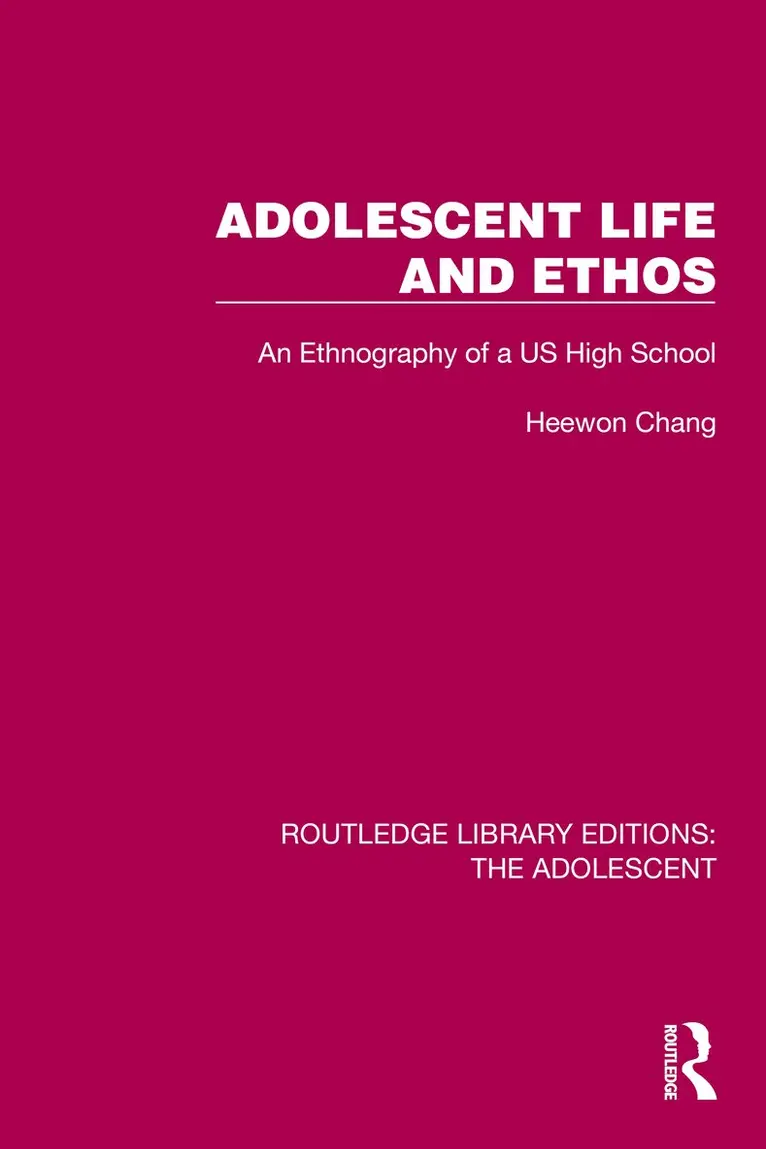
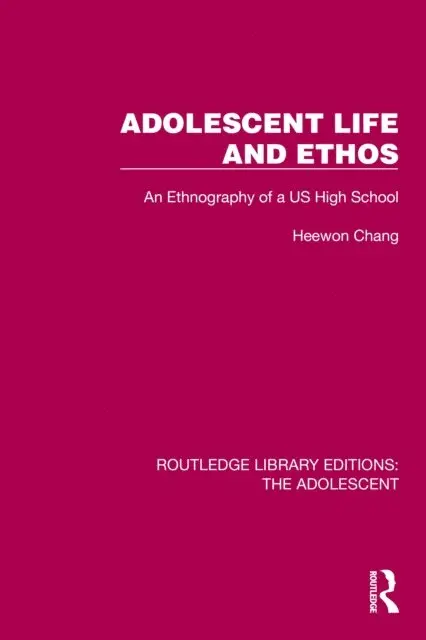
Originally published in 1992, this Asian-authored book presents a cultural description and interpretation of American high school adolescent life and ethos, based on anthropological fieldwork in a semi-rural school and its surrounding community in Oregon. It combines a realistic account of late 1980s adolescent culture and a confessional tale of the Asian ethnographer’s fieldwork experiences among American youngsters.The three main parts of the book focus on a portrayal of adolescent daily life, an interpretation of these young people’s cultural values and ideals, and a reflection on the ethnographer’s fieldwork experiences respectively. Part 1, Adolescent Life, includes five chapters presenting a brief version of a key informant life history, a profile of the school, a portrait of the community, a sketch of a typical school day, and adolescent life out of school. Divided into four chapters, Part 2, Adolescent Ethos, identifies three dimensions of adolescent ethos and analyzes dynamics between the dimensions and reflecting ideals. The last chapter of this part, ‘The Duality of Ideals’ discusses how adolescents negotiated themselves in a complicated web of various ideals pressing on them. Part 3, Doing Ethnography, reports procedural and personal aspects of doing ethnographic research in two separate chapters. The former discusses each step from locating a field to writing an ethnography; the latter describes personal feelings and scholarly thoughts which occurred during and after fieldwork.Adopting the most inconspicuous, unobtrusive form of research methods (she even dressed like them and acted with and among them), the ethnographer tried to listen to the young people’s voices, peek into their lives from outside, and look out at the world through their eyes.
389 kr
Skickas inom 10-15 vardagar
Originally published in 1992, this Asian-authored book presents a cultural description and interpretation of American high school adolescent life and ethos, based on anthropological fieldwork in a semi-rural school and its surrounding community in Oregon. It combines a realistic account of late 1980s adolescent culture and a confessional tale of the Asian ethnographer’s fieldwork experiences among American youngsters.The three main parts of the book focus on a portrayal of adolescent daily life, an interpretation of these young people’s cultural values and ideals, and a reflection on the ethnographer’s fieldwork experiences respectively. Part 1, Adolescent Life, includes five chapters presenting a brief version of a key informant life history, a profile of the school, a portrait of the community, a sketch of a typical school day, and adolescent life out of school. Divided into four chapters, Part 2, Adolescent Ethos, identifies three dimensions of adolescent ethos and analyzes dynamics between the dimensions and reflecting ideals. The last chapter of this part, ‘The Duality of Ideals’ discusses how adolescents negotiated themselves in a complicated web of various ideals pressing on them. Part 3, Doing Ethnography, reports procedural and personal aspects of doing ethnographic research in two separate chapters. The former discusses each step from locating a field to writing an ethnography; the latter describes personal feelings and scholarly thoughts which occurred during and after fieldwork.Adopting the most inconspicuous, unobtrusive form of research methods (she even dressed like them and acted with and among them), the ethnographer tried to listen to the young people’s voices, peek into their lives from outside, and look out at the world through their eyes.
2 289 kr
Skickas inom 10-15 vardagar
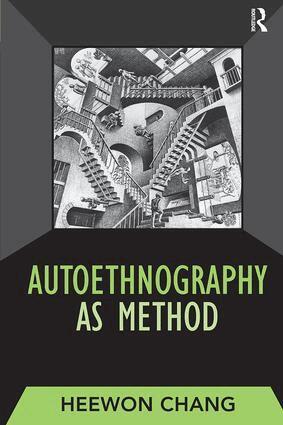
This methods book will guide the reader through the process of conducting and producing an autoethnographic study through the understanding of self, other, and culture. Readers will be encouraged to follow hands-on, though not prescriptive, steps in data collection, analysis, and interpretation with self-reflective prewriting exercises and self-narrative writing exercises to produce their own autoethnographic work. Chang offers a variety of techniques for gathering data on the self—from diaries to culture grams to interviews with others—and shows how to transform this information into a study that looks for the connection with others present in a diverse world. She shows how the autoethnographic process promotes self-reflection, understanding of multicultural others, qualitative inquiry, and narrative writing. Samples of published autoethnographies provide exemplars for the novice researcher to follow.
576 kr
Skickas inom 10-15 vardagar
This methods book will guide the reader through the process of conducting and producing an autoethnographic study through the understanding of self, other, and culture. Readers will be encouraged to follow hands-on, though not prescriptive, steps in data collection, analysis, and interpretation with self-reflective prewriting exercises and self-narrative writing exercises to produce their own autoethnographic work. Chang offers a variety of techniques for gathering data on the self—from diaries to culture grams to interviews with others—and shows how to transform this information into a study that looks for the connection with others present in a diverse world. She shows how the autoethnographic process promotes self-reflection, understanding of multicultural others, qualitative inquiry, and narrative writing. Samples of published autoethnographies provide exemplars for the novice researcher to follow.
2 224 kr
Skickas inom 10-15 vardagar
It sounds like a paradox: How do you engage in autoethnography collaboratively? Heewon Chang, Faith Ngunjiri, and Kathy-Ann Hernandez break new ground on this blossoming new array of research models, collectively labeled Collaborative Autoethnography. Their book serves as a practical guide by providing you with a variety of data collection, analytic, and writing techniques to conduct collaborative projects. It also answers your questions about the bigger picture: What advantages does a collaborative approach offer to autoethnography? What are some of the methodological, ethical, and interpersonal challenges you’ll encounter along the way? Model collaborative autoethnographies and writing prompts are included in the appendixes. This exceptional, in-depth resource will help you explore this exciting new frontier in qualitative methods.
534 kr
Skickas inom 10-15 vardagar
It sounds like a paradox: How do you engage in autoethnography collaboratively? Heewon Chang, Faith Ngunjiri, and Kathy-Ann Hernandez break new ground on this blossoming new array of research models, collectively labeled Collaborative Autoethnography. Their book serves as a practical guide by providing you with a variety of data collection, analytic, and writing techniques to conduct collaborative projects. It also answers your questions about the bigger picture: What advantages does a collaborative approach offer to autoethnography? What are some of the methodological, ethical, and interpersonal challenges you’ll encounter along the way? Model collaborative autoethnographies and writing prompts are included in the appendixes. This exceptional, in-depth resource will help you explore this exciting new frontier in qualitative methods.
2 094 kr
Skickas inom 10-15 vardagar
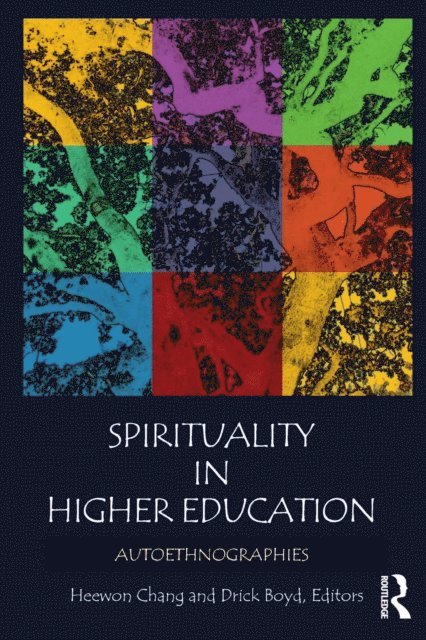
This collection of articles explores how a wide range of academics-- diverse in location, rank and discipline-- understand and express how they deal with spirituality in their professional lives and how they integrate spirituality in teaching, research, administration, and advising. The contributors also analyze the culture of academia and its challenges to the spiritual development of those involved. Twenty chapter authors--from a variety of faith traditions--discuss the ways in which their own beliefs have affected their journeys through higher education. By using an autoethnographic, self-analytical lens, this collection shows how various spiritualities have influenced how higher education is understood, taught and performed. The book will stimulate debate and conversations on a topic traditionally ignored in academia
560 kr
Skickas inom 10-15 vardagar
This collection of articles explores how a wide range of academics-- diverse in location, rank and discipline-- understand and express how they deal with spirituality in their professional lives and how they integrate spirituality in teaching, research, administration, and advising. The contributors also analyze the culture of academia and its challenges to the spiritual development of those involved. Twenty chapter authors--from a variety of faith traditions--discuss the ways in which their own beliefs have affected their journeys through higher education. By using an autoethnographic, self-analytical lens, this collection shows how various spiritualities have influenced how higher education is understood, taught and performed. The book will stimulate debate and conversations on a topic traditionally ignored in academia
Transformative Autoethnography for Practitioners
Change Processes and Practices for Individuals and Groups
Häftad, Engelska, 2022
379 kr
Skickas inom 7-10 vardagar
Can transformation be the primary goal of autoethnographic research? In this book, the authors provide proof that this is indeed possible. Since autoethnography first appeared as a nascent approach to social inquiry, much has been written about it as a useful addition to the field of qualitative research methods. Over the years, its usage has been extended across various disciplines including the humanities, human services, social sciences, leadership studies, engineering, education, counseling, and even medical education. Notably, the primary function of autoethnography to advance our understanding around sociocultural phenomena has been increasingly paired with a parallel function of the many ways in which this research method can also contribute to practice. However, though its contribution to scholarship is well documented, less has been written about its practical usage as the focal point of inquiry. Yet there is growing evidence that one of the emerging strengths of autoethnography is its transformative capabilities. In Transformative Autoethnography for Practitioners, Hernandez, Chang and Bilgen turn the spotlight on autoethnography as a tool for practitioners where the primary goal is to solve real world problems by facilitating transformational change at the individual, group and/or organizational levels. They draw on existing scholarship as well as their collective work and expertise to provide a Transformative Autoethnographic Model (TAM) for use by practitioners who are intent on effecting such changes in their respective contexts.The introduction to Transformative Autoethnography for Practitioners provides an overview and an explanation of different approaches and variations of single focused ethnographic work (SAE) and collaborative autoethnography (CAE). It also presents and discusses in detail the TAM framework as consisting of several iterative steps. Parts 1–3 are each comprised of two chapters. The first chapter of each section situates the discussion of the AE/CAE for transformation at the individual, group and organizational level in the relevant literature. In the second chapter of each section, the authors provide examples, practical details and resources about how to apply TAM within each context. The book ends with a final chapter which explores future applications and directions for the TAM-AE/CAE model across various contexts, including in digital spaces.
Walking the Doctoral Trail
A Fully Relatable (and Occasionally Humorous) Guide for Successful Completion and Beyond
Häftad, Engelska, 2026
501 kr
Kommande
Walking the Doctoral Trail: A Fully Relatable (and Occasionally Humorous) Guide for Successful Completion and Beyond is not a how-to manual—and that is exactly the point. For many prospective and current doctoral students, beginning a doctorate is one of the most meaningful, and most underestimated, undertakings of their lives. This book meets doctoral sojourners where they are: curious, hopeful, anxious, determined, sometimes discouraged, and often more alone than expected. Rather than offering a prescriptive formula for "how to finish," it invites readers into honest reflection, grounded conversation, and realistic preparation and action for the doctoral journey as it is truly lived. Co-authored by three doctoral completers, the book reflects decades of experience walking alongside doctoral students as educators, advisors, and practitioner-scholars who understand the academic and personal demands of doctoral life. Together, the authors offer diverse perspectives without promoting a single theoretical, methodological, or disciplinary stance. Using the metaphor of a hiking trail, Walking the Doctoral Trail supports doctoral students across disciplines and program structures and acknowledges that journeys differ in terrain and pacing, yet share common challenges and turning points. Organized into seven chapters representing stages of the doctoral journey, each topic includes reflection, guidance, warnings, trail tales, and space for readers' own notes. Humor—through original cartoons—is woven throughout, reminding readers they are not alone and that completing the hike is achievable. Ideal for doctoral orientation courses and mentoring conversations, this book offers companionship, perspective, wisdom, and steady encouragement for those committed to walking the doctoral trail to the end. It will be a meaningful gift for someone considering—or beginning—a doctorate program as well! Walking the Doctoral Trail is an invaluable tool for every doctoral student, regardless of the stage that they find themselves in in their program. Perfect for courses such as: Introduction to Doctoral Education; Doctoral Research Seminar; Dissertation/Thesis Proposal Writing; Doctoral Dissertation Seminar; Foundations of Social Science Research; Foundations of Behavioral Science Research; Foundations of Organizational and Leadership Research; Introduction to Educational Research; Doctoral Mentoring and Advising; Inquiry as Practice