Kathy-Ann C Hernandez - Böcker
Visar alla böcker från författaren Kathy-Ann C Hernandez. Handla med fri frakt och snabb leverans.
4 produkter
4 produkter
2 224 kr
Skickas inom 10-15 vardagar
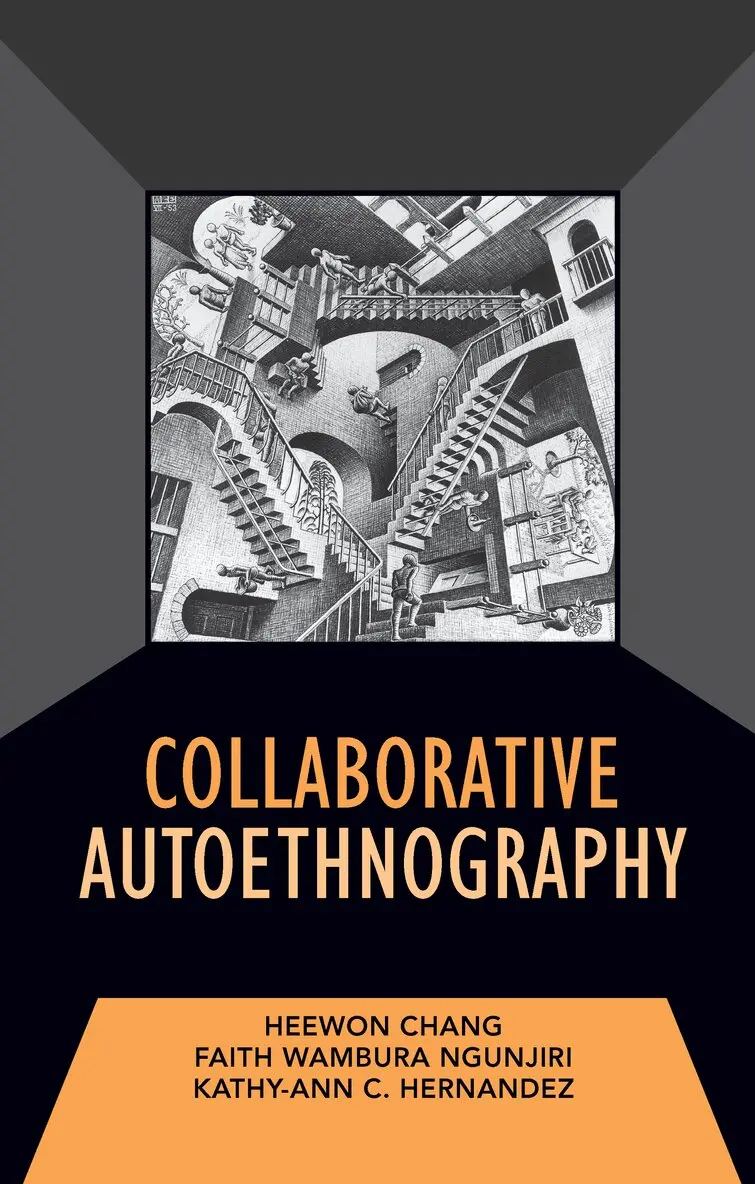
It sounds like a paradox: How do you engage in autoethnography collaboratively? Heewon Chang, Faith Ngunjiri, and Kathy-Ann Hernandez break new ground on this blossoming new array of research models, collectively labeled Collaborative Autoethnography. Their book serves as a practical guide by providing you with a variety of data collection, analytic, and writing techniques to conduct collaborative projects. It also answers your questions about the bigger picture: What advantages does a collaborative approach offer to autoethnography? What are some of the methodological, ethical, and interpersonal challenges you’ll encounter along the way? Model collaborative autoethnographies and writing prompts are included in the appendixes. This exceptional, in-depth resource will help you explore this exciting new frontier in qualitative methods.
534 kr
Skickas inom 10-15 vardagar
It sounds like a paradox: How do you engage in autoethnography collaboratively? Heewon Chang, Faith Ngunjiri, and Kathy-Ann Hernandez break new ground on this blossoming new array of research models, collectively labeled Collaborative Autoethnography. Their book serves as a practical guide by providing you with a variety of data collection, analytic, and writing techniques to conduct collaborative projects. It also answers your questions about the bigger picture: What advantages does a collaborative approach offer to autoethnography? What are some of the methodological, ethical, and interpersonal challenges you’ll encounter along the way? Model collaborative autoethnographies and writing prompts are included in the appendixes. This exceptional, in-depth resource will help you explore this exciting new frontier in qualitative methods.
237 kr
Skickas inom 3-6 vardagar
Transformative Autoethnography for Practitioners
Change Processes and Practices for Individuals and Groups
Häftad, Engelska, 2022
377 kr
Skickas inom 7-10 vardagar
Can transformation be the primary goal of autoethnographic research? In this book, the authors provide proof that this is indeed possible. Since autoethnography first appeared as a nascent approach to social inquiry, much has been written about it as a useful addition to the field of qualitative research methods. Over the years, its usage has been extended across various disciplines including the humanities, human services, social sciences, leadership studies, engineering, education, counseling, and even medical education. Notably, the primary function of autoethnography to advance our understanding around sociocultural phenomena has been increasingly paired with a parallel function of the many ways in which this research method can also contribute to practice. However, though its contribution to scholarship is well documented, less has been written about its practical usage as the focal point of inquiry. Yet there is growing evidence that one of the emerging strengths of autoethnography is its transformative capabilities. In Transformative Autoethnography for Practitioners, Hernandez, Chang and Bilgen turn the spotlight on autoethnography as a tool for practitioners where the primary goal is to solve real world problems by facilitating transformational change at the individual, group and/or organizational levels. They draw on existing scholarship as well as their collective work and expertise to provide a Transformative Autoethnographic Model (TAM) for use by practitioners who are intent on effecting such changes in their respective contexts.The introduction to Transformative Autoethnography for Practitioners provides an overview and an explanation of different approaches and variations of single focused ethnographic work (SAE) and collaborative autoethnography (CAE). It also presents and discusses in detail the TAM framework as consisting of several iterative steps. Parts 1–3 are each comprised of two chapters. The first chapter of each section situates the discussion of the AE/CAE for transformation at the individual, group and organizational level in the relevant literature. In the second chapter of each section, the authors provide examples, practical details and resources about how to apply TAM within each context. The book ends with a final chapter which explores future applications and directions for the TAM-AE/CAE model across various contexts, including in digital spaces.