Heike Wieters – författare
Visar alla böcker från författaren Heike Wieters. Handla med fri frakt och snabb leverans.
4 produkter
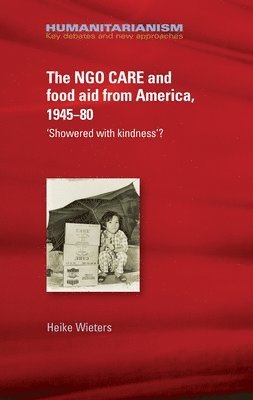
Ngo Care and Food Aid from America, 1945–80
'showered with Kindness'?
Inbunden, 2017
1217 kr
Lägg i varukorg
This book provides a historical account of the NGO CARE as one of the largest humanitarian NGOs worldwide from 1945 to 1980. Readers interested in international relations and humanitarian hunger prevention are provided with fascinating insights into the economic and business related aspects of …
Ngo Care and Food Aid from America, 1945–80
'showered with Kindness'?
Häftad, 2020
506 kr
Lägg i varukorg
This book provides a historical account of the NGO CARE as one of the largest humanitarian NGOs worldwide from 1945 to 1980. Readers interested in international relations and humanitarian hunger prevention are provided with fascinating insights into the economic and business related aspects of …
"One for All—All for One”? Caring and Providing for Others in Europe
Av Heike Wieters, Nikola Tietze
Häftad, 2025
989 kr
Lägg i varukorg
This book focusses on how historical dynamics and specific actors have shaped the diverse outlook and everyday practice of welfare in and across Europe. Based on the concept that narratives about welfare in Europe are intricately interconnected with various practices of “caring” for oneself and …
"e;One for All-All for One"e;? Caring and Providing for Others in Europe
Av Nikola Tietze, Heike Wieters
E-bok, 2025
1255 kr
Lägg i varukorg
This book focusses on how historical dynamics and specific actors have shaped the diverse outlook and everyday practice of welfare in and across Europe. Based on the concept that narratives about welfare in Europe are intricately interconnected with various practices of “caring” for oneself and …