Helen R. Quinn – författare
482 kr
Läs direkt efter köp
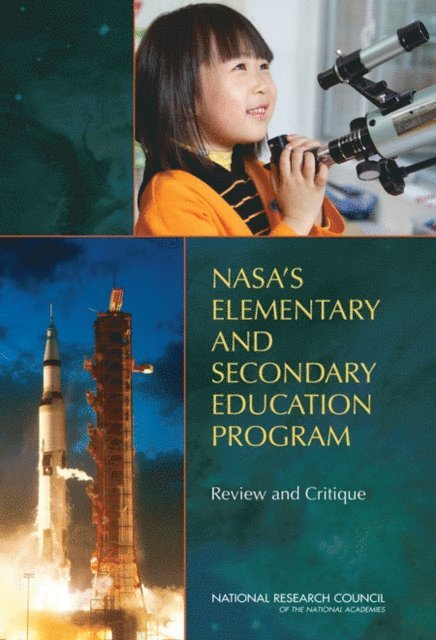
The federal role in precollege science, technology, engineering, and mathematics (STEM) education is receiving increasing attention in light of the need to support public understanding of science and to develop a strong scientific and technical workforce in a competitive global economy. Federal science agencies, such as the National Aeronautics and Space Administration (NASA), are being looked to as a resource for enhancing precollege STEM education and bringing more young people to scientific and technical careers.
For NASA and other federal science agencies, concerns about workforce and public understanding of science also have an immediate local dimension. The agency faces an aerospace workforce skewed toward those close to retirement and job recruitment competition for those with science and engineering degrees. In addition, public support for the agency''s missions stems in part from public understanding of the importance of the agency''s contributions in science, engineering, and space exploration. In the NASA authorization act of 2005 (P.L. 109-555 Subtitle B-Education, Sec. 614) Congress directed the agency to support a review and evaluation of its precollege education program to be carried out by the National Research Council (NRC). NASA''s Elementary and Secondary Education Program: Review and Critique includes recommendations to improve the effectiveness of the program and addresses these four tasks:1. an evaluation of the effectiveness of the overall program in meeting its defined goals and objectives;2. an assessment of the quality and educational effectiveness of the major components of the program, including an evaluation of the adequacy of assessment metrics and data collection requirements available for determining the effectiveness of individual projects;3. an evaluation of the funding priorities in the program, including a review of the funding level and trend for each major component of the program and an assessment of whether the resources made available are consistent with meeting identified goals and priorities; and4. a determination of the extent and effectiveness of coordination and collaboration between NASA and other federal agencies that sponsor science, technology, and mathematics education activities.686 kr
Läs direkt efter köp
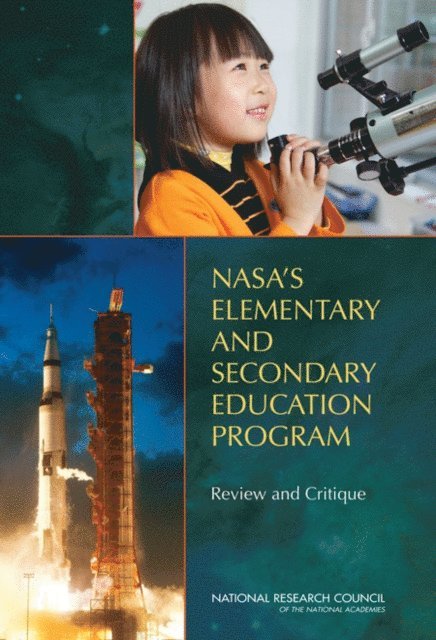
The federal role in precollege science, technology, engineering, and mathematics (STEM) education is receiving increasing attention in light of the need to support public understanding of science and to develop a strong scientific and technical workforce in a competitive global economy. Federal science agencies, such as the National Aeronautics and Space Administration (NASA), are being looked to as a resource for enhancing precollege STEM education and bringing more young people to scientific and technical careers.
For NASA and other federal science agencies, concerns about workforce and public understanding of science also have an immediate local dimension. The agency faces an aerospace workforce skewed toward those close to retirement and job recruitment competition for those with science and engineering degrees. In addition, public support for the agency''s missions stems in part from public understanding of the importance of the agency''s contributions in science, engineering, and space exploration. In the NASA authorization act of 2005 (P.L. 109-555 Subtitle B-Education, Sec. 614) Congress directed the agency to support a review and evaluation of its precollege education program to be carried out by the National Research Council (NRC). NASA''s Elementary and Secondary Education Program: Review and Critique includes recommendations to improve the effectiveness of the program and addresses these four tasks:1. an evaluation of the effectiveness of the overall program in meeting its defined goals and objectives;2. an assessment of the quality and educational effectiveness of the major components of the program, including an evaluation of the adequacy of assessment metrics and data collection requirements available for determining the effectiveness of individual projects;3. an evaluation of the funding priorities in the program, including a review of the funding level and trend for each major component of the program and an assessment of whether the resources made available are consistent with meeting identified goals and priorities; and4. a determination of the extent and effectiveness of coordination and collaboration between NASA and other federal agencies that sponsor science, technology, and mathematics education activities.687 kr
Läs direkt efter köp
544 kr
Skickas inom 10-15 vardagar
173 kr
Skickas inom 5-8 vardagar
236 kr
Läs direkt efter köp
In the first fractions of a second after the Big Bang lingers a question at the heart of our very existence: why does the universe contain matter but almost no antimatter? The laws of physics tell us that equal amounts of matter and antimatter were produced in the early universe—but then something odd happened. Matter won out over antimatter; had it not, the universe today would be dark and barren.But how and when did this occur? In The Mystery of the Missing Antimatter, Helen Quinn and Yossi Nir guide readers into the very heart of this mystery—and along the way offer an exhilarating grand tour of cutting-edge physics.
544 kr
Skickas inom 10-15 vardagar
687 kr
Tillfälligt slut