Board on Science Education – författare
1 186 kr
Skickas
331 kr
Läs direkt efter köp
In November 2020, the National Academies of Sciences, Engineering, and Medicine convened a multi-day virtual symposium on imaging the future of undergraduate STEM education. Speakers and participants pondered the future and the past and shared their goals, priorities, and dreams for improving undergraduate STEM education. Expert speakers presented information about today''s students and approaches to undergraduate STEM education, as well as the history of transformation in higher education. Thoughtful discussions explored ideas for the future, how student-centered learning experiences could be created, and what issues to consider to facilitate a successful transformation. This publication summarizes the presentation and discussion of the symposium.
307 kr
Skickas
284 kr
Läs direkt efter köp
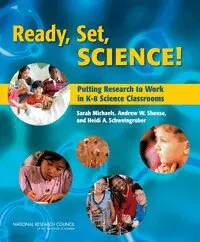
What types of instructional experiences help K-8 students learn science with understanding? What do science educators, teachers, teacher leaders, science specialists, professional development staff, curriculum designers, and school administrators need to know to create and support such experiences?
Ready, Set, Science! guides the way with an account of the groundbreaking and comprehensive synthesis of research into teaching and learning science in kindergarten through eighth grade. Based on the recently released National Research Council report Taking Science to School: Learning and Teaching Science in Grades K-8, this book summarizes a rich body of findings from the learning sciences and builds detailed cases of science educators at work to make the implications of research clear, accessible, and stimulating for a broad range of science educators.
Ready, Set, Science! is filled with classroom case studies that bring to life the research findings and help readers to replicate success. Most of these stories are based on real classroom experiences that illustrate the complexities that teachers grapple with every day. They show how teachers work to select and design rigorous and engaging instructional tasks, manage classrooms, orchestrate productive discussions with culturally and linguistically diverse groups of students, and help students make their thinking visible using a variety of representational tools.
This book will be an essential resource for science education practitioners and contains information that will be extremely useful to everyone—including parents—directly or indirectly involved in the teaching of science.
465 kr
Läs direkt efter köp
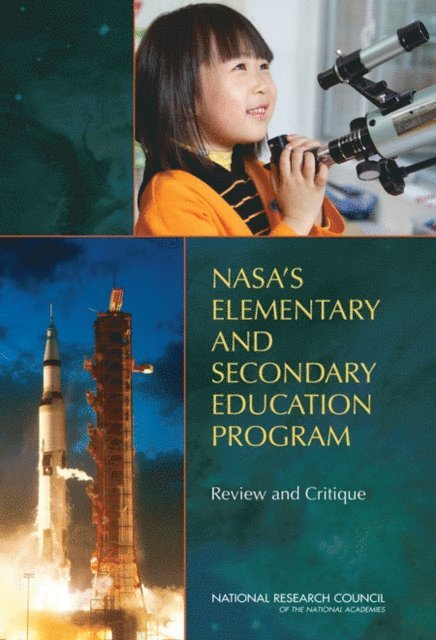
The federal role in precollege science, technology, engineering, and mathematics (STEM) education is receiving increasing attention in light of the need to support public understanding of science and to develop a strong scientific and technical workforce in a competitive global economy. Federal science agencies, such as the National Aeronautics and Space Administration (NASA), are being looked to as a resource for enhancing precollege STEM education and bringing more young people to scientific and technical careers.
For NASA and other federal science agencies, concerns about workforce and public understanding of science also have an immediate local dimension. The agency faces an aerospace workforce skewed toward those close to retirement and job recruitment competition for those with science and engineering degrees. In addition, public support for the agency''s missions stems in part from public understanding of the importance of the agency''s contributions in science, engineering, and space exploration. In the NASA authorization act of 2005 (P.L. 109-555 Subtitle B-Education, Sec. 614) Congress directed the agency to support a review and evaluation of its precollege education program to be carried out by the National Research Council (NRC). NASA''s Elementary and Secondary Education Program: Review and Critique includes recommendations to improve the effectiveness of the program and addresses these four tasks:1. an evaluation of the effectiveness of the overall program in meeting its defined goals and objectives;2. an assessment of the quality and educational effectiveness of the major components of the program, including an evaluation of the adequacy of assessment metrics and data collection requirements available for determining the effectiveness of individual projects;3. an evaluation of the funding priorities in the program, including a review of the funding level and trend for each major component of the program and an assessment of whether the resources made available are consistent with meeting identified goals and priorities; and4. a determination of the extent and effectiveness of coordination and collaboration between NASA and other federal agencies that sponsor science, technology, and mathematics education activities.607 kr
Läs direkt efter köp
Informal science is a burgeoning field that operates across a broad range of venues and envisages learning outcomes for individuals, schools, families, and society. The evidence base that describes informal science, its promise, and effects is informed by a range of disciplines and perspectives, including field-based research, visitor studies, and psychological and anthropological studies of learning.Learning Science in Informal Environments draws together disparate literatures, synthesizes the state of knowledge, and articulates a common framework for the next generation of research on learning science in informal environments across a life span. Contributors include recognized experts in a range of disciplines—research and evaluation, exhibit designers, program developers, and educators. They also have experience in a range of settings—museums, after-school programs, science and technology centers, media enterprises, aquariums, zoos, state parks, and botanical gardens.Learning Science in Informal Environments is an invaluable guide for program and exhibit designers, evaluators, staff of science-rich informal learning institutions and community-based organizations, scientists interested in educational outreach, federal science agency education staff, and K-12 science educators.
442 kr
Läs direkt efter köp
What types of instructional experiences help K-8 students learn science with understanding? What do science educators, teachers, teacher leaders, science specialists, professional development staff, curriculum designers, and school administrators need to know to create and support such experiences?
Ready, Set, Science! guides the way with an account of the groundbreaking and comprehensive synthesis of research into teaching and learning science in kindergarten through eighth grade. Based on the recently released National Research Council report Taking Science to School: Learning and Teaching Science in Grades K-8, this book summarizes a rich body of findings from the learning sciences and builds detailed cases of science educators at work to make the implications of research clear, accessible, and stimulating for a broad range of science educators.
Ready, Set, Science! is filled with classroom case studies that bring to life the research findings and help readers to replicate success. Most of these stories are based on real classroom experiences that illustrate the complexities that teachers grapple with every day. They show how teachers work to select and design rigorous and engaging instructional tasks, manage classrooms, orchestrate productive discussions with culturally and linguistically diverse groups of students, and help students make their thinking visible using a variety of representational tools.
This book will be an essential resource for science education practitioners and contains information that will be extremely useful to everyone—including parents—directly or indirectly involved in the teaching of science.
631 kr
Läs direkt efter köp
Laboratory experiences as a part of most U.S. high school science curricula have been taken for granted for decades, but they have rarely been carefully examined. What do they contribute to science learning? What can they contribute to science learning? What is the current status of labs in our nation''s high schools as a context for learning science? This book looks at a range of questions about how laboratory experiences fit into U.S. high schools:
What is effective laboratory teaching? What does research tell us about learning in high school science labs? How should student learning in laboratory experiences be assessed? Do all student have access to laboratory experiences? What changes need to be made to improve laboratory experiences for high school students? How can school organization contribute to effective laboratory teaching?With increased attention to the U.S. education system and student outcomes, no part of the high school curriculum should escape scrutiny. This timely book investigates factors that influence a high school laboratory experience, looking closely at what currently takes place and what the goals of those experiences are and should be. Science educators, school administrators, policy makers, and parents will all benefit from a better understanding of the need for laboratory experiences to be an integral part of the science curriculum—and how that can be accomplished.
867 kr
Läs direkt efter köp
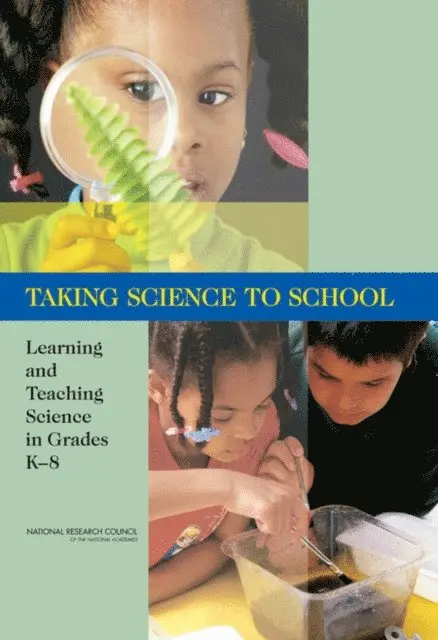
What is science for a child? How do children learn about science and how to do science? Drawing on a vast array of work from neuroscience to classroom observation, Taking Science to School provides a comprehensive picture of what we know about teaching and learning science from kindergarten through eighth grade. By looking at a broad range of questions, this book provides a basic foundation for guiding science teaching and supporting students in their learning. Taking Science to School answers such questions as:
When do children begin to learn about science? Are there critical stages in a child''s development of such scientific concepts as mass or animate objects? What role does nonschool learning play in children''s knowledge of science? How can science education capitalize on children''s natural curiosity? What are the best tasks for books, lectures, and hands-on learning? How can teachers be taught to teach science?The book also provides a detailed examination of how we know what we know about children''s learning of science—about the role of research and evidence. This book will be an essential resource for everyone involved in K-8 science education—teachers, principals, boards of education, teacher education providers and accreditors, education researchers, federal education agencies, and state and federal policy makers. It will also be a useful guide for parents and others interested in how children learn.
308 kr
Läs direkt efter köp
Practitioners in informal science settings—museums, after-school programs, science and technology centers, media enterprises, libraries, aquariums, zoos, and botanical gardens—are interested in finding out what learning looks like, how to measure it, and what they can do to ensure that people of all ages, from different backgrounds and cultures, have a positive learning experience. Surrounded by Science: Learning Science in Informal Environments, is designed to make that task easier. Based on the National Research Council study, Learning Science in Informal Environments: People, Places, and Pursuits, this book is a tool that provides case studies, illustrative examples, and probing questions for practitioners. In short, this book makes valuable research accessible to those working in informal science: educators, museum professionals, university faculty, youth leaders, media specialists, publishers, broadcast journalists, and many others.
631 kr
Läs direkt efter köp
Informal science is a burgeoning field that operates across a broad range of venues and envisages learning outcomes for individuals, schools, families, and society. The evidence base that describes informal science, its promise, and effects is informed by a range of disciplines and perspectives, including field-based research, visitor studies, and psychological and anthropological studies of learning.Learning Science in Informal Environments draws together disparate literatures, synthesizes the state of knowledge, and articulates a common framework for the next generation of research on learning science in informal environments across a life span. Contributors include recognized experts in a range of disciplines—research and evaluation, exhibit designers, program developers, and educators. They also have experience in a range of settings—museums, after-school programs, science and technology centers, media enterprises, aquariums, zoos, state parks, and botanical gardens.Learning Science in Informal Environments is an invaluable guide for program and exhibit designers, evaluators, staff of science-rich informal learning institutions and community-based organizations, scientists interested in educational outreach, federal science agency education staff, and K-12 science educators.
442 kr
Läs direkt efter köp
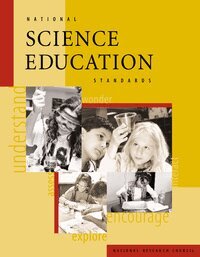
Americans agree that our students urgently need better science education. But what should they be expected to know and be able to do? Can the same expectations be applied across our diverse society?
These and other fundamental issues are addressed in National Science Education Standards—a landmark development effort that reflects the contributions of thousands of teachers, scientists, science educators, and other experts across the country.
The National Science Education Standards offer a coherent vision of what it means to be scientifically literate, describing what all students regardless of background or circumstance should understand and be able to do at different grade levels in various science categories.
The standards address:
The exemplary practice of science teaching that provides students with experiences that enable them to achieve scientific literacy. Criteria for assessing and analyzing students'' attainments in science and the learning opportunities that school science programs afford. The nature and design of the school and district science program. The support and resources needed for students to learn science.These standards reflect the principles that learning science is an inquiry-based process, that science in schools should reflect the intellectual traditions of contemporary science, and that all Americans have a role in improving science education.
This document will be invaluable to education policymakers, school system administrators, teacher educators, individual teachers, and concerned parents.
426 kr
Läs direkt efter köp
An emerging body of research suggests that a set of broad "21st century skills"—such as adaptability, complex communication skills, and the ability to solve non-routine problems—are valuable across a wide range of jobs in the national economy. However, the role of K-12 education in helping students learn these skills is a subject of current debate. Some business and education groups have advocated infusing 21st century skills into the school curriculum, and several states have launched such efforts. Other observers argue that focusing on skills detracts attention from learning of important content knowledge.To explore these issues, the National Research Council conducted a workshop, summarized in this volume, on science education as a context for development of 21st century skills. Science is seen as a promising context because it is not only a body of accepted knowledge, but also involves processes that lead to this knowledge. Engaging students in scientific processes—including talk and argument, modeling and representation, and learning from investigations—builds science proficiency. At the same time, this engagement may develop 21st century skills. Exploring the Intersection of Science Education and 21st Century Skills addresses key questions about the overlap between 21st century skills and scientific content and knowledge; explores promising models or approaches for teaching these abilities; and reviews the evidence about the transferability of these skills to real workplace applications.

584 kr
Läs direkt efter köp
An emerging body of research suggests that a set of broad "21st century skills"—such as adaptability, complex communication skills, and the ability to solve non-routine problems—are valuable across a wide range of jobs in the national economy. However, the role of K-12 education in helping students learn these skills is a subject of current debate. Some business and education groups have advocated infusing 21st century skills into the school curriculum, and several states have launched such efforts. Other observers argue that focusing on skills detracts attention from learning of important content knowledge.To explore these issues, the National Research Council conducted a workshop, summarized in this volume, on science education as a context for development of 21st century skills. Science is seen as a promising context because it is not only a body of accepted knowledge, but also involves processes that lead to this knowledge. Engaging students in scientific processes—including talk and argument, modeling and representation, and learning from investigations—builds science proficiency. At the same time, this engagement may develop 21st century skills. Exploring the Intersection of Science Education and 21st Century Skills addresses key questions about the overlap between 21st century skills and scientific content and knowledge; explores promising models or approaches for teaching these abilities; and reviews the evidence about the transferability of these skills to real workplace applications.


536 kr
Läs direkt efter köp
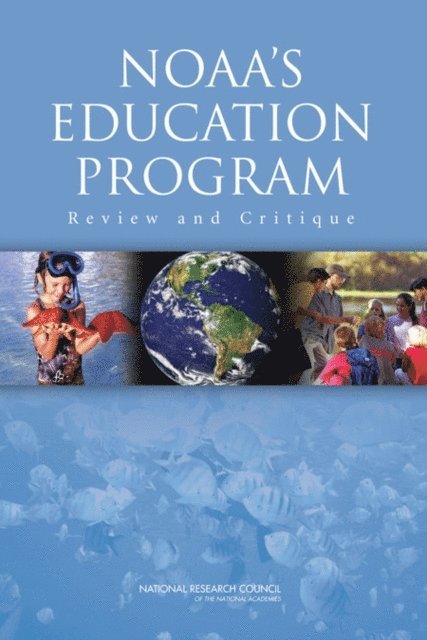
There is a national need to educate the public about the ocean, coastal resources, atmosphere and climate. The National Oceanic and Atmospheric Administration (NOAA), the agency responsible for understanding and predicting changes in the Earth''s environment and conserving and managing coastal and marine resources to meet the nation''s economic, social and environmental needs, has a broad mandate to engage and coordinate education initiatives on these topics. Since its creation in 1970, the NOAA has supported a variety of education projects that cover a range of topics related to the agency''s scientific and stewardship mission.NOAA uses formal and informal learning environments to enhance understanding of science, technology, engineering and mathematics (STEM) and to advance environmental education. The work of this agency overlaps and compliments the missions of other federal agencies, institutions of higher education, private and nonprofit organizations. Coordination among these agencies and organizations has been challenging. Limited education resources and the inherently global nature of NOAA''s mission make strategic partnerships critical in order for the agency to accomplish its goals. Additionally, clear education goals, planning, and strategic use of resources are critical aspects for effective partnerships.NOAA''s Education Program: Review and Critique provides a summary of the national education context for NOAA''s role in education which is twofold: first is to advance the environmental literacy of the nation, and second is to promote a diverse workforce in ocean, coastal, Great Lakes, atmospheric and climate sciences. The book also describes the strengths and weaknesses of the education strategic plan, the education evaluation approach of the agency and strategies for improving the evaluation process.

237 kr
Läs direkt efter köp
On March 11, 2020, the World Health Organization declared COVID-19 to be a global pandemic. From that moment, leaders of institutions of higher education have had to make quick decisions about how to provide high-quality educational experiences for their students while protecting the health of their students, faculty, and staff and maintaining the fiscal stability of their institutions. Institutions of higher learning took various approaches to the COVID-19 pandemic, which raised two questions: what factors informed decisions at these institutions, and what new initiatives or practices seem to be effective for students during the COVID-19 pandemic? To explore these questions and others regarding the effect of higher education''s current COVID-19 response on students in undergraduate and graduate science, technology, engineering, and mathematics programs, the National Academies of Sciences, Engineering, and Medicine held a virtual workshop consisting of four online sessions that took place between September 22 and October 6, 2020. Organized by the Board on Science Education and the Board on Higher Education and Workforce, the virtual workshops provided an opportunity for participants from a range of institutions to share strategies and lessons learned. This publication summarizes the presentation and discussion of the workshop.
316 kr
Läs direkt efter köp
Practitioners in informal science settings—museums, after-school programs, science and technology centers, media enterprises, libraries, aquariums, zoos, and botanical gardens—are interested in finding out what learning looks like, how to measure it, and what they can do to ensure that people of all ages, from different backgrounds and cultures, have a positive learning experience. Surrounded by Science: Learning Science in Informal Environments, is designed to make that task easier. Based on the National Research Council study, Learning Science in Informal Environments: People, Places, and Pursuits, this book is a tool that provides case studies, illustrative examples, and probing questions for practitioners. In short, this book makes valuable research accessible to those working in informal science: educators, museum professionals, university faculty, youth leaders, media specialists, publishers, broadcast journalists, and many others.
757 kr
Läs direkt efter köp
There is a national need to educate the public about the ocean, coastal resources, atmosphere and climate. The National Oceanic and Atmospheric Administration (NOAA), the agency responsible for understanding and predicting changes in the Earth''s environment and conserving and managing coastal and marine resources to meet the nation''s economic, social and environmental needs, has a broad mandate to engage and coordinate education initiatives on these topics. Since its creation in 1970, the NOAA has supported a variety of education projects that cover a range of topics related to the agency''s scientific and stewardship mission.NOAA uses formal and informal learning environments to enhance understanding of science, technology, engineering and mathematics (STEM) and to advance environmental education. The work of this agency overlaps and compliments the missions of other federal agencies, institutions of higher education, private and nonprofit organizations. Coordination among these agencies and organizations has been challenging. Limited education resources and the inherently global nature of NOAA''s mission make strategic partnerships critical in order for the agency to accomplish its goals. Additionally, clear education goals, planning, and strategic use of resources are critical aspects for effective partnerships.NOAA''s Education Program: Review and Critique provides a summary of the national education context for NOAA''s role in education which is twofold: first is to advance the environmental literacy of the nation, and second is to promote a diverse workforce in ocean, coastal, Great Lakes, atmospheric and climate sciences. The book also describes the strengths and weaknesses of the education strategic plan, the education evaluation approach of the agency and strategies for improving the evaluation process.
390 kr
Läs direkt efter köp
Expectations for early learning are very different than they were even as recently as a decade ago. With increased recognition of the intellectual capacities of young children, as well as a growing understanding of how these capacities develop and can be fostered, has come a growing recognition that early childhood education, in both formal and informal settings, may not be helping all children maximize their cognitive capacities. Mathematical and Scientific Development in Early Childhood explores the research in cognition and developmental psychology that sheds light on children''s capacity to learn mathematical and scientific ideas. This summary report of the discussions and presentations at the workshop is designed to frame the issues relevant to advancing research useful to the development of research-based curricula for mathematics and science for young children.
568 kr
Läs direkt efter köp
The National Science Education Standards set broad content goals for teaching grades K-12. For science teaching programs to achieve these goals—indeed, for science teaching to be most effective—teachers and students need textbooks, lab kits, videos, and other materials that are clear, accurate, and help students achieve the goals set by the standards. Selecting Instructional Materials provides a rigorously field-tested procedure to help education decisionmakers evaluate and choose materials for the science classroom. The recommended procedure is unique, adaptable to local needs, and realistic given the time and money limitations typical to school districts.
This volume includes a guide outlining the entire process for school district facilitators, and provides review instruments for each step. It critically reviews the current selection process for science teaching materials—in the 20 states where the state board of education sets forth a recommended list and in the 30 states where materials are selected entirely by local decisionmakers.
Selecting Instructional Materials explores how purchasing decisions are influenced by parent attitudes, political considerations, and the marketing skills of those who produce and sell science teaching materials. It will be indispensable to state and local education decisionmakers, science program administrators and teachers, and science education advocates.
394 kr
Läs direkt efter köp
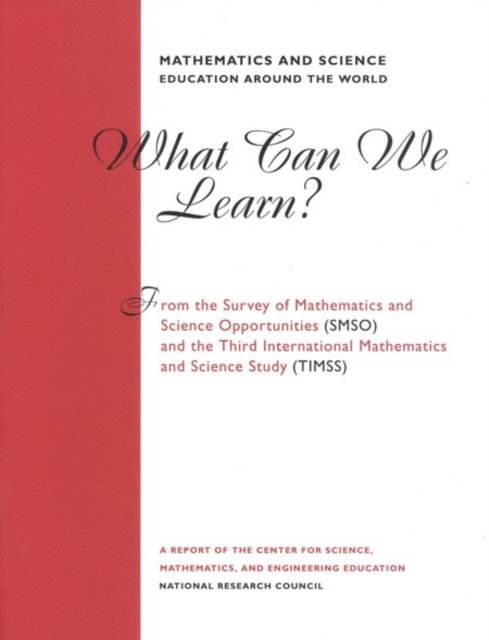
The Third International Mathematics and Science Study (TIMSS) raised the alarm about U.S. mathematics and science education. Most Americans are now aware that U.S. students lag behind their peers in other developed nations. In one state, the legislature reacted by lengthening the school year, assuming that more time on academic content would boost student performance. Some educators have fixed the blame on the mathematics and science curricula typically used in U.S. schools.
Does the problem lie in the curricula, instruction, or the system of support available to teachers? This book presents the first comprehensive analysis of TIMSS study—a half-million students from 15,000 schools around the world. It presents detailed reports on three major aspects of education, including curriculum issues, teaching practices, and school support.
473 kr
Läs direkt efter köp
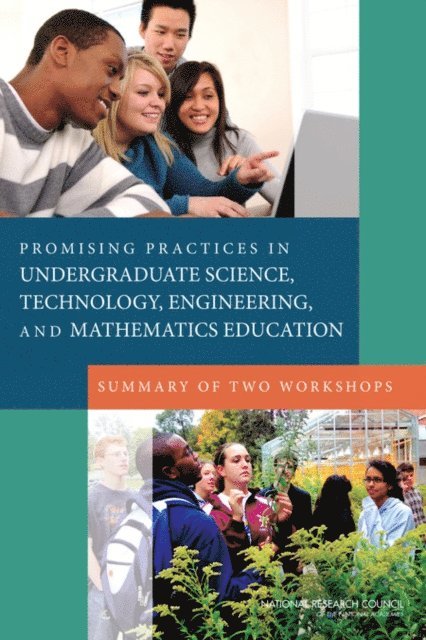
Today''s undergraduate students—future leaders, policymakers, teachers, and citizens, as well as scientists and engineers—will need to make important decisions based on their understanding of scientific and technological concepts. However, many undergraduates in the United States do not study science, mathematics, engineering, or technology (SME&T) for more than one year, if at all. Additionally, many of the SME&T courses that students take are focused on one discipline and often do not give students an understanding about how disciplines are interconnected or relevant to students'' lives and society.
To address these issues, the National Research Council convened a series of symposia and forums of representatives from SME&T educational and industrial communities. Those discussions contributed to this book, which provides six vision statements and recommendations for how to improve SME&T education for all undergraduates.
The book addresses pre-college preparation for students in SME&T and the joint roles and responsibilities of faculty and administrators in arts and sciences and in schools of education to better educate teachers of K-12 mathematics, science, and technology. It suggests how colleges can improve and evaluate lower-division undergraduate courses for all students, strengthen institutional infrastructures to encourage quality teaching, and better prepare graduate students who will become future SME&T faculty.
442 kr
Läs direkt efter köp
Effective science teaching requires creativity, imagination, and innovation. In light of concerns about American science literacy, scientists and educators have struggled to teach this discipline more effectively. Science Teaching Reconsidered provides undergraduate science educators with a path to understanding students, accommodating their individual differences, and helping them grasp the methods—and the wonder—of science.
What impact does teaching style have? How do I plan a course curriculum? How do I make lectures, classes, and laboratories more effective? How can I tell what students are thinking? Why don''t they understand? This handbook provides productive approaches to these and other questions.
Written by scientists who are also educators, the handbook offers suggestions for having a greater impact in the classroom and provides resources for further research.
662 kr
Läs direkt efter köp
The federal role in precollege science, technology, engineering, and mathematics (STEM) education is receiving increasing attention in light of the need to support public understanding of science and to develop a strong scientific and technical workforce in a competitive global economy. Federal science agencies, such as the National Aeronautics and Space Administration (NASA), are being looked to as a resource for enhancing precollege STEM education and bringing more young people to scientific and technical careers.
For NASA and other federal science agencies, concerns about workforce and public understanding of science also have an immediate local dimension. The agency faces an aerospace workforce skewed toward those close to retirement and job recruitment competition for those with science and engineering degrees. In addition, public support for the agency''s missions stems in part from public understanding of the importance of the agency''s contributions in science, engineering, and space exploration. In the NASA authorization act of 2005 (P.L. 109-555 Subtitle B-Education, Sec. 614) Congress directed the agency to support a review and evaluation of its precollege education program to be carried out by the National Research Council (NRC). NASA''s Elementary and Secondary Education Program: Review and Critique includes recommendations to improve the effectiveness of the program and addresses these four tasks:1. an evaluation of the effectiveness of the overall program in meeting its defined goals and objectives;2. an assessment of the quality and educational effectiveness of the major components of the program, including an evaluation of the adequacy of assessment metrics and data collection requirements available for determining the effectiveness of individual projects;3. an evaluation of the funding priorities in the program, including a review of the funding level and trend for each major component of the program and an assessment of whether the resources made available are consistent with meeting identified goals and priorities; and4. a determination of the extent and effectiveness of coordination and collaboration between NASA and other federal agencies that sponsor science, technology, and mathematics education activities.489 kr
Läs direkt efter köp
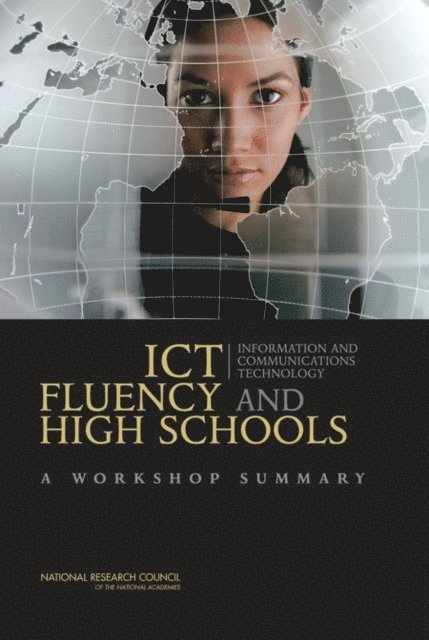
Information and communications technology (ICT) pervades virtually all domains of modern life—educational, professional, social, and personal. Yet although there have been numerous calls for linkages that enable ICT competencies acquired in one domain to benefit another, this goal has largely remained unrealized. In particular, while technology skills and applications at work could be greatly enhanced by earlier complementary learning at school—particularly in K-12 education, a formative and influential stage in a person''s life—little progress has been made on such linkages. At present, the curricula of most U.S. high schools focus on skills in the use of tools such as specific word-processing software or contemporary Internet search engines. Although these kinds of skills are certainly valuable—at least for a while—they comprise just one component, and the most rudimentary component, of ICT competencies.The National Academies held a workshop in October 2005 to address the specifics of ICT learning during the high school years would require an explicit effort to build on that report. The workshop was designed to extend the work begun in the report Being Fluent with Information Technology, which identified key components of ICT fluency and discussed their implications for undergraduate education.ICT Fluency and High Schools summarizes the workshop, which had three primary objectives: (1) to examine the need for updates to the ICT-fluency framework presented in the 1999 study; (2) to identify and analyze the most promising current efforts to provide in high schools many of the ICT competencies required not only in the workplace but also in people''s day-to-day functioning as citizens; and (3) to consider what information or research is needed to inform efforts to help high school students develop ICT fluency.
1 104 kr
Läs direkt efter köp
The Third International Mathematics and Science Study (TIMSS) is a rich source of information that can be used by a broad range of stakeholders to promote discussions and actions to improve K-12 mathematics and science teaching and learning. To support educators, administrators, parents, and others interested in education in using TIMSS materials, the National Research Council (NRC) has prepared a report, Global Perspectives for Local Action: Using TIMSS to Improve U.S. Mathematics and Science Education (see "Resources"). This report will help educators, administrators, parents and others interested in education to understand what can be learned from TIMSS findings, and it will encourage them to use the information to make improvements in mathematics and science education. Provided in the report are insights into mathematics and science achievement, curriculum, instruction, and school support systems, such as professional development, in the United States and around the world. To make TIMSS information more accessible and useful to educators and the public, the NRC prepared this professional development guide to accompany its report. This guide provides directions and support materials for leading workshops and planning sessions for teachers, educational administrators, higher education faculty, and the interested public.
205 kr
Läs direkt efter köp
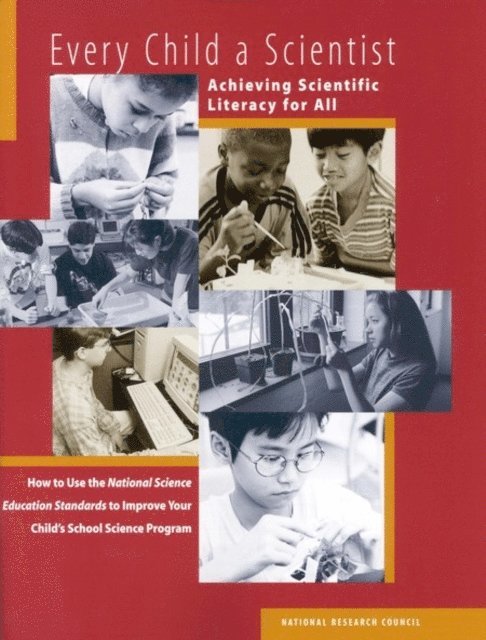
As more schools begin to implement the National Science Education Standards, adults who care about the quality of K-12 science education in their communities may want to help their local schools make the transition. This booklet provides guidance to parents and others, explains why high-quality science education is important for all children and young adults, and shows how the quality of school science programs can be measured.
Center for Science, Mathematics, and Engineering Education Staff; 1998, 32 pages, 8.5 x 11, single copy, $10.00; 2-9 copies, $7.00 each; 10 or more copies, $4.50 each (no other discounts apply).
268 kr
Läs direkt efter köp
Amid current efforts to improve mathematics and science education in the United States, people often ask how these subjects are organized and taught in other countries. They hear repeatedly that other countries produce higher student achievement. Teachers and parents wonder about the answers to questions like these: Why do the children in Asian cultures seem to be so good at science and mathematics? How are biology and physics taught in the French curriculum? What are textbooks like elsewhere, and how much latitude do teachers have in the way they follow the texts? Do all students receive the same education, or are they grouped by ability or perceived educational promise? If students are grouped, how early is this done? What are tests like, and what are the consequences for students? Are other countries engaged in Standards-like reforms? Does anything like "standards" play a role in other countries? Questions such as these reflect more than a casual interest in other countries'' educational practices. They grow out of an interest in identifying ways to improve mathematics and science education in the United States.
The focus of this short report is on what the Third International Mathematics and Science Study (TIMSS), a major international investigation of curriculum, instruction, and learning in mathematics and science, will be able to contribute to understandings of mathematics and science education around the world as well as to current efforts to improve student learning, particularly in the United States.
473 kr
Läs direkt efter köp
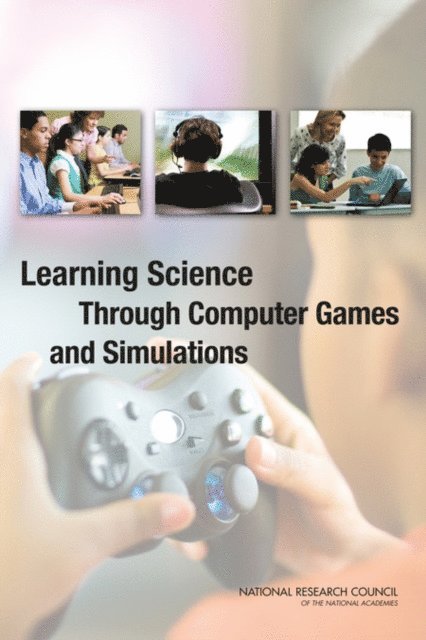
At a time when scientific and technological competence is vital to the nation''s future, the weak performance of U.S. students in science reflects the uneven quality of current science education. Although young children come to school with innate curiosity and intuitive ideas about the world around them, science classes rarely tap this potential. Many experts have called for a new approach to science education, based on recent and ongoing research on teaching and learning. In this approach, simulations and games could play a significant role by addressing many goals and mechanisms for learning science: the motivation to learn science, conceptual understanding, science process skills, understanding of the nature of science, scientific discourse and argumentation, and identification with science and science learning.
To explore this potential, Learning Science: Computer Games, Simulations, and Education, reviews the available research on learning science through interaction with digital simulations and games. It considers the potential of digital games and simulations to contribute to learning science in schools, in informal out-of-school settings, and everyday life. The book also identifies the areas in which more research and research-based development is needed to fully capitalize on this potential.
Learning Science will guide academic researchers; developers, publishers, and entrepreneurs from the digital simulation and gaming community; and education practitioners and policy makers toward the formation of research and development partnerships that will facilitate rich intellectual collaboration. Industry, government agencies and foundations will play a significant role through start-up and ongoing support to ensure that digital games and simulations will not only excite and entertain, but also motivate and educate.
260 kr
Läs direkt efter köp
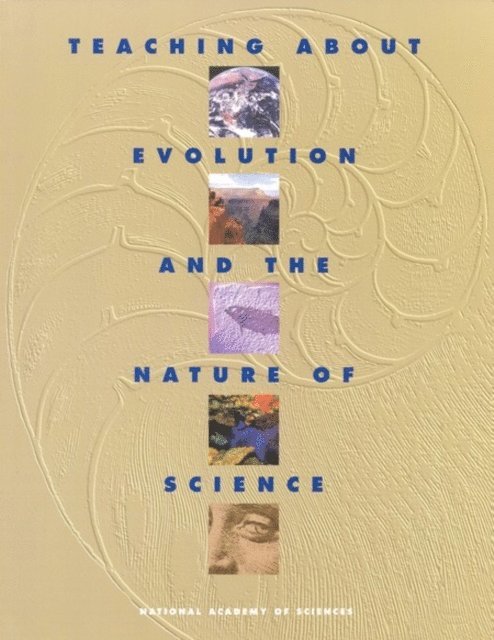
Today many school students are shielded from one of the most important concepts in modern science: evolution. In engaging and conversational style, Teaching About Evolution and the Nature of Science provides a well-structured framework for understanding and teaching evolution.
Written for teachers, parents, and community officials as well as scientists and educators, this book describes how evolution reveals both the great diversity and similarity among the Earth''s organisms; it explores how scientists approach the question of evolution; and it illustrates the nature of science as a way of knowing about the natural world. In addition, the book provides answers to frequently asked questions to help readers understand many of the issues and misconceptions about evolution.
The book includes sample activities for teaching about evolution and the nature of science. For example, the book includes activities that investigate fossil footprints and population growth that teachers of science can use to introduce principles of evolution. Background information, materials, and step-by-step presentations are provided for each activity. In addition, this volume:
Presents the evidence for evolution, including how evolution can be observed today. Explains the nature of science through a variety of examples. Describes how science differs from other human endeavors and why evolution is one of the best avenues for helping students understand this distinction. Answers frequently asked questions about evolution.Teaching About Evolution and the Nature of Science builds on the 1996 National Science Education Standards released by the National Research Council—and offers detailed guidance on how to evaluate and choose instructional materials that support the standards.
Comprehensive and practical, this book brings one of today''s educational challenges into focus in a balanced and reasoned discussion. It will be of special interest to teachers of science, school administrators, and interested members of the community.