Andrew W. Shouse – författare
307 kr
Skickas
284 kr
Läs direkt efter köp
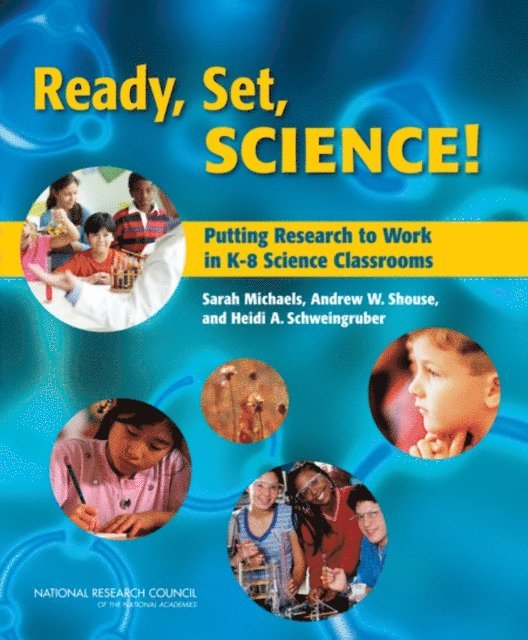
What types of instructional experiences help K-8 students learn science with understanding? What do science educators, teachers, teacher leaders, science specialists, professional development staff, curriculum designers, and school administrators need to know to create and support such experiences?
Ready, Set, Science! guides the way with an account of the groundbreaking and comprehensive synthesis of research into teaching and learning science in kindergarten through eighth grade. Based on the recently released National Research Council report Taking Science to School: Learning and Teaching Science in Grades K-8, this book summarizes a rich body of findings from the learning sciences and builds detailed cases of science educators at work to make the implications of research clear, accessible, and stimulating for a broad range of science educators.
Ready, Set, Science! is filled with classroom case studies that bring to life the research findings and help readers to replicate success. Most of these stories are based on real classroom experiences that illustrate the complexities that teachers grapple with every day. They show how teachers work to select and design rigorous and engaging instructional tasks, manage classrooms, orchestrate productive discussions with culturally and linguistically diverse groups of students, and help students make their thinking visible using a variety of representational tools.
This book will be an essential resource for science education practitioners and contains information that will be extremely useful to everyone—including parents—directly or indirectly involved in the teaching of science.
607 kr
Läs direkt efter köp
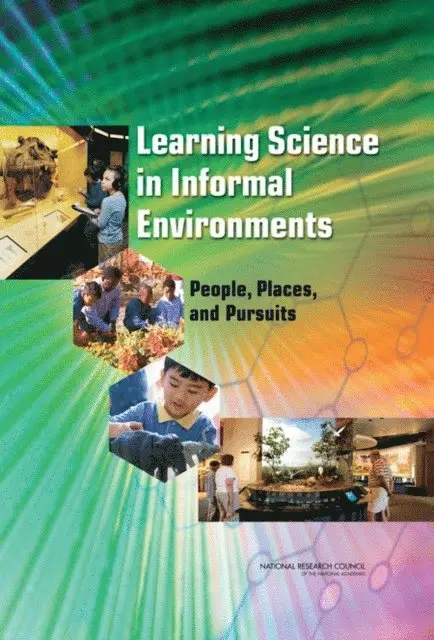
Informal science is a burgeoning field that operates across a broad range of venues and envisages learning outcomes for individuals, schools, families, and society. The evidence base that describes informal science, its promise, and effects is informed by a range of disciplines and perspectives, including field-based research, visitor studies, and psychological and anthropological studies of learning.Learning Science in Informal Environments draws together disparate literatures, synthesizes the state of knowledge, and articulates a common framework for the next generation of research on learning science in informal environments across a life span. Contributors include recognized experts in a range of disciplines—research and evaluation, exhibit designers, program developers, and educators. They also have experience in a range of settings—museums, after-school programs, science and technology centers, media enterprises, aquariums, zoos, state parks, and botanical gardens.Learning Science in Informal Environments is an invaluable guide for program and exhibit designers, evaluators, staff of science-rich informal learning institutions and community-based organizations, scientists interested in educational outreach, federal science agency education staff, and K-12 science educators.
442 kr
Läs direkt efter köp
What types of instructional experiences help K-8 students learn science with understanding? What do science educators, teachers, teacher leaders, science specialists, professional development staff, curriculum designers, and school administrators need to know to create and support such experiences?
Ready, Set, Science! guides the way with an account of the groundbreaking and comprehensive synthesis of research into teaching and learning science in kindergarten through eighth grade. Based on the recently released National Research Council report Taking Science to School: Learning and Teaching Science in Grades K-8, this book summarizes a rich body of findings from the learning sciences and builds detailed cases of science educators at work to make the implications of research clear, accessible, and stimulating for a broad range of science educators.
Ready, Set, Science! is filled with classroom case studies that bring to life the research findings and help readers to replicate success. Most of these stories are based on real classroom experiences that illustrate the complexities that teachers grapple with every day. They show how teachers work to select and design rigorous and engaging instructional tasks, manage classrooms, orchestrate productive discussions with culturally and linguistically diverse groups of students, and help students make their thinking visible using a variety of representational tools.
This book will be an essential resource for science education practitioners and contains information that will be extremely useful to everyone—including parents—directly or indirectly involved in the teaching of science.
867 kr
Läs direkt efter köp
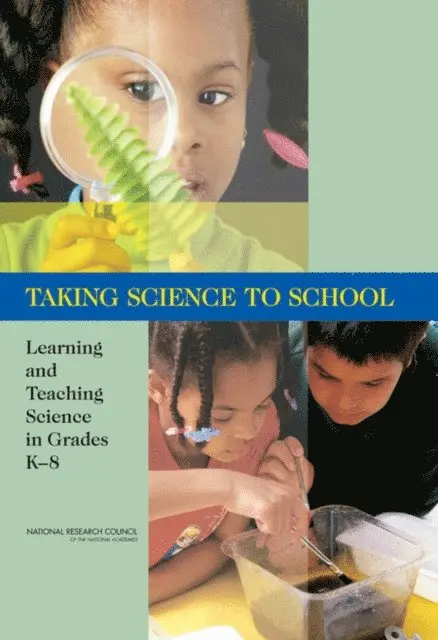
What is science for a child? How do children learn about science and how to do science? Drawing on a vast array of work from neuroscience to classroom observation, Taking Science to School provides a comprehensive picture of what we know about teaching and learning science from kindergarten through eighth grade. By looking at a broad range of questions, this book provides a basic foundation for guiding science teaching and supporting students in their learning. Taking Science to School answers such questions as:
When do children begin to learn about science? Are there critical stages in a child''s development of such scientific concepts as mass or animate objects? What role does nonschool learning play in children''s knowledge of science? How can science education capitalize on children''s natural curiosity? What are the best tasks for books, lectures, and hands-on learning? How can teachers be taught to teach science?The book also provides a detailed examination of how we know what we know about children''s learning of science—about the role of research and evidence. This book will be an essential resource for everyone involved in K-8 science education—teachers, principals, boards of education, teacher education providers and accreditors, education researchers, federal education agencies, and state and federal policy makers. It will also be a useful guide for parents and others interested in how children learn.
631 kr
Läs direkt efter köp
Informal science is a burgeoning field that operates across a broad range of venues and envisages learning outcomes for individuals, schools, families, and society. The evidence base that describes informal science, its promise, and effects is informed by a range of disciplines and perspectives, including field-based research, visitor studies, and psychological and anthropological studies of learning.Learning Science in Informal Environments draws together disparate literatures, synthesizes the state of knowledge, and articulates a common framework for the next generation of research on learning science in informal environments across a life span. Contributors include recognized experts in a range of disciplines—research and evaluation, exhibit designers, program developers, and educators. They also have experience in a range of settings—museums, after-school programs, science and technology centers, media enterprises, aquariums, zoos, state parks, and botanical gardens.Learning Science in Informal Environments is an invaluable guide for program and exhibit designers, evaluators, staff of science-rich informal learning institutions and community-based organizations, scientists interested in educational outreach, federal science agency education staff, and K-12 science educators.
607 kr
Läs direkt efter köp
What is science for a child? How do children learn about science and how to do science? Drawing on a vast array of work from neuroscience to classroom observation, Taking Science to School provides a comprehensive picture of what we know about teaching and learning science from kindergarten through eighth grade. By looking at a broad range of questions, this book provides a basic foundation for guiding science teaching and supporting students in their learning. Taking Science to School answers such questions as:
When do children begin to learn about science? Are there critical stages in a child''s development of such scientific concepts as mass or animate objects? What role does nonschool learning play in children''s knowledge of science? How can science education capitalize on children''s natural curiosity? What are the best tasks for books, lectures, and hands-on learning? How can teachers be taught to teach science?The book also provides a detailed examination of how we know what we know about children''s learning of science—about the role of research and evidence. This book will be an essential resource for everyone involved in K-8 science education—teachers, principals, boards of education, teacher education providers and accreditors, education researchers, federal education agencies, and state and federal policy makers. It will also be a useful guide for parents and others interested in how children learn.
597 kr
Tillfälligt slut
641 kr
Tillfälligt slut